
Polypropylene nonwoven fabric carries recycling code 5, but many recycling centers still turn it away. Yes, PP nonwoven can be recycled—but “can be” and “will be” are two different things in practice. Contamination issues, multi-material blends, and inconsistent municipal programs make it more complicated than the label suggests.
If you source sustainable nonwoven fabric for your brand, try to dispose of a reusable nonwoven bag, or research the polypropylene recycling process, you need more than a yes-or-no answer. Here is how PP nonwoven fabric actually gets recycled, why some products still get rejected, and how it compares to PE and PET alternatives—so your decisions rest on facts, not assumptions.
Direct Answer: Yes, PP Nonwoven Fabric Can Be Recycled—But Not Every Product Is Accepted
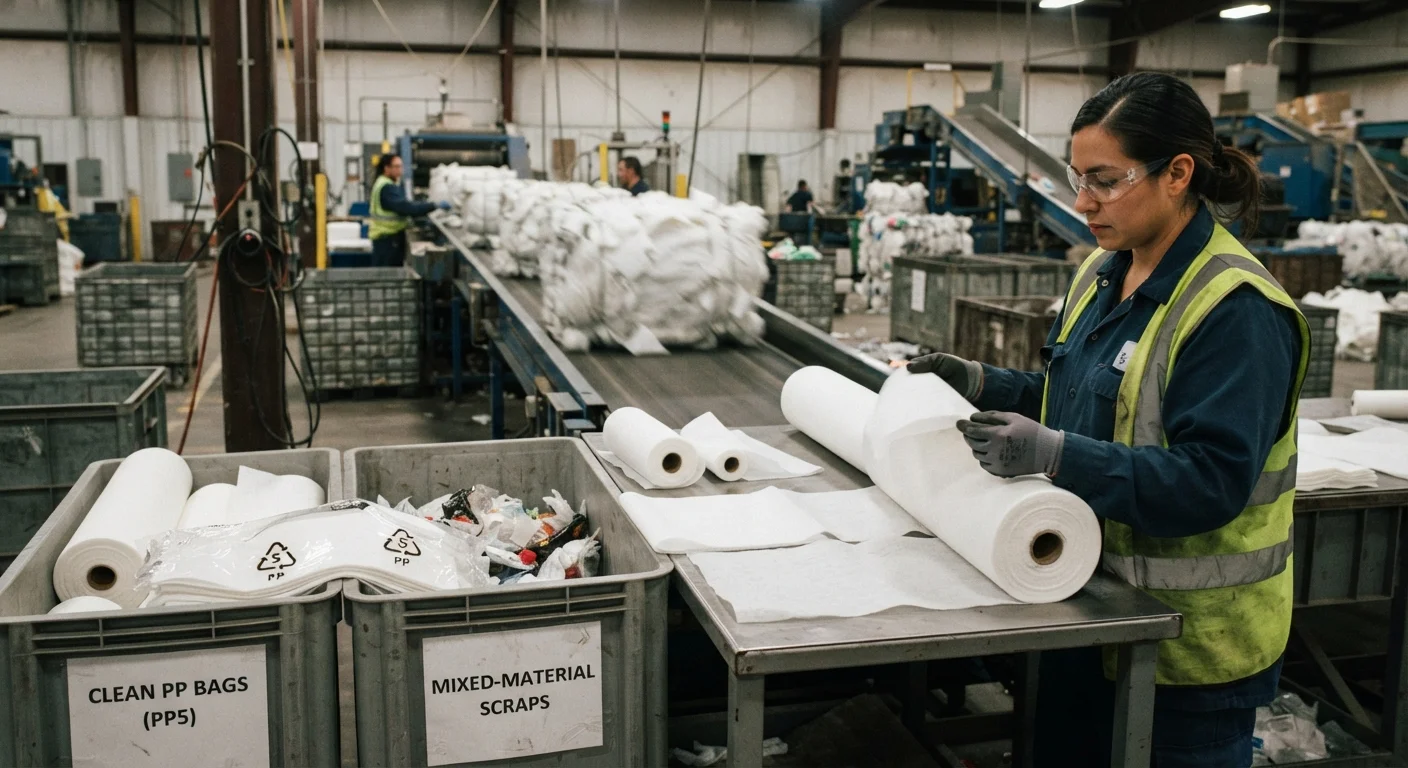
Recyclers reject PP nonwoven fabric because of what’s mixed into it, not the material itself.
Commonly accepted: – 100% PP shopping bags and tote bags with no laminated film or metal hardware – Clean production scrap, roll off-cuts, and bales from spunbond nonwoven fabric lines – Uncontaminated medical textile surplus (not post-use waste)
Commonly rejected: – Post-consumer wipes, masks , and diapers (biological contamination, elastics, mixed materials) – Laminated bags combining PP with PET film or paper labels – Composite blends like PP+PET or PP+viscose, where density sorting can’t separate the PP fraction
Most facilities require 95–98% PP purity in the incoming stream. Below that, processing becomes uneconomical—not impossible, but not worth the labor for most recyclers.
Why Polypropylene Nonwoven Fabric Is Recyclable?
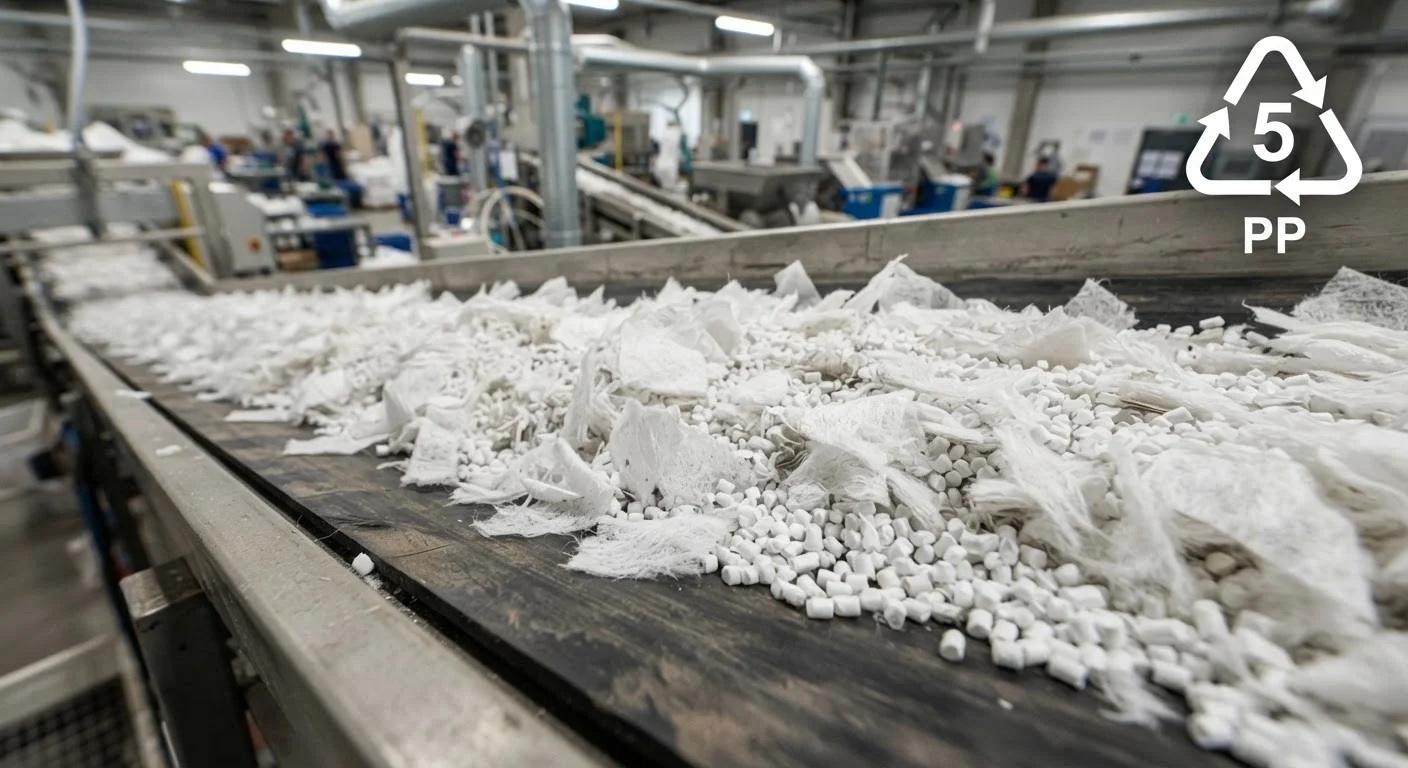
You’ve probably noticed the recycling code #5 stamped on polypropylene packaging. That little triangle isn’t just for show—it’s backed by some solid chemistry. So, why exactly is PP nonwoven recyclable while so many other fabrics head straight to the incinerator?
It mostly comes down to this single fact: polypropylene is a thermoplastic. Think about how wax melts when heated and then hardens again as it cools. PP acts somewhat similarly, though obviously at much higher temperatures. When exposed to heat, its long polymer chains soften and temporarily loosen up rather than permanently breaking apart or burning. Because of this structural flexibility, the material can be safely remelted and reshaped into new products.
There’s another massive advantage here—standard PP nonwoven fabric is a pure mono-material. When you look at a typical spunbond tote bag or agricultural cover, you’re looking at 100% polypropylene from top to bottom. There are no interwoven cotton threads or hidden paper layers to complicate things.
This single-polymer structure is what makes the actual recycling chemistry work. If you consider composite materials—like textiles blended with PET and viscose, or multi-layer protective suits—they are a structural nightmare to recycle. Processors simply cannot separate the different material fractions without ruining them. With pure PP nonwoven fabrics, facilities don’t have to worry about peeling apart complex, incompatible layers. The material maintains a single, predictable melting point, making it incredibly straightforward to remelt compared to multi-material composites.
How PP Nonwoven Fabric Is Recycled?
Density is the first sorting trick. PP floats at 0.90–0.91 g/cm³, while PET, PVC, and most other plastics sink. Recyclers exploit that gap with float-sink tanks, paired with NIR optical sorters that read the spectral signature of each flake. Between the two systems, mixed streams get separated into clean PP fractions before any melting happens.
What happens in the wash tank determines whether the final pellet is usable.
The Wash Cycle
Post-consumer PP nonwoven (bags, wipes, medical scraps) carries adhesives, oils, and biological residue that a simple rinse won’t touch. Facilities run a two-stage wash:
-
Pre-wash : ~40°C water strips loose dirt and dust
-
Hot caustic wash : 1–3% NaOH at 80–90°C for 10–15 minutes dissolves glues, fats, and protein residue
Friction washers mechanically scrub the flake after that, knocking loose films and fines away. Facilities filter and recirculate rinse water, cutting consumption. Fabric-stage material dries to 3–5% moisture; flake destined for extrusion drops to ≤0.3%. Miss that moisture target and you get foaming, surface defects, weak pellets.
Three Paths Back Into Product
Once flake is clean and dry, manufacturers choose one of three routes:
-
Pellet extrusion – Flake melts at 200–230°C and passes through 80–150 µm melt filters that catch remaining fines. Then it gets pelletized via strand or underwater cutting. These rPP pellets become storage bins, automotive components, or feedstock for new nonwoven fabric.
-
Direct spunbond filament recycling – Some plants skip pelletizing. Waste fabric melts, gets purified in filters, and extrudes straight through spunbond dies into filaments. Those filaments cool in a coagulation bath, stretch, and bond directly into new nonwoven web with no intermediate pellet stage.
-
Fiber rework/respinning – For quality-sensitive applications, individual PP fibers get separated using vibratory screens or air classifiers, then respun into thread. This preserves fiber length and mechanical properties better than granulation.
High-spec markets (cosmetic packaging, food-adjacent nonwoven laminates) add one more step: deodorisation. Pellets sit in silos at 90–110°C for 12–48 hours, purging volatile organics like limonene and aldehyde byproducts that cause “recycled smell.” Colorants and stabilizers get dosed during extrusion to tune melt flow and UV resistance.
Spunbond producers running in-line recycling, feeding 10–30% internal regrind back into their own extruders. It’s standard practice on many production lines, and it’s why PP nonwoven manufacturers can talk about circularity with a straight face.
What Prevents Polypropylene Nonwoven Fabric From Being Recycled?
Contamination, structure, and economics keep PP nonwoven fabric out of the recycling stream. Any one of them can sink a batch. Together they explain most rejections.
Sterilization Risk Sends Medical Nonwovens Straight to Incineration
Surgical gowns and blue wrap top the no-recycle list. Recyclers can’t guarantee 100% sterilization during sorting, so hospitals classify these as clinical waste rather than recyclable PP nonwoven material. The material gets burned instead of baled.
Laminates Look Like PP But Behave Like Trash
A lot of PP packaging isn’t pure PP. Manufacturers fuse polypropylene with aluminum or other polymers to extend shelf life. That multilayer construction defeats standard mechanical recycling. There’s no easy way to peel the layers apart. Most of these laminates get downcycled or rejected outright, which undercuts the environmental claims some brands make about their nonwoven fabric manufacturer’s sustainability credentials.
The Polymer Degrades Fast
Recycled PP loses melt-flow rate, molecular weight, and thermal stability with every pass through the process. One industry benchmark puts the ceiling at 2–3 cycles before the material becomes unusable in any application. Heat and reprocessing damage the polymer chains permanently.
The Math Doesn’t Work Either
Recycled PP runs about 80% more expensive than virgin resin once you factor in sorting, testing, additives, and food-grade certification. Collection doesn’t help. The Polypropylene Recycling Coalition reports only 60–65% of U.S. households have PP recycling access, and just 20% of PP used in consumer products ever gets captured.
Bulk makes it worse. PP nonwoven is lightweight but volumetrically huge. A truckload of bags or wrap can cost more to haul than the reclaimed material is worth. Add in the sheer variety of
PP vs PE vs PET Nonwoven Fabric: Which Is Easier to Recycle?
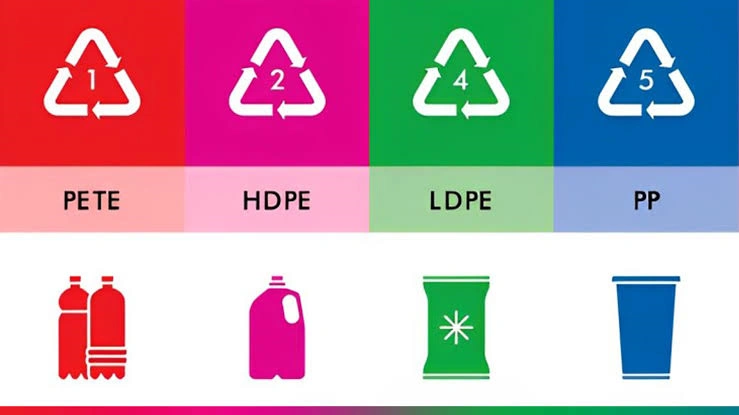
Numbers tell a different story than the recycling code on the label. PET wins the recyclability race at the municipal level, hitting recovery rates up to 58% in developed markets. PP nonwoven fabric recovers only 1–3% globally. PE sits in the middle, mechanically stable but without dedicated nonwoven recycling infrastructure.
For post-industrial scrap, PP nonwoven wins easily. It’s mono-material, melts at lower temperatures, and re-feeds straight into the same extrusion line. Modern spunbond hygiene lines, typically producing 10–40 gsm fabric, hit 90%+ internal scrap reuse as standard practice.
For post-consumer streams, PET nonwoven pulls ahead. Bottle-derived rPET fiber has a mature recycling market already built around it. Decontamination steps let PET cycle back to food-grade quality repeatedly, something PP can’t match.
PET nonwoven also benefits from geotextile and filtration applications, typically 80–500 gsm, mono-material, and low contamination. Post-industrial PET scrap shreds cleanly into staple fiber for reuse. Compare that to PP hygiene products (diapers, wipes, masks), where biological contamination and mixed components make post-consumer collection nearly impossible.
Degradation behavior separates PP and PE too. PE reprocesses through multiple extrusions with minimal MFI change under 240°C, and reprocessed PE from source-separated waste retains high tensile strength. PP degrades faster, losing melt-flow and thermal stability with each cycle.
If you’re manufacturing, PP nonwoven fabric makes in-house recycling simple. If you’re selling to consumers who’ll toss it in a bin, PET or rPET-based nonwoven fabric gets recycled more reliably.
How to Design PP Nonwoven Products for Better Recyclability?
If you’re a manufacturer or a brand sourcing packaging, recyclability doesn’t start at the sorting facility—it starts on your spec sheets. Making sure a product actually survives the recycling process requires intentional design choices. It’s not just about slapping a green logo on a bag; it’s about making the material handling as clean and straightforward as possible. Here is how to engineer PP nonwoven products that recyclers will actually want to accept.
Stick to True Mono-Material Construction
This is arguably the most critical step. When you use pure polypropylene for the main body, the handles, and even the structural edge piping, you eliminate the need for recyclers to manually separate different fabrics. If you mix in cotton webbing handles or nylon threads for stitching, the whole batch becomes a mixed-material headache. Keep the entire product strictly 100% #5 plastic from top to bottom.
Skip the Unnecessary Lamination
Sure, bonding a layer of PET or aluminum film to a PP tote bag makes it shiny and highly waterproof. But honestly? It completely destroys its mechanical recyclability. Facilities cannot peel those bonded polymer layers apart. If your product needs structural stiffness or water resistance, try experimenting with heavier weight (higher GSM) spunbond materials or heat-calendering techniques instead of introducing incompatible plastic films.
Rethink Labels and Adhesives
Heavy paper tags glued down with stubborn adhesives, or thick polyester care labels sewn into the seams, act as immediate contaminants during the melt phase. Try to design products with easily removable labels, or better yet, print your branding directly onto the fabric. If you absolutely must use a physical tag, consider sourcing PP-based labels so the entire product can go straight into the shredder together.
Ditch the Metal Hardware
Those metal snap buttons, brass grommets, and heavy zippers might make a medical bag or premium tote look great, but they are a literal nightmare for recycling equipment. Stray metal can shatter the expensive blades in plastic shredders. If your product requires closures, look into ultrasonic welding, PP-based hook-and-loop fasteners, or simple tie closures made from the nonwoven fabric yourself.
Be Smart About Your Inks
Thick, plastisol-based inks or metallic foils might make your logo pop, but they severely degrade the quality of the recycled pellet later down the line. Heavy chemical dyes usually just turn the final recycled batch into a muddy, grey sludge. Switch to eco-friendly, water-based inks or pigments that are specifically formulated to handle high-heat extrusion safely.
Make the Resin Code Obvious
Finally, don’t make recyclers guess what your product is made of. Put a clear #5 PP recycling triangle somewhere on the design. Whether it’s cleanly printed, ultrasonically stamped, or folded onto a hem, giving waste sorting crews and optical scanners that immediate visual confirmation ensures your product heads to the right processing line rather than the landfill.
Frequently Asked Questions About PP Nonwoven Fabric Recycling
Let’s clear up some of the more specific, practical questions about what happens when PP nonwoven hits the actual recycling market.
Can recycled PP nonwoven fabric be used in food packaging?
Usually, the answer is a hard no. Food safety authorities have incredibly strict rules about what touches our food. Because post-consumer recycled PP can harbor unknown contaminants from its previous life, standard recycled PP nonwoven isn’t deemed food-safe. If it actually needs to go into food packaging, the plastic requires an extremely advanced, expensive chemical decontamination process to reach food-grade status. Because of that cost, most manufacturers just stick to virgin resin for food applications.
Is recycled PP safe for medical products?
You won’t see recycled PP in surgical gowns or sterile drapes anytime soon. Medical environments demand absolute consistency—predictable barrier protection, reliable tensile strength, and zero risk of contamination. Every time polypropylene goes through the remelting cycle, its polymer chains degrade a bit. That variability is perfectly fine for a reusable shopping bag, but it’s a huge liability in an operating room. For safety and compliance reasons, medical nonwovens almost exclusively rely on pure virgin polypropylene.
Does fabric weight (GSM) affect recyclability?
Chemically speaking? Not at all. Whether it’s a sheer 15 GSM agricultural cover or a heavy 120 GSM tote bag, it’s still the exact same #5 plastic underneath. However, GSM totally changes the economics for the recycler. Ultralight fabrics take up massive physical volume but yield very little actual weight, meaning a truckload might cost more in freight than the reclaimed plastic is worth. Heavier-weight fabrics pack much denser, making them significantly more profitable for recycling facilities to process.
How can buyers identify recyclable PP nonwoven fabric?
The easiest giveaway is the #5 recycling triangle usually stamped on the product label. But as a buyer sourcing materials, you need to look a little closer at the construction. If the fabric feels uniquely stiff or glossy on one side, it might be laminated with a PE or PET film to make it waterproof, which completely ruins its recycling potential. Look for standard, breathable spunbond material without sewn-in cotton handles or weird paper tags. If you’re sourcing in bulk, just ask your supplier outright for a mono-material certification.
Can colored PP nonwoven fabric be recycled?
Yes, absolutely. The color masterbatch pigments used during production don’t stop the melting process at all. But here’s the catch—when recyclers toss red, blue, green, and yellow fabrics into the exact same extruder, what comes out the other end usually looks like a muddy grey or dark olive green. So, while bright colored PP is completely recyclable, the resulting recycled pellets are typically dyed black or funneled into industrial products (like automotive parts or hidden construction materials) where aesthetics simply don’t matter.
Conclusion
PP nonwoven material is recyclable and marked with recycling code 5 plastic. When processed correctly, it gets a second life instead of sitting in a landfill for centuries.
But recyclability only matters when the infrastructure supports it. Contamination, mixed materials, and inconsistent collection systems are what keep “technically recyclable” from becoming “actually recycled.”
If you’re a brand sourcing packaging, ask your nonwoven fabric manufacturer how they’re designing for recyclability from the start. At Morntrip , we engineer sustainable nonwoven fabric that performs today and breaks down responsibly tomorrow.
Want packaging that walks the talk? Let’s talk about what that looks like for your product line.





