
One humid week in an unventilated warehouse can undo months of careful sourcing. Crisp, high-performance PP nonwoven fabric turns into a discolored, brittle liability before it ever reaches production.
Most quality complaints about nonwoven fabric rolls come from what happens after delivery. Rolls stacked too high. Left in sunlight. Stored where humidity swings unchecked. For buyers, distributors, and converters managing serious inventory volumes, that blind spot gets expensive.
This guide covers how to protect your stock—the ideal storage environment, correct roll handling, moisture and UV control, and the shelf-life factors that tell you when material starts to degrade. Get these fundamentals right, and you protect both your investment and your production timelines.
Why Proper Nonwoven Fabric Storage Matters?
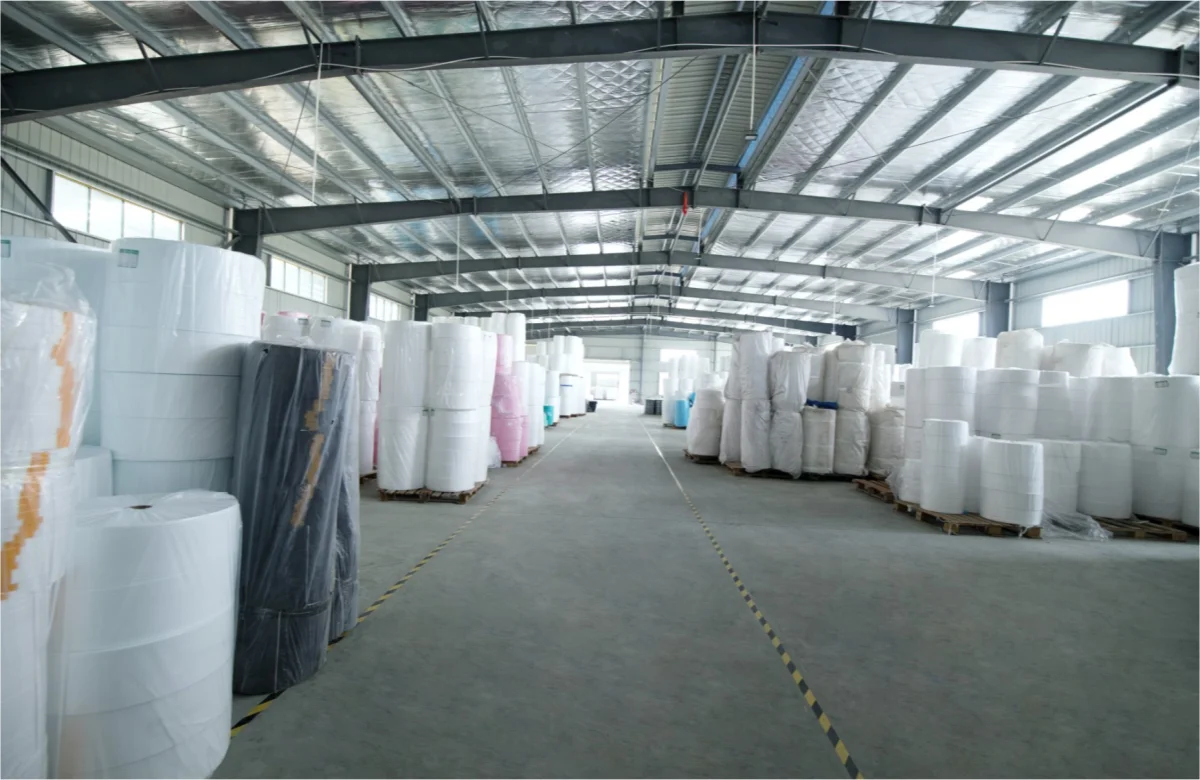
One damp roll sits against a stack of dry stock. Moisture doesn’t stay put. It creeps into neighboring rolls, and within days an entire pallet is compromised by mildew and mold spores. Poor nonwoven fabric roll storage means damage rarely stays isolated.
Every roll that arrives brittle, discolored, or moisture-damaged is wasted capital. You paid for it but can’t sell or process it at full value. For converters running tight production schedules, a single batch of degraded spunbond nonwoven fabric can mean line stoppages, rejected orders, and unhappy end customers downstream.
B2B customers sourcing PP nonwoven fabric for hygiene, medical, or agricultural applications increasingly expect documented proof of proper textile warehouse storage conditions, including temperature logs, humidity records, and pest control measures. Warehouses that can’t demonstrate this lose credibility during supplier audits, even if the material itself tested fine at shipment.
Rolls stacked too high without proper support can topple, causing injury and product loss. Poor ventilation in fabric warehouse setups traps humidity, accelerating the very fabric degradation buyers are trying to avoid.
Choose the Right Storage Environment For Nonwoven Fabrics
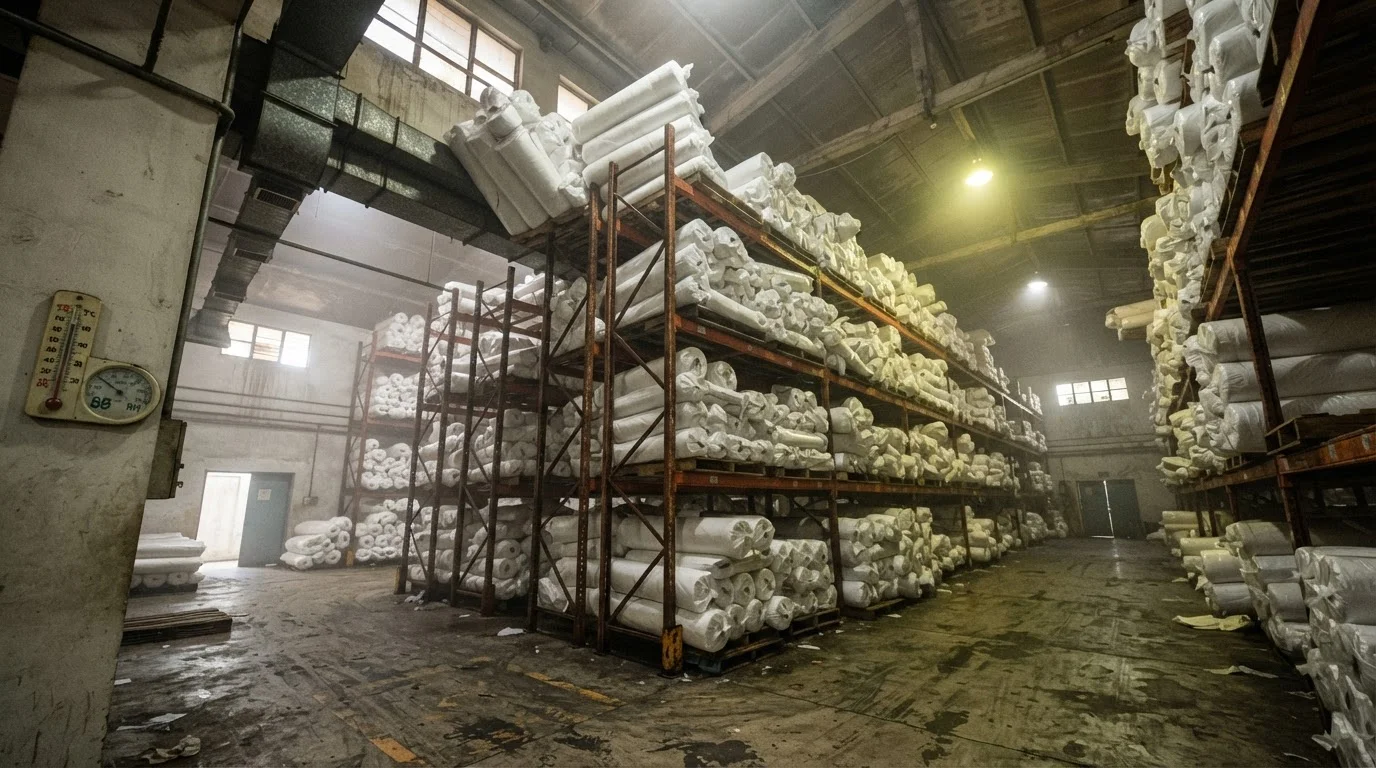
A ten-degree swing overnight can damage nonwoven fabric more than you’d expect. Temperature and humidity control are the foundation of every effective storage strategy for nonwoven fabric rolls.
Temperature and Humidity Targets
Aim for a stable range of 65–75°F (18–24°C) with relative humidity between 40–55%. PP nonwoven fabric and spunbond nonwoven fabric are both sensitive to moisture absorption. Once RH climbs past 60%, fiber bonds start weakening. That’s when you see strength loss, brittleness, and eventually mold.
Daily swings should stay within 2–3% for humidity and a few degrees for temperature. The average reading matters less than the fluctuation. Warehouses without proper humidity control often see wild swings between day and night, especially in metal buildings without insulation. Those swings stress the fibers even when the average numbers look fine on paper.
Shelving and Placement
Keep rolls off the ground. 4–6 inches of clearance prevents moisture wicking up from concrete floors, which stay cooler and often carry residual dampness. Position storage racks at least 18 inches away from sprinkler heads, pipes, and light fixtures. Leaks and condensation happen more often than facility managers expect.
Avoid placing inventory against exterior walls. These surfaces experience the most temperature variation throughout the day, creating microclimates that differ from the rest of your warehouse. Open shelving works better than enclosed cabinets here because airflow matters more than concealment.
Light and Cleanliness
For UV protection, keep rolls in dark storage whenever possible. Even indirect sunlight through warehouse skylights accelerates yellowing over months of exposure. Pair this with strict housekeeping: dust-free zones, scheduled cleaning, and no food or drink near storage areas. Pests and contamination start small but spread fast across an entire pallet stack.
Store Rolls Correctly
Three months of improper stacking turns a straight, usable roll into an unusable oval core. That’s the quiet damage most warehouse teams never see coming. Not mold, not moisture—just gravity and bad support working against you day after day.
Orientation is the first fix. Store PP nonwoven fabric rolls horizontally on dedicated racks, dowel rods, or PVC supports. Never stand them upright in a corner. Never stack them directly on top of each other. Direct stacking crushes fibers at every contact point and leaves pressure marks that don’t disappear when you unroll the material later.
For anything longer than 15 feet, add center support underneath. Skip this step, and the middle sags under its own weight. That sag becomes a permanent deformation in the core, and it gets overlooked constantly. Once a core goes oval, the roll won’t unwind evenly on the production line. Every meter downstream inherits that problem.
Handle rolls by the core, not the fabric surface. Fingerprints, hand oils, and dragging pressure leave marks that surface later as quality inconsistencies. This is especially costly with spunbond nonwoven fabric destined for hygiene or medical-grade applications, where surface cleanliness carries real weight during inspection.
Packaging and Partial Rolls
Keep original packaging intact as long as possible. Factory wrap and end caps block dust and slow moisture absorption, and they cost nothing extra. If a roll gets opened, rewrap it tightly and tape the leading edge before shelving it again. A half-used roll left sitting open on a workbench for weeks collects dust and humidity just as fast as one stored improperly for months.
FIFO Rotation and Routine Inspection
Label every roll with receipt date, fabric type, and batch number. Push older stock to the front, newer stock to the back. Walk the storage area every few months. Check for moisture, discoloration, soft edges, or pest activity before small problems spread across an entire pallet.
Protect the Fabric Before Use
A roll can survive months in perfect storage and still get ruined in the five minutes before it hits the production line. Pulling a roll off the rack is where a lot of preventable damage happens—dragged across a dirty floor, unwrapped too early, left staged under a skylight.
Before unwrapping, wipe down the work surface. Dust, oil residue, or moisture on a table transfers straight into PP nonwoven fabric the moment it makes contact. Handlers should have clean, dry hands—no lotions, no gloves with residue. Spunbond nonwoven fabric destined for hygiene or medical use gets rejected over surface contamination that’s invisible until inspection.
Cut a small test swatch before running a full batch through converting equipment. Check for consistent weight, bonding strength, and any shrinkage under heat if the process involves thermal bonding. Catching an issue on a swatch costs minutes. Catching it mid-run costs an entire batch.
Stage rolls in a covered, shaded area—never near loading dock doors or under skylights—right up until they’re fed into the machine. This keeps UV protection fabric standards intact and prevents last-minute fabric degradation work from undoing itself at the worst possible stage.
Manage Shelf Life and Inventory
A spreadsheet with the wrong expiration date costs more than a damp roll. Nonwoven fabric doesn’t have a printed shelf life like food, but it degrades on a timeline all the same. Treating every roll as interchangeable is where inventory control breaks down.
Track stock by batch or lot, not by SKU alone. Each batch record should include the manufacturing date, expected shelf-life period, storage location, quantity, and current quality status. This matters more with PP nonwoven fabric and spunbond nonwoven fabric than most buyers realize. Fiber bonding strength declines over time under humidity-controlled storage, even when nothing looks wrong.
Calculate a shelf advice date as a trigger for quality checks. The date is the manufacturing date plus a set number of days. Beyond that window, inspect before shipping or converting. A separate expiration date, calculated the same way but with a longer period, marks when the material is considered unusable regardless of appearance.
Run near-expiry alerts weekly. Flag any batch approaching its shelf advice date and move it to the front of processing. This is FEFO logic (first-expire, first-out) applied on top of standard FIFO rotation, because the oldest roll on the shelf isn’t always the one closest to degrading.
Quarantine anything past its expiration date until someone actually inspects it. Track FEFO compliance rate and shelf-life loss value monthly.
Common Storage Mistakes to Avoid
Most warehouse damage traces back to a handful of repeat offenders. Spot these early, and you skip the losses entirely.
Wrong-size storage space. A unit too small forces crowded stacking; too large wastes budget on empty square footage. Measure your largest rolls first, then leave a walkway for access.
Wasted vertical space. Racks that stop at eye level waste the space above them. Stack PP nonwoven fabric rolls higher using proper shelving, not open floor space.
No labeling, no inventory. Skip batch labels and locating a specific roll turns into a warehouse-wide search. One storage guide found labeled inventory retrieves items 67% faster.
Cheap packing materials. Thin plastic sheeting instead of proper wrap raises damage risk by 89%. Spend the extra dollar on real end caps.
Mixing weights incorrectly. Heavy rolls stacked on lighter, more delicate spunbond nonwoven fabric crush the material underneath. Heavy goes on the bottom, always.
Skipping climate control entirely. Temperature and humidity swings ruin an estimated 38% of stored goods across industries. Nonwoven fabric isn’t exempt.
Storing damp or dirty rolls. Moisture trapped before shelving guarantees mold within weeks, not months.
FAQ About Storing Nonwoven Fabric
Questions pile up once a shipment lands on the dock. These are the ones that come up most often.
How long can nonwoven fabric be stored?
With proper humidity control, PP nonwoven fabric typically holds its quality for 12–24 months. Meltblown grades are pickier. Keep them between 18–32°C, never above 35°C, or the electrostatic charge that makes filter media effective starts fading early.
What do I do if a roll already feels damp?
Isolate it immediately. Don’t shelve it near dry stock. Let it air out somewhere ventilated, then inspect for mildew before it goes anywhere near production.
Does fabric need time to adjust before use?
Yes. Leave rolls unopened for 24 hours after arrival so temperature and humidity equalize. Skip this step, and condensation forms the second you unwrap it.
Can nonwoven fabric be stored outdoors?
Only under solid, weatherproof cover—never exposed. Moisture control and UV protection measures matter even more outside than inside.
Conclusion
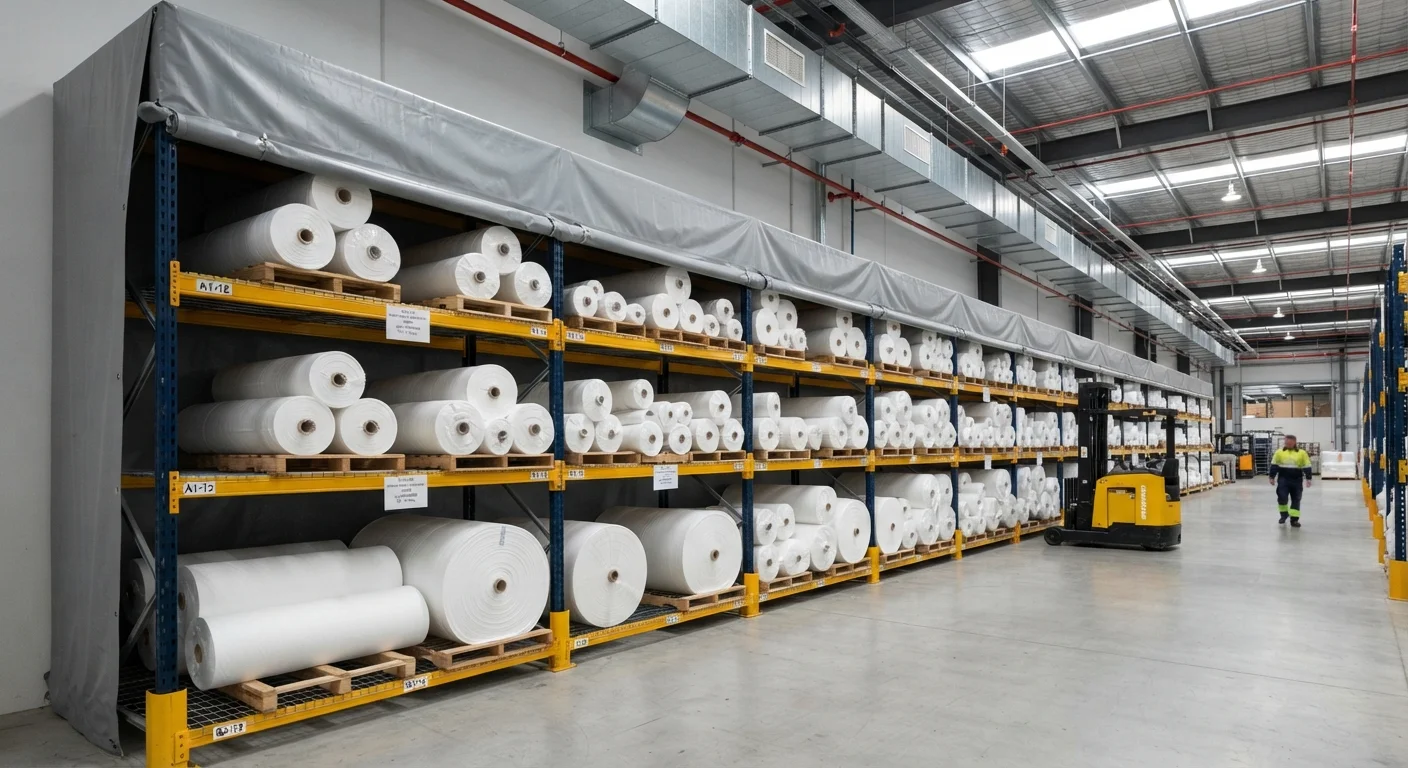
Nonwoven fabric fails because of poor storage, not poor manufacturing. The three factors that matter are simple: stable temperature and humidity, protection from UV light, and smart rack organization that keeps air moving around every roll. Get these right, and PP nonwoven fabric or spunbond nonwoven fabric can sit in your warehouse for months without losing tensile strength, color, or performance.
Every roll you protect is money you don’t have to spend twice. Proper nonwoven fabric roll storage protects your bottom line, production timelines, and client satisfaction.
Before your next shipment arrives, walk your warehouse and check it against this guide. If you’re sourcing nonwoven fabric and want a supplier who understands storage as well as production, Morntrip is ready to talk specs, packaging, and delivery timing that protect your investment from day one.





