
Type “Uvex coveralls manufacturer” into Google and you’ll get a dozen distributor listings—none of them answer who’s stitching the seams. That’s the gap this guide fills.
Uvex is a genuine German safety brand with real engineering credentials, but like most global PPE players, the actual production story is more layered than the packaging suggests. We’ll walk through how Uvex’s disposable coveralls move from raw material to retail shelf, where OEM PPE suppliers fit into that chain, and how you can independently verify a factory’s origin before signing a purchase order.
If you’re a buyer trying to decide between paying brand premium or sourcing your own private label protective clothing, this breakdown gives you the leverage to negotiate smarter—and know exactly what you’re paying for.
Who is UVEX ARBEITSSCHUTZ GmbH?
To understand who manufactures Uvex coveralls , it’s important to distinguish between the brand, the legal entity, and the manufacturing companies within the Uvex organization.
UVEX ARBEITSSCHUTZ GmbH is the company responsible for Uvex’s occupational safety business. Based in Fürth, Germany, it develops and markets a wide range of personal protective equipment, including safety helmets, eyewear, gloves, footwear, hearing protection, and disposable protective clothing.
The company operates as part of the Uvex Safety Group, which itself belongs to the larger Uvex Group. While the group is widely recognized for sports eyewear and cycling helmets, occupational safety products represent one of its largest and most established business divisions.
Unlike companies that function purely as brand owners, Uvex has long invested in manufacturing expertise. The group’s strategy focuses on controlling product development, quality management, testing, and significant portions of production rather than outsourcing every stage of manufacturing.
This distinction is important because many PPE brands simply purchase finished products from third-party factories and apply their own branding. Uvex follows a more integrated model, combining product development, certification, manufacturing, and quality assurance within its own organization whenever possible.
Does Uvex Manufacture Its Own Coveralls?
One of the biggest misconceptions surrounding Uvex coveralls is that the company simply purchases disposable protective clothing from anonymous factories and rebrands it. Public information suggests the reality is considerably more sophisticated.
Uvex Owns Specialized Textile Manufacturing Companies
Within the Uvex organization, Uvex Safety Textiles GmbH serves as the group’s specialist manufacturer for protective garments and workwear. Rather than acting solely as a sourcing office, the company is responsible for developing textile products, selecting appropriate materials, managing production processes, and maintaining quality standards for protective apparel.
This manufacturing capability allows Uvex to keep product development closely connected with production, helping ensure that garments meet both European safety standards and the company’s internal quality requirements.
Instead of relying entirely on external suppliers, Uvex maintains direct control over critical aspects of garment manufacturing, including design validation, material selection, production oversight, and product testing.
Manufacturing Facilities in Germany
Public corporate information also identifies Werk Ellefeld, located in Saxony, Germany, as one of Uvex’s important production facilities for protective clothing.
The site supports multiple stages of manufacturing, from product development and prototype creation to production and quality inspection. Keeping these activities within the same manufacturing ecosystem allows engineering teams and production specialists to work together throughout the product lifecycle.
For industrial buyers, this matters because vertically integrated manufacturing generally provides better consistency than purchasing identical products from multiple unrelated factories.
It also enables Uvex to implement uniform quality management procedures across production rather than depending entirely on supplier audits.
What Does “80% Value Creation” Actually Mean?
One statement frequently referenced in Uvex’s corporate publications is that nearly 80% of the company’s total value creation takes place within its own manufacturing facilities.
This figure is often misunderstood.
It does not necessarily mean that every component of every product is manufactured entirely inside Germany, nor does it prove that every disposable coverall is produced in a Uvex-owned factory.
Instead, it indicates that Uvex performs a significant share of activities—including engineering, product development, manufacturing, assembly, testing, and quality assurance—within facilities operated by the company itself.
Compared with brands that outsource nearly all production to contract manufacturers, this represents a much higher level of manufacturing integration.
Does This Mean Every Uvex Coverall Is Made by Uvex?
Not necessarily.
Although Uvex clearly possesses substantial manufacturing capability, the company does not publicly disclose the production location for every disposable coverall model.
Different product families may be manufactured at different facilities depending on technical requirements, production capacity, certification needs, and regional market demand.
For this reason, it is not accurate to claim that every Uvex coverall is produced in Germany. Likewise, it would also be inaccurate to assume that all disposable coveralls are manufactured by external OEM factories.
The available evidence supports a more balanced conclusion: Uvex combines its own manufacturing resources with a broader production network, while retaining responsibility for product design, certification, and quality management.
Where Are Uvex Coveralls Manufactured?
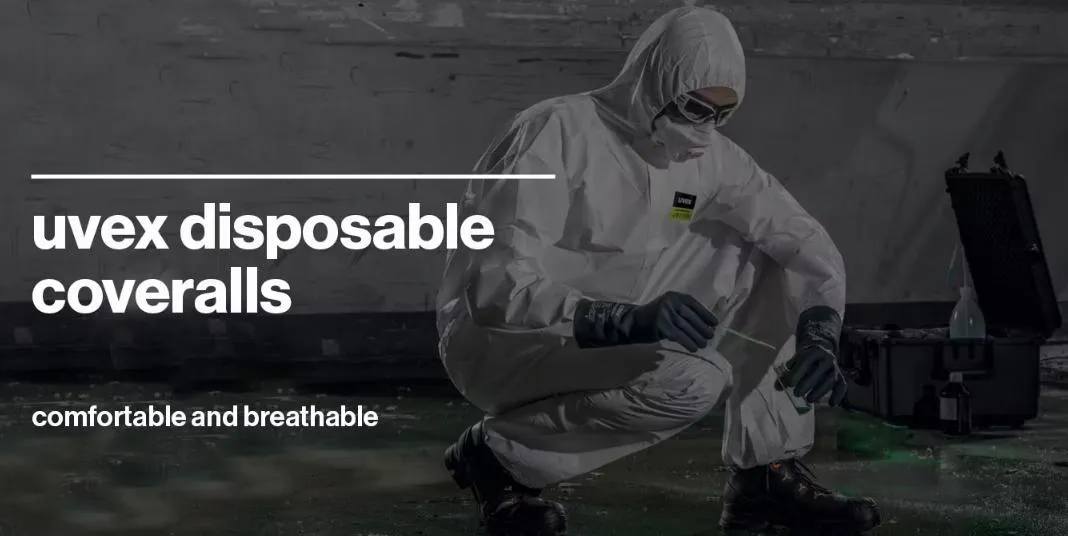
One of the most common questions buyers ask after identifying the manufacturer is where Uvex coveralls are actually produced. The answer isn’t as simple as naming a single factory or country.
Like many multinational PPE manufacturers , Uvex operates across several production and business locations. The manufacturing origin of a specific coverall depends on the product model, certification requirements, and target market.
Rather than assuming every product comes from the same factory, buyers should evaluate the origin of each SKU individually.
Germany Remains a Key Manufacturing Base
Germany continues to play an important role in Uvex’s protective clothing business.
Public corporate information identifies manufacturing activities at facilities such as Uvex Safety Textiles GmbH and Werk Ellefeld, where product development, quality management, and textile production are carried out. These facilities support the company’s commitment to maintaining consistent product performance under European PPE standards.
For products manufactured in Germany, buyers typically benefit from complete technical documentation, established quality control procedures, and direct support from the Uvex organization.
However, being a German brand does not automatically mean every coverall is manufactured in Germany.
International Production Supports Global Supply
Uvex serves customers throughout Europe, Asia, and many other international markets. Supporting this global business requires a manufacturing network that extends beyond a single country.
Corporate sustainability documentation references operations in Kunshan, China, alongside German facilities. Uvex also maintains regional sales and service organizations in China to support local customers.
These public disclosures indicate that the company’s manufacturing and supply chain operate internationally rather than from one centralized production location.
Because Uvex has not published a factory list for every disposable coverall model, the country of origin should always be confirmed for the specific product being purchased.
Why Country of Origin Can Vary?
Several factors influence where a coverall is manufactured.
Different protective garments require different materials, production equipment, and certification processes. Manufacturing capacity may also be allocated across facilities to improve supply stability or shorten delivery times for regional markets.
As a result, two disposable coveralls carrying the Uvex brand may not necessarily originate from the same production site.
For procurement teams, this means the product model—not the brand alone—should determine sourcing decisions.
Does Uvex Use OEM Manufacturers?
A common assumption is that every international PPE brand outsources disposable coveralls to anonymous OEM factories. While contract manufacturing is widespread within the industry, the publicly available evidence does not support such a simple conclusion for Uvex.
What Public Information Confirms?
Public documents clearly show that Uvex maintains its own manufacturing capability for protective textiles and workwear. The company also manages product development, testing, certification, and quality assurance within its organization.
This demonstrates that Uvex is far more than a marketing company purchasing finished products from unrelated suppliers.
What Public Information Does Not Confirm?
At the same time, Uvex does not publish the manufacturing location for every disposable coverall model or provide a complete list of production partners.
Without official disclosure, it is impossible to state with certainty that every disposable coverall is produced exclusively in Uvex-operated facilities.
Likewise, it would be inaccurate to claim that all products are manufactured entirely by external OEM factories.
The available information simply does not support either absolute conclusion.
How Buyers Should Interpret This?
For procurement purposes, the most practical approach is to evaluate each product individually.
Rather than asking whether Uvex “uses OEM manufacturers,” buyers should ask questions such as:
-
Where was this specific model manufactured?
-
Which legal entity issued the Declaration of Conformity?
-
What certifications apply to this SKU?
-
Can the supplier provide country-of-origin documentation?
These questions produce verifiable answers, whereas assumptions based solely on brand reputation do not.
How to Verify the Manufacturing Origin of Uvex Coveralls?
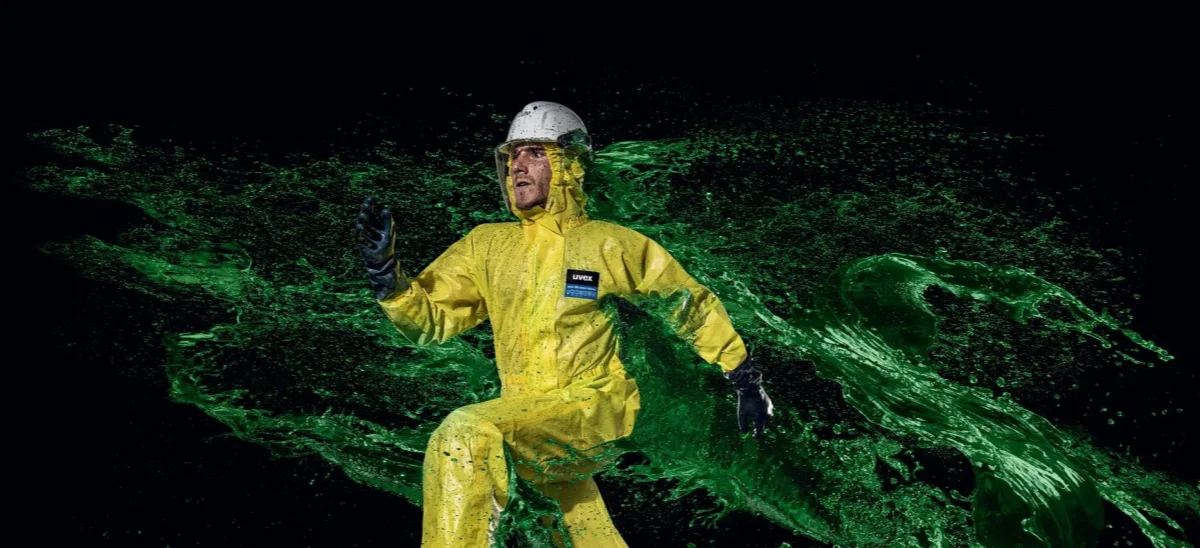
Whether purchasing ten coveralls or ten thousand, verifying manufacturing information helps reduce procurement risk. Most of the necessary information is available through product documentation rather than marketing materials.
Check the Product Label
The easiest place to start is the garment label.
A compliant label normally identifies the country of origin together with the responsible manufacturer or importer, product model, sizing information, and applicable certification markings.
Compare these details with the information provided in quotations and technical documents to ensure they match.
Request the Declaration of Conformity
For CE-certified PPE, the Declaration of Conformity is one of the most important documents.
It confirms that the product has been assessed against the applicable European regulations and identifies the legal entity responsible for placing the product on the market.
This document should always correspond to the exact product model being purchased.
Review the Technical Datasheet
A technical datasheet provides valuable information beyond basic product descriptions.
Buyers should verify:
-
Product model number
-
Protection type
-
Applicable standards
-
Fabric construction
-
Seam construction
-
Intended applications
-
Storage conditions
-
Shelf life
Matching these specifications with purchasing requirements helps avoid ordering an unsuitable product.
Confirm the Country of Origin Before Ordering
If the manufacturing location is important for compliance, government procurement, or customer requirements, request written confirmation before placing an order.
This is particularly important when purchasing through distributors, as inventory may originate from different production batches or countries.
Obtaining confirmation in advance eliminates unnecessary uncertainty later in the procurement process.
Frequently Asked Questions About Uvex Coveralls
Buyers keep asking the same six questions before they’ll commit to a purchase order. Here’s the direct answer to each.
Can I reuse a coverall if it looks clean?
No. Uvex documentation is explicit: single-use means single-use, even if the suit shows zero visible wear. Washing degrades the barrier properties and is prohibited outright.
What’s the shelf life?
Five years from the production date on the label—but only if stored at 15°C–25°C, dry, in original packaging, away from UV light. Break any of those conditions and protective performance drops before the five years are up.
How do I size correctly?
Uvex sizing runs on height plus chest circumference. Size M covers 170–176 cm and 92–100 cm chest. Size L covers 176–182 cm and 100–108 cm. If your measurement sits near the upper limit of a size, go one size up—Uvex’s own donning instructions tell you to check for tearing risk when squatting or stretching.
How do I dispose of a used suit?
Split by contamination level. Non-hazardous exposure: incineration or landfill, no special handling. Heavy or toxic contamination: hazardous waste rules apply; follow local regulations.
Conclusion
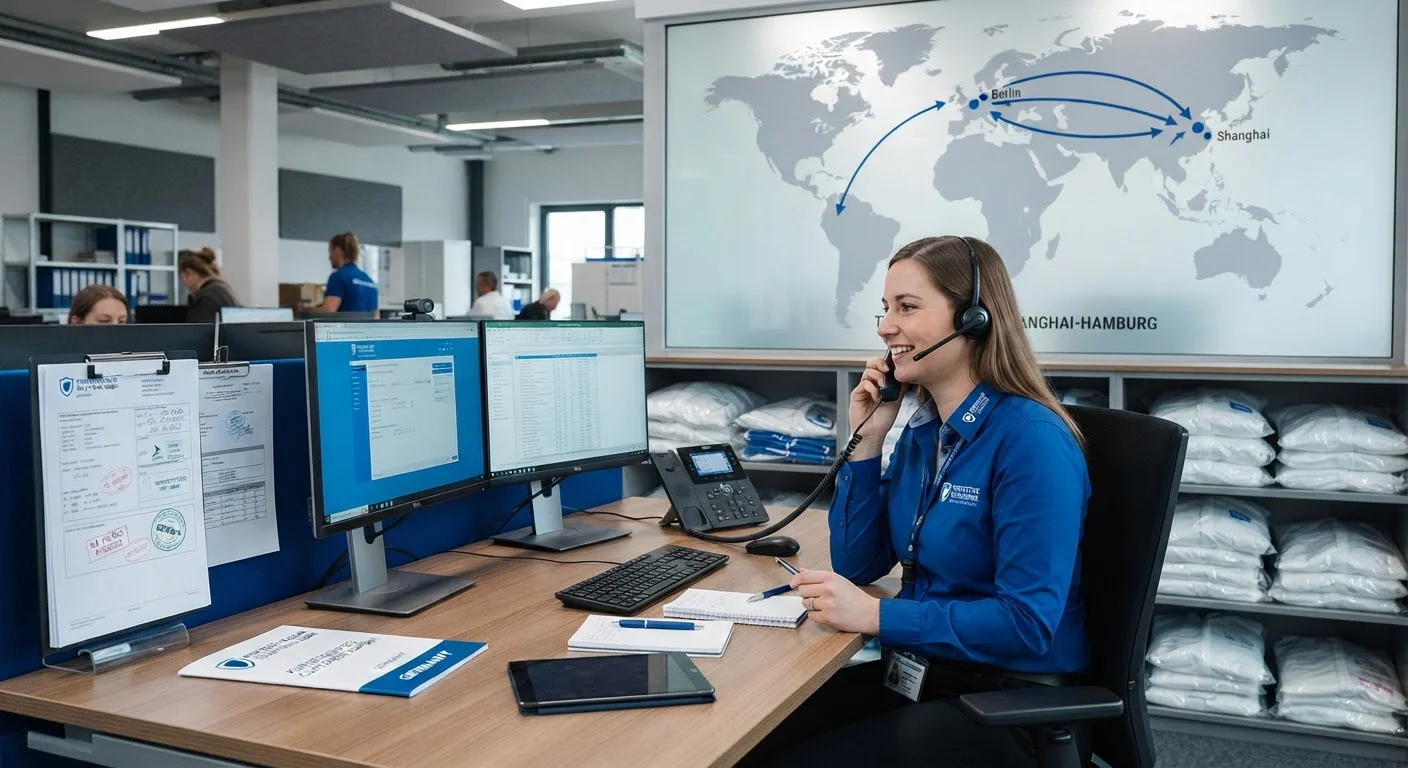
Uvex doesn’t run its own coverall factories. Like most global safety brands, it works through a network of certified OEM PPE suppliers, mostly based in China’s PPE manufacturing hubs, to produce Uvex Coveralls at scale. That’s standard industry practice — and knowing it changes how you should approach procurement.
If you’re sourcing PPE for your business, ask yourself this: can you get the same manufacturing quality without paying for the brand markup? Usually yes, as long as you vet your disposable coveralls factory the same way you’d audit any Tier 1 supplier. Certifications, material traceability, and production capacity all matter.
Ready to explore direct manufacturing partnerships? Request samples and certification documents from vetted OEM/ODM producers before your next bulk order. Your margins will thank you.





