Are you a caregiver restocking supplies, a clinic manager sourcing equipment, or a patient trying to figure out the healthcare system? Knowing where to find Medline locations near you saves real time, money, and hassle.
But “near you” isn’t that simple. What you need changes everything. You might need a corporate facility, a distribution center, or a local retailer that carries Medline products. Each one serves a different purpose — and most people don’t think about that difference until it costs them a trip.
This guide walks you through every practical method to find the right Medline location for your situation. You’ll also get clear advice on how to choose the best option once you find it.
Why Medline Location Matters for Your Needs?

The Medline location you need depends on who you are. Getting that wrong doesn’t just waste an afternoon. It can break a supply chain, delay patient care, or cost a procurement team thousands of dollars from one misdirected site visit.
Two distinct groups search for Medline locations. Each group needs something different.
If You’re a Business or Healthcare Facility
Hospitals, clinics, nursing homes, and distributors aren’t looking for a store. They need a Regional Distribution Center, a Sales Office, or a corporate facility — places where contracts get signed, delivery timelines get confirmed, and supplier audits happen.
This distinction carries real financial weight:
-
Delivery speed changes with distance. Facilities within 200–300 miles of a distribution center receive orders within one to two days. Push that distance past 600 miles, and you’re looking at two to three business days or longer. That gap matters when clinical schedules depend on stock availability.
-
Wrong location, wrong conversation. A sales office cannot fulfill a full-catalog order or host a quality audit. Your team travels to the wrong site for an ISO 13485 or FDA compliance review — you absorb the full cost. Travel, time, and personnel, with nothing to show for it. Cross-state audit trips run hundreds to several thousand dollars per visit.
-
Shipping costs build up in silence. Medical consumables are high-volume, low-value-density goods. Double the shipping distance, and logistics costs climb by 15–30%. At scale, that number adds up fast.
If You’re a Patient or Individual Caregiver
The challenge is different here, but just as frustrating. Most Medline locations on a map — warehouses, distribution hubs, corporate offices — are not open to the public. You show up expecting to buy wound dressings or a wheelchair. A loading dock turns you away.
Patients who need supplies within 24–48 hours post-surgery or during active wound care can’t afford that wasted trip. It directly delays essential care.
There’s also the insurance side to consider. In the U.S., many Medline products are covered through Medicare or commercial insurance via certified DME (Durable Medical Equipment) providers. You visit a location outside your insurance network, and you pay 100% of the cost, versus the standard 10–30% co-pay at an in-network supplier.
Getting the right Medline location from the start isn’t a small convenience. It’s the difference between a smooth process and a costly, exhausting detour.
How to Find Medline Industries Corporate & Distribution Facilities Near You?
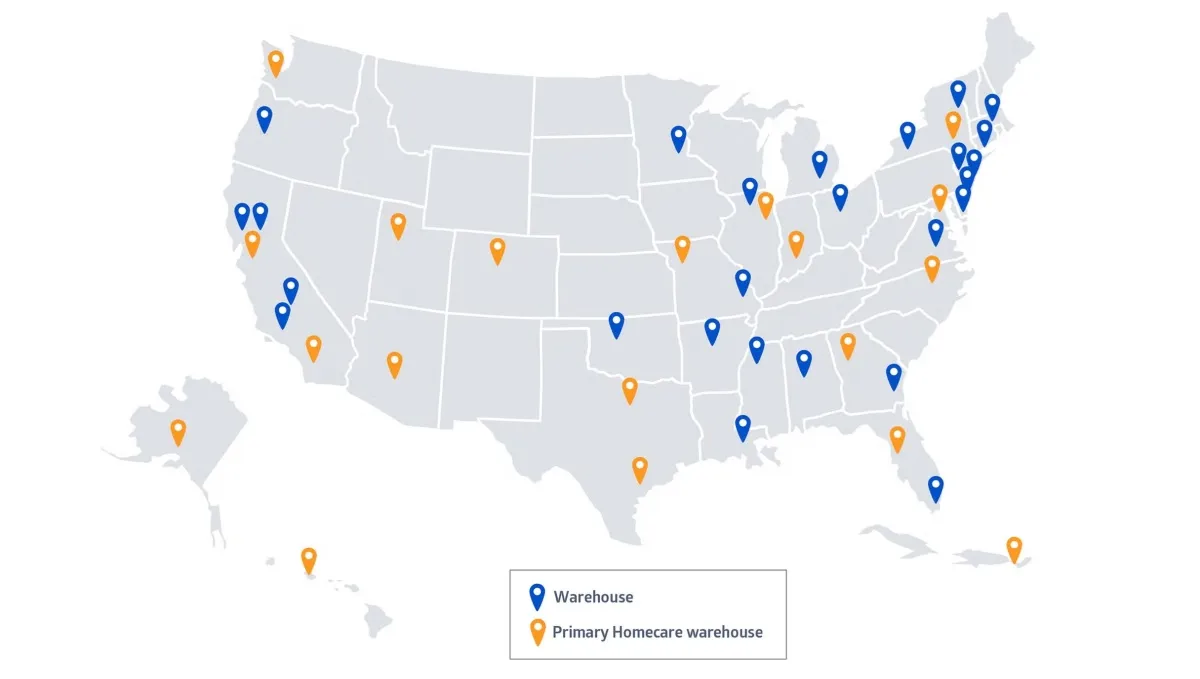
Medline’s U.S. footprint is bigger than most people realize. That size makes it hard to navigate without a clear system.
The good news: there’s a solid three-layer method that works every time. Start with company directories. Move to map search. Finish with a phone call. Each step cuts through the noise and brings you closer to the right facility — not just the nearest one.
Layer 1: Start with Company Directories
Three platforms give you the most useful starting data:
-
Indeed lists Medline Industries ‘ office locations by state. It covers Illinois, California, Texas, Georgia, New York, Florida, Maryland, and North Carolina — a solid first-pass view of where Medline operates across the U.S.
-
Glassdoor shows 24 locations worldwide, with specific North American offices listed, including Atlanta, GA, and Chicago, IL.
-
Zippia places Medline’s headquarters in Mundelein, IL, and maps out 13 office and retail locations across the country.
No single directory gives you the full picture. Cross-check all three. That gives you a reliable shortlist built on real operational sites — not outdated data.
Layer 2: Map It
Got a state or city in mind? Let the search tools do the work. These search strings pull up the most relevant Medline locations on Google Maps or Apple Maps:
-
"Medline Industries + city/state" -
"Medline distribution center + state" -
"Medline Industries headquarters Mundelein IL" -
"Medline Industries warehouse + ZIP code"
Run a ZIP-code search or add “near me” to get results ranked by distance. Then look at what comes up. You’re scanning for three site types: corporate office, warehouse or distribution center, and retail or will-call location. See only one type in your results? Widen the radius. More options are likely there.
Layer 3: Call Before You Go
A map pin doesn’t tell you what a facility does. That’s the phone call’s job.
Reach someone at the location and ask these questions:
-
“Is this location a corporate office, distribution center, or will-call site?”
-
“Do you handle B2B sales or just warehouse fulfillment?”
-
“Which ZIP codes or states do you cover for delivery?”
-
“Can local customers pick up orders here?”
-
“What’s the best extension for purchasing or logistics?”
These questions take three minutes. They spare you a wasted trip, a misdirected shipment, or a dead-end conversation with someone who can’t move your request forward.
What to Record for Every Facility?
Found a promising Medline location? Capture these details before moving on:
|
Data Point |
Why It Matters |
|---|---|
|
Address |
Confirms physical site |
|
Facility type |
Office / distribution center / retail / will-call |
|
State & ZIP code |
Determines delivery coverage |
|
Phone number |
Direct contact for follow-up |
|
Service area |
Local, regional, or multi-state |
|
Customer access |
Pickup, B2B, or appointment-only |
A productive facility visit and a frustrating dead end often differ by one thing: knowing what you need before you show up.
How to Find Local Stores and Suppliers That Sell Medline Medical Supplies Near You?
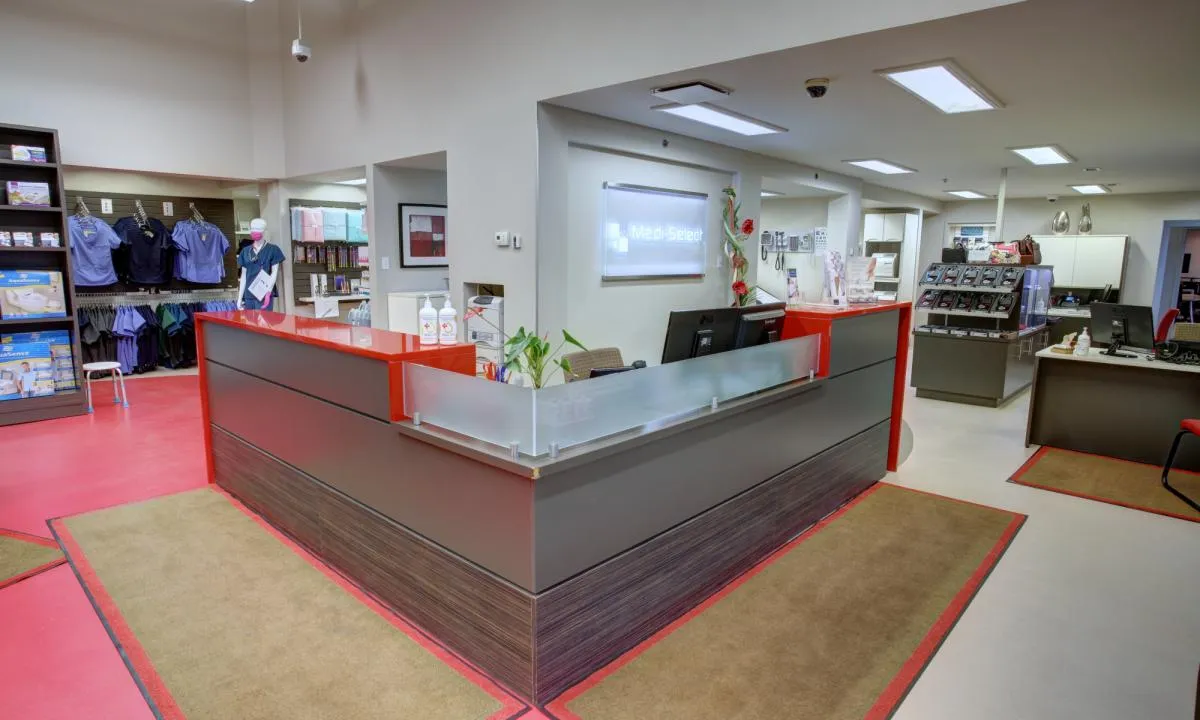
Most people searching for Medline medical supplies nearby aren’t looking for a warehouse or a corporate contract. They need wound dressings by Thursday. A walker by next week. A box of gloves before the home nurse arrives. That changes everything about how you search.
Medline started in 1966 and grew into one of the largest medical supply makers and distributors in the United States, with annual revenues exceeding $7 billion. A company of that size doesn’t reach patients through a single storefront. Products move through a layered distribution network: makers to regional distributors to local retailers, pharmacies, and DME providers. Your local options are real and plentiful — but you need to know where to look.
Start with the Right Search Terms
Don’t just search “Medline near me.” That surfaces warehouses and corporate offices — neither will hand you a box of gauze pads.
Use these targeted search strings instead:
-
“Medline wound care near me”
-
“Medline mobility aids DME near me”
-
“Medline home health supplies store near me”
-
“Medline supplier local pickup”
-
“Medline same-day delivery”
The more specific the term, the more useful the result. Adding “pharmacy” , “DME” , or “home health supplies” to your search cuts out irrelevant hits. It pulls up the local retail channels that are most likely to stock what you need.
Know Which Store Type Carries What
Not every store that sells medical supplies carries the same Medline products. Match your need to the right channel:
-
Community pharmacies — Your best bet for wound care, disposables, and everyday care supplies
-
DME (Durable Medical Equipment) stores — The right place for wheelchairs, walkers, crutches, and Medline mobility aids
-
Home health supply retailers — These stores tend to carry a wider range of Medline home care and rehabilitation products
Check the store’s website before you drive out. Look for a Brands, Medical Supplies, DME, or Inventory page that lists Medline by name. That’s a strong signal they carry real stock — not just the option to order it for you weeks later.
Call First. Four Questions That Save You the Trip.
Stock varies a lot from store to store. One pharmacy two miles away might have what you need on the shelf right now. Another five miles out might need to place an order. The only way to find out is to ask.
Call ahead with these four questions:
-
“Do you have Medline products in stock oday?”
-
“Do you carry [specific product/SKU/size]?”
-
“Can I pick it up in-store, or do I need to wait for an order?”
-
“If I order today, how fast can you deliver locally?”
Or use this ready-made script: “Hi, do you have Medline products in stock today? I’m looking for . Can I pick up in-store, or do you offer same-day delivery?”

Three minutes on the phone beats a wasted round trip every time.
When Local Stores Come Up Empty?
It happens. Your nearby stores may not have what you need. Move to Amazon or a medical supply specialty site — but filter with care. Look for listings that show “same-day delivery”, “local delivery”, or “pickup available”. Before you commit, check the product page for the seller’s name and the shipping location. Also, confirm that store pickup is enabled in your ZIP code.
The fastest sequence that works:
-
Search Google Maps: “Medline medical supplies near me.”
-
Filter by store type: pharmacy / DME / home health supplies
-
Call to confirm real Medline stock and specific SKU availability
-
Check the store’s website for local delivery or pickup options
-
Are local stores out of stock? Search Amazon or specialty sites with same-day delivery filters
Follow that order. You’ll spend less time searching — and more time with what you came for.
Key Factors to Compare: Choosing the Right Medline Location or Supplier
Not all Medline locations deliver the same experience. The closest one on a map isn’t always the best fit for your needs. Check these four factors before you commit to a supplier or make the trip across town. Each one can make or break your experience.
1. Geographic Convenience: More Than Just Mileage
Distance is the obvious starting point. But it’s only part of the picture.
For driving distance and time , use these thresholds:
– Under 10–15 miles in an urban area = high-convenience tier
– Under 30 miles in suburban or rural areas = acceptable range
– Under 20–30 minutes driving time = strong candidate. Anything over 45 minutes cuts how often you’ll visit — by a lot.
Run two checks on Google Maps: once during peak hours, once off-peak. That time difference matters more than the straight-line distance.
For public transit access — relevant for elderly or mobility-limited patients — check the walking distance from the nearest bus or subway stop. More than 800 meters, or more than 10 minutes on foot, creates a real barrier. Look for step-free entry, ramps, and elevator access from the transit stop to the store entrance.
Parking deserves its own column in your comparison sheet. Check these points:
– Total spaces vs. ADA-accessible spaces. ADA guidelines put accessible spots at 2–4% of total capacity — use that as your baseline.
– Hourly cost: a $2/hour lot at Location B versus two free hours at Location A adds up fast for frequent buyers.
– Distance from accessible spots to the front door. Anything over 50 meters becomes a real burden for wheelchair users.
– Curbside drop-off zones for patients arriving with walkers, wheelchairs, or bulky DME items.
For distribution centers and B2B suppliers , focus on delivery coverage:
– What’s the standard lead time for your state? In-state orders run 1–2 business days. Cross-state orders take 3–5 days.
– Does next-day or same-day delivery cover your ZIP code?
– What’s the free shipping threshold? A $100 minimum versus a flat $10–15 per order looks small on one transaction. Multiply that across your full year of orders, and the gap grows fast.
2. Product Availability: Verify at the SKU Level
“We carry Medline products” is not the same as “We have what you need, in stock, today.”
Before finalizing any Medline supplier, build a core SKU checklist. For each product you need on a regular basis, record:
– Full Medline product name + SKU/REF number
– Critical specs: size, material, quantity per pack, weight rating for DME items
Then contact the supplier — by phone or Email — and verify each item. Ask:
-
“Is this SKU in stock right now? How many units do you have?”
-
“What’s your average restocking cycle for this item?”
-
“Can you support ongoing orders at [your volume] each month?”
Comparing multiple Medline locations or distributors? Track these three performance indicators:
|
Metric |
Strong Supplier |
Use Caution |
|---|---|---|
|
Fill rate (line items shipped complete, on time) |
>95–97% |
<90% |
|
Stockout frequency (past 6–12 months) |
Rare; alternatives provided |
Frequent, no backup |
|
Emergency order capability |
Same/next-day cut-off by 3 PM |
No rush options |
Also, ask whether the supplier can help you consolidate SKUs. Cutting ten wound care product varieties down to four or five core items raises your order volume per SKU. That volume gives you real negotiating leverage on unit price.
3. Insurance Acceptance: Confirm It Twice
This step matters most for patients and caregivers sourcing DME — walkers, wheelchairs, and wound care supplies covered under chronic diagnosis protocols.
First, ask the supplier directly:
– Which commercial insurance plans do you accept? (Aetna, UnitedHealthcare, Blue Cross Blue Shield, etc.)
– Are you enrolled in the Medicare Part B / Medicaid DMEPOS network?
– What’s the reimbursement classification for the specific products I need?
Standard disposables like gloves are out-of-pocket costs. Wound care dressings may qualify for reimbursement under specific diagnoses. DME almost always requires a prescription and prior authorization.
Second, call your insurance company to cross-check. Have these ready:
– The HCPCS code for the product. Your doctor or the supplier can provide it — e.g., E0143 for a standard walker.
– Your diagnosis code (ICD-10)
– The supplier’s NPI number
Ask your insurer:
– Is this HCPCS code covered under my current plan?
– What’s my cost share? Standard range: 20–30% patient co-insurance.
– Is prior authorization required? How long does approval take? Typical range: 3–10 business days.
– Is this supplier in-network?
That last question is the one most people skip. It’s also the one that decides whether you pay 20% or 100%.
4. Price and Reputation: Compare on the Same Terms
Price comparisons only work on an equal footing. For high-volume consumables like nitrile exam gloves , convert every quote to cost per unit:
-
Channel A: $10/box (100 gloves) → $0.10/glove
-
Channel B: $92/case (10 boxes, 1,000 gloves) → $0.092/glove
-
Channel C: $0.11/glove, but shipping is included
Add freight costs and applicable taxes before you compare final numbers. The sticker price leaves out a lot.
For reputation, go beyond star ratings. Focus on these three areas for any Medline location or authorized distributor:
-
Claims processing : What percentage of DME insurance claims pass on the first submission? Above 90% signals a competent billing team.
-
Settlement timeline : How long from patient payment to full insurance reimbursement? A 30–45 day cycle is reasonable. Longer than that suggests billing problems — and those problems can circle back to you.
-
Stockout track record : Ask for a report. Or check reviews that call out backorders on critical items by name.
Price is easy to spot. Reliability takes more digging — but it’s what matters most the moment your supplies run out.
Conclusion
Finding the right Medline locations doesn’t have to be complicated. You now have a clear path — from identifying corporate and distribution facilities to tracking down local suppliers who stock what you need, when you need it.
Here’s what to keep in mind: proximity matters, but fit matters more. The closest supplier isn’t always the best one. Use the comparison factors and the 5-minute quick-reference guide to make a smarter choice. Pick the option that fits your care setting, your budget, and your timeline.
Now, take one concrete step today. Open the Medline store locator and type in your zip code. Or call a local distributor directly. Don’t let “I’ll figure this out later” turn into a gap in care or a delay in supplies.
The right Medline location is within reach. You just have to go get it.