
You found a box of disposable medical coveralls in the back of your supply room — sealed, untorn, but expired six months ago. Do you toss them, or suit up?
More procurement managers and safety officers face this question than they’d like to admit. Budgets are tight. Stock is hard to replace.
The answer isn’t a simple yes or no. It depends on three things:
What the coveralls are made of
How they’ve been stored
What you’re walking into when you put them on
This guide breaks down the real science behind disposable protective suit shelf life. You’ll see what the major compliance frameworks say — and what they leave out. Plus, you’ll get a clear, informed way to decide what to do with expired PPE — no guesswork needed.
The Short Answer: Can You Use Expired Non-Sterile Medical Coveralls?

Here’s the rule: it depends on what you’re using them for.
In clinical and medical settings — patient care, isolation rooms, anywhere infection control matters — the answer is a hard no. Expired medical coveralls are out. Full stop. It doesn’t matter how intact the packaging looks.
For low-risk, non-medical tasks? The door isn’t closed. Expired non-sterile disposable medical coveralls can still work as a basic physical barrier. Think dry construction dust, non-toxic painting, or training drills. But two strict conditions must be met first:
They passed proper storage requirements
They clear a thorough visual inspection before use
This isn’t a loophole. It’s a clear, risk-based distinction.
Use Context | Expired Coveralls Acceptable? |
|---|---|
Clinical / healthcare / infection control | ❌ No |
Hazardous chemicals or biohazards | ❌ No |
Low-risk, non-medical tasks (dust, training) | ✅ Conditionally, with inspection |
The same logic applies to other disposables under PPE expiration guidelines. Expired gloves , expired bandages — the pattern holds. Expiry is a hard limit for sterile or clinical use. But physical integrity can allow limited non-medical use.
One thing expired medical coveralls can never do — under any circumstances — is give you verified protection. The expiry date isn’t just paperwork filler. It’s the manufacturer’s final guarantee that the material — the SMS fabric, the elastic, the seam tape — still performs to spec.
Once that date passes, you’re on your own. No warranty. No guarantee.
Why Do Disposable Medical Coveralls Expire?
Expiry dates on non-sterile disposable coveralls aren’t a legal formality. They’re a performance deadline — the manufacturer’s last confirmed claim that the material still does what it was tested to do.
Here’s how it works: before a medical coverall ships, manufacturers run accelerated aging tests. These simulate years of real-world storage in a short timeframe. Based on those results, they assign a shelf life — 3 to 5 years for disposable protective suits. That date marks the outer limit of proven barrier performance. Past it, no test data backs the product up.
Materials Don’t Stay Static
The physical structure of a medical coverall changes over time — even inside sealed packaging. Three components are at high risk:
SMS nonwoven fabric — the spunbond-meltblown-spunbond layers that form the filtration and fluid barrier. Polypropylene fibers oxidize over time. The barrier breaks down. You can’t see it happening.
Elastic components — waistbands, wrist cuffs, ankle closures. Elastomer compounds lose tensile strength and snap-back. This creates gap points right where a seal matters most.
Seam tape and adhesives — bonding agents soften, lose tack, and can separate. A seam that looks sealed may no longer hold under movement stress.
The medical coverall can look fully intact. The packaging is sealed. The color is fine. None of that tells you whether the barrier still performs to spec.
Storage Conditions Accelerate the Clock
Shelf life ratings assume controlled storage: clean, dry, stable temperature, away from UV light, chemicals, and physical pressure. Real-world storage rarely hits every one of those marks.
Heat and humidity are the biggest accelerants. A medical coverall stored in a warm warehouse for two years can age faster than one kept in climate-controlled conditions for four. That’s why practical guidance often narrows the disposable protective suit shelf life to 3 years from manufacture — even if the printed date extends further. This applies to any case where storage conditions are uncertain.
Packaging damage makes things worse. Pinholes, tears, or swelling in the outer pack signal a likely seal failure. At that point, the expiry date doesn’t matter — the protective clothing safety question is already settled.
The short version: the date exists because protection has to be proven, not assumed. Once the proof window closes, so does the manufacturer’s guarantee.
Can Expired Non-Sterile Medical Coveralls Be Used for Low-Risk Tasks?
Low-risk tasks are the right fit for expired non-sterile coveralls — but only under specific, documented conditions.
The FDA is clear on this: “Expired gowns may be used for training and demonstration purposes where barrier protection is not needed.” This isn’t a money-saving workaround someone made up. It’s formal regulatory precedent. Tasks that don’t need barrier protection don’t require a guaranteed performance rating. They just need a physical layer that’s still intact.
Here’s where expired non-sterile protective clothing can go:
Painting — interior or exterior work, non-toxic paints, cosmetic splash and soiling protection
General cleaning — dust, mild detergents, non-hazardous household dirt
Non-clinical training drills — PPE donning/doffing practice with zero infectious or chemical exposure
Light DIY and gardening — where clothing contamination, not pathogen barrier, is the concern
Non-hazardous warehouse tasks — dry dust, low-risk sorting, general stock handling
None of these tasks need certified fluid resistance or verified filtration. They need a cover. The medical coverall still works as a cover? It can do the job.
The Decision Isn’t Binary — It’s a Three-Category Sort
Before anything goes on a body, run each expired batch through a structured classification process. This framework comes from medical coverall manufacturer guidance and regulatory precedent:
Category | Condition | Acceptable Use |
|---|---|---|
A – Training / Demo Only | Partial adhesive degradation, no major tears | PPE drills, simulated exercises, no hazardous agents |
B – Low-Risk Physical Barrier | Passes visual, seam, zipper, and water tests; stored correctly | Painting, cleaning, dust work, gardening, DIY |
C – Discard | Visible damage, brittleness, yellowing, poor storage history | Dispose per local regulations |
Storage history separates B from C more than the expiry date itself. A coverall stored in a climate-controlled warehouse for six years may outperform one stored in a hot shipping container for two. Research on face masks kept in poor conditions — garages, humid basements, vehicles — shows filtration capacity dropping 50–70% beyond the labeled date. The same logic applies here. Poor storage history shrinks the acceptable use window fast. Is storage history uncertain? Default to Category A or C.
How to Inspect Before You Decide?
A disposable protective suit shelf life check isn’t just visual. Run all four of these before assigning expired stock to any task:
Light test — Hold the fabric up to strong light. More light passing through than new stock means barrier integrity is gone.
Stretch test — Pull high-stress zones: knees, elbows, seams. A cracking sound, surface whitening, or an immediate tear means the material is brittle. Discard it.
Seam and closure test — Press on self-adhesive cuffs and hood seals. Adhesive that lifts or leaves residue means the seal is failing. Also check zippers for smooth glide without separation.
Water-resistance spot test — Drip water on several areas. Fabric that absorbs or wets through instead of beading means fluid-repellent performance has dropped. Limit use to dry environments.
For SMS fabric coverall stock, watch for discoloration and thinning at the fabric surface. Polypropylene degradation doesn’t show up all at once. It starts as subtle yellowing or a faint powdery texture — long before it becomes a clear failure.
Label It and Log It
Most facilities skip one key step: relabeling. Any expired medical coverall moved to low-risk use needs a physical mark before it goes back into circulation:
“EXPIRED – LOW-RISK USE ONLY. NO CHEMICAL OR INFECTIOUS TASKS.”
That label stops the wrong medical coverall from getting grabbed off the shelf in a hurry. Pair it with a PPE expiry log — item type, batch number, expiry date, storage conditions, inspection result, assigned use category. At 90 days before expiry, quarantine the batch, run the inspection protocol, and route it to the right category before it turns into a last-minute call.
The line is firm: protective clothing storage conditions that stayed controlled keep your options open. Storage that was warm, damp, or UV-exposed shuts those options down. Not sure about storage history? Contact the manufacturer with the batch number before making any use decision.
What Do PPE Standards Say About Expired Medical Coveralls?

Regulatory frameworks are less specific than most people expect. That gap creates real problems in practice.
No major legislation names a fixed expiry date for PPE garments. OSHA doesn’t. The EU PPE Regulation doesn’t. The law hands responsibility to manufacturers instead. They must declare an ” obsolescence period ” — the point at which a medical coverall becomes “useless for its intended use.” Once that date passes, users must follow those instructions. That’s the framework. Simple in theory. Less simple when the label is smudged, or the manufacturer’s documentation is gone.
Here’s what the key standards require:
OSHA (29 CFR 1910.132) treats expired PPE as defective . Employers must replace it right away. The standard requires PPE to stay in a “clean and reliable fashion” — expired gear cannot meet that bar, by definition.
EN 14126 /
EN 13795
— the European standards covering protective clothing for healthcare — classify these garments as critical PPE. Single-use. Discard after use, no matter how long they sat on the shelf.Infection control guidance across multiple health authorities is clear: “Expiry dates must be adhered to.”
The one formal exception? Training. US healthcare PPE guidance permits expired gowns and coveralls for “training and demonstration purposes where barrier protection is not needed.” Not for patient care. Not for hazardous exposure. Training use only.
For disposable medical coveralls , the general consensus points to a 3–5 year storage benchmark from the date of manufacture:
Storage Conditions | Recommended Max Shelf Life |
|---|---|
Ideal (climate-controlled, dark, dry) | Up to 5 years |
Uncertain or suboptimal | 3 years — conservative default |
No manufacturer date on label | Calculate from purchase date + stated lifespan |
One practical gap the standards don’t solve: missing dates. No expiry on the packaging? PPE compliance standards require facilities to contact the manufacturer using the batch number. Don’t estimate. Don’t assume the product is still within range. Get the data.
The bottom line is the same across every framework: expired equals defective for any task where protection matters. Standards don’t allow judgment calls in high-risk environments. There is a narrow, documented path for training use — but that path has hard edges. It does not extend to real-world protective tasks.
How to Prevent Disposable Medical Coveralls from Expiring in Storage?
Most expiration problems are storage problems in disguise.
A medical coverall rated for 60 months doesn’t fail because time passed. It fails because it sat in a warm warehouse. Or got stacked under heavy boxes. Or absorbed humidity from an unsealed carton. Fix the storage, and you protect the shelf life.
The environment specs that matter:
Temperature: Target 15–25 °C (59–77 °F). Never let storage exceed 30 °C. Heat speeds up polypropylene oxidation — the same breakdown process mentioned earlier — and it starts long before you see any yellowing.
Humidity: Keep relative humidity at ≤60% RH. Above 80% RH, moisture gets into the packaging and becomes a real risk.
Light: Zero direct sunlight. UV hits elastics and films first. Use windowless rooms or opaque bins.
Chemical separation: Keep medical coveralls in a separate room from solvents, disinfectants, and any ozone-generating equipment. At least one closed door between them.
Packaging decisions that extend usable life:
Leave medical coveralls in their original sealed cartons until use. That packaging is built to hold barrier integrity — opening it early defeats the purpose.
For opened cartons, reseal right away with airtight clips or PE bags (≥70 µm). Don’t leave partial boxes with a loose flap.
Store cartons flat or hung — never packed tight. Compression wears down seams and zippers over months, and you won’t notice until it’s too late.
Inventory controls that prevent last-minute surprises:
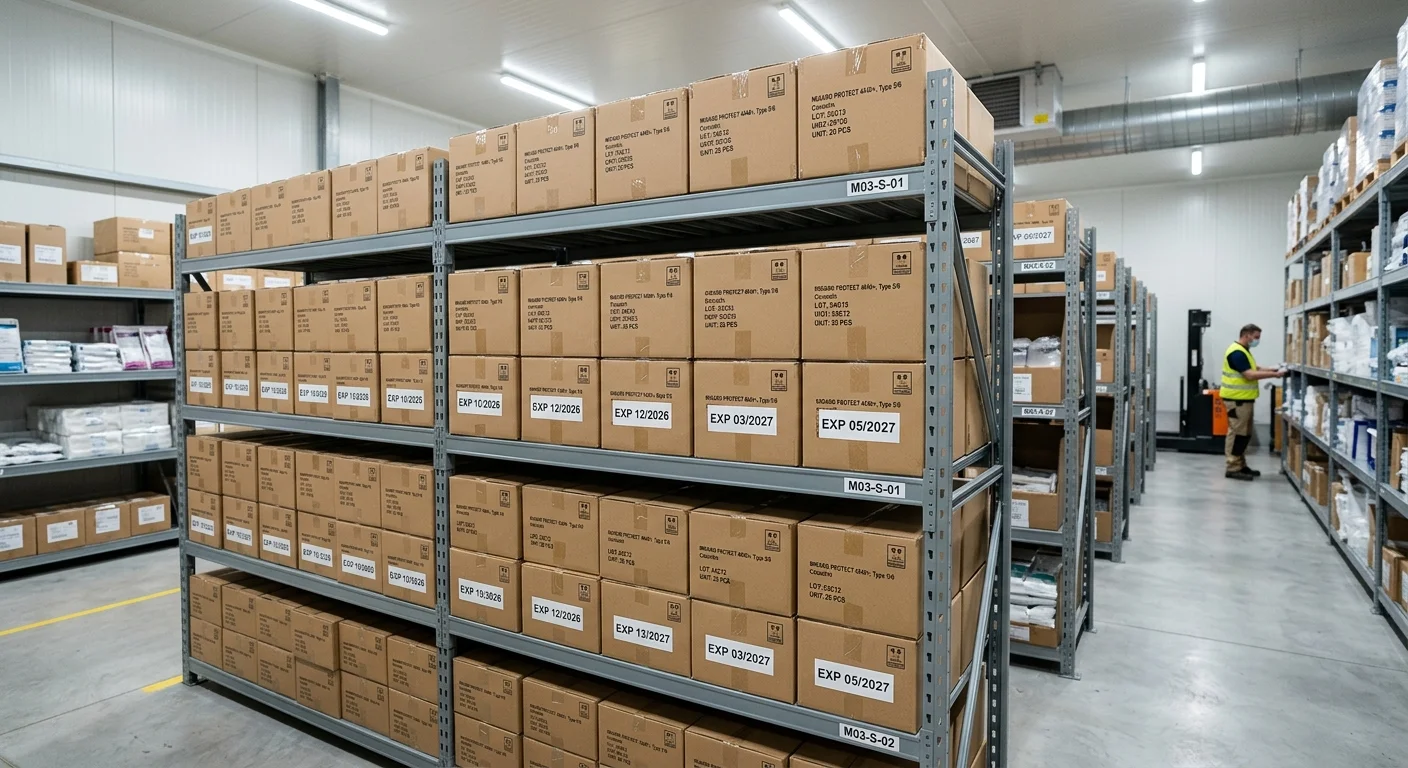
Label every carton with the manufacture date, estimated expiry (DOM + 60 months), and warehouse receipt date. Run FIFO hard — oldest stock ships first, no exceptions. During each quarterly audit, pull lots within 6–12 months of expiry to the front. Route those to near-term, lower-risk tasks before they turn into a disposal problem.
Log temperature and humidity each day. Set alerts at >25 °C or >60% RH. Temperature or humidity spikes happen — inspect the affected lots more closely and cut the internal expiry window short for that batch.
Good protective clothing storage conditions don’t just keep product intact. They keep your options open — so you can make smart use decisions right up to the end.
Conclusion
Expired doesn’t mean unusable — but it does mean think before you reach for it.
Good packaging, controlled storage, and low biological risk? A non-sterile medical coverall that expired not long ago may still get the job done. Step into a clinical environment, handle infectious materials, or face regulatory oversight — there’s no gray area. Use a compliant, in-date product. Full stop.
The real takeaway isn’t about stretching aging PPE to its last day. It’s about building procurement habits that keep expiration dates from becoming a crisis in the first place. Know your stock. Rotate it regularly. Source from manufacturers who are upfront about shelf life, material specs, and storage requirements.
Ready to restock? Disposable protective suits should be built to last and backed by clear, accurate documentation. Morntrip’s medical coverall lineup checks both boxes — worth a look.
Because the best expired PPE decision is the one you never have to make.





