That coffee stain you scrubbed at during your lunch break? Still there. The pen mark from charting patient notes? Setting in deeper with every wash cycle. If you’ve ever pulled your lab coat out of the dryer only to find yesterday’s blood draw or that chemical splash from the lab bench has become a permanent fixture, you’re not alone—and you’re definitely not doing anything wrong. Most white coats aren’t ruined by tough stains. They’re ruined by well-meaning laundry mistakes that set those stains for good.
Washing a white lab coat the right way means getting the timing, temperature, and technique down—especially when you’re trying to remove stains without breaking down the fabric fibers that keep the coat looking crisp. Below, we’ll walk through the exact washing method that works, plus what to do the moment a stain happens, before it’s too late to fix.
How To Wash A White Lab Coat?
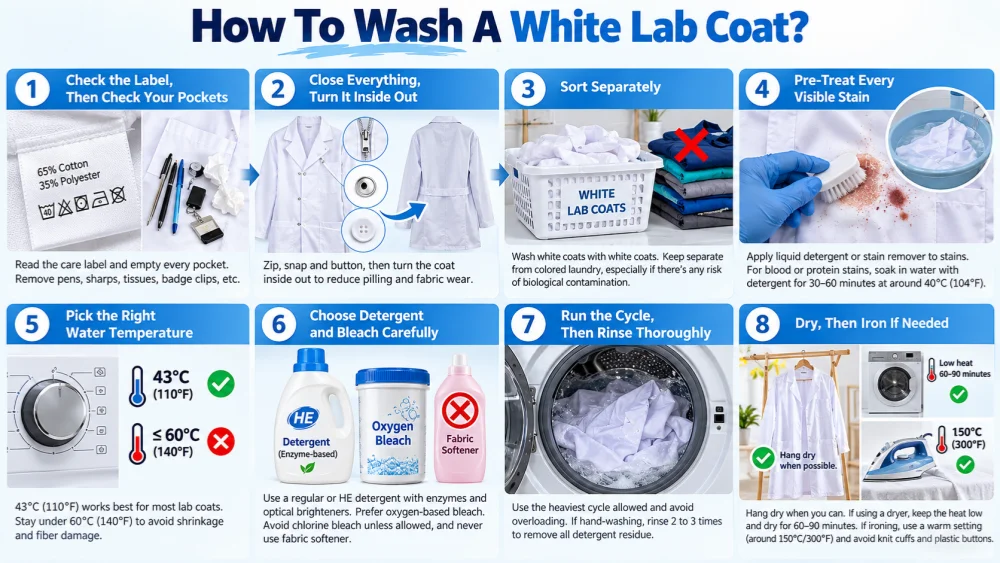
Eight steps stand between a stained lab coat and a clean one. Skip any, and you’re rolling the dice on whether it survives the wash. Follow them in this order.
Step 1: Check the Label, Then Check Your Pockets
Care labels aren’t decorative. Fabric blends vary. Some coats are 100% cotton, others are 65% cotton/35% polyester. Each has a different tolerance for heat and bleach. Read the label before you do anything else.
Then empty every pocket. Pens, sharps, tissues, badge clips. All of it comes out. A pen cap left behind ruins more coats than most stains.
Step 2: Close Everything, Turn It Inside Out
Zip the zipper, snap the snaps, button the buttons. Then flip the coat inside out. That habit cuts down on pilling and fabric wear over time. Small effort, real payoff for lab coat fabric care.
Step 3: Sort Separately
White lab coats go with white lab coats. Don’t toss yours in with dark Scrubs or colored laundry. If there’s any chance of unknown biological contamination, glove up and keep it separate from the regular household load. This isn’t optional if you’re disinfecting a lab coat that’s seen real exposure.
Step 4: Pre-Treat Every Visible Stain
Most of the stain removal happens before the wash cycle. Apply liquid detergent or a stain remover directly onto the mark and rub gently.
For blood or other protein-based stains, soak the coat in water with regular detergent for 30 to 60 minutes at around 40°C (104°F) before it hits the machine. That soak breaks down the proteins.
If the stain might involve lab chemical residue, treat it carefully. Some spot removers react with retained chemicals in unpredictable ways.
Step 5: Pick the Right Water Temperature
43°C (110°F) works best for most lab coats . Some institutional laundering uses hotter water for sanitizing, but check your fabric first. 100% cotton generally prefers cooler water, while cotton-poly blends tolerate more heat.
Stay under 60°C (140°F). Anything hotter risks shrinkage and fiber breakdown you can’t undo.
Step 6: Choose Detergent and Bleach Carefully
Use a regular or HE detergent. Enzyme-based formulas with optical brighteners work best for keeping whites white. Skip the fabric softener. It weakens fiber performance and, in some cases, increases flammability risk.
For bleaching, skip chlorine bleach unless your care label specifically says it’s fine. Oxygen-based bleach is the safer default for most fabric blends.
Step 7: Run the Cycle, Then Rinse Thoroughly
Use the heaviest or longest cycle your fabric allows. It lifts more soil. Don’t overload the machine, because the coat needs room to move for proper rinsing. If you’re hand-washing, rinse 2 to 3 times to make sure no detergent residue remains.
Step 8: Dry, Then Iron If Needed
Hang dry when you can. If using a dryer, keep the heat low. Dry for 60 to 90 minutes depending on load size, then check it’s fully dry before storing. Pull it out promptly to avoid wrinkles and that musty smell.
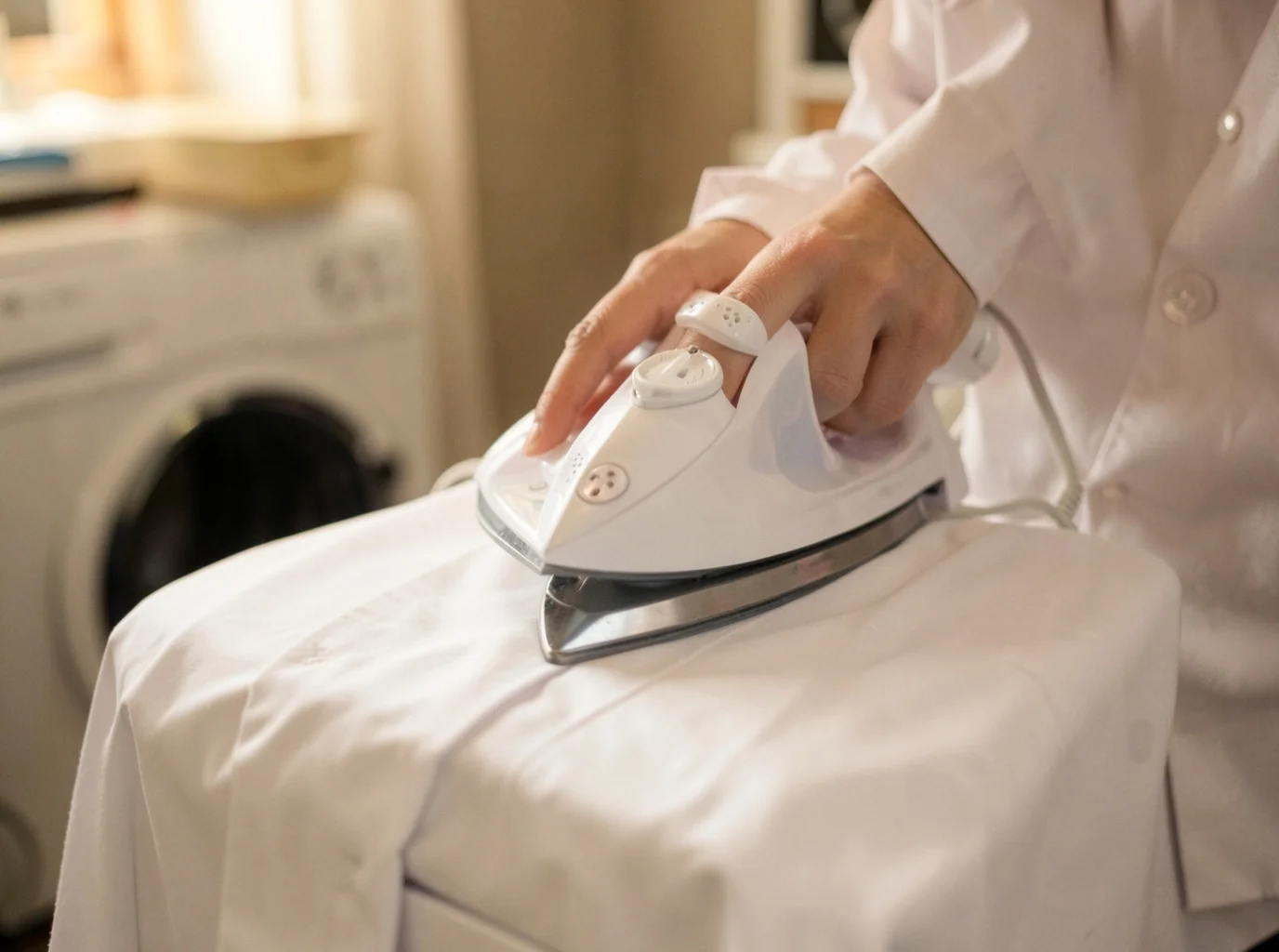
If ironing, use a warm setting, around 150°C (300°F), and avoid knit cuffs and plastic buttons.
How To Dry A White Lab Coat After Washing?
A wet lab coat left in a heap does more damage than the stain you just washed out. Drying matters just as much as washing, and it’s where a lot of people cut corners.
Air drying wins, hands down. Hang the coat on a wide hanger the second it comes out of the machine—wide, not wire, so the shoulders keep their shape. Shake it out first to knock loose wrinkles before they set. If your care label allows a dryer, use a low-heat or cotton cycle and pull the coat out the moment it’s done. Don’t let it sit in a hot drum.
Fabric type changes the rules here. Cotton and cotton-rich coats shrink under heat, so air drying or the lowest possible dryer setting is the safer call. Polyester blends handle low heat better, but high heat still warps printed logos and weakens the fibers over time.
If your facility follows decontamination protocols, the benchmark is different. Some lab safety guidance calls for hot-water laundering at 65°C for 10 minutes or 71°C for 3 minutes, then drying the coat completely before storing it. Skipping that final dry-out step is how mold and mildew get a foothold.
Avoid high heat settings (even on a “quick” cycle), overloading the dryer, and long stretches in direct sunlight since UV exposure fades white fabric fast.
Some workplace policies skip home laundering altogether for contaminated coats and require a specialized cleaning service. Check your facility’s policy before you assume your washer and dryer are cleared for the job.
How Often Should You Wash A White Lab Coat?
Most people wash their lab coat way less often than they should. The data shows it.
One survey found lab coats get laundered on average every 12.4 days. Sounds reasonable until you look closer. 90% of respondents only washed theirs once a month. The most common frequency reported was 13 weeks. The median came in at 23 weeks. The average stretched to 32 weeks. And some coats went as long as two full years between washes. That’s a biohazard risk with sleeves.
Institutions that actually study this recommend a much tighter window. North Carolina State says wash lab coats no less than once a month, with weekly washes for heavy use and biweekly for lighter use. MIT gives nearly identical guidance, recommending weekly for heavy use and biweekly to monthly for everything else. USC runs its lab building laundering programs on a weekly or biweekly cycle, a fixed schedule with no guesswork.
The Rule That Actually Matters
Forget the calendar for a second. If your coat has blood, body fluids, or any visible contamination, wash it after that use. Full stop. Medical-care guidance is consistent: patient-facing or fluid-exposure settings don’t get to wait for wash day.
Here’s a simplified version worth pinning to your locker:
-
Clinical contact or contamination risk: wash after every use
-
Routine, heavy lab work: wash weekly
-
Moderate use: wash every two weeks
-
Light, occasional use: wash monthly at the latest
One more practical note. MIT recommends keeping three lab coats per person, one on your back, one in the wash, one as backup. That rotation makes weekly washing sustainable without leaving you coat-less on a Tuesday.
When Not To Wash A White Lab Coat At Home?
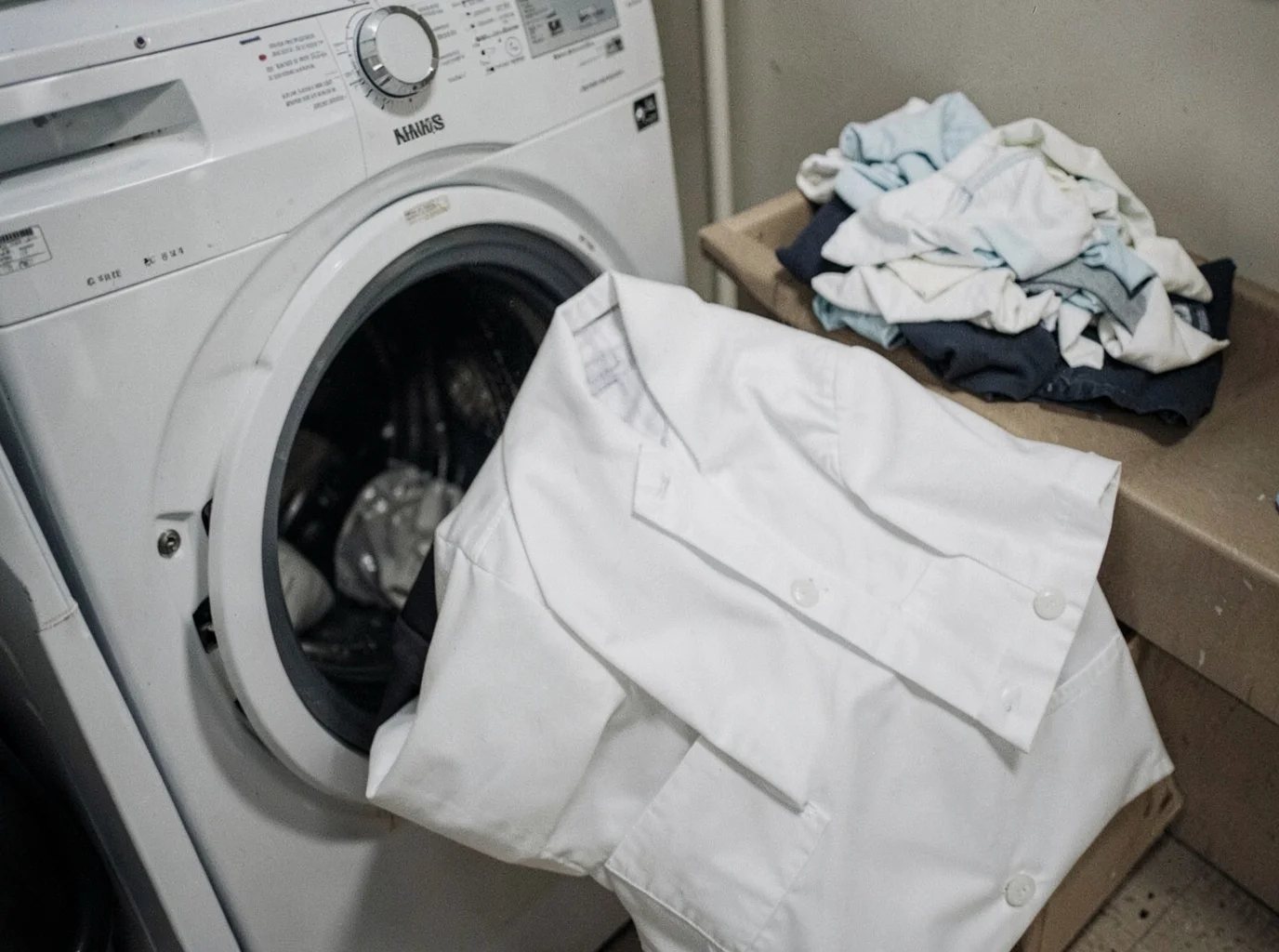
Your washing machine can’t handle everything a white lab coat carries. Some contamination needs a different response, and knowing which protects you, your household, and anyone who touches your laundry after you.
Do not wash a white lab coat at home under these conditions:
-
Hazardous chemical exposure. UCSF says directly that potentially contaminated coats should not be laundered at all. Chemical contamination may require disposal as waste, not a wash cycle.
-
Visible contamination of any kind. UT Austin says coats with obvious contamination need a specialized laundry service or get thrown out.
-
Exposure to human pathogens or radioisotopes. Purdue prohibits taking these items home for cleaning, full stop.
-
Your institution says no. MIT, Rutgers, Emory, and NUS all ban home laundering outright. Coats go through an approved or professional laundry process instead.
-
Heavy contamination. NUS considers heavily contaminated coats as hazardous waste before any laundering happens.
-
PPE cleaning falls on your employer. UTHSC notes that when a lab coat counts as required PPE , the employer must provide a cleaning or decontamination method. That’s not your job to solve at home.
Public laundromats and dry cleaners are also off-limits, unless the facility is approved to handle lab coats. WSU goes further, prohibiting lab coats from mixing with regular household laundry whenever contamination is a possibility.
The exception is ordinary dirt and dust. Purdue and Ohio University both allow home washing when the coat is dirty but chemically clean, with no biological or radiological risk.
FAQ About Washing A White Lab Coat
A lab coat question rarely has one right answer. Different institutions, different fabric blends, different contamination levels—the guidance shifts depending on what you’re dealing with.
What’s the best way to handle blood stain removal on a white lab coat?
Skip hot water for fresh blood. Heat cooks the protein into the fibers, and once that happens, you’re stuck. Rinse the stain under cold water first, as soon as you can. Then mix an enzyme-based detergent with a bit of baking soda and soak the area for at least an hour. That combination breaks down the protein bond without setting it deeper. Only after that soak should the coat go through a full wash cycle.
Can I bleach a lab coat, or does that risk the fabric?
Depends on the label and the protocol you’re following. Some institutional laundering guides call for bleach paired with HE detergent as standard practice. Others say the opposite—no chlorine bleach in the wash cycle, period. Spot-treating with a heavily diluted bleach solution is the safer middle ground when your care label doesn’t explicitly clear chlorine bleach. If you want a default that works across most fabric blends, oxygen bleach is the safer bet.
What about stains that have already set in?
An overnight soak works better than another scrub session. Mix a quarter cup of oxygen-based detergent into cold water, submerge the stained area, and let it sit overnight. That extended soak time does the heavy lifting that a quick pre-treat can’t.
How do I keep my washing machine from becoming its own contamination source?
Some lab coat protocols recommend running a tub-clean cycle before the first load of the day, and disinfecting the washer after any load involving a contaminated coat. It’s an easy step to skip, but skipping it means the next thing you wash sits in that same drum.
Is there a stricter benchmark for institutional laundering?
Yes. One industrial spec used for lab coat laundering runs at 150°F for 10 minutes in a controlled washer-extractor setup. That’s a facility-grade benchmark, showing how seriously some settings treat contamination risk.
Should I check the white lab coat once the wash is done?
Every time. Inspect seams, buttons, and pocket edges after laundering. Damage shows up gradually, and catching it early means a repair instead of a replacement.
Conclusion
Sort your load. Use cold water on protein-based stains before they set. Save bleach for real emergencies—your fabric will last longer. Get these fundamentals right, and you’ll spend less time scrubbing, more time on the work that matters.
Treat stains fast and wash on a regular schedule. Know when a professional cleaner should handle chemical spills instead of your machine. That’s how a lab coat stays sharp for years instead of months.
Bookmark this guide. Stock your stain-removal kit tonight. Check your coat’s fabric care label right now.