If you manage procurement for a laboratory, clinic, university, pharmaceutical plant, or industrial testing facility, the choice between a lab coat manufacturer vs supplier affects more than the unit price. You may be deciding whether to buy ready-stock coats through a retailer, work with a supplier that combines distribution and customization, or purchase directly from a manufacturer for a defined specification. The right model depends on order volume, required fit, fabric composition, logo placement, delivery timing, and how much control your team needs over quality and packaging. Before comparing vendors, review workplace protection expectations through OSHA Personal Protective Equipment.
A retailer can suit smaller or urgent purchases, while a supplier may offer broader product access and options such as logo application, labels, packaging, pockets, and closure methods. A manufacturer becomes more relevant when your organization needs a repeatable design, larger production runs, or direct communication about materials and inspection. Yet each route calls for different checks: fabric weight and composition, strength, size range, closures, supplier qualifications, sample timing, bulk lead time, and packaging quality. International buyers may also need to consider HS codes, import and export rules, and whether an agent or sourcing company is involved. For teams comparing sourcing channels at trade events, this 2024 Canton Fair Guide: Key Ideas and Cozy Canton Fair Hotels may provide useful planning context.

Disposable vs Reusable Lab Coat Requirements
B2B buyers managing laboratories, healthcare facilities, research teams, distribution channels, or branded workwear programs should decide the coat type before comparing a lab coat manufacturer vs supplier. The right model depends on how the coats will be used, replaced, inspected, and delivered.
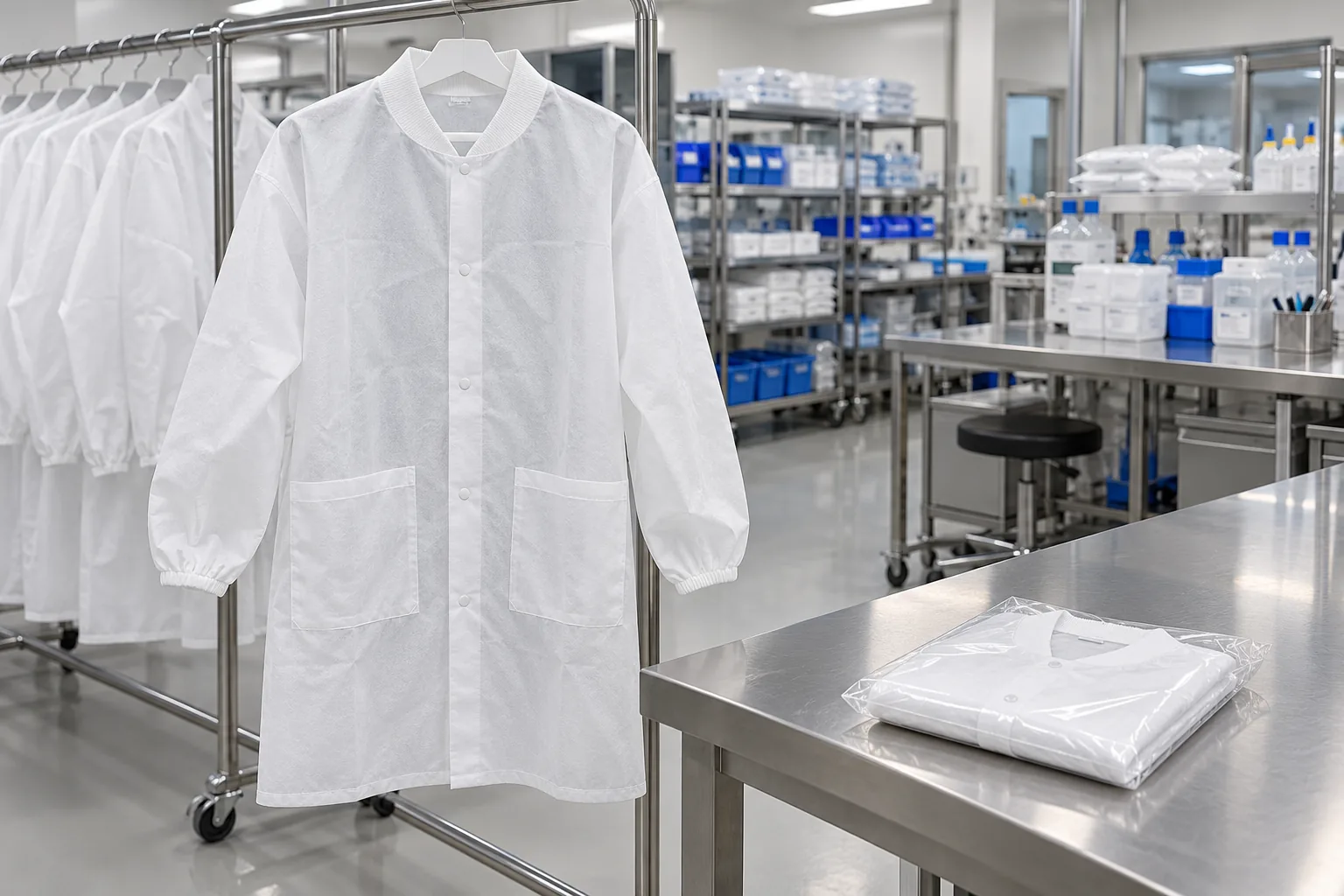
Disposable lab coats suit controlled-use settings where garments are frequently replaced, such as short-term procedures, visitor use, or work areas with strict separation requirements. Review the fabric composition and weight, closure type, cuff design, packaging, and seam quality. Confirm sample and bulk lead times, minimum order requirements, factory verification, and third-party inspection before purchase. A disposable program may reduce laundering needs, but it requires a repeat-purchase plan and dependable stock availability.
Reusable lab coats are more suitable for ongoing use by laboratory or healthcare teams that need consistent sizing, repeatable fit, and a stable garment program. Compare fabric composition, fabric weight, pocket layout, closure methods, size range, and laundering requirements. Ask how the fabric and seams hold up after routine washing, then plan replacement cycles based on wear and operational use.
A practical decision path is simple: frequent replacement and controlled-use conditions may point to disposable coats; ongoing use, consistent sizing, and established laundering may support reusable coats. This product decision should come before choosing among a lab coat manufacturer, lab coat supplier, or lab coat retailers. Once the coat type is clear, align the buying route with volume, customization, inspection, packaging, and delivery needs. Review the purchasing team’s responsibilities through About before setting the specification.
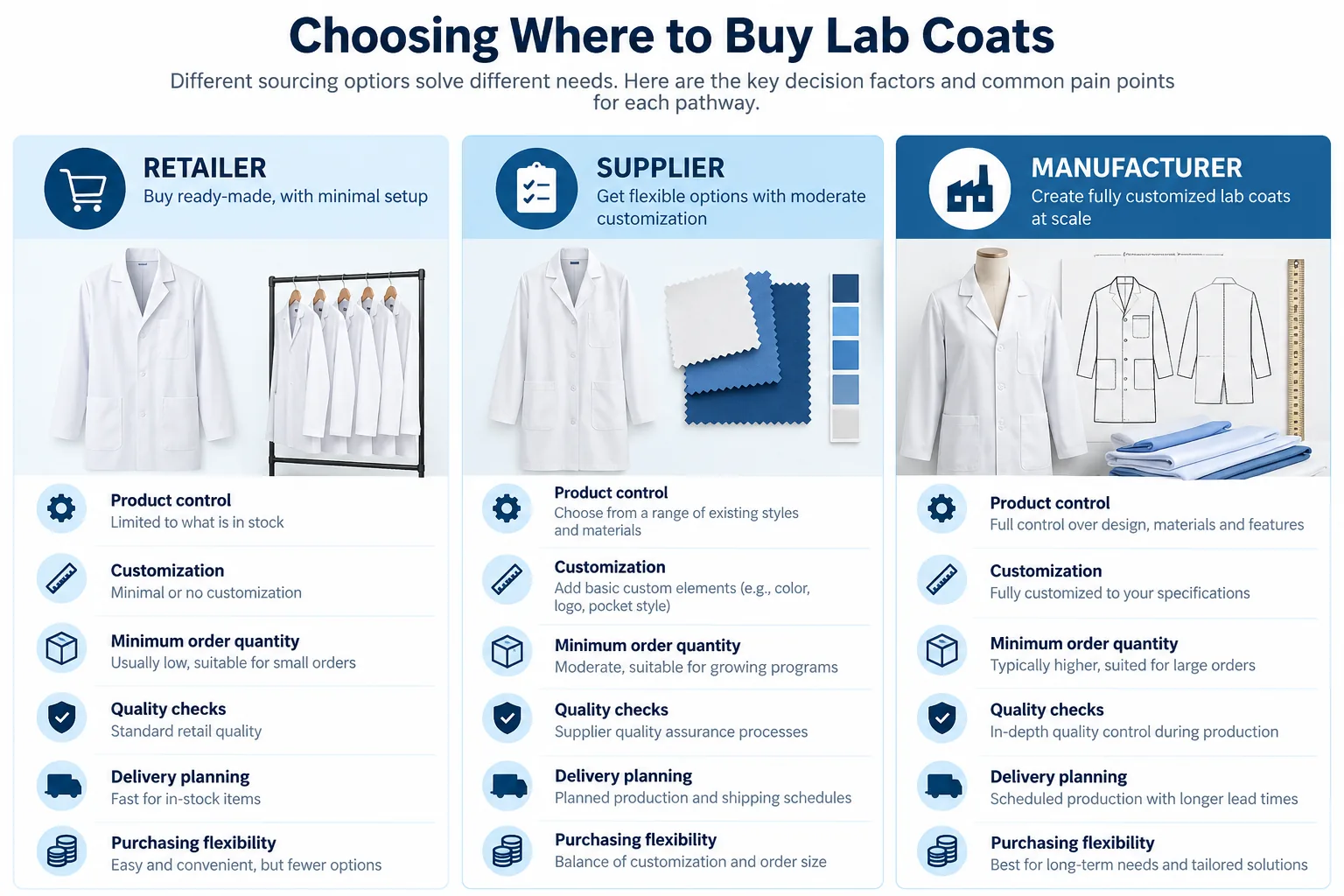
Direct Lab Coat Manufacturer or Wholesale Lab Coat Supplier
A lab coat manufacturer produces garments directly, while a wholesale supplier may distribute ready-stock products, apply logos to existing garments, or arrange fully custom manufacturing through production partners. Define this difference before comparing quotes, since the lowest unit price may not represent the lowest total purchasing cost.
Direct manufacturing often offers stronger control over fabric composition, weight, seams, cuffs, closures, sizing, labels, packaging, and other specifications. It may suit buyers with a clear design, repeat orders, or complex customization. A wholesale supplier can offer a broader product range, ready-stock distribution, simpler purchasing, and access to custom production without requiring the buyer to manage every factory conversation. Communication, quality control, purchasing flexibility, and minimum order terms should be compared alongside price.
Ask both parties for samples, fabric details, size ranges, supplier qualifications, lead times, and inspection or quality-check procedures. For international orders, confirm import and export requirements, the correct HS code, and whether an agent or sourcing company will manage communication, documentation, and shipment coordination. Factory verification and third-party inspection may be useful for bulk orders.
Choose a lab coat manufacturer if product control, direct communication, and customization are priorities. Choose a supplier if you need ready stock, mixed product options, logo application, or a sourcing route that reduces factory-management work.
When Retail Purchasing Makes Sense
Retail purchasing can be the better option when your business needs laboratory coats from ready stock rather than a customized production program. It can suit buyers ordering limited quantities, comparing standard products quickly, or running an initial trial before committing to a larger purchasing model. A retailer may also be practical for urgent replacement garments or one-off department needs.
The trade-off is flexibility versus control. Retail buyers can choose among available products, but they usually have limited influence over fabric, fit, labels, packaging, pocket design, and closure methods. Branding options may be unavailable or restricted to adding a logo to an existing garment. For a first comparison, review product details from sources such as morntrip.com alongside the retailer’s own information.
Before purchasing, confirm whether the displayed item is actually in stock, which sizes are available, and whether the same product can be reordered later. Check return terms, product consistency across sizes or batches, fabric composition and weight, closure type, and the supplier’s quality information. A low-friction first order is less useful if the garment changes or disappears when repeat demand begins.
Retail purchasing is less suitable for private-label programs, recurring bulk orders, or specifications covering fit, color, labels, packaging, pockets, or closures. Those requirements call for more control than a standard retail range normally provides. Once your need moves beyond ready-made selection, compare a wholesale supplier with a direct manufacturer for customization, quality control, communication, and purchasing flexibility.
Compare Total Purchase Cost Beyond Unit Price
A quoted unit price is only one line in the purchase cost. Build a landed-cost checklist covering sampling, logo work, packaging, freight, duties, inspection, rework, inventory holding, and repeat-order terms. This gives procurement teams a clearer basis for comparing a lab coat manufacturer vs supplier, especially for imported orders.
First, confirm what the offer includes. One wholesale model separates ready-stock distribution, logo application to existing garments, and fully custom manufacturing. These should be priced as different scopes, not treated as equal offers. Custom options may include fit, color, labels, packaging, pockets, and closure methods. Review MOQ by color and style as well; one custom supply model sets a minimum of 100 units for each color and style.
Ask how fabric weight, composition, strength, closure type, size range, and supplier qualifications affect the quote. Add sample and bulk lead times, factory verification, third-party inspection, and quality checks for fabric, seams, cuffs, closures, and packaging to the cost review.
Use a landed-cost worksheet and compare manufacturer, supplier, and retailer offers against the same specification. Record the product scope, unit price, MOQ, customization charges, freight, duties, inspection fees, and possible rework. Keep ready-stock and customized pricing in separate sections. Import and export regulations, HS codes, agents, and sourcing companies may also affect the final calculation. For a related China sourcing reference, see 2024 Update: Top 10 Surgical Gown Manufacturers in China Revealed.
Evaluate Samples, Quality, MOQ, and Delivery
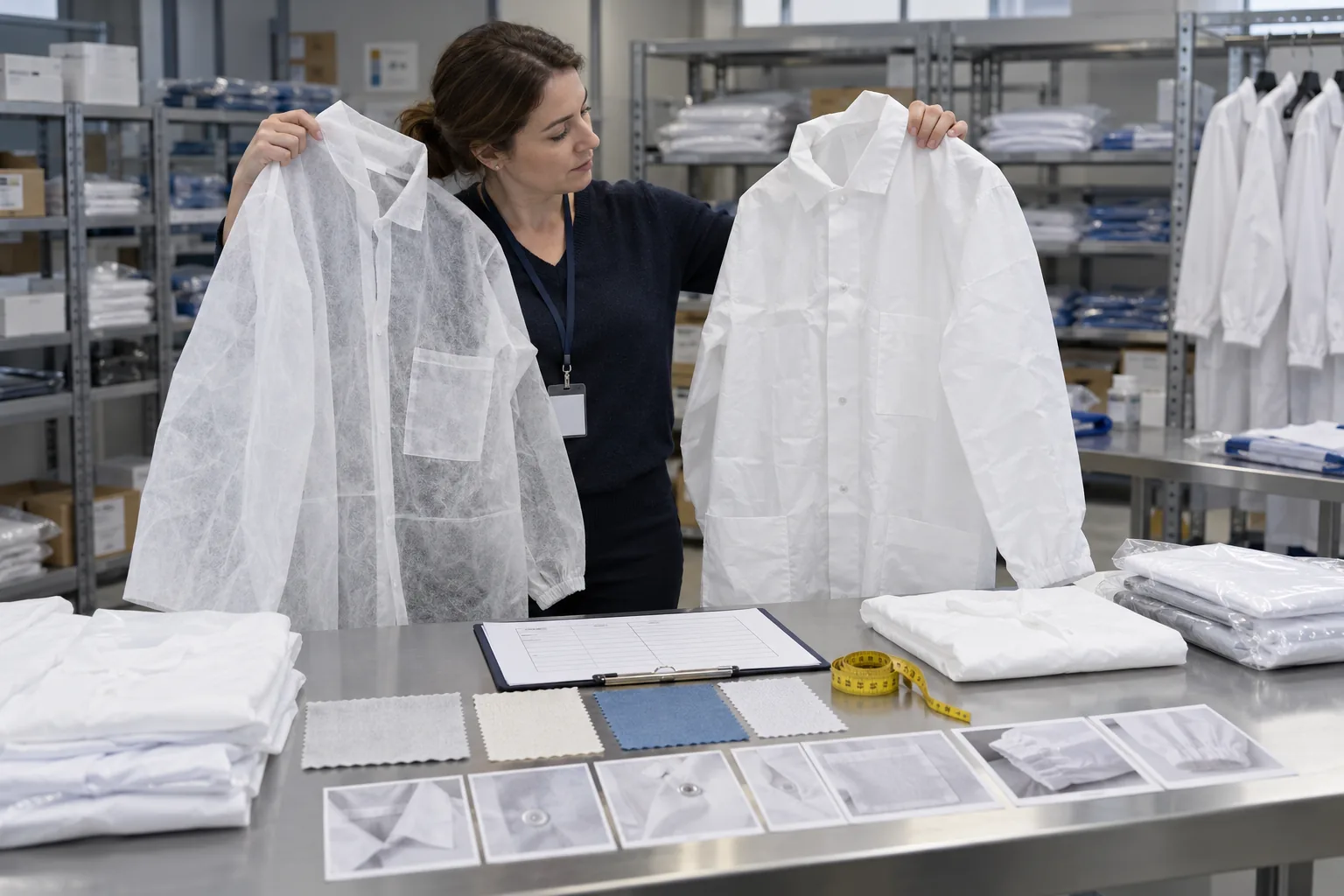
Start with a written sample review process before comparing a lab coat manufacturer vs supplier. Check fabric composition and weight, seam strength, cuffs, closure type, sizing, pockets, packaging, and overall construction. Review fit across the required size range, not only the appearance of one garment. Apply the same discipline to related protective products, such as a 2 Ply Face Mask, if several PPE items will be purchased together.
Before approval, request the sample lead time, bulk production lead time, MOQ, production details, supplier qualifications, and factory verification information. Ask whether the offer covers ready-stock garments, logo application, or fully custom manufacturing, since each model can involve different approval stages and production work. Confirm the MOQ for each color and style where customization applies.
Ask whether third-party inspection is available and define the checks required before bulk shipment. These checks may cover fabric, seams, cuffs, closures, sizing, packaging, and any approved customization. Put the acceptance criteria in writing so the supplier’s quality team and the buyer use the same reference.
Compare the promised delivery date with actual inventory status, sample approval timing, customization work, production lead time, and shipping arrangements. A stated delivery window is not enough if approval or logo work remains open. Record every accepted sample detail in the purchase specification, including materials, measurements, construction, closures, labels, packaging, and permitted tolerances. Use that specification to check bulk goods before shipment and to manage differences between the approved sample and delivered order.
Match the Model to Volume and Customization
The best buying model depends on two factors: order volume and how much control you need over the garment. For low-volume purchases of standard lab coats, a retailer is usually the practical choice. Retailer purchasing suits buyers who need simple, ready-to-buy items and do not place a high priority on product control, repeat customization, or production specifications.
A lab coat supplier fits recurring wholesale orders and buyers who need more flexibility without managing a full custom production program. Suppliers may offer ready-stock distribution, logo application to existing garments, and selected customization. This model can provide broader product access, purchasing flexibility, and support for repeat orders while keeping the buying process less complex than direct factory production. It is a useful middle ground in the lab coat manufacturer vs supplier decision.
A lab coat supplier is better suited to high-volume custom programs. Direct production gives buyers deeper control over fit, color, labels, packaging, pockets, closure methods, materials, and other specifications. This path requires clearer requirements and may involve minimum order conditions for each color and style, so it is most appropriate when customization justifies a larger commitment.
Before choosing, match the model to your purchasing pattern: retailer for low-volume standard coats, supplier for recurring wholesale demand and selected customization, or manufacturer for high-volume programs with detailed specifications.
Submit your required quantity, coat type, specifications, customization scope, sample needs, and target delivery date through the inquiry form. This information will help identify the right purchasing route and move your request toward a practical quotation.
FAQ
What is the main difference between a lab coat manufacturer and a supplier?
A manufacturer focuses on producing the garment to defined specifications. A supplier may offer ready-stock distribution, logo application, wholesale access, or coordination with custom manufacturing.
Should I choose disposable or reusable lab coats for a bulk order?
Compare the use case, fabric composition, fabric weight, closure type, replacement pattern, laundering needs, and total purchase cost before selecting the coat type.
What should I request before approving a lab coat supplier?
Request samples, fabric details, size information, MOQ, sample and bulk lead times, supplier qualifications, factory verification details, and available quality inspection options.
Can a manufacturer support private-label lab coat orders?
A custom manufacturing model may support fit, color, labels, packaging, pockets, closure methods, and logo requirements. Confirm the MOQ and specification scope before approval.