Finding a dependable lab coat manufacturer shouldn’t feel like a part-time job, but for most procurement managers and distributors, that is what it turns into. You’re juggling MOQs, fabric specs, certification requirements, and lead times across a dozen browser tabs and vague quote requests that go nowhere. Whether you’re sourcing for a hospital system, stocking an e-commerce storefront, or launching a private-label uniform brand, the gap between suppliers that exist on paper and those that reliably deliver is wider than most buyers expect.
We did the legwork so you don’t have to. This guide breaks down ten vetted lab coat wholesale suppliers and manufacturers, covering domestic U.S. producers with Berry Amendment compliance as well as cross-border OEM partners built for scale. You will also find the practical factors—fabric quality, customization capability, and turnaround speed—that separate a solid supplier from a sourcing headache.
Spartan Medical: America’s Go-To Lab Coat Manufacturer
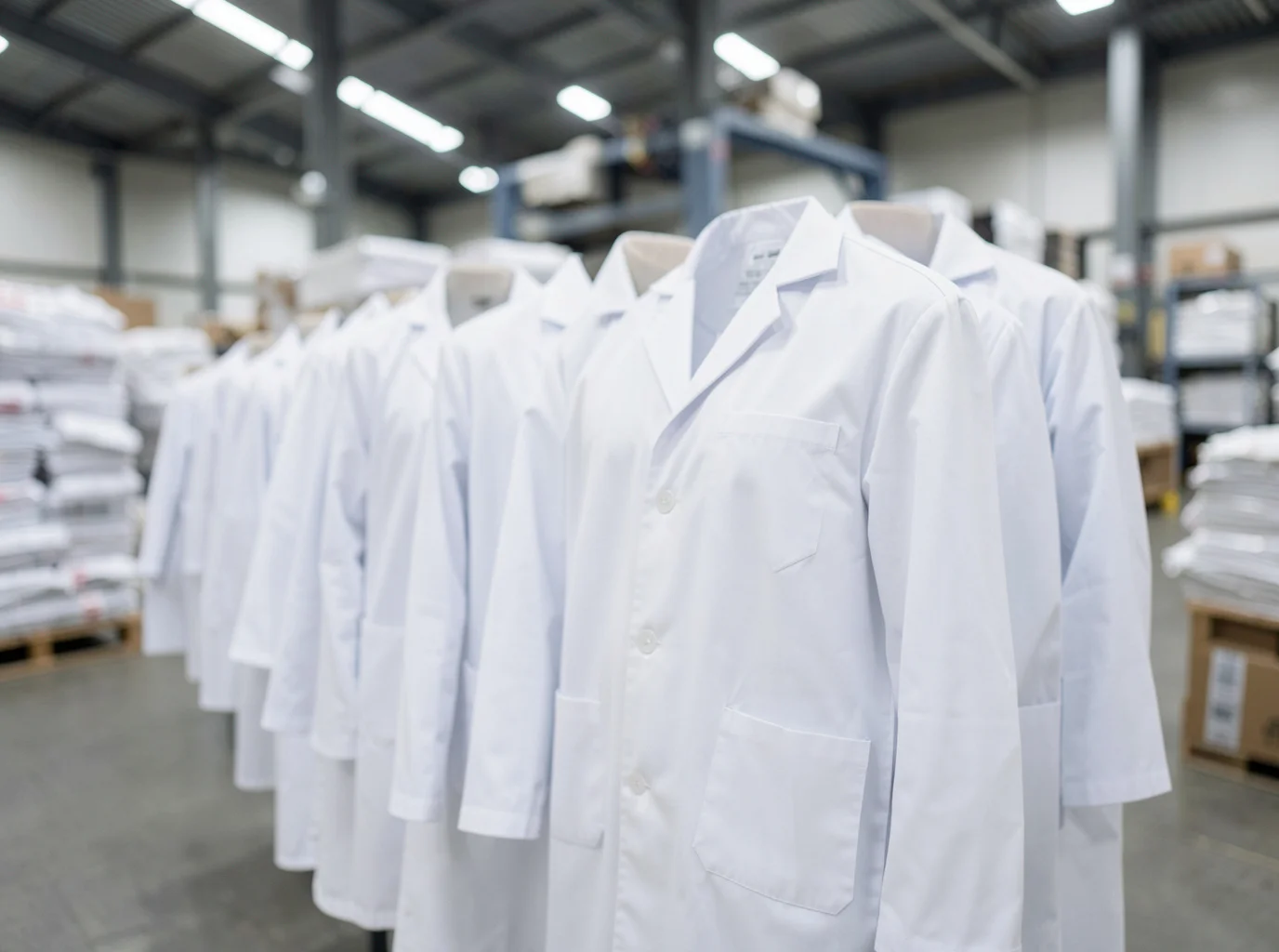
Government contracts tell you a lot about a supplier’s reliability. Spartan Medical holds over 700 federal contracts.
Former Air Force intelligence officer Vince Proffitt founded the Gaithersburg, Maryland company in 2008 as a certified Service-Disabled Veteran-Owned Small Business (SDVOSB). It is one of the few doctor coat manufacturer usa options producing with 100% U.S.-sourced materials out of an ISO 13485-certified and FDA-registered facility at the Brooklyn Army Terminal.
Their disposable, midweight lab coats and lab jackets meet the Berry Amendment, the Buy America Act, and the Make PPE in America Act (IIJA). The coats feature raglan sleeves for easy arm movement, knit cuffs and collars, and front snap closures.
Key procurement credentials:
– VA SING IDIQ: 36C10G23D0066
– DLA DAPA: SP0200-19-H-0051
– CAGE Code: 65VT5
Spartan supplies over 30 military treatment facilities and holds top priority vendor status with the VA. Before ordering, request their Certificate of Conformance, confirm raw-material traceability, and get MOQ, sizing, and lead times in writing, as their public site does not list them.
DenLine Uniforms: A Medical Lab Coat Manufacturer Focused on Liquid Penetration Resistance and Barrier Protection
DenLine builds its business around protection against blood and body fluid splashes. Based in Quincy, Illinois, the laboratory apparel manufacturer focuses specifically on barrier performance.
Testing confirms those protection levels: – AATCC 127 hydrostatic pressure testing: >27.5 cm – AATCC 42 impact penetration: <1.0 g – Performance holds after 225 hot-water commercial wash cycles
That durability data matters when you outfit staff who wash their coats weekly instead of once a month.
Their reusable Protection Plus and UltraLite lines (DL360/DL361) use a 99% polyester and 1% carbon blend with no cotton. DenLine avoids cotton blends because wet fabric causes strike-through, letting fluids seep onto skin or clothing underneath. Disposable options cover AAMI PB70 Level 2 and Level 3, including impervious styles.
Sizing runs XS–3XL across 31.5-inch and 41-inch lengths, with glove -covering cuffs and raglan sleeves built for BSL-1/BSL-2 labs, dental offices, and quasi-cleanroom settings. Reach their team Monday through Friday, 8am–5pm CST, at 800-336-5463.
Liberty Industries: A Custom Lab Coat Manufacturer for Flexible Low- to High-Volume Production
Seventy years in business brings solid credibility. Liberty Industries has operated out of East Berlin, Connecticut since 1953. Today, they produce cleanroom and contamination-control apparel in the United States, including laboratory coats, frocks, coveralls , shoe covers, and disposable garments.
Standard lab coats come in Tyvek ®, sized XS–2XL, with bound seams, elastic cuffs, bottom binding, and snap-front closures. Thomasnet lists Liberty as a Manufacturer, Custom Manufacturer, and Distributor, confirming genuine in-house production.
What you can customize: – Fabric type and weight – Color and size range – Cuff style, pockets, closures – Packaging and private label branding
Rough MOQ benchmarks (unconfirmed by Liberty): 50–200 units for standard styles with custom logos or packaging, and 300–500 units for new patterns or specialty fabrics. Sample orders cover 1–3 pieces and take 1–3 weeks. Full custom production takes 4–8 weeks, running longer for complex barrier-tested fabrics.
This manufacturer serves pharma, biotech, university labs, and hospital research departments requiring traceable U.S. supply chains. Before requesting a quote, check their MOQ, sample fees, logo process, cleanroom grade, and reorder pricing. Reach them at 1-800-828-5656 or [email protected].
Labwear.com: A Premium, Comfort-Focused Lab Coat Supplier
Price alone won’t tell you whether a coat survives a 10-hour shift. Headquartered at 158 Kenwood Ave in Fairfield, Connecticut, Labwear.com built its reputation around comfort and tailoring rather than barrier certifications. As a laboratory apparel manufacturer, the company supplies Meta Labwear, Dickies, and Cherokee styles under the promise of “small-company service, big-company pricing.”
Most coats use a 65% polyester/35% cotton blend in either Durable Poplin or Built-in Stretch Twill. Cherokee men’s styles include a back yoke, center seam, and kick pleat to allow easier bending and reaching. Lengths span 29″, 38″, 40″, and 44″, with sizing running up to 3X.
Pricing tiers:
– Entry 38″ coats start at $27.99
– Meta 38″ styles with iPad pockets start at $41.50
– Meta 44″ cotton button styles start at $55.99
Bulk orders of custom lab coats include free embroidery placement, putting names on the left chest and logos on the right. Customers pay a one-time digitizing fee, and Labwear.com quotes per-garment embroidery costs after you email design files to [email protected]. This setup offers a dependable private label lab coat option for hospitals, universities, and pharmacy teams placing repeat orders with consistent branding.
Lazzar USA: A Lab Coat Wholesale Supplier for Bulk Orders
Having half a million units in stock changes the sourcing conversation. Lazzar USA carries over 500,000 pieces across 300+ workwear and uniform styles, and in-stock lab coats ship with zero MOQ, meaning you can order anywhere from 1 to 500+ units.
Volume pricing for embroidered lab coats:
|
Quantity |
Price/Unit |
|---|---|
|
1–14 |
$57.99 |
|
15–49 |
$53.99 |
|
50–99 |
$49.99 |
|
100–499 |
$44.99 |
|
500+ |
$42.99 |
Buy 500 instead of 1, and you save $15.00 per coat, a 25.9% drop. Orders over 50 units ship free within the U.S.; smaller orders pay a flat $29.
Turnaround takes 2–7 business days without embroidery, and 2–3 weeks after logo approval.
Custom colors outside the catalog require a minimum of 100–200 units depending on the style, so confirm thresholds with sales before committing to a custom bulk order. The company also supplies scrub tops, surgical pants, and nursing scrubs for departments outfitting beyond lab coats.
Jest: A Full-Line Medical PPE Supplier From Surgical Gowns to Lab Coats
Buying your entire PPE order from one vendor sounds convenient until you check which items are certified. Based in Mahwah, New Jersey, Jest Textiles supplies a full line of medical apparel. Their catalog includes surgical gowns, isolation gowns , scrubs, doctor coats, lab coats, N95 masks, surgical caps , shoe covers, and bed linens.
That range covers body, respiratory, and hand protection, but key product details are missing. Jest does not publish glove materials, sizing, or ASTM D6319 compliance anywhere on its site. Before using Jest as your hospital uniform supplier in the USA, request:
-
Surgical gown PB70 level (1–4) and fabric weight
-
N95 NIOSH approval numbers
-
Glove material, thickness, and MOQ
-
Logo customization pricing and sample lead times
Jest provides custom fabrics, patterns, and branding for clinics and labs. Because minimum order quantities and delivery schedules are not listed online, call 1-800-778-7918 for a quote.
Spectrum Uniforms: A Longtime Texas Wholesaler with 30+ Years of Experience as a healthcare apparel manufacturer
Three decades in the uniform business leaves a paper trail. Spectrum Uniforms has operated since 1989, spending about 25 of those years focused on wholesale scrubs and medical apparel. The Houston, Texas headquarters runs lean, with a team of 11–50 employees supplying uniform shops, distributors, and healthcare organizations.
The company operates as both manufacturer and wholesale supplier, managing production in-house. That covers custom-dyed fabric, proprietary style development, and finished-goods delivery without farming the work out to a third party.
Branding options span five methods:
– Embroidery
– Heat transfer
– Pad printing
– UV printing
– Laser engraving
Standard turnaround times:
– In-stock blanks: 1–2 business days
– Embroidery, sewing, UV printing: 7–10 business days
– Heat transfer: 10–12 business days
Turnaround times start once artwork is approved. Spectrum earned Solutions for Business’s Rising Star Award in 2021, showing it has cleared vetting for larger distribution networks.
Shipping is FOB Houston via FedEx Ground by default. Before placing an order, get the MOQ, tiered pricing, sample costs, and decoration setup fees in writing from [email protected]. Office hours are Monday–Friday, 8:30am–5pm CST.
UniFirst: A Full-Chain Uniform Supplier USA Covering Rental, Laundering, and Management Services
Some facilities don’t want to own their lab coats at all. They want clean garments arriving on schedule. UniFirst fills that need, operating as a managed uniform service.
UniFirst handles staff sizing, name and logo personalization, weekly pickups of soiled garments, TRSA-certified industrial laundering, and repairs or replacements. Each piece is scanned at pickup and delivery to prevent mix-ups and shortages. UniFirst manages the entire inventory and runs the laundry schedules.
What’s covered:
– Scrub tops and pants for nurses and surgical staff
– Doctor lab coats, lab jackets, and short-style frocks
– Isolation gowns and additional PPE
– Facility items like mats, mops, and wiping towels
This setup fits hospital systems and multi-location clinics with large staffs and strict sanitation schedules. UniFirst does not publish pricing online. Call sales at 800-455-7654 with your staff headcount, garment counts per role, and pickup frequency ready before asking for a quote.
Wear Mart: A Private Label Lab Coat Supplier Supporting Brand Customization for Businesses of All Sizes
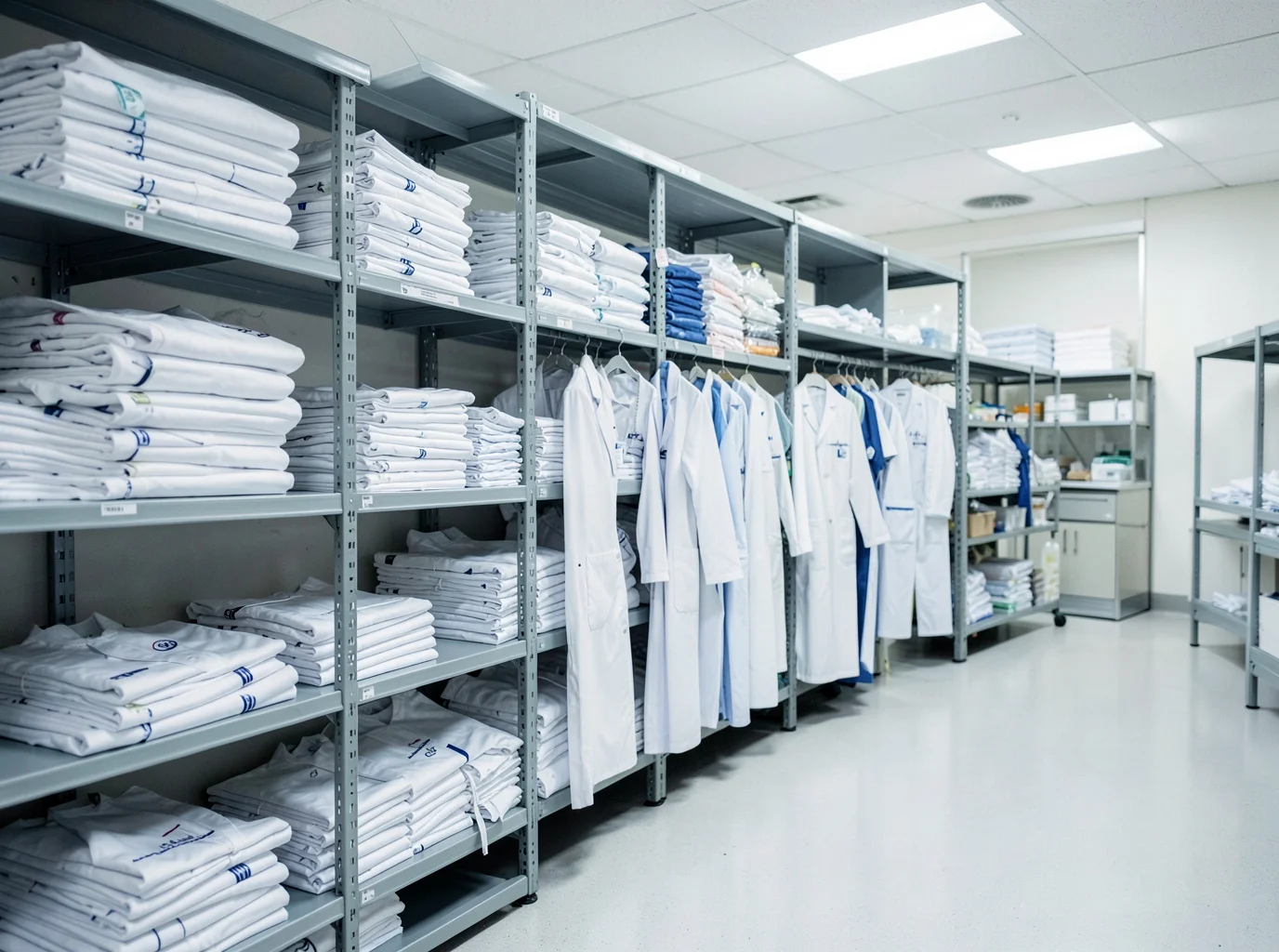
Ten units get you in the door here. Based at 123 Elm Street in Monroe, NY, Wear Mart operates as a private label lab coat supplier for orders of any size, from a single clinic testing a logo to hospital systems placing standing orders.
Customization covers:
– Embroidered logos, names, tags, fonts, and thread colors
– Fabrics: cotton, polyester, spandex blends (95/5 or 90/10 polyester-spandex), rayon, and linen
– Sizing from XXS–5XL depending on the style
– Scrub tops, pants, hats, sets, and hospital uniforms alongside lab coats
Wear Mart claims it has outfitted over 10,000 medical facilities, 2,000+ healthcare clients, and 1,000+ customers worldwide, though those numbers are self-reported. They ship to the U.S., U.K., and Europe.
Before you order, ask for their sample confirmation process, pattern fees, tiered MOQ pricing, wash durability test results, and verified U.S. client references.
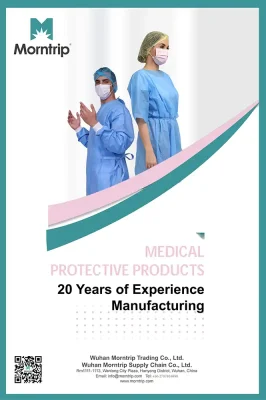
Morntrip: A 20+ Year Veteran Cross-Border OEM/ODM Supplier of Disposable Protective Gear
Twenty years in disposable PPE production puts Morntrip in a different category from most U.S.-based suppliers on this list. Based in China, this laboratory apparel manufacturer runs its own factories instead of outsourcing, supplying PPE distributors, wholesalers, and e-commerce sellers across more than 60 countries (some company pages cite over 120), including the U.S., Canada, the U.K., and Australia.
Production capacity:
– 60+ skilled workers on protective garment lines
– Daily output: 10,000–30,000 pieces
– Monthly capacity around 300,000 units
Their catalog includes disposable coveralls, isolation gowns, surgical gowns, lab coats, masks , shoe covers , and nonwoven PPE. Certifications cover ISO 13485, ISO 9001, CE, and FDA-related registrations, with garments tested against EN 14126, EN 1149, ASTM F2100, and Type 3/4/5/6 standards. Check the current certificate numbers and FDA 510(k) documentation before ordering. Do not assume a facility certification applies across every SKU.
Why buyers consider it: FOB pricing on custom Type 5/6 coveralls runs about $0.80–$1.50 per unit, which is 40–65% below European brands. MOQs start around 1,000–5,000 units depending on specs, and free samples are available on request. For bulk orders and private label lab coats at volume, that pricing gap changes the sourcing math—provided you lock down shipping terms, lead times, and quality-control checkpoints in writing first.
U.S. Domestic Sourcing vs Cross-Border Sourcing (Chinese Suppliers): How to Weigh Your Options
Neither sourcing model wins outright. The right split depends on how urgent, how large, and how customized your order is.
When domestic sourcing wins: Emergency restocks and short lead times. Skipping ocean freight and customs clearance matters when a hospital, lab, or government contract cannot tolerate a stockout. Treat U.S. suppliers as your safety-stock and rush-order channel. – Institutional compliance. U.S. buyers often require FDA 510(k), NIOSH, ISO 13485 , a domestic legal entity, batch traceability, and local after-sales support. Contracts, invoicing, insurance, and recall handling are much simpler when the manufacturer operates under your legal jurisdiction. – Small, frequent orders. Test launches, pilot programs, and multi-SKU buys fit domestic suppliers better. Chinese factories typically set custom MOQs around 500–1,000 units per textile style, or 1,000–3,000 for technical garments, which is too high for a trial run. – Paperwork fit. Domestic vendors handle W-9s, Net-30 terms, domestic warehouse shipping, state tax, and institutional vendor registrations with less friction. That lowers administrative overhead on bid-based procurement.
When cross-border sourcing wins: Scale changes the math. Morntrip, for example, produces close to 5 million surgical masks, 300,000 respirators , and 30,000 protective garments daily, supported by over 7,000 tons of annual nonwoven material capacity. Chinese OEM apparel manufacturers usually run 30%–50% below domestic production costs, though that gap narrows once you factor in ocean freight, tariffs, third-party inspections, warehousing, and financing costs.
|
Factor |
U.S. Domestic |
China Cross-Border |
|---|---|---|
|
Restock speed |
Fast, suits small/urgent orders |
Better for planned bulk orders |
|
Compliance |
Easier contracts, support, accountability |
Verify FDA/NIOSH/ISO/CE + import docs |
|
Unit cost |
Higher |
30%–50% lower at scale |
|
Customization |
Flexible at small volume, pricier per unit |
Logo/packaging/fabric flexible |
|
MOQ |
Can go as low as case lots |
Hundreds to thousands; some SKUs 10,000+ |
|
Capacity |
Fits mid-volume, fast turnaround |
Fits hundreds of thousands to millions of units |
|
Main risk |
High price, limited volume discount |
Shipping, customs, QC, FX, delays |
A practical blend
Keep a 2–4 week safety stock with a U.S. supplier for emergencies, and route planned bulk orders through a vetted Chinese OEM with staged delivery and pre-shipment inspections. A common split is roughly 20–30% domestic to 70–80% cross-border, depending on shelf life and how critical the supply line is. For annual volumes in the tens or hundreds of thousands with stable specifications, look at Chinese manufacturers like Morntrip that run automated lines and produce their own raw materials.
Conclusion
Choose a lab coat manufacturer by matching your specific needs (MOQ, fabric performance, certifications, turnaround time) to a supplier who can deliver at scale. Domestic manufacturers like Spartan Medical win on compliance and speed, while cross-border partners like Morntrip bring two decades of OEM/ODM experience and pricing flexibility that is hard to beat for bulk orders.
The right wholesale supplier is the one that fits your budget, timeline, and brand goals. Use the comparison table above as your starting filter, then request samples and quotes from your top three picks before committing.
Don’t let indecision stall your supply chain. Reach out to a couple of these vendors this week, ask the hard questions about lead times and private labeling, and get your sourcing pipeline moving.