Pick the wrong coverall on a hazmat job, and you’ll feel it within the first two hours. Not because someone warns you. Because your body tells you first.
The seams start pulling. The material bunches up. You find yourself staring at a suspicious tear near your wrist, wondering if it’s a real problem.
That gut-check moment is what this 3M coveralls vs Tyvek comparison is built around. No spec sheets. No marketing copy. Just real wear patterns, real failure points, and real decisions that safety managers and workers face every single day.
There’s a durability gap between these two products. Most buyers don’t see it until it’s too late — whether they’re placing a bulk order or just picking up a single suit.
What Does “Last Longer” Mean on the Job?
“Longer” carries a lot of weight in that question — and it means something different based on what you’re doing.
A painter on a single-day spray job needs a suit to survive eight hours without a tear at the knee. An asbestos remediation crew on a two-week demolition site needs steady barrier protection across multiple shifts, constant movement, and heavy sweating. Those are two very different demands.
Durability isn’t one number. It’s a combination of three things:
Physical endurance — Does the material resist tearing under repetitive motion?
Chemical hold time — How long before the barrier breaks down under specific exposure conditions?
Wearability — Does the suit stay functional in hot, crowded, uncomfortable conditions?
A protective suit that fails on any one of these isn’t lasting long enough. It’s just lasting until the next problem shows up.
That’s the real benchmark. Not hours on a tag — hours under real job conditions.
My First Day Wearing 3M Coveralls: Where It Starts to Fail
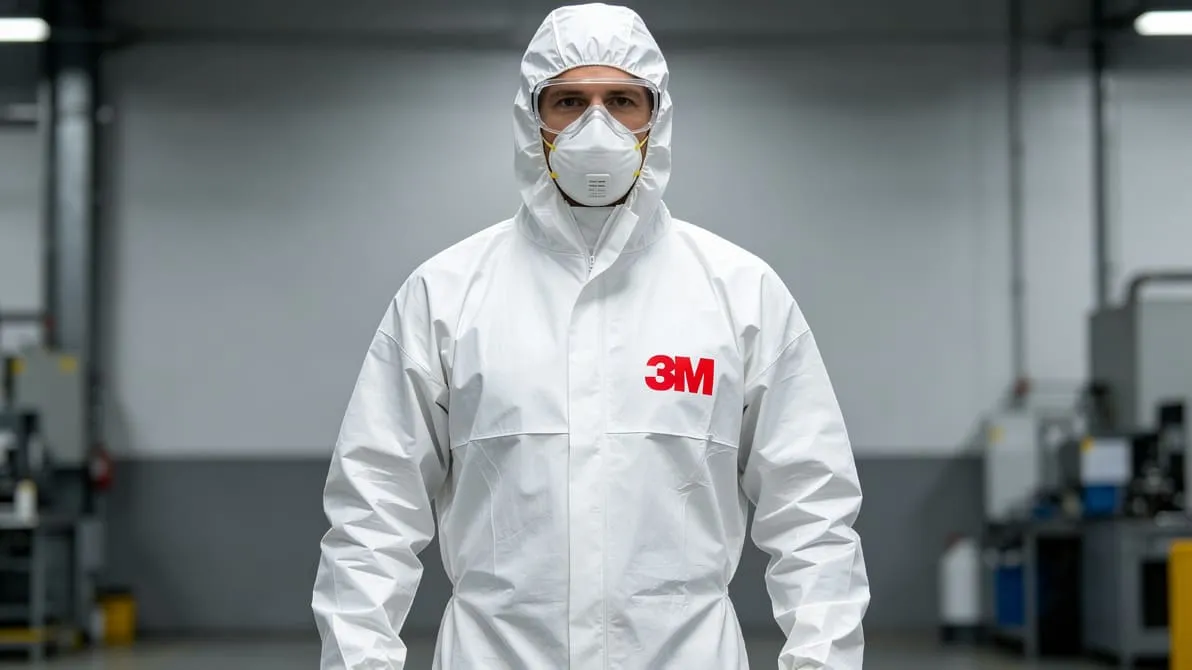
here’s something the product page won’t tell you: 3M coveralls start showing stress before lunchtime.
The most common option workers grab is the Type 6 3M coverall — rated for light mists and small splashes. It covers most industrial scenarios. On paper, that sounds fine. On an actual shift, it’s a different story.
Failure starts at friction points. Knees hit concrete. Elbows drag across surfaces. Shoulders brush equipment. That repeated contact puts the microporous coverall material under the most stress — and it often gives out there first.
The abrasion standard tells the whole story:
Fabric must handle 10+ rubs without forming a hole smaller than 0.5 mm
That’s the Class 1 minimum to pass
In real conditions — crawling, crouching, constant movement — many workers hit that limit on the first extended use
Once the fabric cracks or splits, the barrier is gone. A Type 6 protective suit built for splash resistance turns into nothing more than a thin layer of broken material.
There’s also a removal problem most buyers miss. 3M’s own doffing guidelines lay out a strict sequence: peel from the shoulders, roll inward, and keep the exterior away from your skin. Skip one step while tired — and you get contamination during removal, not during the actual job.
The bottom line on 3M 4510 coveralls and similar disposable gear: the material works fine for light tasks. But physical durability under sustained movement is its clear weak point.
My First Day Wearing Tyvek: What Feels Different
Tyvek doesn’t feel like protection. It feels like paper.
That’s the first thing you notice pulling on a DuPont Tyvek suit. It’s stiff. It rustles as you move. Every step sounds like someone crumpling a grocery bag. For workers used to softer disposable protective clothing , that first sensation catches you off guard.
But here’s what changes everything: Tyvek is not paper. It just acts like it on day one.
A full suit weighs around 225g — about 8 ounces. It’s light, structured, and doesn’t cling to your body. Thinner plastic-film alternatives don’t breathe at all. Tyvek does. Not like a textile, but far better than a sealed chemical-resistant coverall that traps heat from the first hour.
There’s also a fix most buyers never hear about. Run the suit through a machine wash and tumble dry it with a pair of tennis shoes before your first shift. The difference is dramatic. That stiff, noisy material softens into something that moves with you — close to cotton in feel. The crinkling fades. The stiffness eases up.
Skip that prep step, and the DuPont Tyvek suit feels like a burden. Do it, and it turns into one of the most comfortable options in the disposable protective clothing category. You can wear it through a full shift without the constant distraction of a stiff, awkward fit.
Where They Actually Break: Side-by-Side Wear Test
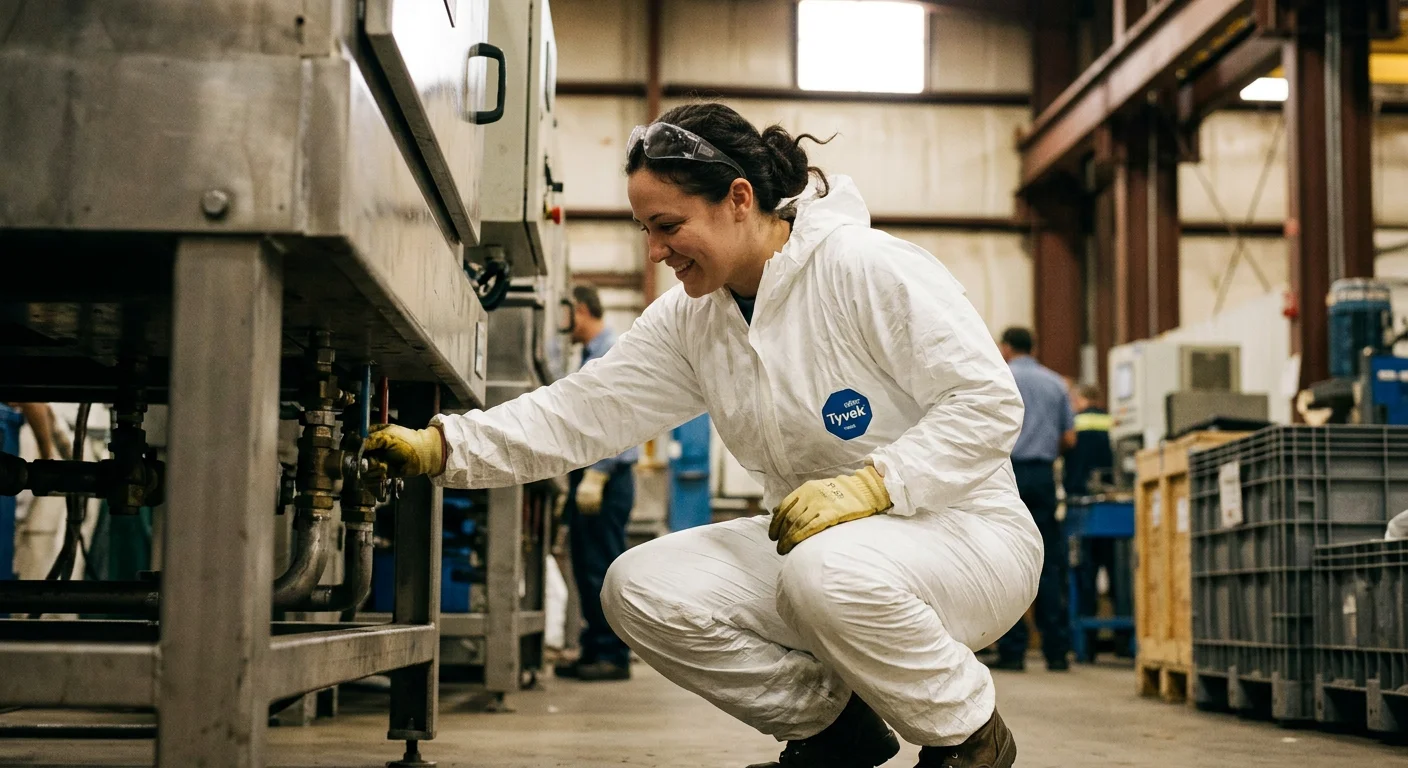
Six hours into a shift, both suits start telling the truth.
Not the truth from the product listing. The truth from your knees, your elbows, and whatever surface you’ve been crawling across all morning.
Here’s what that truth looks like — broken down by failure point, not by brand loyalty.
3M Coveralls: The Friction Problem
3M coveralls fail from the outside in. Abrasion is the killer.
The Microporous film gives these suits their chemical resistance. That same film is what makes them weak against physical stress. Every time you kneel, crouch, or drag your arm across a surface, you burn through that film layer. The protection doesn’t fade out slowly — it breaks down at the contact points first.
The pattern is almost always the same:
Knees go first — concrete contact, repeated flexion, material splits
Elbows follow — equipment contact, lateral scraping
Wrist cuffs weaken — common on workers who adjust their gloves often
A microporous coverall with a surface crack loses its chemical barrier at that spot. The rest of the suit may look fine. That one point is no longer protected.
DuPont Tyvek: Where It Gives Out
Tyvek holds up longer under abrasion. That’s not opinion — asbestos remediation crews pick it over standard SMS coveralls for multi-day work. The reason is simple: it survives rougher surfaces for longer.
But Tyvek has its own breaking point: seam stress under sustained full-body movement.
Long shifts with repetitive bending put real strain on the suit. Think crawling through crawl spaces or repeated overhead work. That stress goes straight to the stitched seam lines. Those seams are where DuPont Tyvek suits show visible separation first.
The honest comparison:
Failure Point | 3M Coveralls | DuPont Tyvek |
|---|---|---|
Abrasion resistance | Weaker | Stronger |
Seam durability | Moderate | Vulnerable under sustained flex |
Chemical barrier lifespan | Shorter at wear points | More consistent across full suit |
Realistic single-shift rating | Light-duty tasks | Moderate-to-heavy tasks |
The bottom line: 3M coveralls break on the surface. Tyvek breaks at the structure. Figure out which failure mode matters more in your job environment. That’s what should drive your buying decision — not the brand name on the packaging.
After 4–8 Hours: Which One Still Feels Safe to Wear?
Four hours in, the suit stops being equipment. It becomes part of the job — and that’s the moment you find out whether it was the right call.
Fatigue sets in. Movement gets sloppy. Workers stop thinking about the suit and focus on finishing the shift. That’s the mental shift where protective clothing either earns its keep or fails you without warning.
Here’s what the data shows at the four-hour mark:
3M coveralls take the worst of the physical abuse early. Every abrasion point — knees, elbows, wrist cuffs — gets stressed hard and often. The microporous film at those contact zones doesn’t just weaken. It breaks down. The suit may look fine from a distance. Up close, the barrier at your highest-risk points is already gone.
DuPont Tyvek suits
hold up differently at hour four. The fabric handles sustained friction better — that’s its structural strength. By hour six or seven, though, seam stress from full-body movement starts to show. Crawling, bending, reaching overhead — each repetition adds a little more load to the stitched seam lines.
The honest breakdown at the eight-hour mark:
Condition | 3M Coveralls | DuPont Tyvek |
|---|---|---|
Surface abrasion zones | Often compromised | Largely intact |
Seam integrity | Moderate | Stress visible on long shifts |
Overall barrier confidence | Reduced for heavy tasks | Still reliable for moderate exposure |
Recommended continued use | Light-duty only | Moderate-duty with inspection |
The practical rule is simple: inspect at four hours, decide at six.
Your chemical-resistant coverall shows surface cracking or seam separation? Swap it out. No shift justifies a compromised barrier in the second half of your day.
Tyvek pulls ahead for longer industrial shifts. For tasks that wrap up well within six hours, 3M 4510 coveralls stay a solid, cost-effective pick — as long as the work stays light.
Real Jobs, Real Results: Which One Lasts Longer?
Here’s what most comparison articles skip: it depends on what your hands are doing for eight hours straight.
That’s not a dodge. It’s the most important factor in the 3M coveralls vs Tyvek debate. Buyers scanning product specs miss this point all the time.
Look at real field data and a clear pattern shows up across two job types.
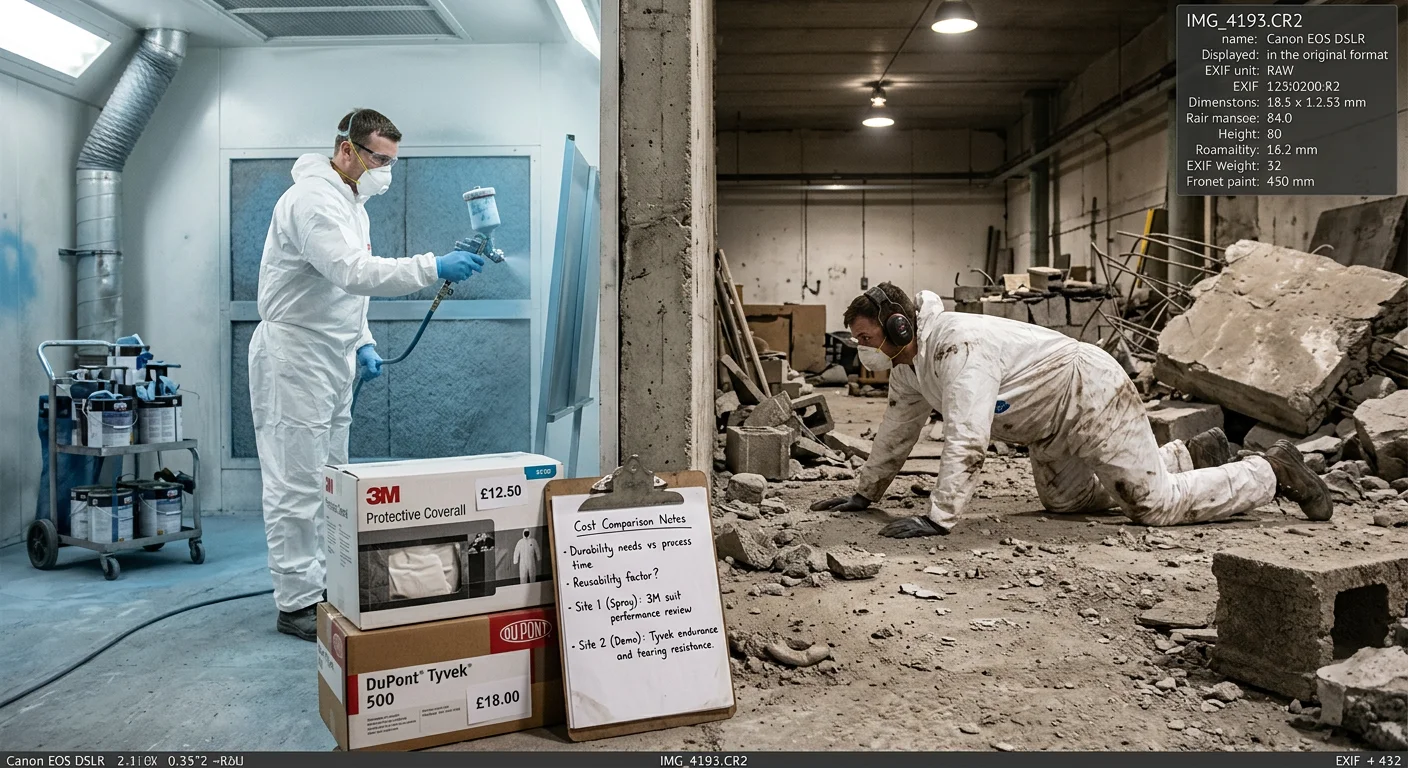
Scenario one: light industrial and spray painting. Workers on single-day jobs — automotive refinishing, light chemical handling, general maintenance — get through a full shift in 3M 4510 coveralls without a barrier failure. The microporous layer holds up. Splash protection does its job. For tasks that finish inside six hours with limited crawling or kneeling, 3M coveralls give you solid value per unit cost.
Scenario two: asbestos remediation, demolition, and multi-surface crawl work. This is where the DuPont Tyvek suit pulls ahead — by a clear margin. Remediation crews on multi-day jobs across abrasive surfaces report far fewer mid-shift barrier failures with Tyvek. That’s compared to standard SMS coveralls or microporous options. The material takes sustained friction without breaking down. It survives the kind of repetitive contact that tears through a microporous coverall before lunch.
The durability breakdown, job by job:
Job Type | Winner | Reason |
|---|---|---|
Single-day light tasks | 3M Coveralls | Cost-effective, adequate barrier |
Heavy abrasion environments | DuPont Tyvek | Outlasts on rough surfaces |
Multi-shift chemical exposure | DuPont Tyvek | More consistent barrier retention |
Budget bulk purchasing | 3M Coveralls | Lower per-unit spend for light use |
The bottom line: Tyvek lasts longer on harder jobs. 3M lasts long enough on easier ones. Match the suit to the shift — not the other way around.
The Hidden Cost: How Often You End Up Replacing Them
The sticker price on a box of coveralls is the least important number in the equation.
Here’s the math most safety managers never run: a cheaper suit that fails at hour four doesn’t cost less — it costs twice as much. You’re buying two suits to cover one shift.
This is where the “buy nice or buy twice” principle hits hardest in protective clothing. A box of 3M 4510 coveralls runs lower per unit than DuPont Tyvek suits. That gap looks attractive on a purchase order. It stops looking attractive once your crew burns through two suits per shift instead of one.
The replacement pattern breaks down like this:
Light tasks, clean environments : Both suits complete a full shift. The cost difference is real — 3M wins on budget.
Heavy abrasion, multi-surface work : 3M coveralls tear out at friction points mid-shift. One job, two suits. Your per-shift cost just doubled.
Multi-day remediation jobs : Tyvek ‘s stronger abrasion resistance means fewer mid-job replacements. The higher unit price spreads across more actual hours of protection.
The practical rule: double the unit price in your head, then factor in realistic replacement frequency. A $3 coverall you replace twice costs $6. A $5 DuPont Tyvek suit that completes the full shift costs $5.
For bulk purchasing teams, that gap adds up fast. Order 500 units a month. Run a 40% mid-shift failure rate on cheaper disposable protective clothing. That’s 200 extra replacements — pure waste spend with zero added protection.
Match your suit to your shift intensity. The savings show up in the reorder cycle, not the unit price.
3M Coveralls: Where They Make More Sense
Not every job needs the toughest suit on the shelf.
3M coveralls are a solid choice when the hazard is clear, the shift is short, and the budget needs to stretch. That’s a real scenario for a lot of buyers. It’s where 3M 4510 coveralls deliver what they promise.
Match the right Type to the right threat:
Dust and dry particulates? Type 5 is your call.
Light splash or spray of hazardous chemicals? Type 6 covers it.
Directed jet spray with higher chemical risk? Step up to Type 3. The 3M 4570 coverall has taped seams and heavier fabric. It’s built for that level of exposure.
The seam difference matters more than most buyers expect. Basic stitched seams handle light splashes well. Taped seams — like those on the 4570 — block liquid from pushing through. They give you the strongest resistance against chemical penetration.
For single-day light industrial tasks, spray painting, or general maintenance work, 3M coveralls do the job well. You get a reliable barrier at a lower cost. No need to pay for durability the task doesn’t demand.
Tyvek: Is the Extra Cost Worth It?
Tyvek costs more. But the real question is whether that extra spend pays back — and on the right jobs, it does.
The math is simple. A DuPont Tyvek suit costs more per unit than comparable 3M coveralls or standard SMS coveralls. That said, heavy abrasion jobs change the picture fast. Think asbestos remediation, demolition work, or multi-surface crawl spaces. Workers burning through two Microporous coveralls per shift end up spending more than a single Tyvek suit would have cost. The savings are there — you just need the right job type.
Tyvek earns its price premium in three specific situations:
High-contact, abrasive environments — rough surfaces, sustained crawling, repeated friction contact. Cheaper suits tear faster here. You go through more of them.
Multi-shift chemical exposure — jobs running six, seven, eight hours straight. Barrier integrity has to hold the whole time. Tyvek delivers that. Many budget options don’t.
Bulk purchasing for heavy-duty crews — fewer mid-shift suit replacements mean lower total spend per job. The per-unit cost looks higher on paper, but the job cost often comes out lower.
Match the suit to the job intensity. That’s where the real ROI shows up.
FAQ: Real Questions People Ask Before Buying
Buyers don’t hesitate because they lack information. They hesitate because they have the wrong information.
Here are the questions that decide purchases — and the straight answers.
Is Tyvek reusable?
For dry particulate work like asbestos abatement, some crews do reuse suits — but only when there’s no chemical contamination. DuPont still rates them as disposable. Been near hazardous chemicals? Swap it out. That $5 saving isn’t worth the risk.
Are 3M coveralls disposable — meaning single-use only? Yes. The 3M 4510 coveralls and similar microporous coveralls are built for one shift. After the first wear, the barrier breaks down fast — mostly at abrasion points. Reusing them on chemical jobs creates a compliance problem, not just a comfort one.
Which one is better for spray painting?
3M coveralls take this one. Light splash, short shift, controlled environment — that’s the job they’re built for. No reason to pay the Tyvek premium on a clean automotive refinishing job.
Do either of these protect against asbestos?
Both carry asbestos ratings. But DuPont Tyvek suits are the go-to standard for remediation work. They hold up better under physical stress on demolition sites. A torn 3M coverall at hour three offers zero protection.
Which is cheaper per job — not per unit?
Do the math per shift, not per box. On light tasks, 3M wins. On heavy-contact work, Tyvek costs more per unit — but it often outlasts two cheaper suits in a single job. That makes Tyvek the better value where durability counts.
Conclusion
Here’s the bottom line: neither coverall is better across the board — the right one depends on what it needs to block.
3M coveralls work well for light-duty, single-shift jobs where breathability matters. You won’t feel like you’re sealed inside a plastic bag. But throw chemical splashes, heavy abrasion, or high-risk hazmat conditions at them — they’ll need replacing before the day is done.
Tyvek holds up longer where it really counts: barrier integrity under real working conditions. That’s not a small thing. At hour seven, that difference matters.
The real question was never which one lasts longer on a shelf . It’s which one still protects you at hour seven.
Before your next bulk order, run one unit through your actual job conditions. Not a lab test. Your job.
Still weighing your options? Check out Morntrip ‘s range of industrial safety coveralls — built for the jobs where failure isn’t an option.