Surgeons joke that operating rooms are cold enough to store wine. After an hour six under those fluorescent lights, that joke stops being funny.
You’re here because you want to know if the 3M surgical gown does anything real about that bone-deep chill. Or maybe you’re wondering if it’s just another stiff, crinkly layer between you and hypothermia. Either way, you’re in the right place.
The 3M Bair Hugger Warming Gown has a strong reputation. But a reputation means nothing without proof. So we dug into real performance data, clinical evidence, and the kind of wear-it-for-twelve-hours feedback that glossy product pages tend to skip.
Warmth, comfort, fluid resistance, fit — we cover all of it.
What Is the 3M Bair Hugger Warming Gown? (Product Identity & Use Case)
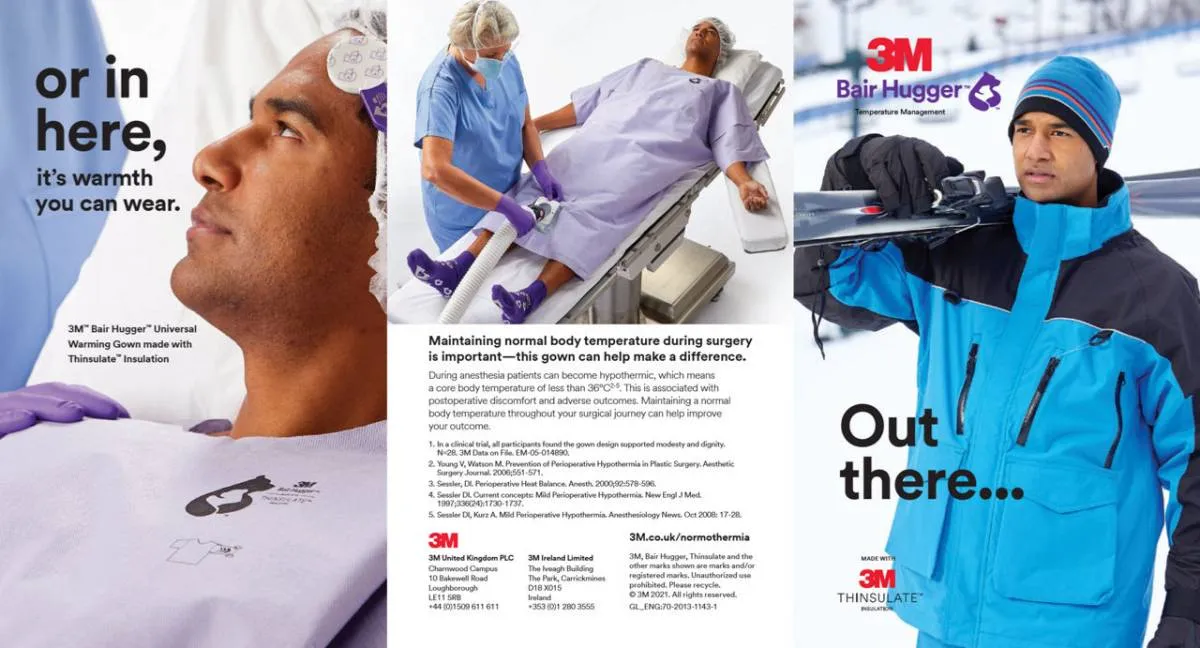
Here’s something the product brochure won’t tell you: this isn’t just a gown. Well, it is a gown — but calling it just a gown is like calling a Swiss Army knife a bottle opener. Accurate. But far from the full picture.
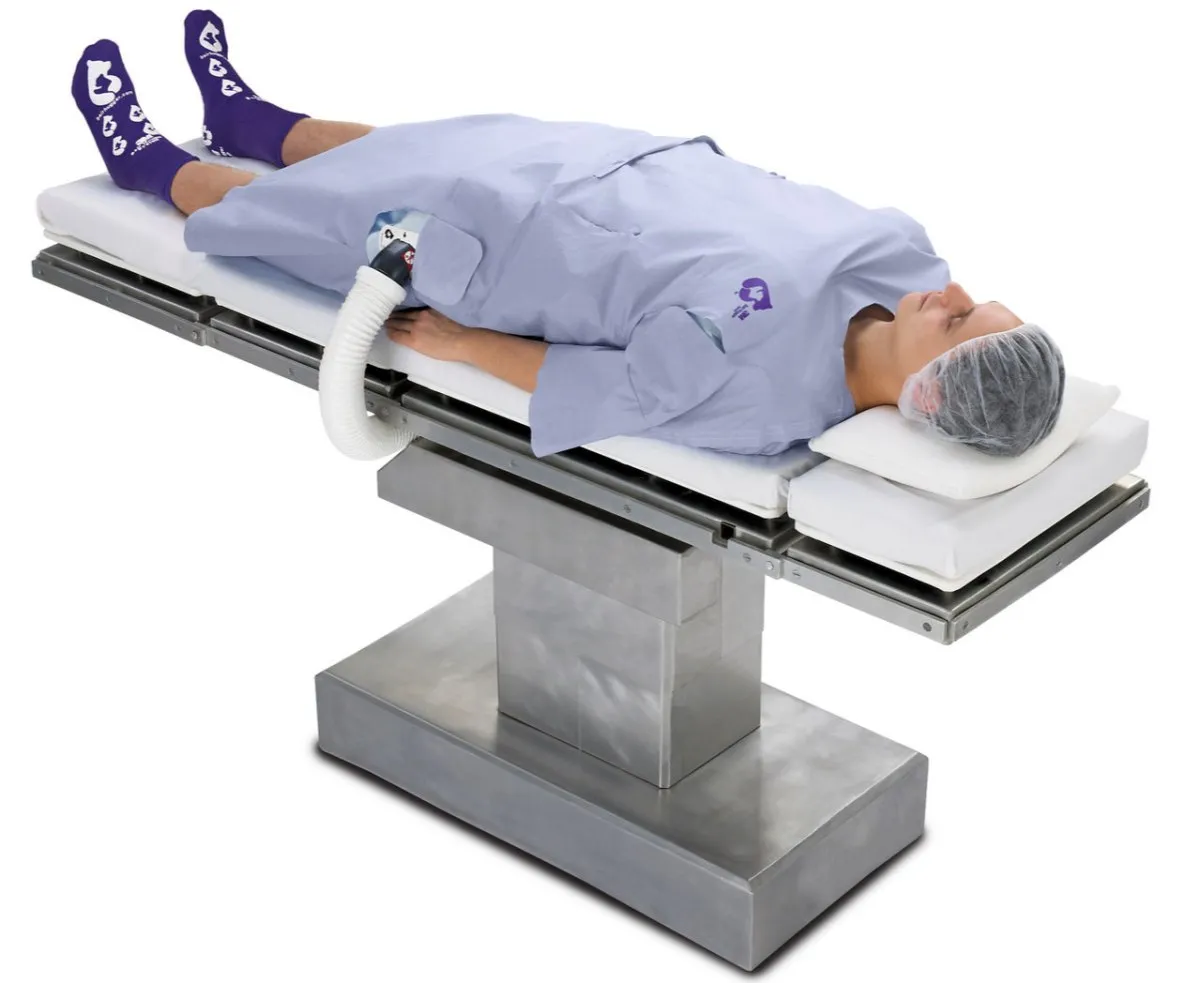
The 3M Bair Hugger Warming Gown is a single-use, forced-air warming system built to look like patient apparel. Connect it to a 3M Bair Hugger temperature management unit (Models 505, 750, 775, or 875). That simple step turns a disposable wrap into an active, air-channeled warming device. It pushes heat across the patient’s entire body surface through internal channels sewn right into the gown.
It replaces three separate things at once:
– The standard pre-op gown
– The intraoperative warming blanket
– The PACU recovery blanket
One device. One patient. The full perioperative journey is covered.
Three Styles, One System
The gown comes in three configurations. Each one targets a different clinical situation:
-
OR Gown (81001) — one comfort port, one clinical port; standard perioperative warming
-
Plus Gown — three ports total; delivers upper and lower body warming at the same time, no repositioning needed
-
Flex Gown (81003) — two internal warming inserts with separate ports; built for maximum flexibility across different surgical positions
There’s also a Universal Warming Gown lined with 3M Thinsulate Insulation. It holds “banked heat” even after the warming unit gets disconnected during transport. That matters more than it sounds. Picture moving a patient down a cold hallway at 6 a.m. — that retained warmth makes a real difference.
Who is it built for?
The Bair Hugger gown puts the patient first, not the OR staff. It targets perioperative hypothermia — before surgery, during it, and after. Pre-warmed air flows through channels built directly into the gown material. Patients using the Model 875 unit can adjust their own temperature with a handheld dial controller. That’s a level of control no standard hospital gown has ever offered.
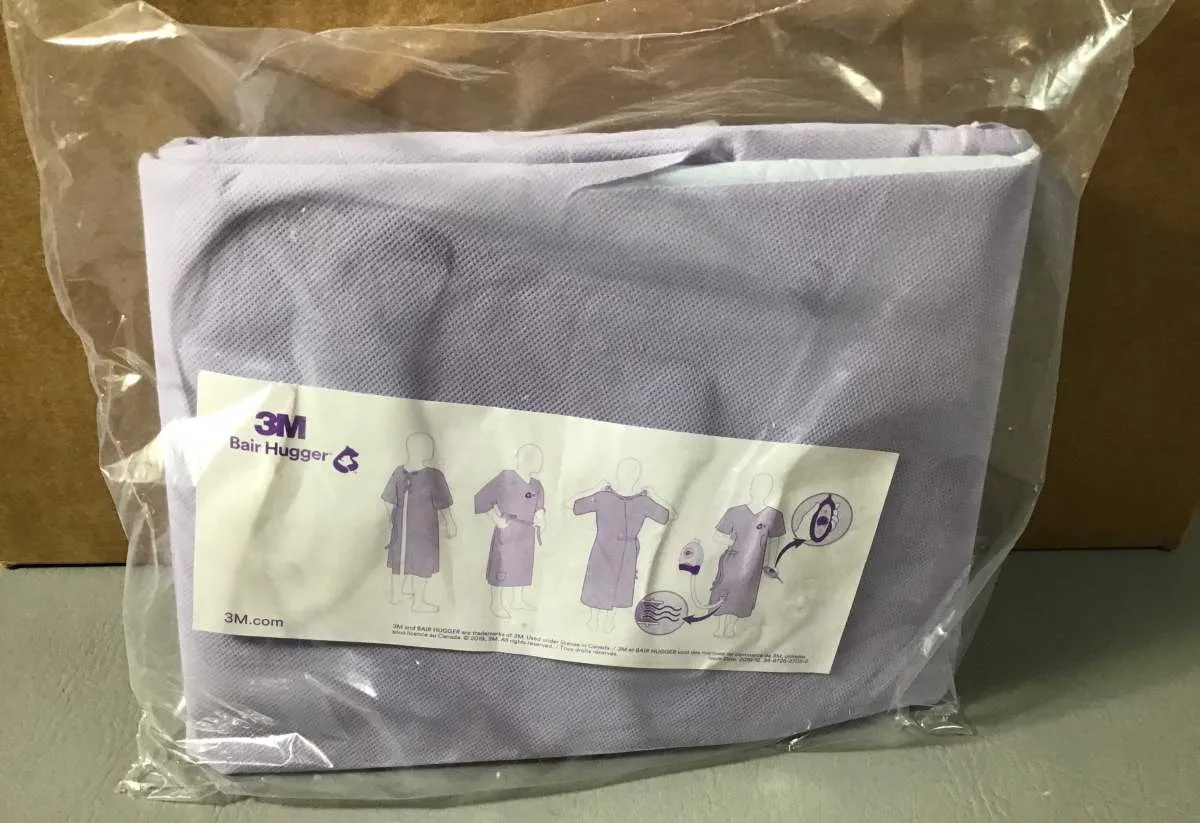
Sizes run Small (43.7″), Standard (51″), and X-Large (51″ with a 122-inch sweep for bariatric patients). Packaged non-sterile, 30 gowns per case. First FDA-cleared in 1987. To this day, it holds the benchmark position for forced-air perioperative warming.
How Warm Is the 3M Surgical Gown? (Clinical Warmth Performance)

Numbers don’t lie. An unwarmed surgical patient loses up to 1.6°C of core temperature in the first 60 minutes after anesthesia induction. This isn’t because the OR is cold. Anesthesia shuts down your body’s ability to regulate heat entirely. That’s not discomfort. That’s a clinical event with real consequences.
So let’s look at what the 3M Bair Hugger warming gown delivers — in degrees, in watts, and in outcomes backed by data.
The Numbers Behind the Warmth
The warming units paired with this gown push forced air between 32–43°C (90–109°F) at the hose outlet. The exact temperature depends on your unit model and settings. That range is the clinical sweet spot — enough heat to make a real difference, without risking thermal injury.
At the High setting, standard forced-air warming blankets deliver 40–60 W/m² of heat transfer to covered skin. The Universal Warming Gown with Thinsulate Insulation hits the upper end of that range. 3M states directly that it provides higher heat transfer than their standard lower body blanket without insulation.
That gap adds up fast over a three-hour procedure.
What Thinsulate Does Here?
This is where 3M surgical gown material quality earns its place. Thinsulate insulation in medical garments reaches a clo value of 0.7–1.6. A standard cotton hospital gown sits at just 0.3–0.4 clo. That’s 2–4× better insulation against convective and radiant heat loss.
In a 20–22°C pre-op environment, that insulation cuts passive core temperature drop by 0.2–0.4°C over 30–60 minutes compared to a standard gown. Active warming gets interrupted sometimes — a patient transport down a cold hallway, for example. The banked heat stays in place instead of bleeding out into the air.
Prewarming: The Move That Changes Everything
Fifteen minutes. That’s all it takes. Just 15 minutes of prewarming before anesthesia induction cuts redistribution hypothermia hard. Anesthetic drugs push warm blood from your core to your periphery all at once. Prewarming counters that shift before it starts.
The cost of skipping prewarming is real:
– 60–70% of unwarmed surgical patients drop below the 36.0°C normothermia threshold
– With effective forced-air warming in place, that figure drops to under 20–30%
– Prewarmed patients stay 0.5–0.8°C warmer at 60–120 minutes post-induction compared to controls
The operating room gown warmth this system delivers is not a passive comfort feature. It’s a clinical intervention with measurable stakes.
Warmth With Consequences (The Good Kind)
Keeping normothermia at ≥36°C across the full perioperative window produces outcomes that both surgeons and hospital administrators track closely:
-
~40–60% relative reduction in surgical site infection rates — achieved by preventing inadvertent hypothermia
-
~20–30% less transfusion need in warmed patient groups versus unwarmed ones
-
Shorter PACU recovery times — plus 73% of patients in one cited study said the Bair Hugger warming gown system made a positive difference in their surgical experience
Cotton blankets cost $1.63 per use. They reach room temperature fast and deliver a fraction of the sustained heat flux you get from this gown. Stack three of them, and you still won’t match a single Thinsulate-equipped warming gown in a clinical setting.
The 3M surgical gown insulation approach is straightforward. It’s better physics, applied the same way, across every stage of the surgical journey.
Is the 3M Warming Gown Comfortable to Wear? (Patient Comfort Evidence)
Patients have opinions about this. Strong ones. They shared those opinions in clinical studies, which is a chaotic but useful way to measure how people feel about Hospital Gowns.
Here’s what the data says: 73% of patients reported the Bair Hugger warming gown system had a positive impact on their surgical experience. That’s not a vague “patients seemed fine” result. That’s three out of four people — cold, anxious, pre-surgery people — saying this gown helped them.
Comfort Scores, Anxiety, and the Cotton Blanket Problem
Multiple studies used warmed cotton blankets as the comparison. Cotton blankets feel warm for about four minutes. Then they hit room temperature and become a thin piece of fabric, doing nothing useful.
Measured against that baseline, the Bair Hugger gown came out ahead on every comfort metric that matters:
-
Higher comfort scores at 30 minutes compared to warmed cotton blankets
-
Greater control over personal comfort — patients could adjust their own warmth level, and that sense of control matters a lot to anxious people waiting for surgery
-
Higher satisfaction levels at 30 minutes versus standard warmed blankets
-
Reduced anxiety and apprehension — one spinal surgery study ran prewarming at 38°C for 60 minutes and found lower anxiety and higher comfort scores versus standard care
Lower anxiety before surgery is not a minor detail. It changes pain perception, post-op opioid requirements, and recovery. One randomized study found that the warmed gown group showed reduced opioid use after surgery and increased thermal comfort satisfaction in the PACU.
The Part About Pediatric Patients (Which Is Worth Noting)
Parents of pediatric patients reported a positive view of the gown. What they valued most: being able to hold their children while the warming was still happening. That’s a comfort outcome for two people at once — the child stays warm, and the parent stays close.
Why do the Design Changes the Experience?
A separate blanket shifts around. It slides off. It falls the moment a nurse moves quickly past the bed.
The Bair Hugger gown removes that problem by design. It is the gown. The warming function is built into the garment, with a multi-position upper-body warming insert that tucks into a built-in pocket. No extra bulk. No constant readjusting. Patients stay covered and warm from pre-op through PACU — one steady experience instead of three separate hand-offs with cold gaps in between.
That steady coverage is what disposable surgical gown comfort looks like in real clinical use.
The system also warms up to 2x faster than other warming methods. Faster warmth means faster comfort. That cuts down the window of pre-surgical misery — the part where you’re cold, anxious, and lying under fluorescent lights in something backless.
3M Warming Gown vs Traditional Cotton Blankets: Key Differences
Cotton blankets have one job — and they can’t hold it for more than four minutes.
That sounds harsh. But look at the numbers. The average surgical patient goes through 9 cotton blankets per perioperative stay. At $1.63 per blanket use, that adds up to $14.67 in blanket costs alone. And that’s before you count the laundering energy, the water, the detergent, and the staff time spent walking back and forth to the blanket warmer. Each cotton blanket lasts about 22 uses before it wears out or goes missing.
After all that laundering, folding, warming, and hauling, the blanket touches the patient and starts cooling down. That’s passive insulation. The plain-English version: a large cotton blanket that loses its purpose the moment it meets cold skin.
Active vs. Passive: The Core Divide
The 3M Bair Hugger warming gown works in a different way. It’s not a small upgrade. It’s a different approach to warming altogether.
|
Feature |
Cotton Blankets |
3M Warming Gown |
|---|---|---|
|
Warming type |
Passive (pre-heated, then cools) |
Active forced-air (32–43°C, sustained) |
|
Coverage |
Multiple blankets, variable |
Wrap-around, one gown, full perioperative journey |
|
Patient control |
None |
Adjustable temperature settings |
|
Staff trips to warmer |
Repeated |
Eliminated — hose reconnections only |
|
Cost per patient stay |
~$14.67+ (9 blankets) |
Single-use gown benchmarked against that figure |
|
Infection control |
Laundering-dependent |
Single-patient, single-use |
Cotton is breathable. It wicks moisture. It’s comfortable — no argument there. But comfort that fades in minutes isn’t a real solution. It’s a stopgap.
What Changes in the Workflow?
Each blanket-warmer trip seems small. Over a shift, those trips add up fast. With cotton blankets, nurses swap out cooled blankets for warm ones through pre-op, OR transfer, and PACU. Every swap takes handling time, tracking time, and laundering prep time.
The 3M warming gown cuts out that whole cycle. One product. One hose connection. Here’s how the coverage flows:
-
Pre-op — prewarming starts before the patient enters the OR
-
Intra-op — clinical ports keep warming active during surgery
-
PACU — same gown, same patient, no cold gaps between stages
One pediatric facility tracked this change directly. They had been using cotton blankets in pre-op and Bair Hugger blankets in the OR as two separate systems. Testing the Bair Hugger gown across the full care pathway lets them run one product from start to finish. Fewer handoffs. Fewer decisions. Fewer moments where a patient went from warm to not.
The material trade-off is worth noting. Cotton blankets are reusable but carry ongoing water, energy, and detergent costs. The 3M Bair Hugger gown — made from 75–85% polypropylene — is single-use, which means more solid waste. 3M does encourage facilities to look into polypropylene recycling through their waste contractors. Neither option is a clean environmental win. But the clinical and operational case for active warming gets harder to dismiss every time a nurse makes another trip down the hall to the blanket warmer at 5 a.m.
Who Should Use the 3M Warming Gown? (Buyer Decision Guide)
Not every OR needs this surgical gown . That might sound odd to say in a product review, but it’s true. Pretending otherwise does you no favors.
Here’s who this conversation is for:
This gown is built for you if:
-
You already run 3M Bair Hugger or Bair Paws units (Models 750, 775, or 875). Without the hose connection, the gown does nothing special. It’s just a gown. A decent one — but not a miracle product.
-
Your facility handles mixed surgical caseloads — orthopedics one hour, gynecology the next, lithotomy positions before lunch. The multi-position upper-body insert covers all of it. No product swaps needed.
-
You’re chasing normothermia KPIs and falling short. The protocol calls for prewarming plus continuous coverage through PACU. This gown covers all three phases in one SKU.
-
You run a high-throughput ASC or same-day surgery center. Cutting one garment change saves real time across 20 cases a day. That adds up fast.
-
Your patients skew elderly, low-BMI, or face procedures over 60–90 minutes. These groups are hit hardest and fastest by perioperative hypothermia.
This is likely not the right fit if:
-
Your facility uses non-3M forced-air systems with incompatible hose fittings
-
Most procedures run under 30 minutes under local anesthesia
-
Your purchasing policy limits single-use waste
-
Patients need grounding pads, transdermal patches, or security straps right where the warming channels sit — those are hard contraindications, not small workarounds
Five straight questions to help you decide:
-
Do you own compatible 3M warming units right now?
-
Where are patients going cold in your perioperative pathway — pre-op, transport, induction, or PACU?
-
How much do your surgical positions vary week to week?
-
Can one universal gown SKU replace your cloth gown and separate warming blankets combined?
-
Are you open to running a pilot in orthopedics or general surgery before a full system-wide rollout?
Questions one through four mostly land on “yes”? A pilot is worth running. Question one is a “no”? Fix the equipment compatibility issue first. Everything else comes after that.
Final Verdict: Is the 3M Surgical Gown Worth It?
The answer is yes — with one big asterisk attached.
This gown is not a universal fix. It’s a strong answer to a specific problem. Your facility needs to ask the right question first: How do we keep patients from going hypothermic across the full perioperative window — without juggling four separate products? That’s the problem this gown solves. And for that problem, it’s worth every dollar.
The numbers speak for themselves. One prevented SSI saves $10,000–$25,000 in downstream costs. A single Bair Hugger gown costs $16–$35. You don’t need a finance degree to see that ratio makes sense.
But the asterisk matters. No compatible 3M warming units? This becomes an expensive modesty gown. Nothing more. Sort out your warming infrastructure first.
Worth it for:
– High-volume ORs focused on normothermia compliance
– Facilities managing too many separate gown and blanket SKUs
– Elderly or petite patients, or those facing procedures longer than 60 minutes
Skip it if:
– Your cases run under 30 minutes
– Your budget is tight right now
– Your warming equipment runs on a different system
The 3M Bair Hugger warming gown does its job well. Just make sure that the job matches what your facility needs.
FAQ: 3M Surgical Gown Common Questions
Real questions deserve real answers. These are the ones that come up most when people are choosing the right 3M surgical gown — not the ones marketing departments wish you’d ask.
What do AAMI levels on 3M surgical gowns mean?
Four levels. One standard: ANSI/AAMI PB70:2012 . The level shows how much fluid the gown’s critical zones — front torso and sleeves — can block before fluid breaks through.
-
Level 1 — Minimal splash exposure. Basic care, short dry procedures.
-
Level 2 — Low exposure. Blood draws, suturing, and ICU work.
-
Level 3 — Moderate exposure. Orthopedic, urologic, and laparoscopic procedures with some bleeding or irrigation.
-
Level 4 — High exposure under pressure. Open colectomy, trauma, cardiovascular surgery. Tested against synthetic blood and viral penetration.
Not sure which level fits your case? Go one level up. That’s the CDC-consistent approach.
Which AAMI level do I need for my procedure?
Match the expected fluid volume to the level. Short and dry? Level 1 or 2. Routine laparoscopic case with moderate fluid? Level 3. Open abdominal surgery with power irrigation and real blood loss? Level 4 — no exceptions.
Does gown color tell me the AAMI level?
No. AAMI PB70 sets no color-to-level standard. Each manufacturer picks their own color scheme. For 3M surgical gowns, skip the color — check the package label and IFU for the printed AAMI level. That’s the one source that counts.
How should a 3M surgical gown fit?
Fit determines protection. A well-fitting gown:
-
Reaches mid-calf and wraps the back completely
-
Let’s you reach and bend without pulling the front or sleeves away from your body
-
Have cuffs covered — and staying covered — by gloves when your arms extend
Too small means restricted movement and exposed skin. Too large means extra fabric brushing unsterile surfaces. Neither works. Size up before the case starts, not after.
What should I check on the package before opening?
Seven things, in order:
-
Product description — ” sterile surgical gown ,” reinforced or standard
-
AAMI level — printed on the label
-
Size and style
-
Sterilization method and expiry date
-
Lot number for traceability
-
Single-use symbol — do not re-sterilize
-
Latex-free confirmation if your staff needs it
Do 3M surgical gowns provide full 360° coverage?
No. Surgical gowns — 3M’s included — are open at the back and stop around mid-calf. The front and sleeves are the critical protection zones. Your procedure carries whole-body splash risk from a high-consequence pathogen? A coverall is the right choice, not a gown.
What key specs should I compare when evaluating 3M gowns against other brands?
Five factors that make a real difference:
-
Barrier performance — Ask for AATCC 42, AATCC 127, ASTM F1670, and F1671 test results by level
-
Material type — SMS fabric vs. reinforced/impervious panels in high-exposure zones
-
Breathability — MVTR values matter for long procedures. Poor airflow causes real heat stress
-
Allergen profile — Confirm latex-free. Check for other known sensitizers too
-
Sterility assurance — Industry standard is SAL 10⁻⁶. Verify it’s on the label