Sourcing medical supplies at scale is risky. One wrong assumption about a supplier’s product range can stall your entire procurement cycle.
For healthcare buyers, the real question isn’t just what Medline Industries sells. It’s whether their catalog runs deep enough to consolidate vendors, cut costs, and meet your facility’s clinical standards.
The Medline Industries catalog covers thousands of SKUs. You’ll find PPE, wound care, surgical supplies, infection prevention products, and much more. But knowing where to look and how to find what you need takes time without a clear roadmap.
This guide breaks down every major product category. It shows you how to access the catalog and walks through the procurement process — so your next sourcing decision is based on facts, not guesswork.
What Is the Medline Industries Catalog and Who Is It For?
Medline Industries is no small operation. The company offers over 550,000 medical products and clinical solutions, covering every care setting — from hospital ORs to home health agencies across 125+ countries.
The Medline Industries catalog is the master index of that full portfolio. You get two formats: a searchable online product database and segment-specific print or PDF catalogs covering wound care, infection prevention, long-term care, and OR supplies. Each listing includes SKU numbers, pack sizes, materials, and use-setting indicators. These are the exact data points procurement teams need to build formularies and negotiate contracts.
Who Uses Medline Industries Catalog?
This catalog serves professional B2B buyers:
-
Hospital supply chain teams standardizing gloves, drapes, and procedure trays
-
Long-term care facilities managing incontinence and wound care formularies
-
Ambulatory surgery centers matching case pack sizes to procedure volumes
-
Home care agencies specifying patient-deliverable kits
-
Retailers and pharmacies sourcing consumer-packaged OTC items
-
GPOs and IDNs cross-referencing contract SKUs system-wide
Individual patients are not the target audience. Pricing is account-specific. Non-contracted users can see product specifications, but negotiated pricing tiers stay out of reach.
Exam Gloves, Masks & Protective Apparel: Medline’s PPE Product Line

Running out of the right glove at the wrong moment is costly. The gap between “similar” and “specified” adds up fast — and that’s exactly what Medline’s PPE line is built to prevent.
The Medline gloves and PPE catalog covers three core protection layers: exam gloves, masks and respirators, and full protective apparel. Each layer is organized by material, certification, and clinical exposure level.
Exam Gloves: Material Matters More Than Price
FitGuard is Medline’s flagship nitrile line. Most hospital procurement teams will start here. These gloves are powder-free, latex-free, and ambidextrous. Textured fingertips give you a solid grip in wet environments. Palm thickness runs 3.0–3.5 mil, stepping up to 4.0–4.5 mil at the fingers — both meet ASTM D6319 tensile and elongation standards. Select SKUs also carry ASTM D6978 chemo-rated certification, a required spec for oncology departments.
High-volume settings need smart bulk packaging. FitGuard Touch packs at 300 gloves/box, with cases holding 3,000 gloves. That cuts down on change-outs during busy shifts. Retail pricing runs around $0.09 per glove. Hospital contract pricing comes in lower.
Not every task calls for nitrile. Here’s how Medline’s three core glove materials compare:
|
Material |
Key Standard |
Elongation |
Allergy Risk |
Best For |
|---|---|---|---|---|
|
Nitrile |
ASTM D6319 |
~500–600% |
Low |
Exam, chemo, infectious exposure |
|
Latex |
ASTM D3578 |
~700% |
Higher |
High-tactility procedures |
|
Vinyl |
ASTM D5250 |
~300% |
Low |
Low-risk, cost-sensitive tasks |
Latex offers the best elasticity. But many facilities restrict it due to allergy protocols. Vinyl is the cheapest option — though it carries the highest micro-tear risk. For most acute care settings, nitrile is the standard choice. Medline’s FitGuard line runs XS through XL, so full department standardization is straightforward.
Masks & Respirators: Certification Drives the Decision
The Medline surgical supplies and respiratory protection catalog breaks into two clear purchasing tracks: ASTM-rated surgical masks and NIOSH-approved N95 respirators.
Medline surgical masks follow ASTM F2100 performance levels:
-
Level 1 — BFE/PFE ≥ 95%, fluid resistance at 80 mmHg. Suited for routine, low-exposure care.
-
Level 2 — BFE/PFE ≥ 98%, 120 mmHg. Designed for moderate procedures.
-
Level 3 — BFE/PFE ≥ 98%, 160 mmHg. Built for high-fluid, high-exposure environments.
Medline’s Level 2–3 surgical masks test at ≥98% bacterial and particulate filtration efficiency across 0.1–3.0 μm. Standard packing: 50 masks/box, 300–500 masks/case. Most IDN and GPO contracts are structured around that configuration.
N95 respirators work on a separate certification track. Medline’s N95 SKUs hold NIOSH approval under 42 CFR Part 84, delivering ≥95% filtration efficiency at 0.3 μm. Many are also FDA-cleared as Class II surgical respirators, with fluid resistance tested per ASTM F1862. You’ll find both cup-style and duckbill designs in S/M/L sizing. These use headband construction — not earloops — to maintain NIOSH fit integrity. Cases hold 120–400 respirators, depending on the SKU.
One distinction that matters for hospital RFPs: an ASTM Level 3 mask is not a substitute for an N95 in aerosol-generating procedure environments. Your procurement specs should call out both as separate line items.
Protective Apparel: Gowns, Kits, and Bulk Configuration
The Medline personal protective equipment apparel line covers full-body protection. Isolation gowns are rated per AAMI PB70 — Levels 1–2 for routine care, Levels 3–4 for high-fluid or critical-zone use. Most gowns use SMS nonwoven fabric (spunbond-meltblown-spunbond). Sizing runs S through 3XL, packaged at 50–100 gowns/case.
Facilities managing surge capacity or infection-control response have a faster option. Medline’s Employee Protection Kit with Goggles bundles the full protection stack — gown, gloves, mask, shoe covers , and goggles — into one pre-configured unit. Each case holds 25 complete kits. That covers 25 staff events per case, with no individual item picking needed.
Wound Care & Skin Care Products: From Basic Dressings to Advanced Solutions
Wound type determines everything. A dressing that speeds healing on a shallow surgical incision can damage a deep diabetic foot ulcer. That difference shows up at every level of the Medline wound care products catalog.
Matching Dressings to Wound Profile
Medline builds its wound care line around exudate level and infection risk — not marketing categories. Here’s how the clinical logic maps to product selection:
Low or no exudate — dry, superficial wounds:
Basic gauze with tape handles physical protection well. For fragile skin around the wound, petrolatum-impregnated gauze cuts down on adhesion pain and trauma during removal. Skip foam and alginate products here — they need fluid to work.
Moderate exudate — partial-thickness wounds and healing surgical sites:
Polyurethane foam dressings handle mid-to-high exudate volumes well. Acrylic adhesive borders reduce shear stress at high-pressure spots like the sacrum and calcaneus — the same areas where Stage II pressure injuries tend to form. Standard gauze in this category leads to frequent changes, drying out, and a disrupted moist healing environment.
Heavy exudate — deep cavitary wounds:
Calcium alginate dressings absorb 10–20x their own weight in fluid. They form a gel matrix that fits sinus tracts and wound cavities closely. The sodium-calcium ion exchange adds a secondary clotting effect — useful for wounds with minor bleeding risk. For very high exudate output, super absorbent polymer (SAP) dressings lock fluid in place. These are the clinical standards for high-output venous leg ulcers and large sacral pressure injuries.
Necrotic or fibrinous wounds requiring debridement:
Hydrogel dressings carry 70–90% water content. They rehydrate and soften eschar without causing mechanical trauma. These work well for dry diabetic foot wounds and radiation dermatitis. One contraindication: wounds with heavy exudate — hydrogels speed up maceration in those cases.
Infected or infection-prone wounds:
Silver-ion foam and silver alginate combinations deliver antimicrobial coverage while managing exudate at the same time. Standard clinical protocol uses silver dressings for about two weeks to bring down bacterial load. After that, you switch to non-antimicrobial absorptive dressings.
Skin Barrier, Moisturizers & Wound Cleansers
The Medline patient care products skin care line goes beyond dressings. It covers the barrier and maintenance routines that stop wounds from forming in the first place.
Skin barrier products
follow FDA OTC single-ingredient active standards:
–
Dimethicone (1–30%)
— flexible hydrophobic film that cuts friction and reduces water loss through the skin (TEWL)
–
Zinc oxide (1–25%)
— physical barrier with mild astringency, the standard ingredient in incontinence creams
–
Petrolatum (30–100%)
— the strongest occlusive option available, shown to reduce transepidermal water loss by
50–75%
For incontinence-associated dermatitis (IAD) prevention, the protocol is straightforward: cleanse after each bowel event, then put on a barrier with 20–40% zinc oxide or 30%+ petrolatum. For urinary incontinence, a leave-on dimethicone cream at 10–20% concentration is the go-to choice.
Moisturizer formulation matters for long-term skin care management. Survey data from dermatologist practices shows effectiveness ratings for dry skin ingredients:
– Petrolatum:
85.5%
of dermatologists rate it effective
– Ceramides:
82.1%
– Hyaluronic acid:
79%
– Urea:
79%
— at 5–10% concentration for moisturizing, above 20% for keratolytic debridement
Wound cleansers in the Medline catalog are formulated at pH 5.5–7.0, close to the skin’s natural microenvironment. Many contain polyhexamethylene biguanide (PHMB) or hypochlorous acid (HOCl) for infection-risk situations. For chronic ulcers, irrigate at 4–8 psi — you can reach that pressure with a 35 mL syringe and 19G needle. This removes biofilm without harming granulation tissue.
Ingredients to Use vs. Avoid During Active Healing
For skin near the wound during healing, reach for occlusives, dexpanthenol, aloe vera, and short-term silver preparations. These support new skin growth. Oral vitamin C and zinc supplements also have strong multi-study backing for cutting healing time after procedures.
Stay away from AHAs, BHAs, retinoids, or chemical sunscreen actives like oxybenzone and avobenzone on wounds that haven’t fully closed. These thin new epithelia can cause contact dermatitis on broken skin. For sun protection on healing tissue, zinc oxide or titanium dioxide physical blockers are the right swap.
Incontinence & Urology Supplies: What Long-Term Care Facilities Need to Know
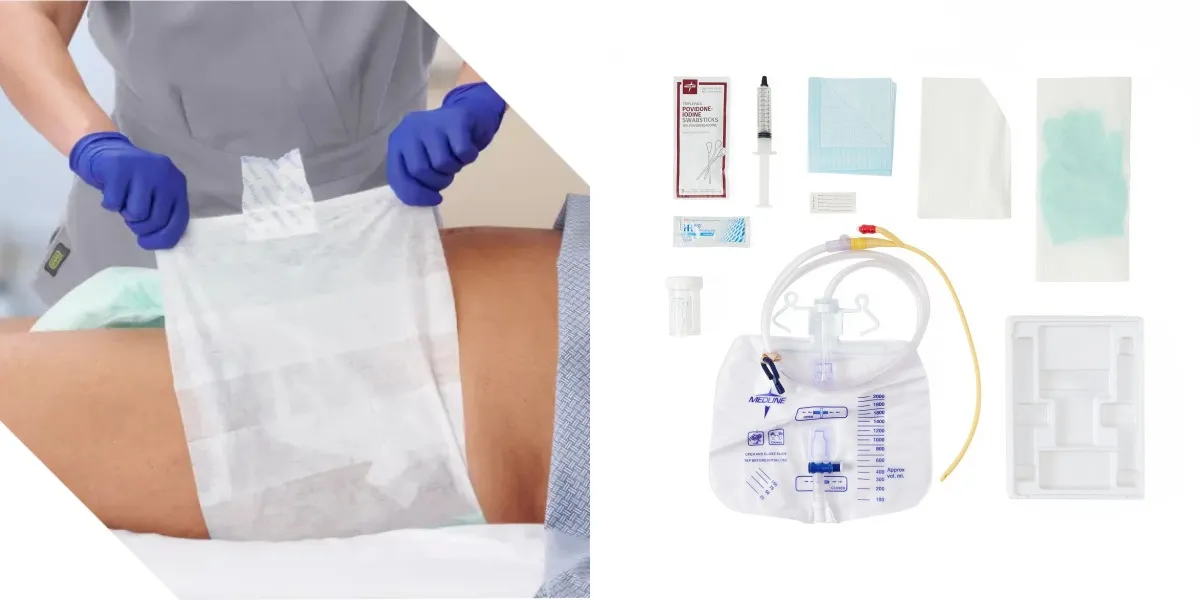
In long-term care, incontinence isn’t a side issue — it runs through everything. Directors of nursing report urinary incontinence in over 50% of residents. CNAs spend 56% of their working hours on incontinence-related tasks. 59% of DONs tie those same tasks to CNA turnover. And the monthly price tag? An average of $5,407 on incontinence products plus $5,497 in laundering costs — over $11,000/month per facility. That’s before you count staff hours or downstream costs from pressure injuries and falls.
The Medline incontinence products catalog tackles this head-on. Its tiered product structure is built around clinical need, not guesswork.
Absorbent Products: Matching the Product to the Resident
The most common — and expensive — purchasing mistake in SNFs is defaulting to maximum-absorbency briefs for every resident. Higher absorbency means higher unit cost. It also tends to push staff to stretch change intervals. That speeds up skin breakdown.
Medline’s Medline patient care products line organizes absorbent incontinence supplies into four clear categories:
-
Pull-up protective underwear — waist range S–XL (22–68 in), daytime absorbency ~700–1,200 mL, overnight models up to 2,000 mL. These work best for mobile residents in active toileting programs.
-
Tab-closure adult briefs — the go-to product for immobile or incontinent residents. Moderate SKUs handle ~800–1,200 mL. Heavy SKUs reach up to 2,000 mL. Super/overnight models go up to 2,500–3,000 mL for nocturnal or hard-to-manage cases.
-
Pads, liners, and male guards — bladder control pads handle light-to-moderate leakage (~100–500 mL). Male guards focus on absorbency at 150–400 mL. Booster pads add 500–900 mL of capacity inside a brief without swapping the whole product.
-
Underpads and mattress protectors — disposable underpads come in standard 23″×36″ and 30″×36″ sizes, rated 300–1,500 mL. Reusable versions hold up for 150–300+ wash cycles. Mattress protectors use polyurethane-coated barriers. Look for liquid penetration resistance and breathability. Non-breathable surfaces speed up maceration.
To build a solid formulary, standardize around 2–3 absorbency tiers per product type. Tie each tier to clinical criteria — mobility level, voiding frequency, day versus night. Set your baseline at 6–8 absorbent products per incontinent resident per day. Then adjust every quarter using EHR census data.
Catheter and Drainage Supplies: Specs That Matter for SNF Billing
For catheterized residents, Medline diagnostic supplies and urology products cover the full drainage system. The procurement logic here works differently. Medicare Part B may cover catheters and drainage bags for residents with documented permanent urinary incontinence or retention. Once medical necessity is established, the ongoing need is presumed. Part of the cost moves off the facility budget.
Key specs to know:
Foley catheters — standard adult sizes run 14–18 Fr, balloon volumes at 5–10 mL, lengths ~40–45 cm. For residents with enlarged prostates or urethral obstruction, specify a Coudé tip. Choose 100% silicone for latex allergy or long-term use.
Intermittent catheters — sizes 12–16 Fr cover most LTC adults. Female lengths run 6–8 in; male/universal lengths are 14–16 in. Hydrophilic-coated closed systems cost more per unit but carry a lower CAUTI risk. Calculate that tradeoff against infection treatment costs — it’s often worth it.
Drainage bags — bedside bags offer 2,000–4,000 mL capacity with anti-reflux valves and graduated markings in 100–250 mL increments. Leg bags run 500–1,000 mL for ambulatory residents. Match valve type to resident dexterity.
One connector detail that bulk orders often miss: verify that catheter funnel size, tubing diameter, and bag inlet are all compatible across your chosen SKUs. Mismatched connectors from different product lines cause disconnections and leaks. That’s a preventable problem — and it wastes product while raising infection risk.
What Smart LTC Procurement Actually Looks Like?
The facilities that control incontinence costs best aren’t spending less per unit. They’re spending with more precision. A few practices that separate efficient buyers from reactive ones:
-
Negotiate wetness indicators and breathable side panels as baseline requirements , not premium upgrades. These two features cut unnecessary changes and reduce skin breakdown at the same time.
-
Don’t layer standard pads inside pull-ups or briefs that aren’t designed as booster pads. Non-flow-through products push fluid sideways. That increases both linen changes and skin exposure — costs that far outweigh any per-unit savings.
-
Coordinate Medicare Advantage OTC allowances with family purchasing. Some plans offer allowances for incontinence supplies on a set schedule. Facilities that track this stop from duplicating spend.
Incontinence tasks eat up the majority of CNA time. A product that cuts even one or two changes per shift per resident is a real labor efficiency gain. In facilities already dealing with turnover costs, that math matters far more than the line-item price on any single SKU.
OTC & Pharmacy Products: Medline’s Consumer-Facing Medical Catalog
Most people think of Medline as a clinical operation — surgical drapes, hospital gloves, ICU-grade wound care. The OTC catalog tells a different story.
Medline’s OTC and pharmacy assortment covers over 1,000 consumer-facing items. You’ll find the everyday essentials that complete a full medical supply relationship: pain management products, cold and flu remedies, nutritional supplements and vitamins, and allergy treatments, including antihistamines and nasal sprays. This is not a retail pharmacy shelf. It’s a benefit-driven catalog built for institutional programs and member-based ordering — the catalog frames all products for “health and medical use only”.
How does ordering work?

You have three channels to choose from:
-
Online portal — 24/7 access with order tracking
-
Phone — live rep support, Monday–Friday, 7 am–7 pm CST (have your card number and member ID ready)
-
Mail — complete the order form from the back of the catalog; allow up to 4 weeks for processing
Each listing has a clear Item number — CURAD Flex-Fabric, for example, appears as Item 6511. That item-based structure keeps SKU-level reordering and formulary comparison fast and precise. Benefit program administrators get the organized, no-guesswork format they need to manage orders at scale.
Mobility, Rehabilitation & Daily Living Aids: Products for Home Care and DME Dealers
Home care doesn’t begin with a diagnosis. It begins the moment someone tries to stand up from a toilet and realizes they can’t do it alone.
The Medline rehabilitation equipment catalog speaks to that reality head-on. You get a clear lineup of mobility aids, bathroom safety products, and daily living tools — built for home care agencies and DME dealers buying at scale.
Wheelchairs and Mobility Aids: Matching Specs to the Patient
Standard manual wheelchairs in Medline’s catalog come in 16″, 18″, and 20″ seat widths. Bariatric configurations reach weight capacities of 500–700 lb for larger patients. Steel-frame models weigh around 35–40 lb. Aluminum-frame versions bring that down to 28–32 lb — a real difference for families loading chairs into car trunks every day.
Transport chairs run lighter at 15–25 lb. The smaller rear wheels (8–12″) mean a caregiver must push. For patients with upper-limb weakness or moderate dementia, that’s often the right clinical choice.
For DME dealers, here are the selection criteria that matter most:
-
Patient weight vs. chair capacity — industry standard is to spec at 1.2–1.5x the patient’s actual weight
-
Grip height — should align with the patient’s wrist crease in a standing position
-
Fold depth — look for rollators under 15 lb with simple fold mechanisms for vehicle transport
Rollators add a seat and a storage basket. They suit patients who can stand on their own but wear out on longer routes. Standard rollator capacity sits at 300–350 lb. Bariatric models reach 400–500 lb.
Bathroom Safety and ADL Products
Falls happen most often in the bathroom. The Medline patient care products safety lineup covers the full prevention setup:
-
Grab bars in lengths from 12″ to 32″ , rated at ≥250–300 lb load capacity. Mount them into wall studs or use expansion anchors.
-
Shower chairs and transfer benches with adjustable heights from 15–21″ and seat widths up to 20″. Bariatric versions hold up to 500 lb.
-
Raised toilet seats that add 2–6 inches of height. These are essential for post-hip-replacement patients who must avoid flexion beyond 90°.
For high fall-risk patients, a solid setup looks like this: one angled grab bar at the tub entry, one to two horizontal bars along the shower wall, and one horizontal bar beside the toilet for sit-to-stand support. That covers the core risk points without overcomplicating the install.
Daily living aids round out the ADL category. Sock aids, long-handled dressing sticks (26–30″), and extended shoehorns all serve patients with limited hip or lumbar flexion. These small tools close the gap between clinical care and what patients can actually manage at home.
Infection Prevention, Disinfectants & Environmental Services Products
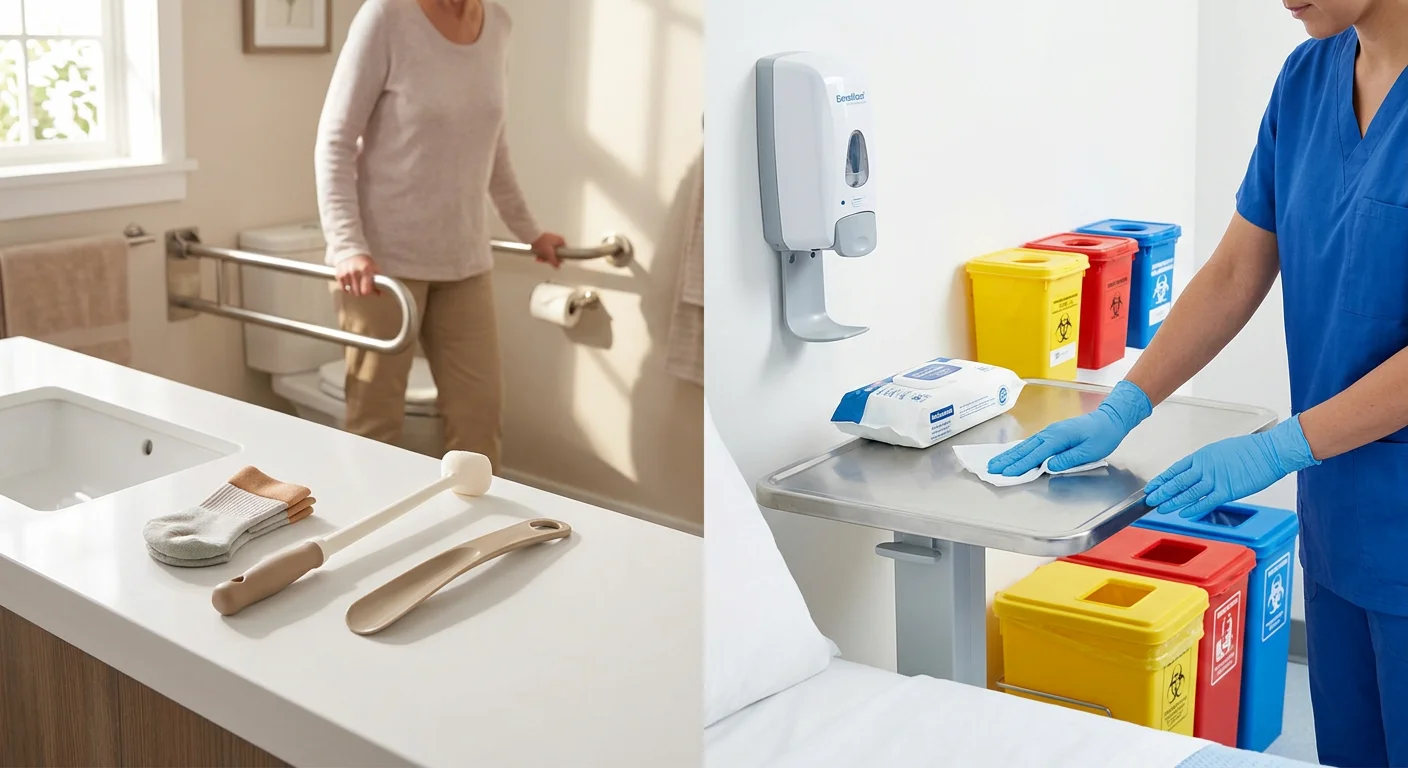
Surface contamination drives an estimated 20–40% of healthcare-associated infections. The products your facility uses to break that chain are not interchangeable. The Medline infection prevention products catalog is built around that clinical reality.
Surface Disinfectant Wipes: Contact Time Is the Deciding Variable
Three EPA-registered wipe formulations lead professional procurement decisions. The differences between them matter more than the label.
Oxivir Tb Wipes (AHP formula, EPA Reg. No. 70627-56) kill MRSA, SARS -CoV-2, norovirus, tuberculosis, HIV, HBV, and HCV in 1 minute of maintained wet contact. That speed makes them the right fit for ICU and ED environments where bed turnover pressure is constant.
Super Sani-Cloth Wipes (quat + alcohol, EPA Reg. No. 9480-4) use a 2-minute contact time with 55–65% IPA. You get broad-spectrum coverage, including non-enveloped viruses and resistant bacteria. Avoid them on alcohol-sensitive equipment surfaces.
CaviWipes 2.0 (EPA Reg. No. 46781-15) carries specific label claims for C. auris , biofilm, MRSA, and VRE at 2 minutes. Is your ICU or hematology unit dealing with drug-resistant fungal exposure? This is the SKU to specify.
One procurement rule that simplifies RFP writing: prioritize products with ≤3-minute contact times for high-turnover departments. Longer dwell times get skipped under real workflow pressure. A wipe used without meeting the full contact time gives zero protection.
Hand Sanitizers and Skin Antiseptics
Alcohol-based hand sanitizers for clinical use need 60–95% ethanol or 70–91.3% isopropanol — the CDC -recommended concentration range. They work against gram-positive and gram-negative bacteria and enveloped viruses, including influenza and SARS-CoV-2.
Critical exception: they do not kill C. difficile spores or norovirus. During outbreak protocols, soap and running water for ≥40 seconds replace the dispenser entirely.
For CHG-containing formulations, standard surgical hand antisepsis concentrations run 2–4% CHG, often combined with 70% IPA. The combination delivers fast alcohol-based kill plus CHG’s residual suppression. That makes it the standard for pre-op hand preparation in ORs.
Pre-surgical skin antisepsis follows the same logic. CHG + 70% IPA — applied to dry skin with a 2-minute dry time — is the preferred combination for catheter insertion sites and surgical fields. PVP-I at 7.5–10% is a valid alternative where CHG is contraindicated. Contact time for PVP-I is ≥2–3 minutes.
Medical Waste Containment: OSHA Compliance Is Non-Negotiable
The Medline diagnostic supplies and environmental services catalog covers the full containment infrastructure that OSHA ‘s bloodborne pathogen standard (29 CFR 1910.1030) requires.
Sharps containers
come in three deployment sizes:
– Bedside/tabletop:
1–2 gallons (≈4–8 L)
– Wall-mount/cart:
5–8 gallons (≈20–30 L)
– Centralized collection:
18–20 gallons (≈68–76 L)
All containers must be puncture-resistant and leak-proof. Seal them at 2/3 to 3/4 full — that’s OSHA’s standard to prevent overfill injuries. Place them at the point of use: injection rooms, patient bays, OR suites.
Regulated medical waste bags come in three standard capacities: 8–10 gallon (small), 20–30 gallon (mid), and 40–55 gallon (large). Minimum wall thickness is 1.2–1.5 mil. All bags must be red or carry a visible biohazard symbol per OSHA requirements. Place waste receptacles within 2–5 meters of the generation point. This cuts carry distance and reduces cross-contamination exposure.
Department-Level Configuration Logic
Procurement teams building infection prevention bundles by unit type should start from these baselines:
ICU: Use AHP or quat-alcohol wipes at the bedside for routine decontamination. Reserve chlorine-based or vaporized hydrogen peroxide products for C. diff and C. auris risk zones, with contact times of 3–10 minutes. Place alcohol hand sanitizer dispensers at a minimum of one point per bed, covering both entry and exit sides. Use bedside 1–2 gallon sharps containers per bed cluster and centralized 5–8 gallon units at nursing stations.
OR: Standardize on CHG + alcohol or PVP-I for surgical field prep. Use surface wipes with contact times of ≤1 minute between cases. Set up full medical waste separation — sharps containers at instrument tables and regulated waste bags at 20–30 gallon capacity per suite.
For EPA label verification during sourcing, check two lists:
–
EPA List N
covers SARS-CoV-2-effective products, with contact times ranging from 1–10 minutes.
–
EPA List K
covers
C. difficile
sporicidal coverage, mostly chlorine-based, with contact times of 3–10 minutes.
Cross-reference the three-part EPA registration number on every product label before finalizing any formulary.
Surgical, Procedural & OR Supplies in the Medline Catalog
Every minute in an operating room costs money. Wasted setup time, missing tray components, and mismatched gown sizes don’t just slow procedures — they stack up across hundreds of cases a year into real budget damage.
Medline’s surgical supplies catalog is built to stop that. The OR category splits into clear sub-families: procedure trays and kits, drapes and sterile barriers, suction and fluid management, sponges, blades, suture, and skin prep. Each sub-family has its own PDF brochure. Buyers go straight to what they need — no scrolling through thousands of unrelated SKUs.
How does the Medline Industries Catalog Organize OR Products?
Medline gives procurement teams two search paths. Both match how OR teams think on the floor:
-
By procedure or specialty — OB/GYN, orthopedics, cardiovascular, general surgery. Each specialty section lists relevant pack families with procedure name, item code, and component count.
-
By product type — Standard OR Packs, Laparotomy Packs, C-Section Packs, Cardiac Packs, Minor Procedure Trays, Urology Trays, ENT Trays. Each type has a dedicated brochure section.
Every catalog PDF page for procedure packs follows the same format: pack name → primary procedure indication → Medline code → component count . That consistency cuts comparison time during RFP preparation.
Standard Pack Configuration: What’s Inside
A standard Medline general surgery pack includes:
-
Back table cover : 44″×90″–60″×90″ SMS material
-
Mayo stand cover : ~23″×54″–25″×54″
-
Fenestrated patient drape : fenestration at 3″×10″ or 4″×8″, with adhesive border and fluid-control reinforcement
-
2–4 utility drapes : 26″×15″–40″×26″, some with adhesive strips
-
2–4 surgical gowns : AAMI Level II–IV depending on procedure; L/XL sizing is standard
-
4–10 sterile blue towels : 16″×26″
-
Suction tubing : 3/16″ or 1/4″ ID, 10–12 ft, with Y-connector in select packs
-
OR accessories : light handle covers, medicine cups (30–120 mL), labels, grounding pad for electrosurgery packs
Cases ship at 10–20 packs per case as the standard Medline ordering unit.
Specialty packs are built around their specific procedures. The C-Section pack adds a ≥2L integrated fluid collection pouch, baby blanket, and bulb syringe. The knee arthroscopy pack includes a leg drape with stockinette, an arthroscopy drape with fluid pouch, cable covers, and irrigation tubing. The cardiac pack scales up to a ~112″×160″ drape field with a 3L fluid pouch and cable organizers.
Minor procedure trays cover biopsies, I&D, suture removal, and central line placement. These run lean: thermoformed sterile tray, 10–20 gauze sponges, basic instruments, fenestrated sheet, and medicine cups.
Custom Procedure Trays: When Standard Isn’t Enough
Standard packs work well for most facilities. High-volume hospitals often need a tighter fit.
Medline’s Custom Procedure Tray (CPT) program lets procurement teams start with any standard pack and adjust it to match surgeon preference cards. You can change drape fenestration shape, gown AAMI level and size mix, suction tubing length, sponge counts, tray layout sequence, and sterilization method (ETO, steam, or gamma).
The numbers make a strong case for custom kits. Consolidating 20–80+ individual SKUs into one kit code cuts OR pick lines by an estimated 70–90%. Time-and-motion data from similar programs shows 2–6 minutes saved per case on setup. Material costs drop 5–20% per case — that’s what happens when exact quantities replace padded standard counts. Six towels instead of ten. One gown instead of two.
Custom codes do require minimum annual volume commitments. Industry benchmarks run around 400–800 packs per year per custom code. Medline’s specific thresholds vary by region and contract terms.
For IDN procurement teams standardizing across multiple facilities, the value is clear. One kit code. One surgeon’s preference card. Consistent setup across every OR in the system.
How to Access the Medline Industries Catalog (Online, PDF & Phone)
Three access paths. One Medline Industries catalog. The right one depends on how your procurement team operates.
Online at medline.com — no login needed to browse. Go to Products in the top menu. From there, work through 10–20 main categories: Wound Care, Gloves, Surgical & OR, Incontinence & Urology, Exam & Diagnostic, and more. Each category splits into subcategories with filters for material, size, and packaging. You can search by keyword, Medline SKU (formats like MDS2020 or MSC093008), or HCPCS code. Product pages show pack configurations (“1 box = 100 each; 10 boxes = 1 case”), specs, and IFU downloads where available. Contract pricing and order placement require a logged-in account. Your Medline sales rep sets that up for you.
PDF catalogs live under the Resources or Catalogs & Brochures section in the site footer. Separate PDFs cover OR, Long-Term Care, Infection Prevention, OTC, and Wound Care. Download the one you need, rename it with the version year (“Medline_InfectionPrevention_2024.pdf”), and save it to your shared drive. Some PDFs aren’t listed on the site. Your sales rep can send those to you on request.
By phone — call 1-800-MEDLINE (1-800-633-5463). Before you dial, have your account number, SKUs, quantities, and delivery address ready. This option works best for new accounts, urgent substitutions, or catalog requests before your online access is active.
Medline Industries Catalog FAQs: What Buyers Most Often Want to Know
Six questions come up again and again when procurement teams first reach out to Medline. Here are straight answers to each one.
Is the Medline Industries catalog free? Yes. You can download Medline Industries catalog brochures as PDFs at no cost — no paywall, no account needed to view them. Each brochure covers a specific category: surgical gowns , Drapes & Packs runs 154 pages; Protective Apparel covers 24 pages; Oral Care Solutions is 8 pages. The library is free to browse. Your regional distributor may ask you to register before placing an order, but viewing costs nothing.
Can I request samples before committing to a bulk order?
The catalog doesn’t list a formal sample program. In practice, reach out to your regional Medline office or distributor and ask for trial quantities or evaluation packs. This is how most B2B relationships get started — a small trial run before a full commitment.
What’s the minimum order quantity?
Medline doesn’t publish a universal MOQ. It changes by SKU, product category, and packaging format — box, case, or pallet. Ask by category to get a clear answer: gloves,
gowns
, wound care, oral care. Each one may have different terms.
Does Medline offer private label or OEM customization?
The standard catalog doesn’t spell this out. That said, their portfolio spans surgical, PPE, wound care, and mobility categories — a wide range. It’s worth asking your rep whether specific items come branded, unbranded, or custom-packaged, and what volume thresholds apply. You won’t know until you ask.
How do I find category-specific brochures?
Ask for a departmental assortment list by unit: OR, ICU, wound care, long-term care, or infection prevention. Medline organizes its brochures by category. A targeted request gets you to the right one faster than scrolling through the full index.
Who do I contact for the latest Medline Industries catalog or regional pricing? – UK: Medline Industries Ltd — Tel. +44 844 334 5237 | [Email protected] | Quayside Wilderspool Business Park, Warrington WA4 6HL – France: Medline International France SAS — 5, rue Charles Lindbergh, 44110 Châteaubriant – North America: 1-800-MEDLINE (1-800-633-5463), Monday–Friday, 7 am–7 pm CST
Your regional rep handles lead times, catalog updates, and contract pricing. That’s your fastest route from the first question to the first order.