Ask someone in Britain to grab the rubber gloves , and there’s a good chance they’ll come back holding a pair of “Marigolds” instead. No, that’s not a mix-up with the flowers. Across the UK, this bright yellow kitchen staple has become so tied to one iconic brand that the name has practically replaced the product itself, much like calling every vacuum cleaner a “Hoover.” But is “Marigolds” the only term Brits use, or does it depend on who you’re talking to and what the gloves are actually for? If you’ve ever paused mid-conversation (or mid-Google search) wondering why British English seems to have its own secret vocabulary for something as ordinary as washing up gloves, you’re about to get the full, slightly quirky breakdown, brand history included.
The Direct Answer: What Are Rubber Gloves Called in the UK?
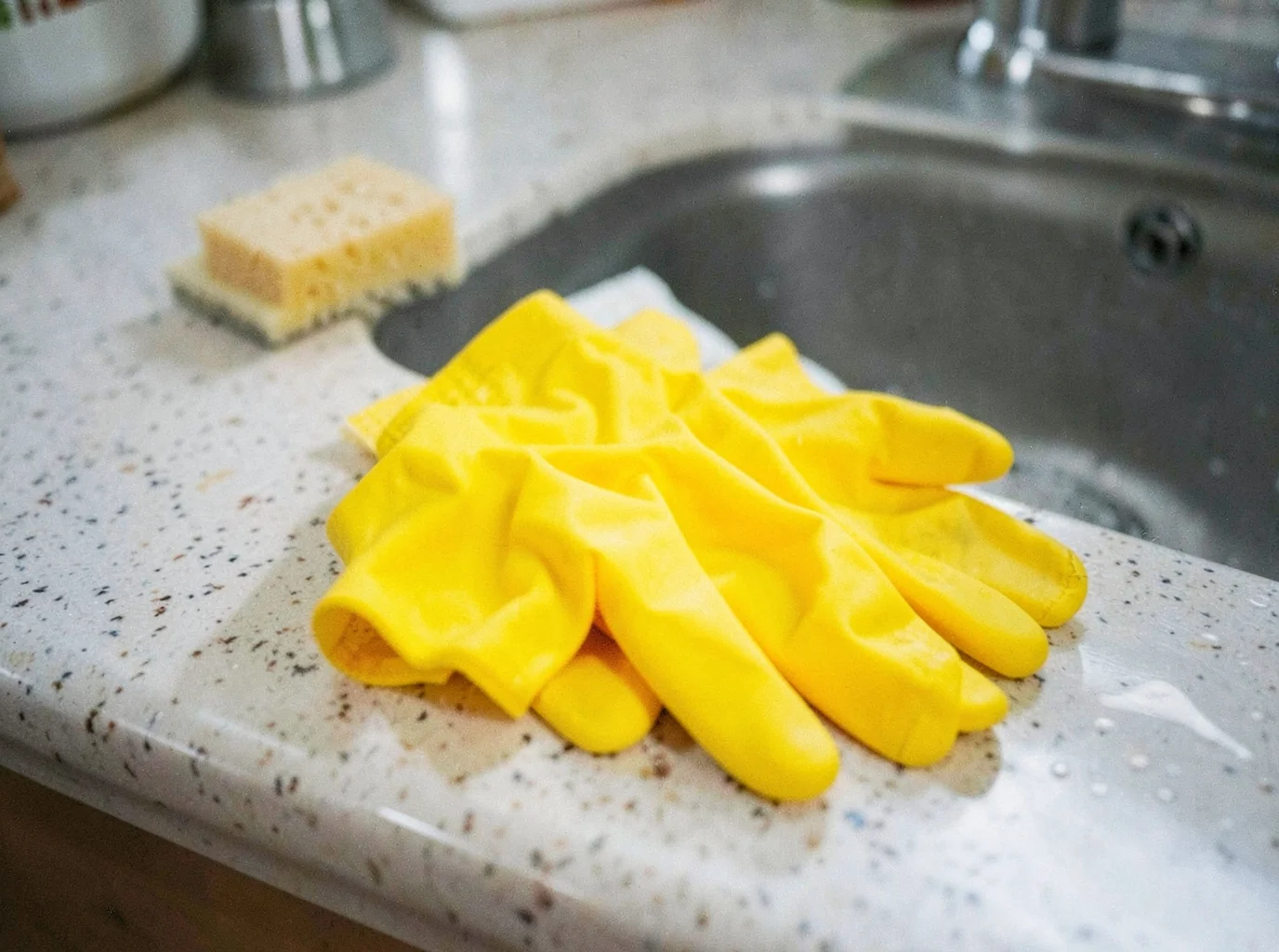
Strip away the brand talk, and the answer is simpler than you’d think. In everyday UK speech, most people reach for washing-up gloves when they’re talking about the rubber gloves used at the kitchen sink. That’s the phrase you’ll hear most often at home, in adverts, and on supermarket shelves.
Rubber gloves hasn’t gone anywhere, though. It’s still a standard British-English term, listed in UK dictionaries and used by retailers right alongside ” washing-up gloves .” They’re two names for the same thing, used in slightly different contexts.
Head into cleaning or industrial territory, and the labelling shifts. Sellers often switch to rubber gloves, latex gloves, or Natural rubber latex gloves, depending on the material. So the short version: washing-up gloves for chatting, rubber gloves for labels and dictionaries.
Why Are Rubber Gloves Sometimes Called “Marigolds” in Britain?
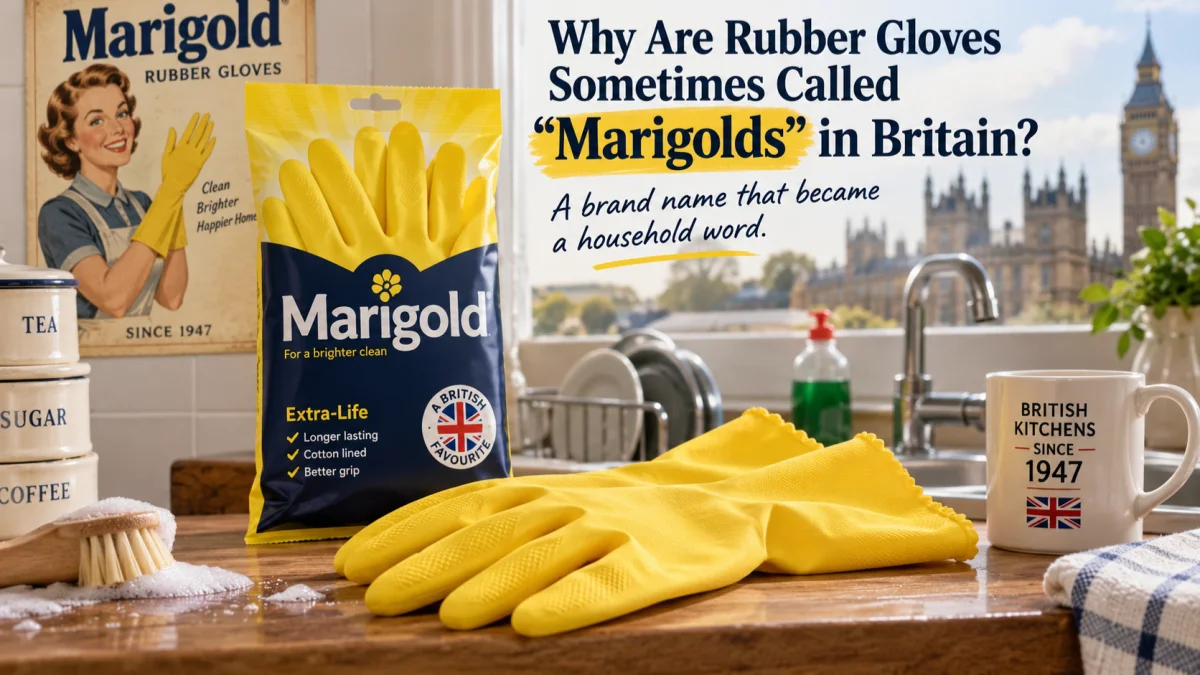
A flower had nothing to do with it. The Marigold name belongs to a glove brand, and that brand did its job so well that Brits stopped bothering with the generic term altogether. Linguists call this a genericized trademark—a product name that swallows the category whole.
The Brand Behind the Name
Marigold’s own company history places the first rubber gloves in 1947, with the first latex washing-up gloves hitting British kitchens in 1950. Some secondary sources trace the company further back, crediting Joseph Jackson with founding the brand in 1937, though the household latex gloves came later as the product line expanded.
Timing mattered. Rubber gloves for the sink weren’t common before this. Marigold arrived early, marketed hard, and stuck around long enough to become the default. Freudenberg, the company now behind the brand, calls Marigold the best-selling Glove brand in the United Kingdom. That explains why the name never faded.
How “Marigold” Became Shorthand?
Daily conversation and dictionary entries show that “Marigold” is now a British English term for rubber gloves used in household cleaning, almost always in the plural. Nobody asks for “a Marigold.” They ask for “the Marigolds”—the same way nobody buys “a Hoover” without meaning a vacuum cleaner, or reaches for “Sellotape” and means anything other than sticky tape.
This pattern isn’t rare in British English. Brand names quietly replace the generic term until the original word starts sounding oddly formal. “Rubber gloves” still works fine in writing or on a label, but “Marigolds” is what gets said out loud in most kitchens across the country.
Where the Gloves Come From?
Modern Marigold products still carry that UK identity on paper. Listings show manufacturer details tied to OL16 2AX, a UK postcode, even as production for some lines shifts to Malaysia. The branding stayed British. The factory floor didn’t have to.
So when someone in Yorkshire says they’re off to grab the Marigolds before doing the dishes, they’re not making a random flower reference. They’re using seventy-odd years of brand history.
What Different Rubber Gloves Are Called in the UK?
Walk down a UK supermarket cleaning aisle, and you’ll spot far more variety than just “Marigolds.” British retailers split rubber gloves into task-specific categories, and each one carries its own label. Knowing these terms matters if you’re shopping, comparing products, or trying to write copy that actually sounds British.
Household and Kitchen Terms
Household gloves are the broadest label. UK retailers use it to cover pretty much any rubber or latex glove for everyday cleaning around the house. It’s a catch-all term, meaning it covers any glove regardless of brand or task.
Narrow it down a bit, and you get kitchen gloves . This one shows up constantly in UK product listings for dishwashing and food-prep tasks. A Marigold Extra Life Kitchen Gloves pack, for example, sits in this category on most retailer sites.
Then there’s bathroom gloves, which sounds oddly specific until you realise the difference is practical. These come with a longer cuff, built for splash protection during scrubbing or when your arms need to go deeper into water. Marigold Longer Bathroom Gloves is the classic example here.
Cleaning, Trade, and Industrial Names
Step outside the home, and the vocabulary shifts again. Cleaning gloves or janitorial gloves are the standard trade terms across domestic and professional cleaning contexts in the UK.
For tougher jobs, sellers reach for heavy-duty rubber gloves — thicker, sturdier, built to survive repeated use. Polyco Maxima Heavy Duty Rubber Gloves is one you’ll find under this label, alongside options like Polyco Deep Sink Extra Long Rubber Gloves for anyone dealing with, well, deep sinks.
Chemical work brings its own naming pattern. UK trade listings use chemical-resistant gloves , and when the cuff runs longer, the term switches to gauntlets. Ansell AlphaTec Chemical-Resistant Gloves and Portwest Chemical Gauntlet Gloves both follow this convention.
Material-Based Naming
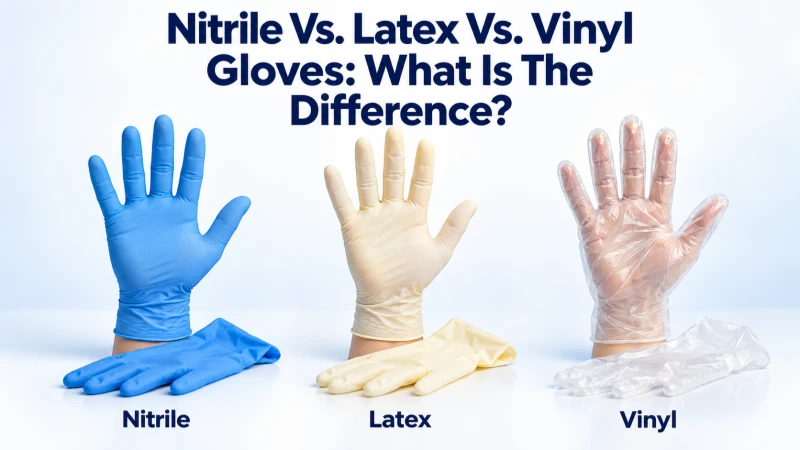
Material matters as much as task in UK labelling. Latex gloves and natural rubber latex gloves are the standard terms for many household rubber gloves. Nitrile gloves get grouped in the same category, especially for chemical resistance and oily tasks. PVC gauntlets round things out as another common PPE and cleaning term.
UK glove names follow a pattern of task, protection level, and material. Washing-up, heavy-duty, chemical-resistant paired with latex, nitrile, or PVC. That combination is the naming formula behind every listing you’ll find.
UK vs US: Do Americans Use the Same Names?
No, not really. Cross the Atlantic, and “washing-up gloves” turns into blank stares. Americans call them rubber gloves or, more specifically, dish gloves —straightforward, functional, no brand baggage attached. There’s no “Marigolds” equivalent in American kitchens. No genericized trademark took over the category the way it did in the UK. Ask for “dish gloves” in a US store, and staff know exactly what you mean. Ask for the same thing in Britain, and you might get a slightly confused look before someone points you toward the Marigolds.
Spelling Adds Another Layer
Spelling differences pile on top of the vocabulary gap. UK colour becomes US color. UK organise loses its “s” for a “z” across the pond, landing as organize. These small changes show up in product listings, packaging, and marketing copy, so UK English rubber gloves terminology needs its own SEO treatment separate from US-targeted content.
The Bigger Pattern
Americans don’t typically borrow British terms for household basics, and Brits rarely default to American ones either. Rubber gloves follow this pattern. A mundane cleaning product ended up with two separate naming systems—branding drove the UK term, plain function drove the US one.
Price tags don’t tell the whole story. A pair of household gloves at £1.45 and a box of Nitrile gloves at £7.29 can both claim to protect your hands, but they’re built for entirely different jobs. The search terms you use matter more than most shoppers realise, especially once you move past the kitchen sink and into cleaning, food handling, or trade work.
Search Terms That Work
Typing “rubber gloves” into a UK retailer’s search bar gets you somewhere, but it’s a blunt tool. Sharper results come from terms like:
-
“nitrile gloves UK”
-
“latex rubber gloves UK”
-
“chemical resistant gloves EN 374”
-
“medical examination gloves EN 455”
-
“UKCA CE gloves”
-
“bulk disposable gloves UK”
These phrases match how UK compliance pages and product listings are written, so you filter better and end up with fewer wrong purchases.
Compliance Marks Worth Checking
Two standards appear on UK glove listings. EN 374 covers resistance to chemicals and microorganisms, so it’s the one to look for on chemical-handling or nitrile gloves. EN 455 applies to medical or disposable examination gloves, and UK listings usually spell out both this and virus certification under EN 374.
Then there’s the mark CE or UKCA. Don’t just trust the brand name. Match the mark to the exact product code, since certification can vary between SKUs even within the same range.
What Prices Look Like?
Household washing-up gloves run from £1.45 to £3.00 per pair on UK retail sites. Disposable nitrile gloves sit closer to £0.07 per glove, £7.29 per box of 100. Chemical-resistant pairs on trade listings land between £1.13 and £3.07, while marketplace box pricing swings from £3.50 to £16.50 per 100, depending on certification.
A Simple Sourcing Checklist
Search the task first: medical, food, chemical, cleaning, or industrial. Filter by standard next. Verify the CE or UKCA mark against the product code. Compare unit pricing last, once everything else checks out.
FAQs About Rubber Gloves in the UK
Straight answers, no fluff. Here’s what UK glove buyers ask.
What standards should I check on the label?
Look for EN ISO 21420:2020, the general glove requirement that replaced EN 420. This standard added an electrostatic pictogram tied to EN 16350, dropped the protein content test for natural rubber gloves, and scrapped minimum glove-length rules unless another standard demands them. It also requires a date-of-manufacture marking. Mechanical risk gloves get scored under EN 388. Anything sold in the UK also needs to meet PPE Regulations 2018, with UKCA marking on the pack.
Do rubber gloves carry allergy warnings?
They should. Packaging must list any substance known to trigger allergic reactions, and latex content has its own specific test. If a listing skips this, that’s a red flag.
What sizes do UK rubber gloves come in?
Standard sizes are small, medium, large, extra-large. Wholesale buyers often see flock-lined household gloves packed as 10 bags of 12 pairs—120 pairs per case—in blue across the full S/M/L/XL range.
How long are heavy-duty and gauntlet-style gloves?
Heavy-duty rubber gloves measure 45 cm. PVC gauntlets, common in household and cleaning work, run 30 cm.
Who actually makes these gloves in the UK?
Simpac supplies flock-lined household gloves and holds BRC accreditation. MIP Ltd manufactures glove-box gloves for UK and European nuclear, pharmaceutical, and life-science sectors, certified ISO 9001:2015. Glove Supply Limited, based in Slough and London, is the sole UK distributor for Comfort Rubber Industries.
Conclusion
Next time you hear a Brit ask for their “Marigolds,” you’ll know they’re not talking about flowers. They mean rubber gloves, plain and simple. “Washing up gloves” works just as well at the kitchen sink. That’s genericized branding—the same kind of linguistic magic that turned Hoover into a verb.
Whether you’re prepping a UK-bound Amazon listing, decoding a British sitcom, or just satisfying your curiosity, you now have the vocabulary to sound local. Shopping for a pair yourself? Skip the confusion. Search “Marigolds” or “washing up gloves” to land on exactly what you need—not surgical gloves or gardening mitts.
Ready to stock up on gloves that match British shelves? Browse our cleaning and household glove range and grab a pair that speaks the language, no translation required.