Reach for a box of gloves, and you’re suddenly facing a choice that should be simple: nitrile, latex, or vinyl? If you’ve grabbed the wrong pair and ended up with itchy hands, a torn Glove mid-task, or a purchase that fell apart, you know this decision matters. These three materials aren’t interchangeable. Each has its own strengths and real limitations in stretch, chemical resistance, allergy risk, and durability. Whether you’re stocking a clinic, running a commercial kitchen, or just need reliable gloves for cleaning at home, picking the right one saves you money and headaches later. Here’s what sets them apart, so you can stop guessing and choose with confidence.
Nitrile Vs. Latex Vs. Vinyl Gloves: Core Differences at a Glance
Nitrile wins on protection, latex wins on feel, vinyl wins on price. Everything else follows from that. The material itself—synthetic nitrile butadiene rubber (NBR), natural rubber latex (NRL), or PVC with plasticizers—determines how each glove performs.
|
Dimension |
Nitrile |
Latex |
Vinyl |
|---|---|---|---|
|
Elasticity/Fit |
4/5 |
5/5 (best) |
2/5 (weakest) |
|
Puncture Resistance |
5/5 — 3–5x stronger than latex |
3/5 |
1/5 |
|
Chemical Resistance |
5/5 — broadest coverage |
3/5 |
1/5 |
|
Allergy Risk |
5/5 (protein-free) |
1/5 (highest risk) |
5/5 (low) |
|
Price (bulk) |
$0.055–$0.08/pc |
$0.045–$0.065/pc |
$0.03–$0.045/pc |
|
Durability |
5/5 |
4/5 |
2/5 |
Vinyl gloves run 30–50% cheaper than nitrile, making them great for budget-driven, low-risk tasks, but they are not built for chemical-resistant gloves or puncture-resistant gloves.
Nitrile Gloves: Materials, Properties

Nitrile butadiene rubber, or NBR, is the whole story here. It’s a fully synthetic material with zero natural latex protein in it, which makes nitrile the go-to latex allergy gloves alternative for anyone who breaks out, itches, or reacts to Type I latex allergies. That’s a big deal—it’s the exact reason hospitals, food processors, and cleanroom operations reach for nitrile first.
The numbers back up the hype, too. Nitrile is generally about 3x more puncture-resistant than natural rubber latex, and premium options like Ansell’s TouchNTuff 92-605 claim up to 4x the puncture resistance of comparable latex gloves . On the chemical side, nitrile holds up well against oils, greases, lubricants, some organic solvents, and diluted acids and bases—solid for splash and incidental contact, though it’s not indestructible against strong oxidizers or ketones. Always check a chemical compatibility chart before assuming “nitrile” alone means full protection.
Pricing & Product Examples
Pricing swings widely by thickness and certification. Lab and medical-grade nitrile boxes typically run $53.52–$616.62 depending on case size and specs. Budget retail options start around £20.50 per 100 gloves. Heavy-duty 8 mil gloves, built for mechanics and oily environments, land closer to $36.99 per 100.
Latex Gloves Explained: Elasticity Advantages and Allergy Risks
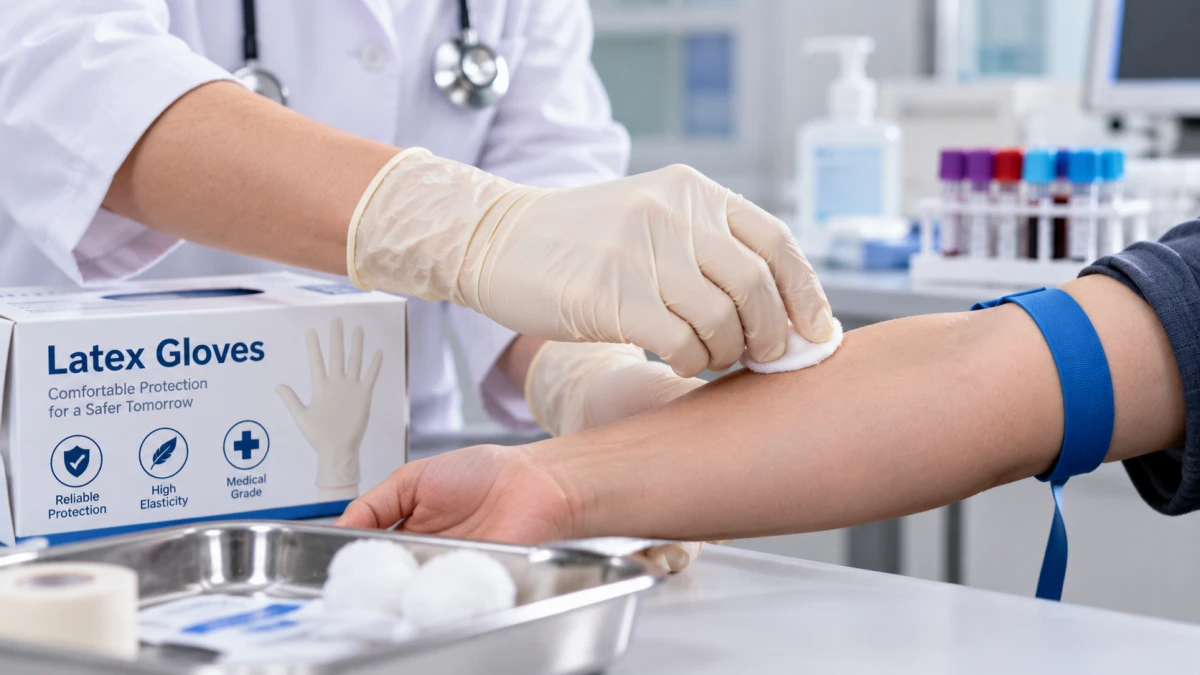
Latex comes straight from a tree. Natural rubber latex starts as the milky sap tapped from Hevea brasiliensis , the rubber tree, and that organic origin is why this material feels so different on your hand.
Why Latex Feels So Good On?
If you’ve ever compared glove elasticity side by side, latex wins every time. Its natural high elasticity and low modulus mean it hugs your hand’s shape and snaps back instantly. Surgeons, dentists, and lab techs doing fine, precise work often reach for latex first, because nothing else quite matches that second-skin feel. Nitrile comes close, especially in thinner formulations, but it’s still a touch stiffer. Vinyl trails far behind. It’s fine for quick, low-risk tasks, but ask it to handle small parts or detailed motion, and it falls short fast.
The Allergy Problem You Can’t Ignore
8–12% of healthcare workers report latex sensitivity, and during peak exposure years, that number climbed as high as 17%. Reactions move quickly too. Contact urticaria and itching can show up within 10 to 15 minutes. Some people also develop rhinitis, coughing, wheezing, or, in severe cases, anaphylaxis.
Most hospitals haven’t banned latex outright, but powdered latex gloves are largely gone. The UK’s HSE says powdered latex shouldn’t be used in workplaces at all, since switching to powder-free gloves with low protein content meaningfully cuts allergy and asthma risk.
If you need the feel of latex without the risk, low-protein powder-free versions are the compromise. Otherwise, nitrile remains the safer latex allergy glove alternative.
Vinyl Gloves: The Limits of a Low-Cost Solution

Vinyl gloves are essentially PVC with a personality makeover. That rigid, brittle plastic gets loaded up with plasticizers just to make it flexible enough to pull onto your hand. It works, but it’s also why vinyl feels stiffer and fits looser than nitrile or latex ever will. The film isn’t molecularly cross-linked, so it stretches unevenly and tends to separate under stress rather than snapping back. A typical multipurpose vinyl glove clocks in around 0.06 mm thick—thin, light, and built for tasks that don’t ask much of it.
That simplicity is where the savings come from. Cheap PVC resin plus a low-performance formula gives vinyl the lowest price point of the three, which is why it dominates in food-safe glove material for short, dry tasks—portioning bread, tossing salads, or bagging vegetables. It’s not the move for fatty foods, hot dishes, or long prep sessions, though; plasticizers can migrate into fats, especially with heat or alcohol-based sanitizers in the mix.
Same story for gloves for cleaning: vinyl handles quick, low-risk wiping and turnover work just fine. But hand heat and repeated flexing loosen the fit fast, and organic solvents, ketones, and aromatic chemicals will degrade it in a hurry. For anything greasy, chemical-heavy, or sharp-edged, nitrile takes over.
Key Comparison Dimensions in Depth: Chemical Resistance and Durability
Numbers don’t lie, and when it comes to chemical resistant gloves , the data tells a clear story. Nitrile leads across the board—IPA (isopropyl alcohol) rates “Excellent” for nitrile, while PVC/vinyl typically scores “Poor” on the same test. Latex sits in the middle, handling alcohol and diluted acids reasonably well but losing ground fast against oils, greases, and organic solvents.
The catch: “chemical resistant” isn’t a fixed label. One nitrile chemical glove datasheet shows breakthrough times ranging wildly depending on what it’s touching. Isopropyl alcohol? Breakthrough time exceeds 6 hours, permeation rate undetectable. 50% sodium hydroxide holds strong past 8 hours. 37% hydrochloric acid also clears 6+ hours. But drop to 29% ammonium hydroxide, and that same glove only lasts 2.2 hours with a permeation rate of 0.3. Carbon tetrachloride? Just 3.4 hours, permeation rate 30. Same material, wildly different results based on concentration and formula.
Puncture Resistance: What The Lab Data Shows
Puncture resistant gloves get measured in force (Newtons)—higher numbers mean tougher gloves. Lab testing on three nitrile products found Microtouch averaging 11.31 ± 2.13 N, Nitratouch at 9.53 ± 1.38 N, and Safeskin at 8.63 ± 3.30 N. Across the board, nitrile consistently beats latex on puncture force, and both outperform vinyl by a wide margin. The durability ranking holds steady: nitrile > latex > vinyl, with vinyl tearing into full rips the moment it’s nicked.
Powder-Free Comfort Trade-Offs
Powder free gloves shift the comfort equation too. Powder-free latex still wins on flexibility and second-skin feel, though allergy risk remains. Powder-free nitrile balances comfort with chemical protection best—slightly stiffer, but latex-protein-free. Powder-free vinyl feels the least breathable of the three, better suited for short, low-risk tasks than all-day wear.
Industry-by-Industry Selection Guide: Medical Exam Gloves Types and Other Applications
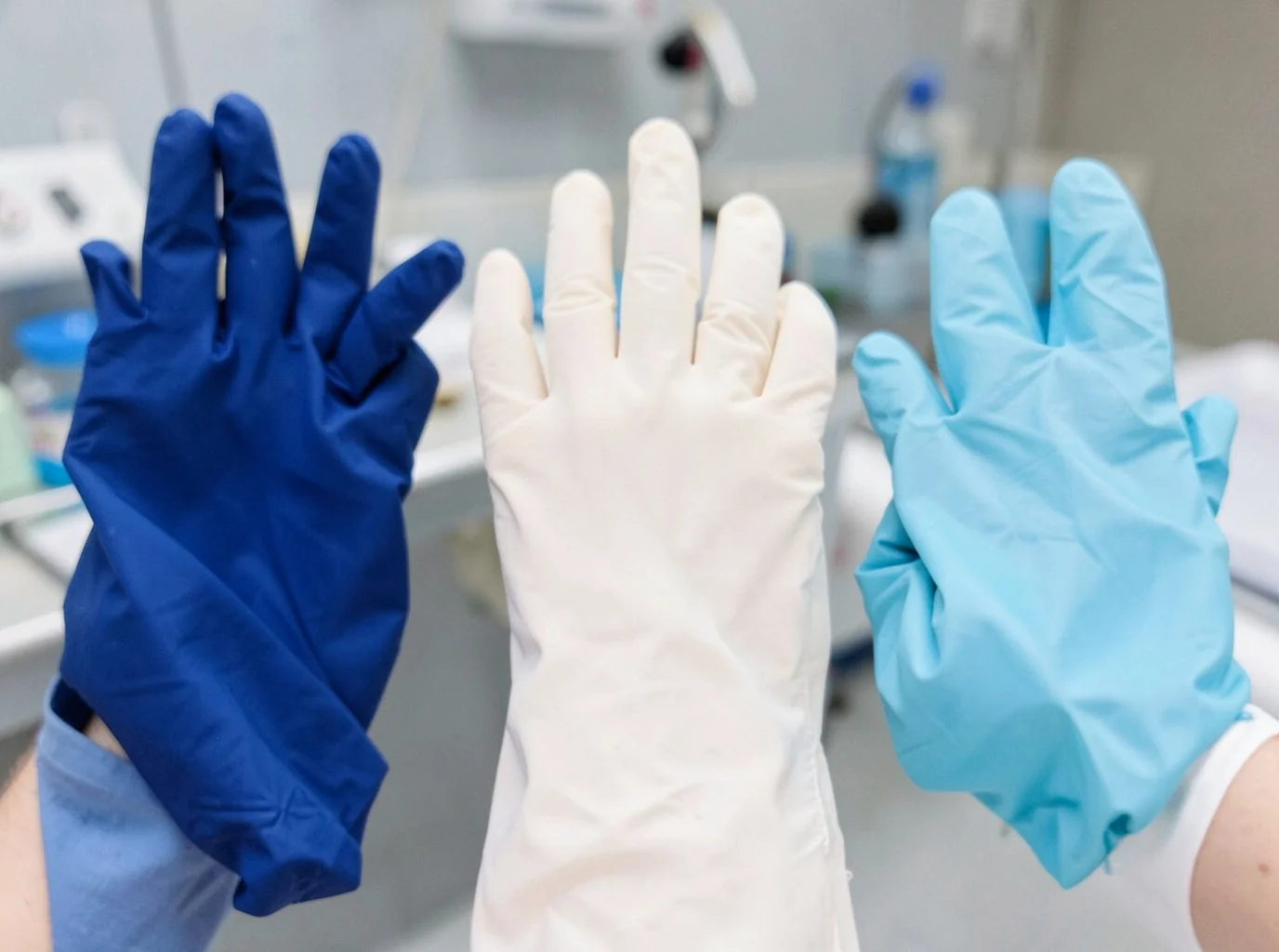
FDA doesn’t leave this decision to guesswork. All three materials (nitrile, latex, and vinyl) fall under Class I reserved medical devices and require 510(k) premarket notification before they can be sold as medical exam gloves types. Each material has its own standard too: ASTM D6319 for nitrile, ASTM D3578 for latex, and ASTM D5250 for vinyl. In Europe, the path runs through CE marking plus EN 455, while industrial chemical protection uses EN ISO 374-1 and EN ISO 374-5, stamped alongside Category III certification.
Medical, Nursing & Dental: What Gets Recommended
FDA guidance is blunt: if a patient or provider has a latex allergy, switch to PVC, nitrile, or polyurethane. Nitrile sits at the top of the list for physical exams, nursing care, and dental work. It sidesteps allergy risk while meeting FDA’s exam-glove criteria. Latex still holds a place in traditional care settings where fit and dexterity matter most, as long as allergy disclosure is handled. Vinyl works fine as a low-cost backup for quick, low-risk checks. But dentistry, with constant fluid exposure, calls for nitrile’s steadier barrier performance.
Cleaning & Chemical Handling: Cost Vs. Coverage
For light household cleaning, vinyl wins on price alone. But once cleaning products bring solvents or degreasers into the mix, nitrile’s puncture and chemical resistance make it the smarter total-cost choice—fewer tears, fewer replacements. For lab work and chemical handling, nitrile dominates outright, rated 5 mil or thinner with EN ISO 374-1 Type B certification for splash and liquid protection.
Glove Material Comparison Decision Tree: How to Choose Between Nitrile, Latex, and Vinyl
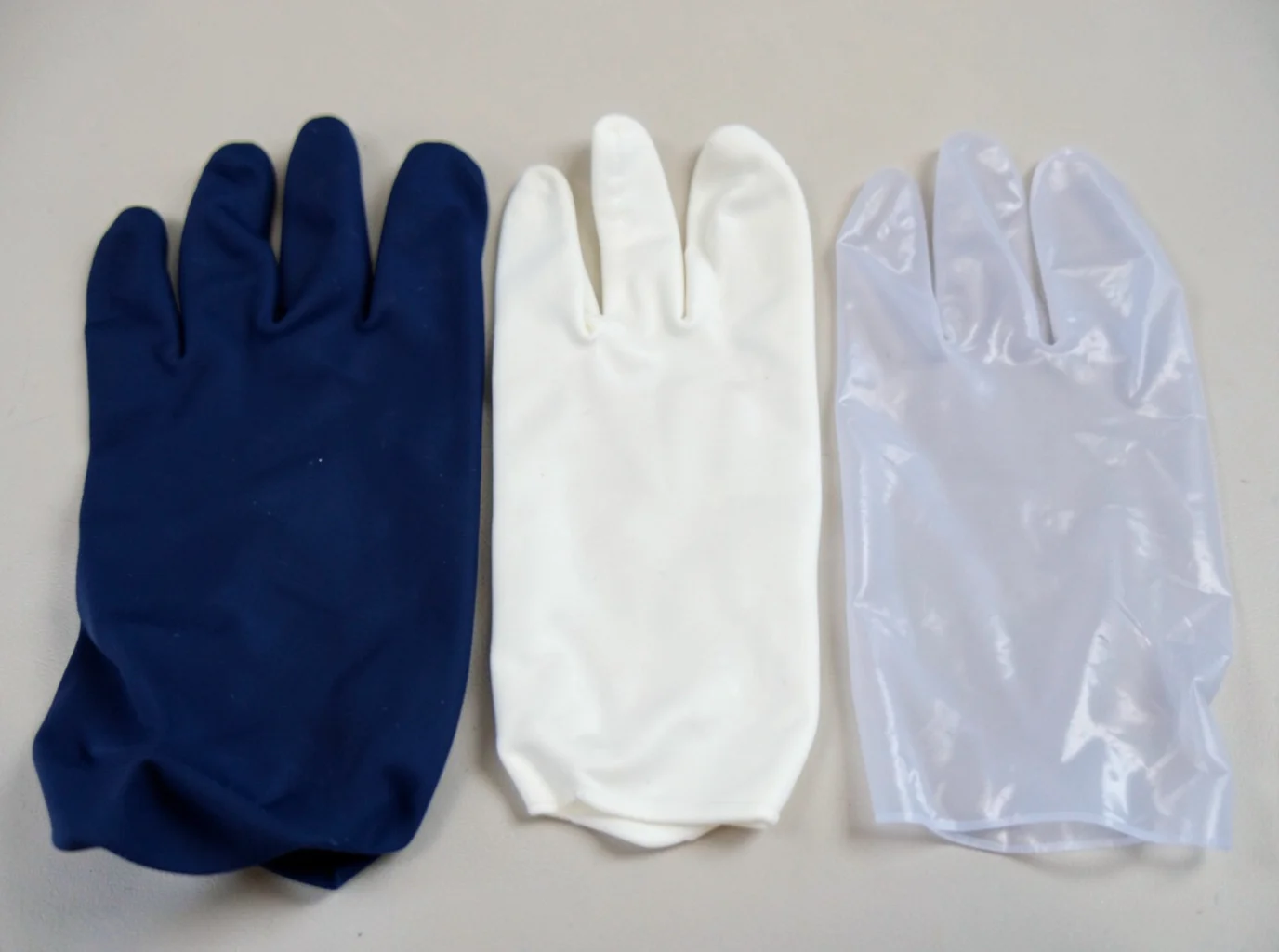
Four questions are all you need to pick the right glove. Walk through them in order, and the decision stops feeling complicated.
Start with allergy risk. If anyone on your team has a known latex allergy, or you’re covering patients and staff with unpredictable sensitivities, nitrile wins, no debate. It’s latex-free, so the Type I protein reaction isn’t a concern.
No allergy concern? Look at exposure. Chemicals, oils, solvents, cleaning agents, automotive work, lab samples—any of those, and nitrile takes over again. It handles oils and multiple chemical classes far better than latex.
Still undecided? Check the task itself. Fine, high-touch work like electronics assembly, delicate procedures, or anything demanding maximum sensitivity favors latex, assuming no allergy risk. Its elasticity comparison scores beat nitrile here.
Budget is the tiebreaker. Latex often runs 20–40% cheaper than nitrile, though some market data shows the gap as tight as 5–15% depending on region and order volume. It’s fine for low-risk, short-term tasks. Not fine if puncture resistance matters.
B2B Procurement Checklist
-
Medical facilities : require ASTM D6319 (nitrile) or D3578 (latex), plus EN 455/EN 374 documentation. Standardize nitrile across wards, ER, and sterilization lines.
-
Factory safety leads : demand chemical compatibility charts and puncture data before bulk buying; keep latex as a minor SKU for light assembly.
-
Supplier vetting : ask for third-party test reports, full size runs, powder-free options, and shelf-life data. Nitrile commonly holds 5+ years in proper storage.
-
MOQ strategy : order one test batch plus one reorder batch first. Run puncture, fit, and chemical trials before committing to volume.
Conclusion
There’s no single “best” glove—just the best glove for your hands, your task, and your budget. Nitrile wins for chemical resistance and puncture protection, latex gives you unbeatable stretch and comfort (if allergies aren’t a concern), and vinyl keeps costs low for light, low-risk jobs. If you’ve been burned by a latex allergy before, nitrile is your friend—it’s become the go-to latex allergy glove alternative for a reason.
So don’t just grab whatever’s cheapest off the shelf. Think about what your hands will actually be doing today, then choose accordingly. And if you’re still torn between options—or need bulk pricing for your business—reach out to our team at Morntrip. We’ll help you find the right fit, literally and figuratively. Your hands (and your wallet) will thank you.