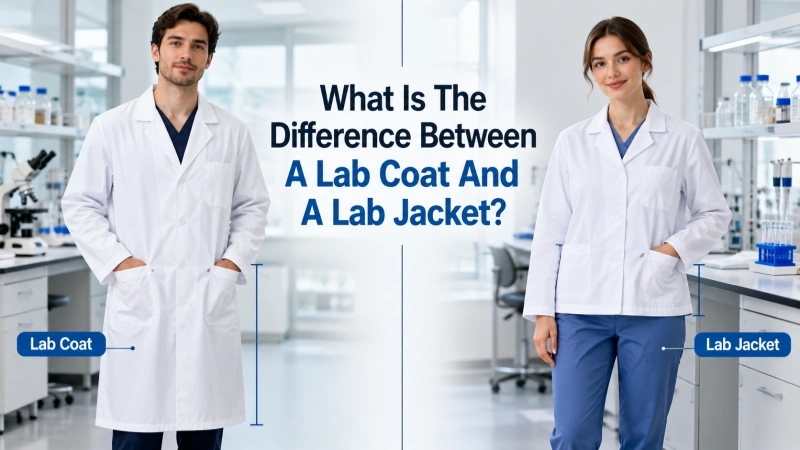
Custom disposable lab coats allow distributors, laboratory suppliers, and private-label brands to offer products that match their customers’ needs. Depending on the supplier, buyers may be able to customize material weight, sizes, colors, garment features, and packaging.
Before requesting a quotation, buyers should understand the differences between OEM, ODM, and private-label options. They should also confirm minimum order quantities (MOQs), sample availability, product specifications, and applicable labeling requirements.
This guide explains which lab coat features can be customized, how to choose a suitable manufacturing model, and what to confirm before approving samples and starting production.
Are disposable lab coats suitable for the intended laboratory, healthcare, or controlled-work environment, and which material, protection, and sterility options should be considered?
Material selection should match the intended use and purchasing brief. Wholesale options may vary by material weight, size, color, collar style, closure method, pockets, and cuffs. Buyers can compare these features against durability, printability, and cost priorities before selecting a standard specification or requesting a custom version.
Protection requirements should be reviewed alongside the product’s stated use, available certification and testing documents, and any protection claims. Ask the Lab Coat Supplier to provide relevant product documentation before internal approval, rather than relying on appearance or a general category description.
Sterile and non-sterile status is another purchasing decision. A facility may require one status for a defined process, while a different operation may accept the other. Product pages may also present OEM, ODM, and custom packaging routes, so the order structure should match the buyer’s distribution model and approval workflow.
For private-label programs, confirm fabric type and weight, size adjustments, branded packaging, label language, warning information, and applicable United States medical device labeling requirements. A practical approval process can move from a requirements brief and material confirmation to sample development, compliance checks, mass production, and shipment. MOQ, samples, and quotation procedures should be confirmed before purchase commitment.
Which Disposable Lab Coat Features Can Be Customized?
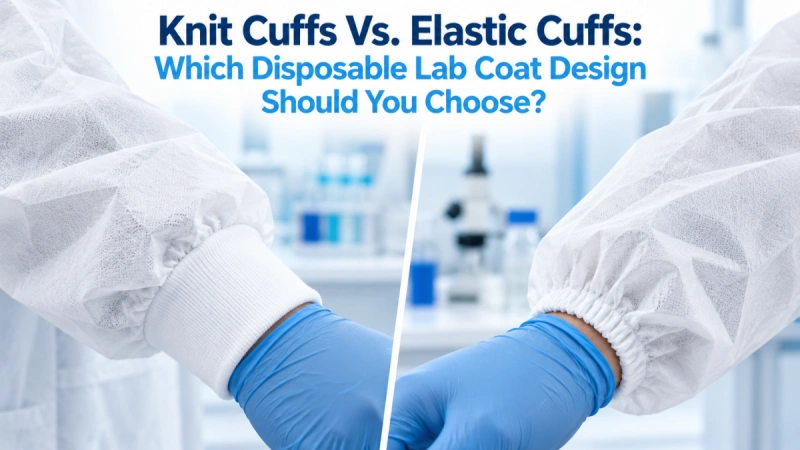
Buyers can review eight main garment specification groups: material weight, size, color, collar style, closure method, pockets, cuffs, and packaging. Wholesale disposable lab coat options may vary across these features, so the specification should match the intended product position and use. Material weight, sizing, and branding choices can involve trade-offs among durability, printability, and cost, while color and construction details can affect visual consistency across a private-label range. A Custom Lab Coats buyer guide can support this comparison.
Garment requirements should remain separate from packaging and labeling requirements. The garment brief should define the fabric or material weight, size range, color selection, collar, closure, pocket configuration, and cuff design. The packaging brief should state whether the product is sterile or non-sterile, the standard or custom packaging format, OEM or ODM requirements, branded packaging, label language, warning information, and any applicable United States medical device labeling requirements. Product pages may also address OEM labeling, samples, minimum order quantities, and quotation procedures, so buyers should request confirmation from the selected Lab Coat Manufacturer.
Prepare a written specification sheet before requesting samples or quotations. This gives the manufacturer a fixed reference for requirements confirmation, sample development, compliance checks, production, and shipment.
- Size range and size adjustments
- Color selection and printability needs
- Closure details and collar style
- Pocket configuration
- Cuff design
- Packaging format, labeling language, and warning information
OEM vs. ODM vs. Private Label for Disposable Lab Coats
Buyers should compare OEM, ODM, and private-label options across five areas: product structure, branding control, label language, packaging ownership, and customization scope. An OEM program usually starts with a buyer-defined requirements brief, followed by material and specification confirmation, sample development, compliance checks, production, and shipment. This model suits buyers that need stronger control over fabric, sizing, closure, cuffs, pockets, collar style, or other construction details. An ODM route may use an existing supplier product with selected modifications, while a private-label program may focus mainly on applying the buyer’s brand to an established product and packaging format. OEM disposable PPE manufacturing process
Product programs may present OEM, ODM, custom packaging, and sterile or non-sterile options, so buyers should confirm which choices are available for the specific lab coat line. Wholesale products may vary by material weight, size, color, collar style, closure method, pockets, and cuffs, all of which can affect durability, printability, and cost. Disposable lab coat options
For private-label planning, specify fabric type and weight, size adjustments, branded packaging, label language, and warning information. Buyers serving the United States should also review applicable medical device labeling requirements before approving artwork or product claims. Ask whether the supplier owns the base structure, who controls packaging files, and whether labels identify sterile status, product information, and warnings. This comparison helps clarify whether the project needs a supplier-led structure, a modified existing product, or a branded packaging program. Private-label considerations for United States buyers
What to Confirm Before Ordering Custom Lab Coats?
Before placing an order, buyers should prepare a pre-order confirmation list covering the selected disposable lab coat configuration, sample conditions, minimum order quantity, testing documents, certification documents, packaging, quotation terms, and production approval. Confirm the material weight, size range, color, collar style, closure method, pockets, cuffs, and whether the product is sterile or non-sterile. These details can affect durability, printability, and cost.
An SMS disposable lab coat product page may address protective use, certification and testing documents, standard packaging, OEM labeling, minimum order quantities, samples, and quotation procedures. Buyers should request the exact documents and sample conditions linked to their selected product configuration rather than relying on general product-page statements. For United States private-label programs, also confirm fabric type and weight, size adjustments, branded packaging, label language, warning information, and applicable medical device labeling requirements.
The sample stage should be recorded separately from mass-production approval. First, confirm the sample specifications, branding, packaging presentation, and any required changes. After revisions, issue written approval for the final production version and attach the approved specifications to the purchase order. An OEM process may include a requirements brief, material and specification confirmation, sample development, compliance checks, mass production, and shipment, so each handoff should have a documented status.
Use a clear procurement gate: no production release until specifications, testing and certification documents, sample status, packaging, minimum order quantity, and quotation details are confirmed in writing. This record gives purchasing, quality, and the supplier one reference before the order moves into production.
How Does the Custom Lab Coat Manufacturing Process Work?
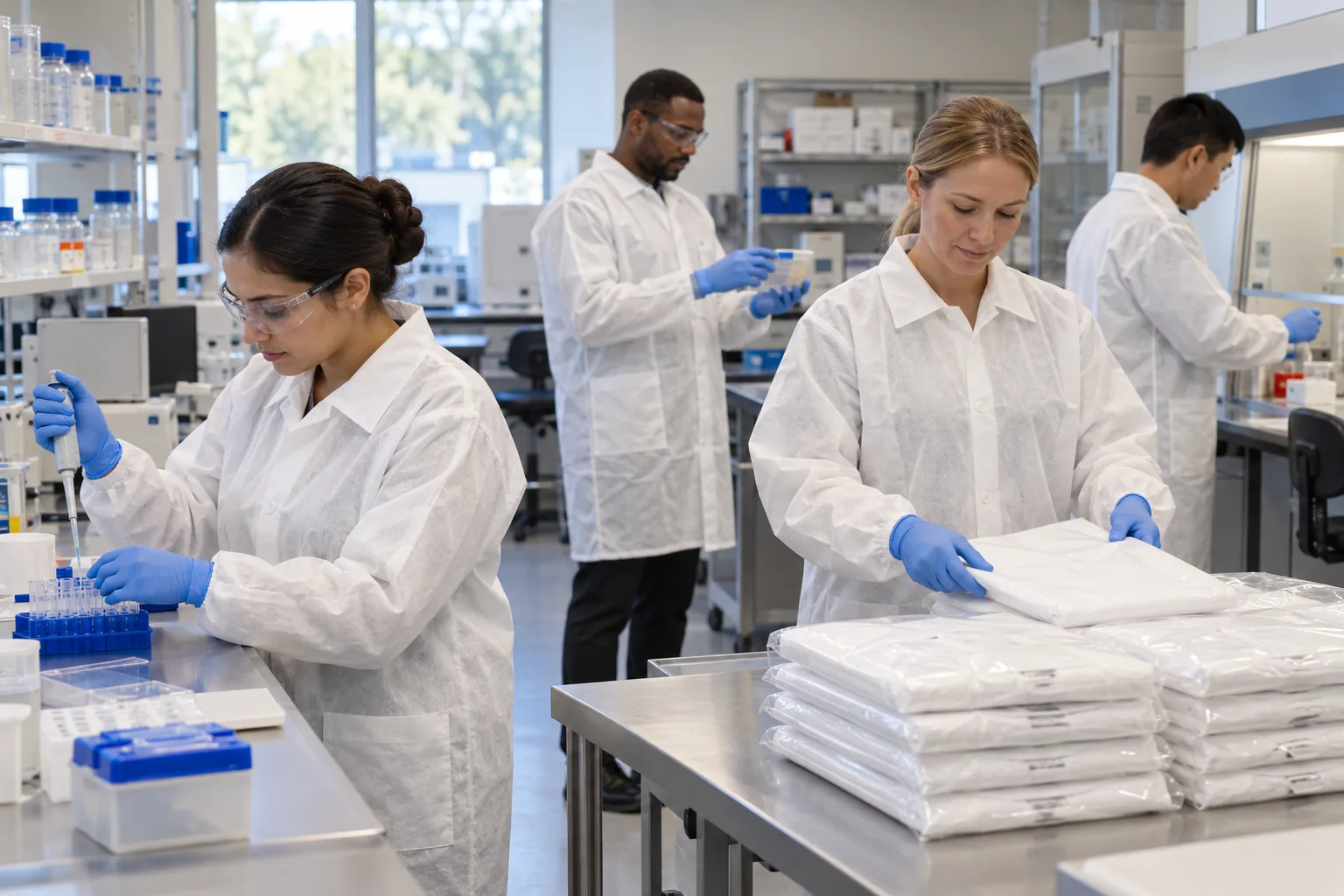
An OEM project starts with a requirements brief that gives the factory a clear product definition. The brief should cover the intended environment, product structure, material and weight, size range, color, collar, closure, pockets, cuffs, packaging, and labeling needs. Buyers should also state whether the coat is sterile or non-sterile and whether they need OEM, ODM, or private-label packaging.
Next, the buyer and supplier confirm the material and specifications. This stage records the agreed fabric, dimensions, construction details, branding format, packaging language, warning information, and any market-specific labeling requirements. For United States buyers, medical device labeling requirements may apply.
Sample development then creates a defined version for review. The buyer can assess fit, structure, material, printability, branding, packaging, and cost trade-offs before giving production approval. Any changes should be recorded against the sample version rather than handled through informal messages.
Compliance checks follow sample approval. The supplier reviews applicable certification and testing documents, labeling content, and sterile or non-sterile claims. Quality checks should then compare the approved sample, materials, specifications, packaging, and labels against the production plan.
After these approvals, mass production begins. Procurement teams should assign an owner to each stage, record approval dates, and keep an open-questions log covering unresolved specifications or documents. Before shipment, final quality checks confirm that the finished goods and packaging match the approved requirements.
A compact workflow is: requirements brief → material and specification confirmation → sample development → compliance checks → quality checks → mass production → shipment. This sequence gives buyers a practical record for supplier communication, approval control, and shipment release.
How can buyers identify and compare suitable lab coat manufacturers for the United States market?
For United States purchasing programs, compare disposable lab coat suppliers against the same commercial checklist. Start with product range: material type and weight, sizes, colors, collar styles, closure methods, pockets, cuffs, and sterile or non-sterile options. These details can affect product positioning, usability, durability, printability, and cost. Review whether the supplier offers OEM, ODM, private-label, and custom packaging services, as shown by disposable lab coat product listings.
Ask each manufacturer to confirm whether it supports your required fabric type and weight, size adjustments, branded packaging, label language, and warning information. Request its standard specifications, sample process, minimum order quantities, available documents, packaging format, and quotation response procedure. An SMS lab coat product page may provide a useful reference for reviewing samples, testing documents, packaging, and quotation details.
The supplier’s stated workflow also matters. Check whether it moves from a requirements brief to material and specification confirmation, sample development, compliance checks, mass production, quality checks, and shipment, as described in this OEM PPE process. For United States programs, ask how the supplier handles medical device labeling requirements, including language and warnings, based on the private-label guidance for U.S. buyers.
Use the comparison to shortlist a Lab Coat Manufacturer, test fit for Lab Coat Retailers, and prepare a complete inquiry for commercial review through the landing page and inquiry form.
FAQs About Custom Disposable Lab Coats
Can disposable lab coats be supplied in sterile and non-sterile versions?
Yes. Disposable lab coat product pages may distinguish between sterile and non-sterile products. Buyers should confirm the selected status in the product specification and sample approval.
What can be included in a custom disposable lab coat specification?
The specification may cover material weight, size, color, collar, closure, pockets, cuffs, packaging, labeling, and product structure. The final scope should be confirmed with the supplier.
What should buyers request before approving production?
Request samples, minimum order quantity details, testing or compliance documents, packaging information, OEM labeling details, quotation terms, and the production approval conditions for the selected configuration.
What should United States buyers review in a private-label program?
Review fabric type and weight, size adjustments, branded packaging, label language, warning information, and United States medical device labeling requirements before approving the product program.