You’ve got a box of isolation gowns sitting in storage, and no one on your team can quite agree on whether they’re still safe to use. It’s one of those questions that seems simple on the surface but trips up even experienced procurement teams and clinical staff—because unlike a carton of milk, isolation gowns don’t come with a big, obvious “use by” stamp that tells the whole story.
Do isolation gowns expire? Sometimes yes, sometimes no. The answer depends on factors buyers rarely check. We’ll go over the real isolation gown expiration date rules, what degrades the material over time, and how to tell if that gown in the back of your supply closet is still fit for use. If you’re managing PPE inventory or making purchasing decisions, you need this information to keep your facility compliant and protected.
Do Isolation Gowns Expire?
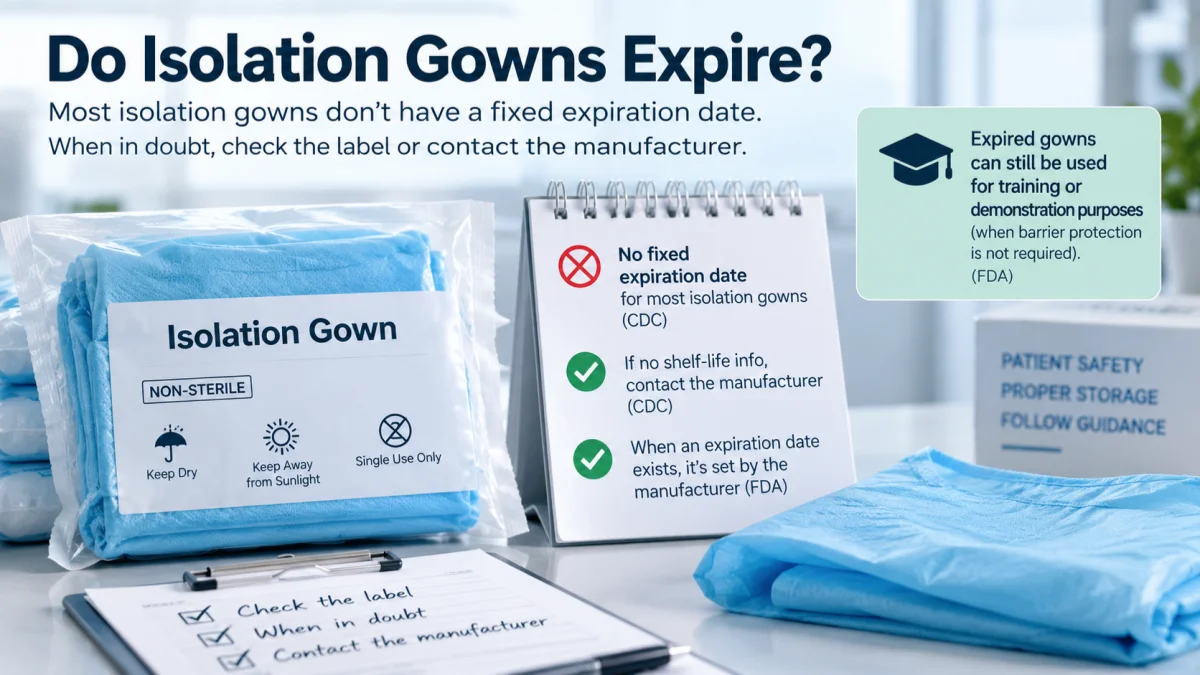
Most isolation gowns don’t come with a fixed expiration date. The CDC states it plainly: the majority of isolation gowns do not have a designated shelf life. That surprises a lot of buyers who assume every medical product ships with a hard cutoff date.
But a missing expiration date doesn’t mean permanent use. CDC guidance says that if there’s no shelf-life information on the gown label or packaging, you contact the manufacturer directly. You don’t guess.
FDA takes a similar stance, but frames it around the label itself. Their guidance says to check whether the gown has expired “as indicated by the manufacturer-designated shelf life in the product labeling.” So when an expiration date exists, it comes straight from the manufacturer.
Even expired gowns aren’t automatically trash. FDA notes that expired gowns can still serve for training or demonstration purposes, situations where barrier protection isn’t required. That’s a practical distinction worth remembering before you toss out an entire stockpile.
Isolation Gown Shelf Life: Sterile vs Non-Sterile
Sterility status changes everything about how long a gown stays usable. Sort isolation gowns into sterile and non-sterile, and the shelf-life picture gets concrete.
Non-sterile isolation gowns carry a shelf life of 3 to 5 years. Some manufacturers list “expected shelf life is 3 years” right on their product pages. Others push that number higher—product documentation states “5 years” or the equivalent “1825 days” or “60 months.” One technical spec sheet put it bluntly: “Non-Sterile: Established at 5 years.” So depending on the brand, you’re looking at either a 3-year or 5-year window.
Sterile isolation gowns run a similar range, 3 to 5 years, though 5 years shows up more often across manufacturer literature. One sterilization document states plainly: “Sterile device shelf life is 5 years from the sterilization date.”
The catch with sterile gowns is that packaging integrity isn’t optional—it’s the entire foundation of that shelf-life claim. The original sterile packaging must stay sealed, undamaged, free of pinholes, with no failed seals. Open that package for any reason, and the gown drops to non-sterile status instantly, even if it’s never touched a patient.
|
Type |
Common Shelf Life |
Typical Source Examples |
Procurement Focus |
|---|---|---|---|
|
Non-sterile gown |
3 years / 5 years (60 months, 1825 days) |
Documented across multiple manufacturer specs |
Check manufacture/expiration date on label; plan turnover in 3–5 year cycles |
|
Sterile gown |
3–5 years, commonly 5 years |
Sterilization docs cite 5 years |
Confirm sterile barrier is intact, unopened, undamaged |
Storage conditions matter for both types. High humidity, extreme temperatures, and packaging damage shorten usable life regardless of sterility status.
What Affects Isolation Gown Shelf Life?
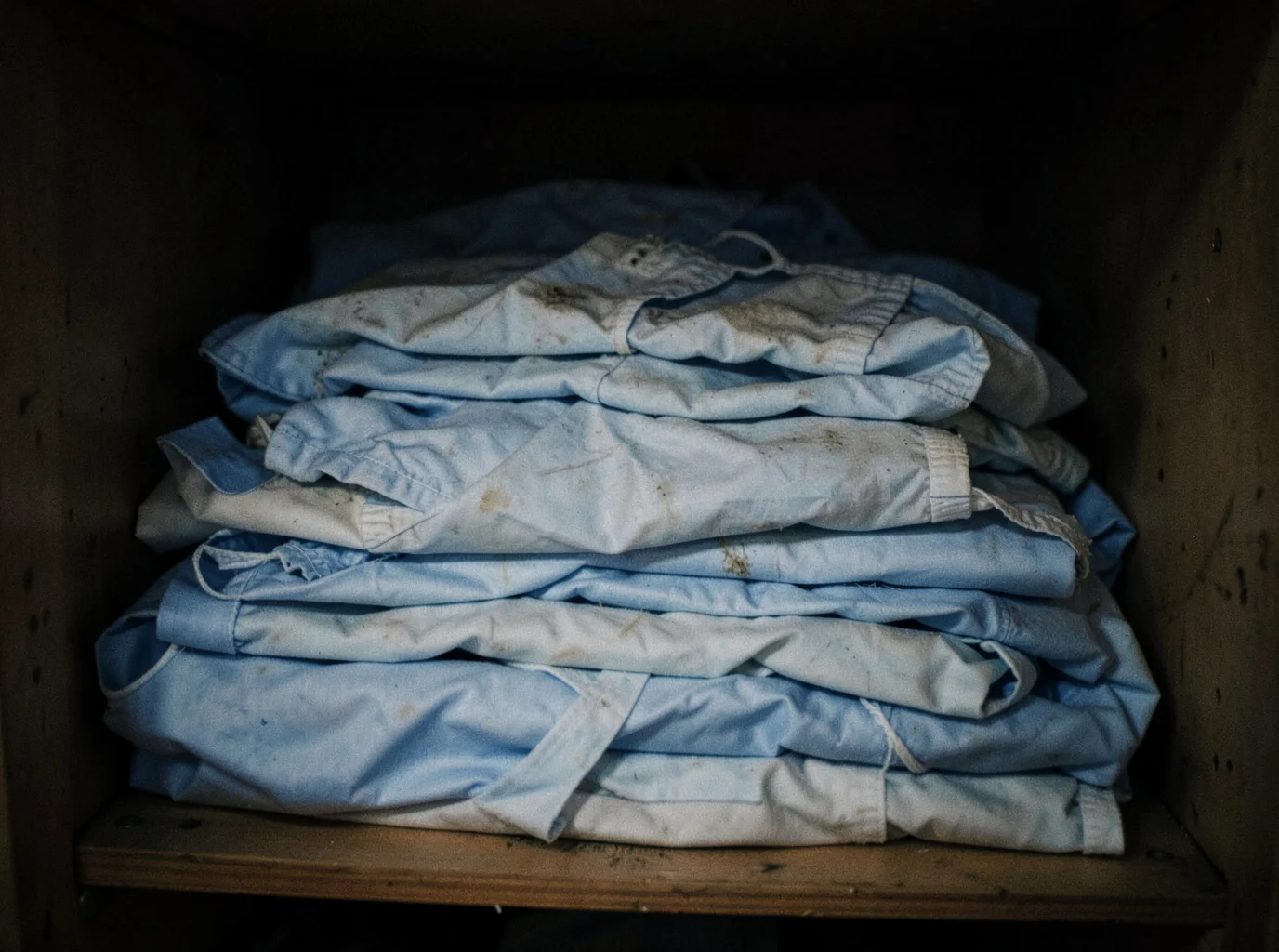
Storage conditions and handling do most of the damage to an isolation gown, often long before the printed shelf life date arrives.
Temperature and Humidity
Heat and moisture attack gown material at the fiber level. Manufacturer IFUs typically call for storage between 15–30°C, with some specs allowing a wider range down to -5°C. Above 35–37°C, sterile barriers start to weaken. Humidity does similar harm. Keep relative humidity below 80%, ideally 30–50% for a tighter buyer-grade benchmark. High humidity triggers mold growth, fiber brittleness, and hydrolysis of coated barriers. That degradation happens without visible warning until the fabric tears on first use.
Light Exposure
Direct sunlight and fluorescent lighting degrade gown fibers over time. UV exposure breaks down polymer chains in nonwoven fabric and coating layers. Store gowns away from windows and bright warehouse lighting.
Packaging Integrity
Check the gown and its packaging before use. Damaged packaging can expose the product to moisture, dirt, or other contamination during storage and handling. For sterile gowns, FDA labeling guidance states that sterile, single-use gowns should be labeled “Sterile” and indicate that sterility depends on the package remaining unopened and undamaged.
The CDC recommends checking sterile packages before use for loss of integrity, including tears, wet areas, or punctures. Packaging should also be protected from moisture and physical damage during storage.
Storage time should also be checked when the manufacturer provides a shelf life. According to CDC guidance for isolation gowns , most isolation gowns do not have a designated shelf life. If no shelf-life information appears on the gown label or packaging, healthcare facilities should contact the manufacturer.
Material Type
SMS isolation gowns offer breathability, but their Meltblown barrier reacts faster to heat, humidity, and UV. PE-coated gowns resist liquid penetration better but can develop microcracks from folding pressure and carton compression.
Proper Isolation Gown Storage Guidelines
A gown’s printed shelf life is only as good as the conditions it’s stored in. Get that wrong, and a “5-year” sterile gown can fail years before its date. Here are the conditions that keep it reliable.
Environmental Controls
Keep the storage room at 15–30°C (59–86°F). Some manufacturers tighten that to 15–25°C for dark, climate-controlled rooms.
Stay under 80% relative humidity as a baseline. For disposable gowns , tighter guidance recommends 30–50% RH to cut down mold growth and fabric brittleness.
Store gowns in the dark, away from direct sunlight and UV. Some spec sheets say this explicitly; no exceptions.
The room needs to be dust-free and well-ventilated, sealed against moisture, condensation, and pests.
Physical Storage Setup
Keep gowns in their original packaging until use. This preserves both cleanliness and the sterile barrier. Don’t unbox them ahead of time for convenience.
Cartons belong on shelves or pallets, never the floor. Shelving should sit at least 230mm (10 inches) off the ground. Use closed cabinets, racks, or carts with smooth, non-porous surfaces. Skip wood shelving. And avoid stacking boxes so tightly they crush the lower rows—the NIOSH crushing rate we mentioned earlier isn’t just a statistic.
Keep stock away from windows to limit condensation and light. Don’t leave gowns sitting in external shipping cartons inside clean storage; transfer them to organized inner boxes.
Facility SOP Checklist
-
Dedicate a separate, enclosed, secured clean-storage area.
-
Restrict access to authorized staff, log movement where possible.
-
Sort and label by size and type, use FIFO rotation.
-
Monitor temperature and humidity, check logs routinely.
-
Inspect for damage or moisture before releasing stock.
-
Keep gowns away from patient-room entryways.
-
Remove cardboard clutter and dust sources from the room.
How to Tell If an Isolation Gown Is Still Usable?
Forget the calendar for a second. A gown’s real test is what your hands and eyes find when you actually check it. This inspection sequence separates safe gowns from liability.
Immediate fails : Any tear, hole, perforation, broken seam, or split seal means the gown is done. Same goes for damp, wet, moldy, or discolored spots. Treat visible moisture or strikethrough as contamination, full stop.
Warning signs : Yellowing, brittleness, a chemical or musty odor, or fabric that’s gone thin in spots signals material breakdown. These gowns aren’t automatically trash, but they need a second look before clearing for use.
Failed closures count too . Broken ties, snapped snaps, stretched-out elastic, or a cuff that’s separating from the sleeve breaks the protective seal just like a hole would.
Field Checks That Take Two Minutes
Hold the gown up to strong light and hunt for pinholes, thin spots, or skipped stitches. Pull gently at the seams and sleeves; gaps that widen under light tension are a fail. Run your palm across the fabric. Stiffness, tackiness, or peeling means degradation. Focus on shoulders, underarms, sleeve seams, and the back closure first. That’s where stress shows up earliest.
Packaging check : crushed, punctured, or unsealed outer cartons mean the contents are suspect, even if the gown looks fine. When in doubt, treat it as contaminated.
No Expiration Date on the Label?
Don’t guess. Pull it aside, log the lot number, production date, and photos, then contact the manufacturer directly for written shelf-life confirmation before it re-enters usable stock.
Can You Use Expired Isolation Gowns? (The Debate Over Using Expired Isolation Gowns)
Short answer: only in an emergency, and only under strict conditions. CDC guidance allows facilities to consider using expired gowns during supply shortages, but that’s a crisis-capacity exception, not a green light for everyday use. The gown still has to look and feel intact—no visible damage, no signs of wear.
WHO backs the same logic. Their guidance permits using PPE past the manufacturer’s date short-term, during emergencies, provided the item is in good condition, with no visible signs of degradation. Miss that condition, and the exception disappears.
What Disqualifies a Gown
Before reaching for any expired stock, inspect every piece for tears, holes, contamination, staining, mold, mildew, unusual odor, discoloration, or fraying. Any one of those means discard, no exceptions.
The Reprocessing Line Nobody Should Cross
One thing stays firm regardless of shortage: disposable isolation gowns are not meant to be washed, decontaminated, or sterilized for reuse. WHO explicitly discourages reprocessing PPE without proper decontamination. On top of that, HSE evidence shows disposable gowns often can’t survive doffing intact—ties and fasteners break during removal, which makes reuse mostly theoretical anyway.
For procurement teams, expired gowns are a stopgap for supply gaps, not a standard practice. Once a gown shows damage, contamination, or came from an attempted reprocessing cycle, it’s done. No inspection saves it from that.
Inventory Management Best Practices (Practical Inventory Management Recommendations)
FEFO (first-expired, first-out) separates facilities that never scramble over expired stock from those that discover a problem gown mid-procedure. The system only works if you log lot number, production date, and expiration date at intake, not after gowns hit the shelf. That’s the point where most FEFO programs quietly break.
Storage and picking rules that make FEFO stick:
– Separate each SKU by expiration date, don’t mix lots at the same pick location
– Let your system assign picks by lot and location automatically, skip manual selection
– Scan and verify lot numbers at every outbound check
– Set expiration alerts 30 days out so near-date stock gets rotated, discounted, or used first
– Run regular cycle counts on FEFO SKUs, checking for misplaced or mixed lots
A basic spreadsheet works for smaller operations. Track SKU, lot number, production date, expiration date, receiving date, storage location, quantity, and required storage conditions. Larger volumes need a WMS with lot tracking, automated FEFO picking, expiration alert reports, and full traceability from receipt to shipment.
Bulk Purchase Planning
For bulk orders, build remaining shelf life into your purchase terms. If your facility burns through six months of stock, buy lots with at least 12–18 months left—roughly two to three times your consumption cycle as a safety margin.
Keep rolling orders tied to actual usage instead of stockpiling. Aim for inventory that covers 3–6 months of consumption with a 30-day buffer for near-expiry stock. At receiving, verify production date, lot number, sterilization method, and packaging integrity before anything enters storage.
FAQ: Common Questions About Isolation Gown Expiration
Quick answers below cover what most procurement teams ask once they’ve dug through the shelf-life details above.
Do all isolation gowns come with an expiration date?
No. Most disposable gowns skip a fixed date. When one does appear, it’s from the manufacturer’s own testing, not a regulatory mandate.
What’s the difference between surgical gown expiration and isolation gown expiration?
Surgical gowns almost always ship sterile with a hard expiration tied to sterilization validation. Isolation gowns can be sterile or non-sterile, so the expiration rules only apply to the sterile ones.
Do reusable isolation gowns have a shorter lifespan than disposables?
Reusable isolation gowns expire by wash cycles, not calendar time. Most manufacturers rate them for 50–100 launderings before barrier performance drops below spec.
Can gown material degradation happen before the printed date?
Yes. Poor storage speeds it up regardless of what’s printed on the carton.
Where can I get exact shelf-life documentation for a specific product? Manufacturers hold this data. For AAMI Level 1–4 specs, MOQ details, and written shelf-life confirmation, check Morntrip ‘s isolation gown product page or contact their team for samples and quotes.
Conclusion
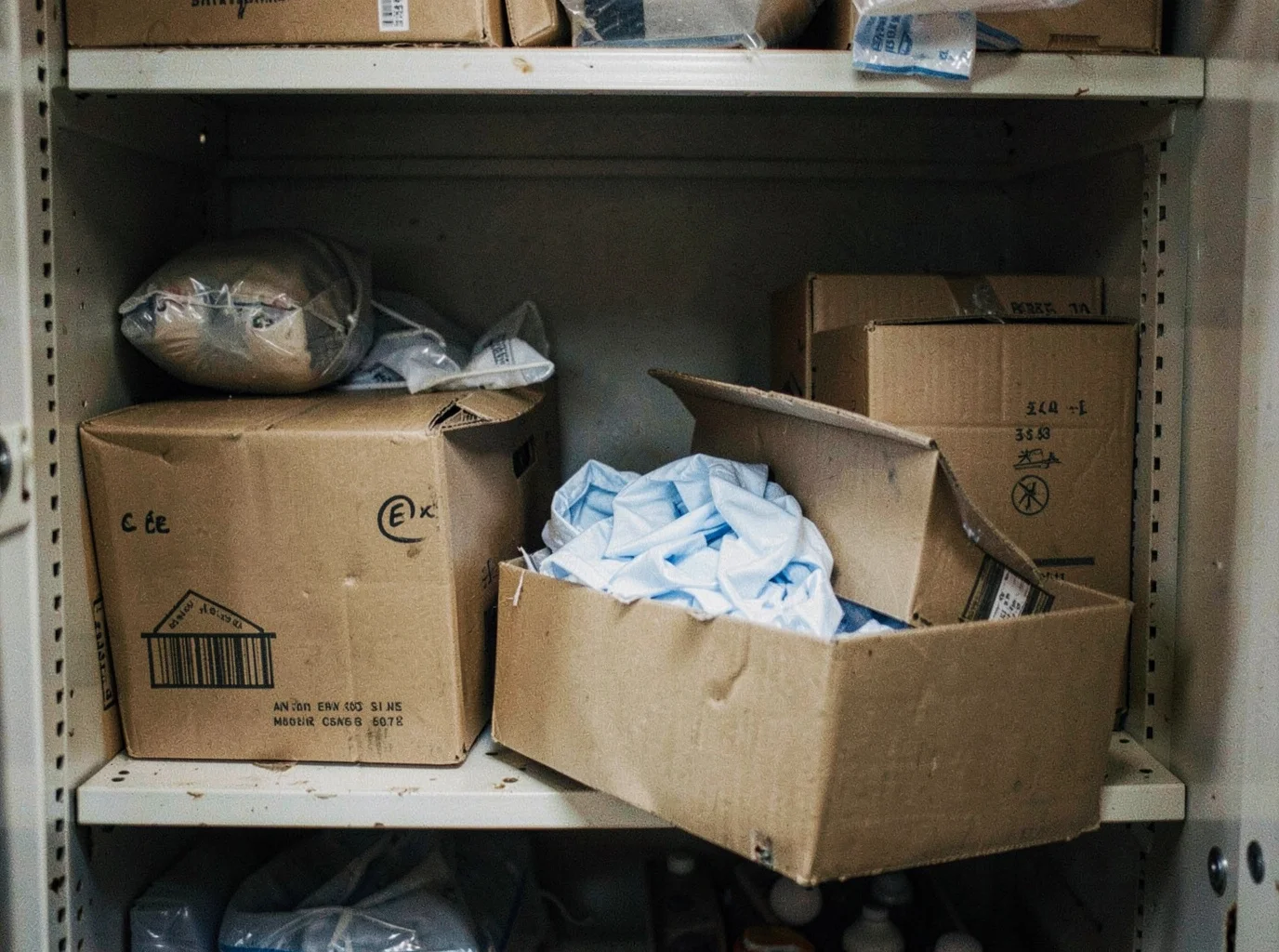
Do isolation gowns expire? Yes. But poor storage is a bigger risk than the printed date. A sterile gown stored in a cool, dry stockroom can outlast one carelessly shoved into a damp supply closet, no matter what the label says. Material degradation, humidity, and light exposure will outpace an arbitrary expiration date if storage conditions are ignored.
Start by auditing your current stock against the storage guidelines we’ve covered. Check for discoloration, brittleness, or compromised packaging before assuming a gown is safe. Build a rotation system (FIFO) into your inventory management so nothing quietly expires on a back shelf.
If you’re evaluating isolation gown manufacturers or need gowns designed for longer shelf stability and consistent barrier performance, look for a manufacturing partner who delivers that.