You’ve been there before — samples arrive looking decent, the price is right, and you place the order. Then 10,000 meters of substandard nonwoven fabric show up at your door. Suddenly, “decent” is costing you real money.
Here’s the reality: nonwoven fabric quality varies a lot between suppliers. The difference between a reliable roll and a bad one isn’t always easy to spot at first glance.
Most buyers don’t know this — you don’t need a lab or expensive equipment to catch the red flags before you commit. A few basic checks go a long way.
This guide covers everything from checking nonwoven fabric GSM to simple physical tests you can do yourself. Use it before your next bulk order, and you’ll know what you’re getting before it’s too late.
Why Nonwoven Fabric Quality Varies So Much (And Why It Costs You)
Nonwoven fabric is not woven. That one fact explains why quality is so hard to predict.
Traditional textiles interlace yarns. Nonwovens are built from fibers or polymers — bonded through heat, chemicals, mechanical pressure, or water jets. Change any one of those inputs, and you get a different product. Same appearance. Different performance. That gap is where problems start.
The three biggest quality drivers are fiber type, bonding method, and nonwoven fabric weight per square meter (GSM). Two rolls sitting side by side in a warehouse can look the same. Under real conditions, they behave like different materials.
Here’s where buyers get hurt:
A fabric using recycled or second-quality fibers instead of virgin material shows inconsistency across the roll. Your finished product takes on that risk
Bonding process variation hits the nonwoven fabric’s tensile strength and wet strength hard. Poor bonding fails faster in humid, medical, or filtration environments
Weight tolerance drift means you receive less material than you paid for — and less performance than your application needs
The downstream cost is real. Weak fabric forces more layers, backing support, or outright rejection. In regulated categories like medical PPE or industrial filters, a quality failure isn’t just expensive — it becomes a liability.
These variables are not optional knowledge. They are your first line of defense before a purchase order goes out.
Visual Inspection of Nonwoven Fabric: What You Can Spot in One Minute
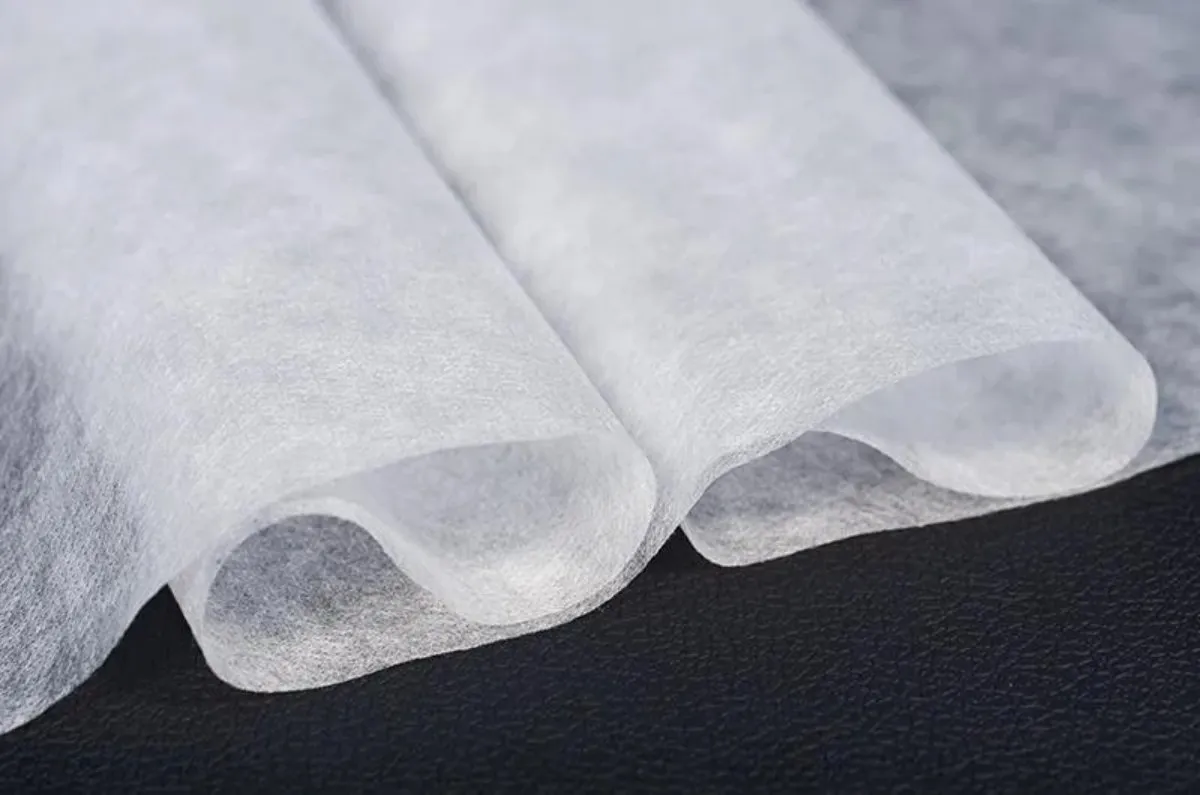
Before any test kit comes out, your eyes are already working. A trained buyer can spot serious quality problems in under 60 seconds — no equipment, no lab, no technical background needed.
Here’s what to look for and how to do it fast.
Start With the Surface
Hold the nonwoven fabric up to natural light. Look for uniform fiber distribution across the entire sheet. Good-quality spunbond nonwoven fabric shows a consistent, even texture. No thin patches, no holes, no cloudy spots. Poor bonding gives you a mottled look — some areas dense, others nearly see-through.
Run your eye along the edge of the roll. Uneven edges or visible waviness signal width tolerance problems. Those problems will hurt your cutting yield later.
Check the Face for These Red Flags
Lay a sample flat on a clean surface. Scan it section by section:
Fiber clumping or pilling : loose fibers that haven’t bonded well will pill fast under light friction
Color inconsistency : streaks, yellowing, or off-white patches in polypropylene nonwoven fabric point to inconsistent raw material or processing temperature problems
Visible holes or thin spots : hold the sample up to a window — any light breaking through in unintended areas signals an underweight or weak-bonded section
Surface fuzz : too many loose fibers on either face suggest the bonding energy was too low during production
The 30-Second Uniformity Test
Fold the fabric sample in half, then fold again. Hold it up to the light. All four layers should transmit light at the same level. One quadrant looks lighter than another? The nonwoven fabric weight per square meter is drifting across the roll. That means inconsistent performance across your entire batch.
This one check catches the kind of GSM variation that formal nonwoven fabric thickness measurement would later confirm in a lab. You won’t get a precise number here — but you get a clear directional signal, fast.
What Visual Inspection Can and Cannot Tell You
Visual checks catch gross defects: bad bonding, obvious contamination, structural inconsistency, and surface damage. A 60-second pass is a screening step. It’s not a full quality verdict.
What it won’t reveal: precise nonwoven fabric GSM, actual nonwoven fabric tensile strength, or nonwoven fabric breathability performance. Those require the physical tests covered in later sections.
Use visual inspection as your first filter. A sample fails here? Stop. Don’t move to physical testing — move to a different supplier.
Simple Physical Tests of Nonwoven Fabric Anyone Can Do
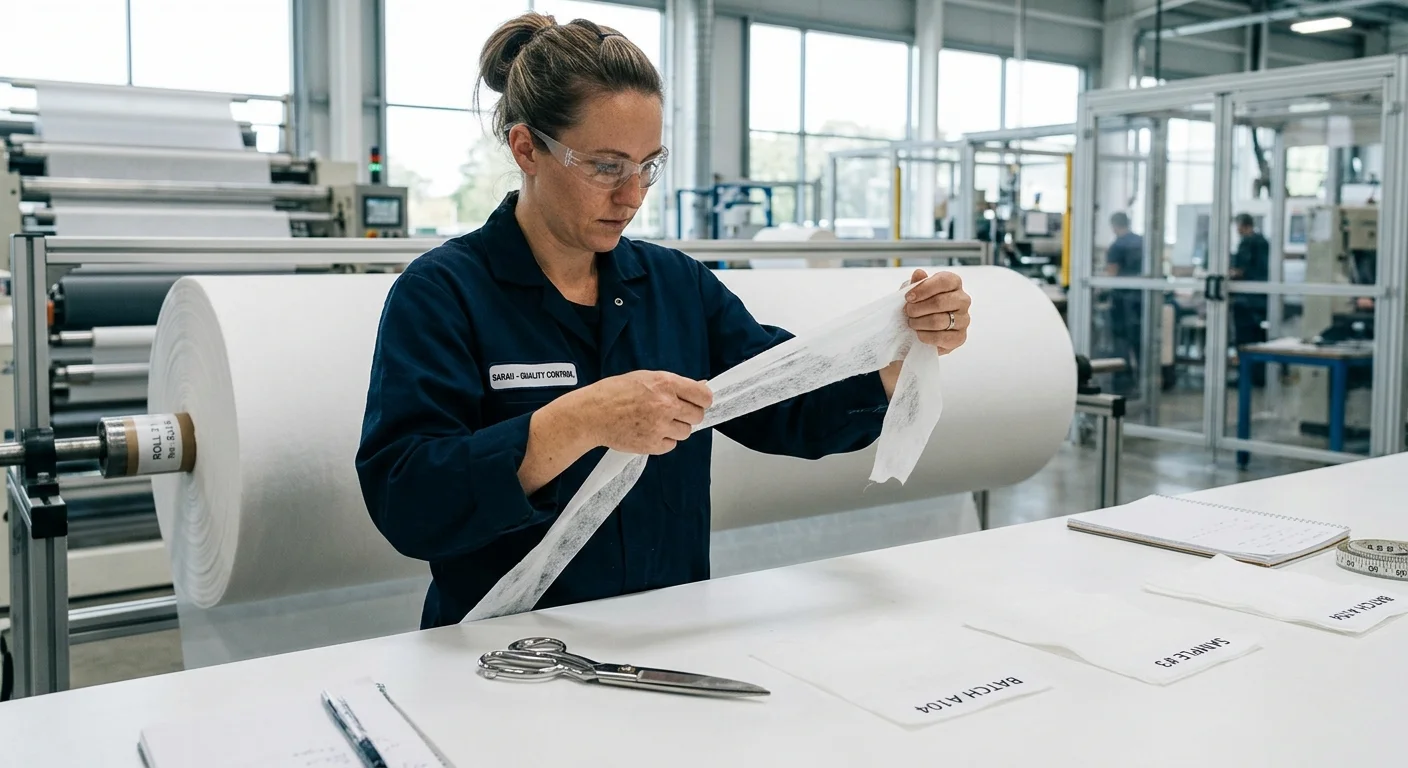
Your eyes caught the obvious problems. Now it’s time to get your hands involved.
Visual inspection is your first filter — but it won’t tell you how a fabric truly performs . These simple physical tests will. None of them requires a lab. None requires expensive equipment. All you need is about 10 minutes and a sample in your hands.
These tests measure the metrics that determine real-world performance: nonwoven fabric GSM, nonwoven fabric tensile strength, nonwoven fabric softness, nonwoven fabric breathability, and structural integrity under stress. Here’s how to run them yourself.
The GSM Estimation Test (Weight Per Square Meter)
Nonwoven fabric weight per square meter is one of the most critical specs in any purchase order. It’s also one of the easiest for suppliers to misrepresent.
Here’s a quick field method:
Cut a 10cm × 10cm sample from the roll (use a ruler and scissors — precision matters here)
Weigh it on a kitchen scale accurate to 0.1 grams
Multiply the weight in grams by 100
That gives you the GSM value for that sample. A supplier quoting 80 GSM should give you a result close to 0.8 grams for a 10×10 cut. Anything lower than expected means you’re receiving underweight fabric — less material, less performance, less value per meter.
Run this test on multiple spots from the same roll. Wide variation between samples is a red flag. It points to inconsistent production quality.
The Tensile Strength Pull Test
Nonwoven fabric tensile strength tells you whether your product holds up under real use. That applies to a shopping bag, a medical drape, or an industrial filter — whatever you’re buying for.
No tensile testing machine needed. Do this:
Cut a strip about 2cm wide and 15cm long, with the long axis running along the machine direction (lengthwise on the roll)
Hold each end between your thumb and forefinger with a solid grip
Pull with a steady, controlled force — don’t jerk
Good spunbond nonwoven fabric resists tearing. It stretches a little before giving way. Poor bonding fails fast — you’ll feel it right away. The fabric either tears at low force or delaminates instead of stretching evenly.
Repeat the test cross-direction (across the roll width). Most nonwovens are weaker in the cross-direction, but the gap shouldn’t be large. A fabric that tears almost right away in the cross-direction has a bonding problem. That problem will show up in production.
This test is critical for evaluating polypropylene nonwoven fabric used in bags, geotextiles, or any load-bearing application.
The Breathability Hand Test
Nonwoven fabric breathability matters most in hygiene, medical, and agricultural applications. Here’s a simple way to check it:
Hold the fabric flat against your open mouth
Exhale with moderate pressure through the fabric
Place the same fabric against the back of your hand and repeat
High-breathability fabric lets air pass through with little resistance. You’ll feel it on the back of your hand. A fabric that blocks airflow is too dense or poorly structured for breathable applications.
For meltblown nonwoven fabric used in filtration, that resistance is intentional. For coverall or hygiene applications, high resistance is a problem — not a feature.
The Softness and Pilling Friction Test
Nonwoven fabric softness shapes end-user experience and product quality. This matters in medical, hygiene, and skin-contact applications.
To test it:
Rub the fabric surface 10–15 times with your thumb, using steady pressure
Check for pilling, fiber shedding, or surface distortion
Then rub two pieces of the fabric against each other for 15 strokes
Quality fabric holds its surface together. Cheap or poorly bonded fabric pills fast, sheds loose fibers, or breaks down on the surface. Fiber shedding in medical or food-contact applications isn’t just a quality issue — it’s a compliance risk.
The softness feel test is subjective, but that doesn’t make it useless. A fabric that feels scratchy or stiff for skin-contact use is a real problem. That feedback counts as data.
The Water Resistance Drip Test
Need to check the nonwoven fabric durability under moisture? This test takes 30 seconds:
Lay the fabric flat on a dark surface
Drop 3–5 water droplets onto the surface from about 10cm height
Watch what happens over 30 seconds
Water beading on the surface? The fabric has a hydrophobic treatment. That’s useful for medical, agricultural, or outdoor applications. Does water absorb straight away? The fabric is hydrophilic. That suits some hygiene applications but fails in waterproof-critical uses.
The result itself isn’t the issue. The issue is whether the result matches what the supplier told you. A discrepancy means you’re not getting what was specified.
These five tests won’t replace lab certification for regulated industries. But for most B2B buyers making bulk purchasing decisions, they give you enough to separate reliable suppliers from risky ones. Run them on every sample. Document the results. You’ll be glad you did when the full shipment arrives.
How To Check GSM Without Professional Equipment?
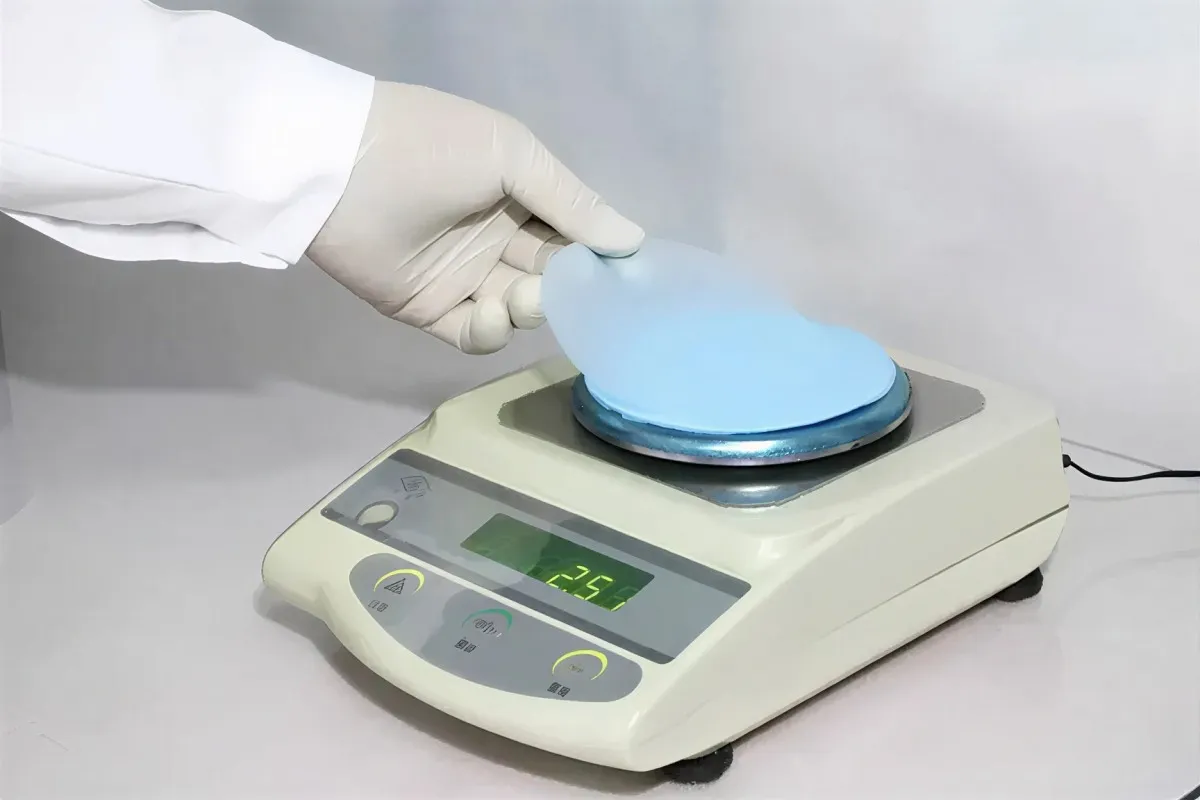
Nonwoven fabric GSM is the most misrepresented spec in supplier quotes. Claiming 80 GSM on a product sheet costs nothing. Faking a scale and a ruler is a different story.
The good news: you don’t need a professional GSM cutter or a lab to check it. Here’s how to do it with tools you already have.
What You Need
A ruler or measuring tape
Scissors or a cutter
A digital kitchen scale with at least 0.1g resolution (0.01g is better for lightweight fabrics)
A calculator — your phone works fine
That’s it.
The 10×10 cm Method (Fastest and Most Reliable)
This is your go-to approach. It’s accurate, repeatable, and takes under three minutes.
Cut a precise 10cm × 10cm square from the fabric sample. Use a ruler and cut clean, straight edges. Sloppy cuts produce the wrong area — and wrong GSM numbers.
Weigh it on your digital scale. Record the weight in grams.
Multiply that number by 100. That’s your GSM.
Example: your 10×10 cut weighs 0.8g. Multiply by 100 → 80 GSM. Supplier quoted 80 GSM? You’re good. The sample weighs 0.65g. You’re getting underweight fabric — and paying for material that isn’t there.
The math is simple: a 10×10 cm sample covers 100 cm², which is 0.01 m². GSM = grams ÷ m². So weight ÷ 0.01 = weight × 100.
Don’t Stop at One Sample
One data point isn’t enough. Cut 3 to 5 samples from different locations across the roll — edges, center, both ends. Calculate GSM for each, then average the results.
Here’s why it matters: one passing result can hide serious variation. Say one sample reads 80 GSM and another reads 62 GSM — both from the same roll. The nonwoven fabric weight per square meter is all over the place. That’s a production consistency problem. Inconsistent GSM leads to inconsistent performance. Failure points become hard to predict.
Quick Reference: Other Sample Sizes
Can’t cut a perfect 10×10? Use these multipliers:
Sample Size | Area (cm²) | GSM Multiplier |
|---|---|---|
10 × 10 cm | 100 cm² | × 100 |
10 × 20 cm | 200 cm² | × 50 |
20 × 20 cm | 400 cm² | × 25 |
50 × 50 cm | 2,500 cm² | × 4 |
The universal formula: GSM multiplier = 10,000 ÷ sample area in cm². Learn that once, and any sample size works.
Sanity-Check Your Result
Not sure if your number makes sense? Here are real-world GSM benchmarks for polypropylene nonwoven fabric and related materials:
Lightweight hygiene/medical nonwovens : 15–35 GSM
Standard shopping bag / agricultural fabric : 50–100 GSM
Heavy-duty geotextile or industrial nonwoven : 100–300+ GSM
Got a number that falls far outside the expected range? Run through this checklist:
Re-measure your cut dimensions
Confirm the scale reads zero before weighing
Make sure you’re weighing a single flat layer — no folds, no seams, no overlapping edges
Small cutting errors grow into big GSM miscalculations. This is true with any fabric, but thin and lightweight materials are the most sensitive to it.
How To Tell If Nonwoven Fabric Is Made from Virgin PP?
Virgin PP and recycled PP can look identical on a roll. That gap between appearance and reality is where suppliers cut costs — and where buyers absorb the loss.
No single test proves a fabric is 100% virgin polypropylene. What works is stacking multiple signals together — documentation, physical checks, and targeted lab data. Use all three layers, and you get a clear picture fast.
Start With the Paper Trail
Before you touch a single sample, ask your supplier for:
A specification sheet that clearly states “100% virgin polypropylene” — not “PP-based” or “polypropylene blend”
An FTIR test report confirming PP as the sole polymer with no detectable fillers above 0.5–1 wt%
OEKO-TEX or REACH compliance reports — these flag heavy metals and restricted substances that show up in recycled feedstock
Then check the price. Virgin polypropylene nonwoven fabric from Asian manufacturers runs 10–30% higher than equivalent GSM products blended with recycled content. A quote that sharply undercuts market rate isn’t a deal — it’s a warning sign.
The Burn Test: Confirm It’s PP at All
This step doesn’t prove virgin quality. But it rules out misrepresented base materials fast.
Take a small scrap and bring it near a flame:
Virgin or recycled PP melts and drips, burns with a blue-yellow flame, smells like paraffin wax, and leaves a small, hard, light-colored bead
PET produces black smoke, a sweet chemical smell, and black hard residue
Cellulosic fiber burns fast like paper with grey ash and no melt-drip
If the burn behavior doesn’t match PP — stop. You’re no longer checking virgin quality. You’re dealing with a misrepresented fabric altogether.
Visual and Tactile Red Flags in the Field
QC technicians use these signals as screening indicators. They’re not lab-grade proof, but they’re fast and reliable enough to catch most recycled-blend situations:
Color uniformity : Virgin spunbond nonwoven fabric holds a consistent shade across the roll. Color variation (ΔE* above 1.0) between sections or batch points to recycled blends. Watch for greyish base tones or visible specks in white fabric.
Odor on opening : Virgin PP has almost no smell at room temperature. A noticeable plastic, chemical, or burnt odor from the bale is a solid marker of recycled PP content.
Hand-feel vs. GSM : At the same weight — say, 25 GSM SMS for medical use — virgin PP feels softer, drapes evenly, and shows no powdery surface. A fabric that feels stiff or chalky at a given GSM often contains inorganic fillers like calcium carbonate.
Quantitative Checks That Separate Virgin from Recycled
Run these against the supplier’s own declared benchmarks for virgin-grade material:
GSM consistency : Quality polypropylene nonwoven fabric made from virgin PP holds within ±5% GSM across the roll. Variation beyond ±7–10% signals process instability. This shows up often in recycled blends.
Tensile strength and elongation : At 25 GSM, a 100% virgin spunbond delivers >30–40 N/5cm in machine direction with elongation at break of >30–60%. Recycled or filler-loaded mixes can drop tensile performance by 10–30% at the same stated weight.
Thickness vs. weight ratio : Virgin PP follows a predictable curve — 25 GSM spunbond runs 0.18–0.22 mm thick. A fabric that measures thick but tests weak at a given GSM almost always contains fillers or degraded recycled polymer.
For buyers placing high-volume orders or working in regulated categories, push for periodic ash content testing. Virgin PP nonwoven sits at <0.2–0.3 wt% ash. Anything above 1 wt% confirms filler loading — and makes a “100% virgin” claim indefensible.
Lock the standard into your contract. Recycled content or inorganic filler above 0.5–1 wt% should count as non-conformance. Get a documented right to reject the lot written in before you sign.
Ask These Questions Before Buying Nonwoven Fabric in Bulk
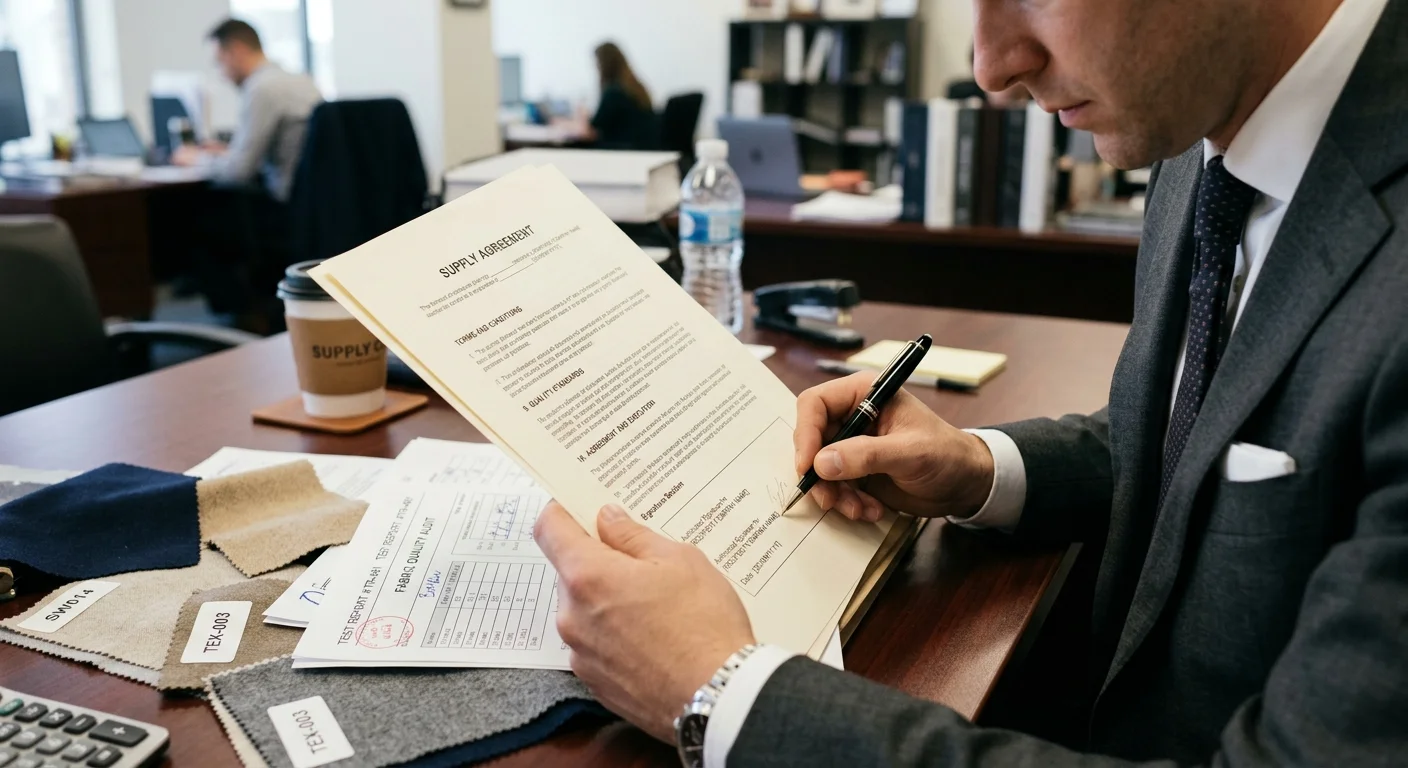
Samples pass your tests. The price fits your budget. Now comes the part most buyers skip — and it’s where bulk orders go wrong.
Get your supplier to answer some hard questions before a single purchase order gets signed. Not because they’re untrustworthy. Sample-stage nonwoven fabric quality and quality at 50,000 meters are two different conversations entirely.
Here’s what to ask.
Lock Down the Specs in Writing
Start here: “What are the exact specs I’m locking in for this bulk order?”
You want a written spec sheet. It should state nonwoven fabric GSM tolerance (±5%), fiber type (virgin PP vs. blended), bonding method, width, and any surface treatment. Verbal confirmations mean nothing once a shipment arrives short.
Buying polypropylene nonwoven fabric for a specific application — medical, agricultural, filtration? Ask straight out: “What certifications cover this product?” Request ISO 9001, REACH, or relevant compliance reports. Then confirm the manufacturer name on the report matches who you’re buying from.
Pressure-Test Their Production Reality
Two questions most buyers forget:
“What is your production capacity per month for this exact spec?” — That number should exceed your order volume by at least 20–30%. That buffer absorbs reorder needs and QC rejections.
“Do you subcontract any part of production?” — Yes means nonwoven fabric tensile strength and spunbond nonwoven quality consistency are harder to guarantee. Get names and references.
Ask for 2–3 buyer references in your market. Contact them. Ask one specific question: “What was their defect rate, and how did they handle it?”
Know Your True Cost Before You Commit
The unit price on a quote sheet is not your real cost.
Ask for the full landed cost breakdown: production + packaging + freight + import duties + customs fees. That single number decides your actual margin. Run your profitability at full price. Then run it again, assuming 10–20% of stock sells at a discount or doesn’t move. The math needs to work both ways before you proceed.
Also confirm: “Under what conditions can pricing change after I place the order?” Raw material surcharges and exchange rate clauses can eat into margins across a 60-day production cycle — often without warning.
Define What Happens When Something Goes Wrong
Before signing, ask: “What is your defect rate on this product, and what’s your resolution process?”
Push for specific answers — not reassurances. What AQL standard covers the final inspection? Can you send a third-party inspector pre-shipment? What’s the remedy if nonwoven fabric durability or nonwoven fabric weight per square meter falls outside spec — replacement, partial refund, or credit?
Get those answers in writing. Build them into the contract. A supplier who stands behind their polypropylene nonwoven fabric quality will agree without pause. One who hedges on defect handling is already telling you something important.
Conclusion
Quality isn’t something a supplier tells you — it’s something you verify yourself.
You now have the tools to do that. Weigh the non-woven fabric against a coin. Pull a strip between your fingers. Burn a fiber to confirm virgin PP. Each test moves you from a passive buyer to an informed decision-maker. No lab required.
Here’s the bottom line: nonwoven fabric GSM, tensile strength, and material purity are not technical terms to ignore. They are the difference between a product that performs and one that fails your customers at the worst possible moment.
Before your next bulk order, run the checklist. Ask the hard questions. Request samples and test them yourself.
Are the suppliers worth working with? They’ll welcome the scrutiny.
The ones who hesitate? That’s your answer.
Smart procurement isn’t about spending less — it’s about buying right. Now you know how.