Twelve-hour shifts don’t forgive bad scrubs. Sprinting between patients or hunching over a chart at 3 a.m. puts real demands on what you wear. Your scrubs either work with your body or fight against it — and most healthcare workers have learned that the hard way.
Medline scrubs have built a loyal following in hospitals and clinics. But the brand’s claims about comfort and fit only tell part of the story. What matters more is what people who wear them every day think.
That’s what this review covers. You’ll get real buyer feedback on:
-
Fabric feel — how it holds up through a full shift
-
Sizing quirks — what fits true and what doesn’t
-
Wash durability — how the scrubs look after repeated laundering
-
Brand comparison — how Medline stacks up against the competition
Read this before you spend a dime.
What Makes Medline Scrubs So Comfortable? Fabric & Feel Breakdown

The answer isn’t “comfort” as a vague brand promise — it’s engineering. Medline builds comfort into three distinct fabric lines. Knowing which one fits your shift makes a real difference.
The Three Fabrics Worth Knowing
ComfortEase is a 65% polyester / 35% cotton twill blend. The polyester does the practical work — wicking moisture, resisting wrinkles, holding shape wash after wash. The cotton softens the hand feel and adds breathability. Nurses often describe this blend as feeling like a golf polo: light, fast-drying, and never stays damp. In high-activity units, you’re on your feet and moving hard. That quick-dry behavior hits different at hour ten than it does at hour one.
AngelStat runs cotton-rich — closer to a 55–65% cotton ratio. It feels crisper out of the bag, more like traditional hospital scrubs . But here’s the thing: it gets much softer after 5 to 10 wash cycles. The higher cotton content also means better airflow — about 10–20% more air permeability than standard poly-cotton blends. Your ward runs warm? You want cool or crisp? AngelStat is the better call.
AVE is the outlier — 72% polyester / 23% rayon / 5% spandex, built for 4-way stretch. The rayon improves drape and surface smoothness. The spandex removes tightness at the knees, hips, and shoulders during long bends and squats. Medline calls it “like athletic gear” — it wicks heat away and dries in half the time of standard cotton scrubs.
What This Means for a 12-Hour Shift
-
Running hot? Go with AVE or AngelStat. One wicks fast, the other breathes better.
-
Bending and reaching all shifts? AVE’s 4-way stretch handles it. Poly-cotton blends without spandex will wear you down in ways you don’t feel until hour nine.
-
Hate pilling? ComfortEase and AVE both hold up past 50+ wash cycles without fuzzing at the seams. That’s a real edge over budget 100% cotton scrubs , which start breaking down around wash 20.
Medline Scrubs Sizing: How to Pick the Right Size (Based on Real Buyer Feedback)
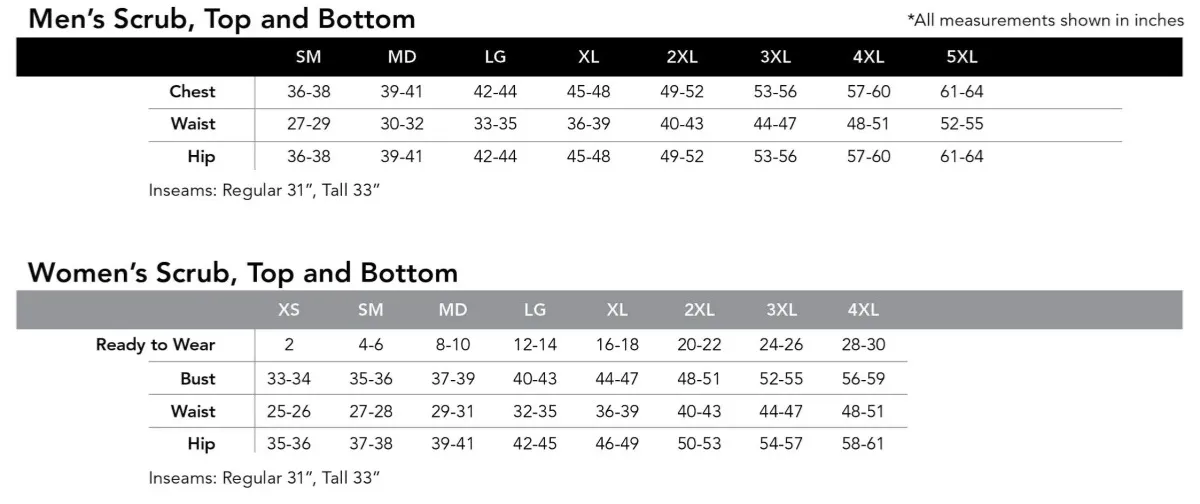
Size charts are optimistic. Real bodies aren’t. Here’s what buyers found when the package arrived.
The clearest pattern in Medline buyer feedback: unisex and ComfortEase styles run large — from Medium and up. Medline even calls it out on the ComfortEase Reversible Pants page: “Sizes Medium & Up Run Large – Please Size Down.” That’s not fine print. The brand is telling you straight up — pay attention.
Here’s what that means for you:
-
Want that traditional, roomy scrub feel? Order your usual size. You’ll get it.
-
Want a cleaner, less boxy look? Drop one size. This matters most in ComfortEase unisex pants from M onward.
-
Between two sizes? Go closer to the lower end of the waist/hip range. The drawstring handles the rest.
Sizing by Body Type
Petite frames get the worst mismatch with unisex cuts — not just in width, but in length too. XS works for waists under 26 inches. At the XS/S border, size down if pant length is your concern. Plan to roll or hem either way.
Taller buyers get a real advantage from the generous cut. Lean but long? Size by waist and hip first. The extra length in unisex styles works in your favor.
Plus-size buyers (waist 40+ in) have a solid range here. ComfortEase goes up to 3XL, covering a 50-inch waist and 56-inch hip. Measurements near the bottom of a size bracket? Try sizing down — the “runs large” pattern holds at bigger sizes too.
One exception: some fitted women’s styles — including certain yoga-waist AVE pants — run small. A few TikTok buyers went up one size from their usual. Near the upper limit of your measurements in those styles? Size up.
ComfortEase Unisex Pants Size Reference
|
Size |
Waist |
Hip |
|---|---|---|
|
XS |
24–26 in |
30–32 in |
|
S |
28–30 in |
34–36 in |
|
M |
32–34 in |
38–40 in |
|
L |
36–38 in |
42–44 in |
|
XL |
40–42 in |
46–48 in |
|
2XL |
44–46 in |
50–52 in |
|
3XL |
48–50 in |
54–56 in |
Unisex tops are forgiving — most buyers land true to size and find them comfortable. The pants are where sizing gets tricky. That’s where you’ll want to pay the most attention.
Durability & Wash Performance: Do Medline Scrubs Hold Up After Repeated Laundering?
Scrubs that fall apart after twenty washes aren’t scrubs — they’re a subscription to frustration. The good news: Medline’s poly-cotton construction is built to solve this problem directly.
Most Medline lines — AngelStat, ComfortEase, and the reversible styles — use a 55% cotton / 45% polyester blend made for industrial laundering. That’s not marketing language. Hospitals wash scrubs at 70–90°C with chemical disinfectants. Medline’s fabric is rated to handle that. Third-party reviewers have confirmed the construction “holds up through repeated industrial laundering” without structural breakdown.
What Happens After Repeated Washing
Shrinkage stays controlled with proper care. Under normal conditions — cold or warm water up to 60°C, low-heat drying — the shrink rate for this blend sits between 1–3% in both directions. Push it past 90°C over and over, and cumulative shrinkage can reach 5–7%. That’s the industry ceiling for hospital uniform contracts. Stay below it, and your sizing holds.
Color holds better than pure cotton alternatives. The polyester content resists dye bleeding. AATCC wash-fastness testing shows quality poly-cotton medical fabric scores 4–5 out of 5, which means dozens of washes before any noticeable fade. Hot water plus chlorine bleach speeds up color loss. Save that combination for heavily contaminated shifts, not routine cleaning.
Pilling is where polyester earns its place. The fiber resists surface abrasion — industry abrasion tests on similar blends reach 50,000+ rub cycles before fabric breaks down. Buyers who wash their scrubs every day report no significant pilling past 50 washes. Budget 100% cotton scrubs start degrading around wash 20. That gap adds up fast over a full work year.
One trade-off worth knowing: reversible Medline styles use heavier fabric — 170–200 g/m² versus the standard 140–160 g/m². That added weight gives you an estimated 10–30% more laundering cycles before wear shows. It also runs warmer. In a cold OR, that’s a feature. On a busy med-surg floor in July, it’s something to factor in.
The Washing Protocol That Extends Lifespan
Scrubs that last two years versus scrubs that last four — the difference comes down to care habits, almost entirely.
Routine shifts:
– Cold water or 30–40°C
– Gentle cycle, adequate water level — don’t overload the drum
– Mild, chlorine-free detergent
– Tumble dry on low, or hang dry
Heavy contamination shifts:
– 60–70°C wash, at least 15 minutes
– Add chlorine bleach or hospital-recommended disinfectant
– High-heat dry
Every wash:
– Turn pants and tops inside out before loading — this alone cuts fading and surface pilling by a visible amount
– Wash scrubs apart from regular laundry to prevent fiber damage from zippers and hardware
Skip the high-heat dryer cycle as much as possible. Pull scrubs out while still a little damp and reshape them. This stops hard creases from forming, reduces fiber fatigue, and keeps the fabric soft over time.
The bottom line: Medline scrubs are built to be washed hard and often. Treat them right, and they’ll outlast most options in their price range.
Medline Scrubs Line Comparison: ComfortEase vs. AngelStat vs. Performax vs. Ave
Four lines. Four different promises. Picking the wrong Medline scrubs doesn’t just cost you money — it costs you comfort at hour eleven of a twelve-hour shift.
Here’s how they differ.
The Fabric Breakdown
|
Line |
Fabric |
Stretch |
Feel |
Price Per Piece |
|---|---|---|---|---|
|
AngelStat |
55% cotton / 45% polyester |
None |
Crisp, structured poplin |
$12–$18 |
|
ComfortEase |
65% polyester / 35% cotton |
None |
Lighter, smoother, wrinkle-resistant |
$13–$20 |
|
Performax |
Poly + spandex blend |
2-way |
Athletic, smooth, “techy.” |
$18–$26 |
|
Ave |
Premium poly-rich stretch |
4-way |
Soft, drapey, lounge-adjacent |
$25–$35 |
AngelStat leads on cotton — and that matters in a warm unit. More cotton means better airflow. A 55/45 split puts it well ahead of ComfortEase’s poly-heavier build. The trade-off: it comes out of the bag feeling stiff and structured. Give it five to ten washes, and that changes.
ComfortEase runs lighter and wrinkle-resistant by design. Hospitals buy it in bulk for a reason — easy care, consistent appearance, zero ironing required. It’s not glamorous. It works.
Performax adds 2-way stretch. You feel that difference most during patient transfers, squatting, and shoulder-level tasks. ED or ICU work? That flexibility earns its place on every shift.
Ave sits at the premium tier, and it feels like it. Four-way stretch with a softer, drapier hand. Less about industrial durability, more about how you feel and look at hour eight. It’s built for outpatient providers, not the OR.
Who Should Buy What
AngelStat is the right call for OR techs, central sterile staff, and environmental services — anyone who sends scrubs through industrial laundering on a regular basis. It’s also the go-to for students and large group orders where budget matters more than a luxury feel. Lowest price, longest lifespan.
ComfortEase fits roles where appearance consistency counts and laundry time is tight. Think clinic staff, group uniform programs, and anyone who doesn’t want to deal with fabric care instructions.
Performax earns its price in high-mobility roles. ICU nurses, ED techs, and floor RNs who spend shifts bending, reaching, and moving fast — the stretch fabric cuts the friction the other lines create. One thing to know: stretch fabrics can pill faster than poplin in rough environments. That’s the trade.
Ave is for outpatient providers, NPs, PAs, and anyone in an image-sensitive setting. You get a close fit, modern styling, and top-tier all-day comfort. This isn’t an institutional uniform line — it’s a personal investment.
The Quick Decision
-
Tight budget + durable → AngelStat
-
Group order + easy care → ComfortEase
-
Active, high-movement role → Performax
-
Outpatient + premium comfort → Ave
One rule cuts through all of it: buy for your environment, not your preference. A soft stretch scrub won’t survive a surgical laundry program. A thick poplin feels suffocating on a full floor shift in July. Match the line to your actual working conditions. That’s the right line.
Medline Scrubs vs. Cherokee, Dickies & Figs: What Buyers Actually Prefer
Brand loyalty in scrubs is not sentimental — it’s practical. Buyers switch for hard reasons. The price stopped making sense. The fabric fell apart in hospital laundering. The fit felt wrong by hour six.
Here’s where these four brands actually stand.
Price: The Number That Drives Most Decisions
The price gap is wider than most buyers expect:
|
Brand |
Approx. Top Price |
Full Set |
|---|---|---|
|
Medline |
$12–$18 |
~$20–$28 |
|
Cherokee Workwear |
$14.99–$16.99 |
~$30–$40 |
|
Dickies |
— |
~$30–$50 |
|
FIGS |
$38–$48+ |
$80–$100+ |
Nurses rotating through 5–7 sets per week do the math fast. Stocking up on FIGS hits $400–$800 before you’ve added a single extra pair. The same rotation in Medline or Cherokee Workwear stays under $300. That gap is why hospital purchasing departments default to Medline. Not because it’s glamorous — because it scales.
Fit Philosophy: What Each Brand Is Built For
These four brands differ in more than price. Each one is built around different bodies and different priorities.
FIGS cuts slim. Tapered legs, defined waist, athleisure silhouette. It looks sharp at the nurses’ station and photographs well. The trade-off is real, though. Buyers with fuller hips or thighs tend to size up. Some feel restricted during high-movement tasks.
Medline cuts generously. Straight, roomy, built for a range of motion, and a universal fit across body types. OR techs and ICU nurses who layer underneath appreciate that. Younger buyers shopping for themselves tend to want something more fitted.
Cherokee covers both ends. The base Workwear line is classic and relaxed — reliable, colorful, built to last. The FORM and Infinity lines go slimmer. You get stretch fabric and a premium feel at a lower price than FIGS.
Dickies stays in the functional camp — thick, durable, traditional cut. Buyers who leave Dickies behind tend to cite two things: it feels stiff , and it runs heavy for active floor work.
Why Buyers Switch — In Both Directions
Toward Medline: Budget pressure, bulk purchasing, and laundry durability drive this move. Stretch performance fabrics — including some FIGS styles — can pill or lose shape faster under repeated high-heat hospital laundering. Medline’s poly-cotton construction holds up better across a 2–3 year uniform lifespan. For bulk orders, that durability math outweighs feel.
Away from Medline: Comfort and image push buyers out. Try a quality stretch fabric through a full shift, and going back to traditional poplin becomes a tough ask. FIGS and the Cherokee stretch lines cut real physical friction — less pulling during patient transfers, more ease at the hips and knees. In outpatient settings where appearance shapes how patients see you, the style gap between Medline and FIGS starts to matter more.
The Practical Bottom Line
-
Hospital-issued or self-funding multiple sets → Medline or Cherokee Workwear. The price-per-set math is hard to argue with.
-
High-movement role, self-purchased → Cherokee Infinity/FORM or FIGS. You’ll feel the stretch difference by shift three.
-
Image-sensitive setting → FIGS, if budget allows. Cherokee FORM, if it doesn’t.
-
Pure durability, lowest cost → Medline or Dickies. Both hold up better than fashion-forward options in industrial laundry conditions.
No single brand wins across the board. The right pick depends on who’s paying, how often you wash, and whether your shift requires you to sprint.
Who Should (and Shouldn’t) Buy Medline Scrubs: Honest Verdict
Medline surgical scrubs are a tool, not a fashion statement. That distinction matters more than most buyers expect before they place an order.
Buy Medline if you fit this profile:
-
You work long shifts. ComfortEase is built for all-day wear. It’s soft straight out of the packaging and holds up through hour twelve. Nurses, CNAs, and surgical techs rate long-shift comfort at 4 out of 5.
-
You’re buying multiple sets on a tight budget. At $12–$20 per piece, you can stock a full rotation without the cost adding up fast.
-
You want room to move, layer, and breathe. The relaxed, classic cut handles patient transfers, deep squats, and a hoodie underneath. It won’t restrict you.
-
You need pockets that do the job. Multi-pocket cargo styles carry scissors, pens, and a notepad. No bulging, no struggling to fit things in.
-
You’re sourcing for a team. Wide size range, multiple lines, solid colorways — Medline is built for bulk and institutional purchasing.
Skip Medline if this sounds like you:
-
You want FIGS-style tailoring. Slim tapered legs and a defined waist aren’t part of what Medline’s core lines offer.
-
You’re petite and need precise inseam options. The standard cut can overwhelm smaller frames. The petite range is also limited.
-
Premium fabric feel matters to you. Modal , Tencel, high-spandex blends — Medline doesn’t operate in that space.
The honest scorecard:
|
Category |
Rating |
|---|---|
|
Comfort |
★★★★☆ |
|
Fit & Silhouette |
★★★☆☆ |
|
Durability |
★★★★☆ |
|
Value for Money |
★★★★★ |
Medline earns its reputation on reliability and price, not runway aesthetics. That trade-off works well for your shift, your budget, and your body — so it’s an easy buy.
Medline Scrubs Buying Tips: Where to Buy & How to Get the Best Value

Knowing the right Medline scrub is half the battle. Knowing where to buy it — and when — is how you stop leaving money on the table.
Where you buy determines your fallback options more than your price.
-
Medline’s official site carries the fullest lineup — all four fabric lines, Tall inseams, and extended sizes. Promo codes show up on a set schedule. Free shipping kicks in around $50–$100. Great for bulk orders. Single-unit prices can run higher than those of other retailers.
-
Amazon is the smart first-purchase move. Prime members get free returns on most apparel. Order two or three sizes close together. Try them unwashed with tags on. Ship back what doesn’t fit. Zero cost to size-test. Prime Day and Black Friday bring 15–30% off. Stack a coupon on top, and some styles drop to 60–70% of retail.
-
Scrubs & Beyond lets you compare Medline side by side against Cherokee, Dickies, and others — a solid choice if you’re still deciding between brands. Their “under $19.99” clearance section stays active all year.
-
Healthcare-specific distributors like HealthcareSupplyPros give tiered discounts on team orders over $99. Good option for clinics or departments buying in volume.
The smartest buying sequence for first-timers: 1. Order two adjacent sizes on Amazon — confirm “Free Returns” before checkout. 2. Try both unwashed, tags on. 3. Keep the winner. Return the rest. 4. Note the exact style number and size. Buy multiples during Prime Day or Black Friday — those are the two best windows to stock up.
One last thing: in a high-heat unit, don’t cut corners on the fabric line to save $5 a piece. The wrong fabric line costs more in comfort and wear than the discount is worth.
Conclusion
After twelve hours on your feet, the last thing you need is a waistband fighting back.
Medline scrubs earn their reputation where it counts. The fabric breathes all day — no sticky, uncomfortable feeling by mid-afternoon. The sizing chart is clear and worth following. The stitching holds up through heavy laundry cycles that would destroy cheaper uniforms. Medline isn’t the loudest name in the breakroom. But for nurses and healthcare workers who put medical scrubs ‘ comfort first, these scrubs get the job done shift after shift.
Still deciding? Here’s a simple breakdown:
-
Role matters: Choose ComfortEase for long shifts, Performax for high-movement work
-
Between sizes: Go up — you’ll thank yourself by hour eight
-
Washing: Cold wash from day one to protect the fabric and fit
Your uniform is your armor. Pick one that works as hard as you do — and holds its shape long enough to prove it.