Picking the wrong coveralls isn’t just a purchasing mistake — it’s a safety one. KleenGuard coveralls have become a go-to choice across construction sites, painting crews, and light industrial environments. But do they hold up when the work gets dirty, chemical-splashed, or intensely hot? That’s the real question.
We tested the A20, A40, and A45 models under real job conditions. What we found was more layered than the packaging lets on. Some workers swear by them. Others have gone back to Tyvek and never looked back.
This breakdown covers what you need to know — protection ratings, all-day wearability, honest model comparisons, and who should (and shouldn’t) grab a KleenGuard before the shift starts.
What Are KleenGuard Coveralls? (Brief Brand & Product Overview)
KleenGuard is a product line from Kimberly-Clark Professional. This is the company that invented SMS (Spunbond Meltblown Spunbond) nonwoven fabric technology. That technology now forms the foundation of modern disposable protective clothing.
The lineup covers eight models. It starts with the lightweight A20 (dry particulates, ~$110–$123 per case) and goes up to the A80 (Level B/C chemical vapor protection, ~$363–$492). Each step up brings a different material, a different threat level, and a different job site application.
Key material technologies across the range:
-
SMS polypropylene — breathable, lightweight (A20, A30)
-
SFL microporous laminate — liquid barrier with breathability (A40, A45)
-
iFLEX stretch panels — patent-pending, available on A25 and above
That range — from dust to chemical vapor — is what makes KleenGuard worth knowing before you buy.
KleenGuard A20 vs A40 vs A45: Which Model Fits Your Work?
Three models. Three very different jobs. Pick the wrong one, and you’re either sweating through a shift in gear you didn’t need — or leaving a chemical splash with protection that wasn’t enough.
Here’s the breakdown.
A20: Built for Breathability, Not Liquid
The A20 uses SMS Microforce barrier fabric. It’s lightweight, breathable, and tough against tears. KleenGuard’s patented Reflex design makes it 7.5x less prone to tearing than standard coveralls . On a grinding floor or in a pharma cleanroom, snags happen all the time. That number matters.
What it handles well:
– Dry hazardous particulates
– Aerosols
– Beryllium dust
– Animal waste environments
– Light maintenance work
What it doesn’t handle: serious liquid exposure. The A20 gives you low splash resistance only. Does your job involve grease, coolant, or body fluids on a regular basis? You’re underprotected.
Best fit: Metal fabrication, pharmaceutical production, light industrial maintenance. Good choice for cost-sensitive operations where breathability and dry-particle protection come first.
A40: The Liquid Barrier Workhorse
The A40 moves up to a microporous film laminate. That’s a different material class from the A20. It delivers 30% greater strength and a 3.8x better liquid barrier than the leading competitor. It also meets ASTM F1670 blood penetration resistance and carries NFPA 99 antistatic certification. In healthcare and lab settings, static discharge is a real hazard — so certification counts.
The tradeoff is heat. The laminate breathes less than SMS fabric. On extended shifts, workers feel the difference.
One practical detail: packaging fits vending machines at 25 per case. That simplifies high-volume industrial procurement more than it sounds.
Best fit: Labs, healthcare environments, biohazard handling, and machine operations with coolant or grease splash.
A45: Protection Plus Airflow
The A45 combines the A40’s film laminate barrier with the A50-level airflow. It runs 10–15% above A40 pricing. That’s a fair premium for extended healthcare shifts or high-contamination fluid environments. The A40’s heat buildup becomes a real fatigue problem over a full shift. The A45 solves that.
Best fit: Healthcare technicians, lab workers, any high-fluid-risk role where you’re wearing the coverall for hours — not minutes.
The Short Version
|
Model |
Primary Hazard |
Key Strength |
Best For |
|---|---|---|---|
|
A20 |
Dry particulates, low splash |
Maximum breathability, tear resistance |
Grinding, pharma, light maintenance |
|
A40 |
Liquids, light splash |
Liquid barrier, anti-static certification |
Labs, healthcare, biohazard handling |
|
A45 |
High-risk fluids, light splash |
A40 protection + improved airflow |
Extended healthcare, high-contamination shifts |
The A20 is your breathable, budget-friendly option for dry environments. The A40 is the solid mid-tier pick where liquid protection is non-negotiable. The A45 is for roles that need that liquid barrier but can’t give up comfort across a full shift.
Base your choice on what’s in the air — and on your skin — not just the price tag.
Protection Performance: Does KleenGuard Keep You Safe?
KleenGuard publishes more specific protection numbers than most brands ever do. That’s worth noting — because specific numbers are testable numbers.
Start with the A20+. Independent lab testing puts its particle holdout at 96.7% for particles between 1.0 and 2.0 microns. Its hydrohead rating comes in at 88.2 cm (AATCC 127). The hydrohead rating measures how much liquid pressure a fabric can resist before it leaks. That’s not a marketing claim. That’s a result you can test and repeat.
The SMS-based models (T56, T65) work to a different standard. The T56 blocks 99% of particles larger than 1 micron under I.O.M. Aloxite testing. Triple-stitched seams back up the fabric — useful in spots where material performance alone isn’t enough.
Where the Coverall Standards Matter?
Each KleenGuard certification targets a specific hazard. These aren’t broad “protection” labels.
-
ASTM F1670 — blood and body fluid penetration resistance (A40)
-
NFPA 99 anti-static — built for labs, healthcare, and electronics environments
-
EN 1149-1 — static dissipation, essential in paint-spray and solvent environments
-
Type 5/6 (CEN) — EU-standard compliance for particles and chemical splash
-
EN 14126 — infectious agent protection for healthcare use
-
EN 1073-2 — radioactive dust, relevant for asbestos abatement work
The T65 Ultra is silicone-free. That’s a small detail with real consequences. In automotive or industrial paint operations, silicone contamination ruins finishes. So a silicone-free suit isn’t a bonus — it’s a requirement.
The Real Constraint
Breathability and barrier protection work against each other. You can’t fully maximize both at once. KleenGuard’s film laminate models (A40, A45) give you stronger liquid defense. The SMS models (T56, T65) give you better airflow. Neither material wins on both fronts.
So the key question is: what threat are you facing on the job site? Get that right, and the protection holds up in practice. Get it wrong, and even a strong spec sheet won’t save you.
Comfort & Fit: Can You Work in These All Day?
Eight hours in bad protective clothing doesn’t just feel uncomfortable — it becomes a distraction. You start adjusting seams. You roll up cuffs. You lose focus. In environments where attention matters, that’s a real problem.
KleenGuard coveralls outperform most disposables in comfort. But they’re not all equal. Material choice is what separates them.
Breathability: Where the Models Diverge
The A20’s SMS fabric breathes well for a disposable. Workers doing light maintenance or pharmaceutical work in climate-controlled environments report little to no heat buildup across a full shift. That makes sense — SMS moves air. Film laminate doesn’t.
The A40 and A45 are a different story. The Microporous laminate gives the A40 its liquid barrier, but it also traps heat. On a long shift, that heat builds up. Fatigue hits earlier. The A45 was built to fix this — it matches the A40’s barrier protection but adds better airflow into the construction. For anyone putting in 8+ hours in fluid-risk environments, the A45’s higher price is not a luxury. It’s the practical choice for staying sharp by hour six.
Fit and Mobility
The iFLEX stretch panels — available on the A25 and above — make a real difference in high-movement roles. Bending, kneeling, and reaching in a coverall without any stretch is exhausting work. These panels cut that resistance down.
Sizing is a real limitation worth noting. The current range leans toward standard fits. Workers at size extremes often report bunching at the joints or restricted shoulder movement. A poor-fitting coverall creates friction points and fatigue. Those small issues pile up across a shift — slowly but steadily.
The practical baseline: Match the model to your shift length and hazard level. Don’t reach for an A40 in a dry, low-risk environment just because it’s on the shelf — the breathability hit isn’t worth it.
KleenGuard vs Tyvek Coveralls: The Honest Comparison
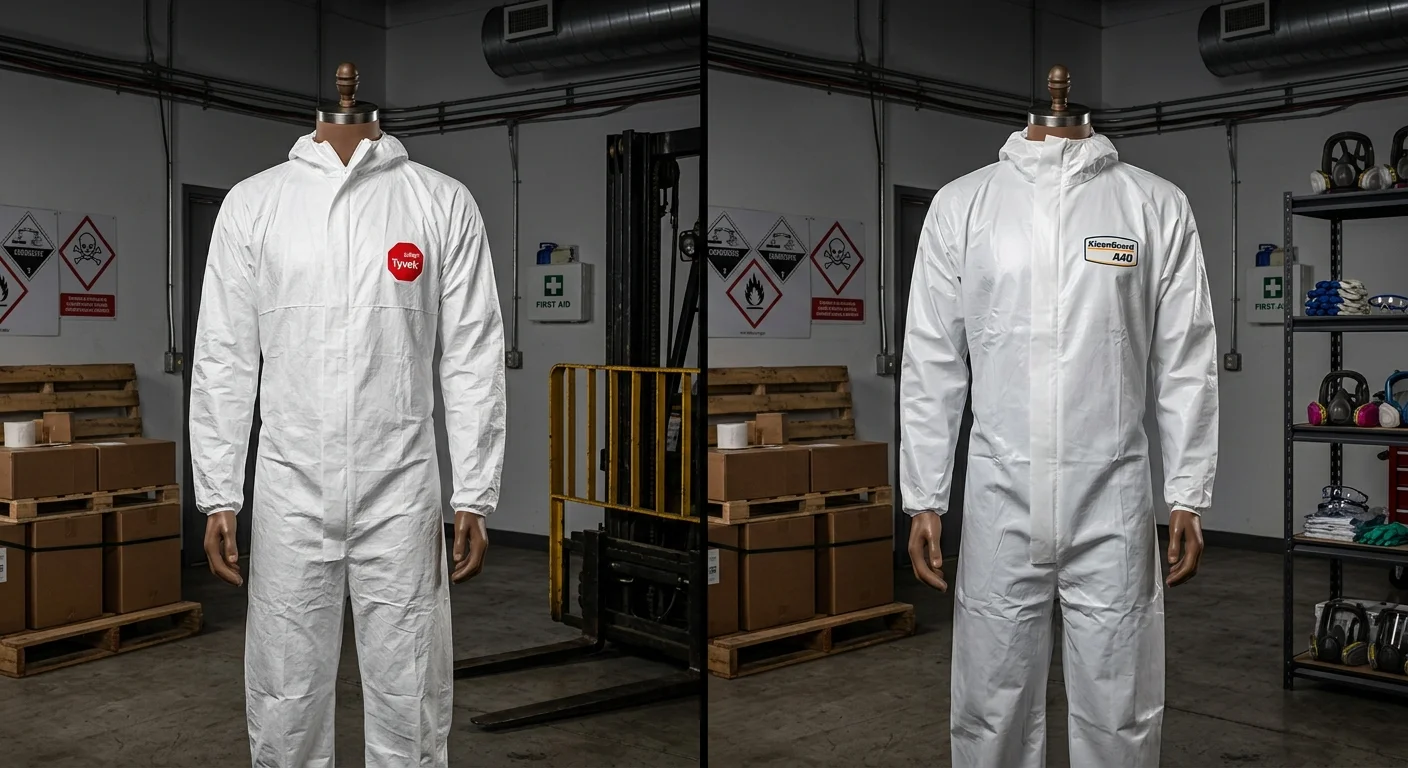
DuPont’s Tyvek has dominated protective coveralls for decades. That reputation is earned. But a strong reputation doesn’t mean it’s the right tool for every job.
The real difference starts with fabric technology. Tyvek uses flashspun Polyethylene — a proprietary process DuPont has long defended as irreplaceable. KleenGuard A40 uses a microporous film laminate. These aren’t two versions of the same thing. Each is built on a different manufacturing approach, designed for a different set of risks.
Where Tyvek Wins?
Abrasion resistance is Tyvek’s strongest point. Under repeated friction and stress, Tyvek holds its barrier properties better than microporous film. In cleanrooms, pharmaceutical facilities, and asbestos abatement work, that durability edge is significant — not minor. Tyvek also carries EN 1149 antistatic certification. KleenGuard A40 meets NFPA 99 instead. Both are valid standards. EN 1149, though, is what most European and pharmaceutical procurement teams specifically require.
Your environment involves fine dust, controlled-particle air quality, or long wear cycles? Tyvek is the stronger technical choice.
Where KleenGuard Competes?
Price is the obvious advantage. The A40 comes in at $6.00 per unit in a 25-count case. KleenGuard sets this price point directly against Tyvek’s higher distributor pricing. For bulk purchasing, visitor protection, or light-duty rotation, that cost gap adds up fast.
Fit is another area where KleenGuard pulls ahead. The REFLEX® design adds 12% more chest room and 6% longer body length. Anyone who has spent a full shift in a coverall that pulls at the shoulders knows why this matters. Fewer rip-outs mean fewer suit changes. That means more time on the job.
Kimberly-Clark also backs the switch with a price-match guarantee of up to $1,000 — covering the A20, A40, and A45 families against Tyvek 400. That’s a real procurement advantage, not a marketing stunt.
There’s one more differentiator that rarely appears in spec sheets. Used KleenGuard suits qualify for The RightCycle Program — Kimberly-Clark’s recycling initiative. Tyvek suits go straight to the landfill. For operations tracking sustainability metrics, that difference is worth noting.
The Honest Call
|
|
Tyvek 500/600 |
KleenGuard A40 |
|---|---|---|
|
Fabric Tech |
Flashspun polyethylene |
Microporous film laminate |
|
Abrasion Resistance |
Superior |
Good |
|
Antistatic Cert |
EN 1149 |
NFPA 99 |
|
Best Use |
Cleanrooms, pharma, asbestos |
Light-duty, visitor, bulk programs |
|
Price Per Unit |
Higher |
~$6.00 |
|
Sustainability |
Landfill |
RightCycle recyclable |
Neither product wins across the board. Tyvek is the right pick for environments that demand strong barrier performance under physical stress. KleenGuard makes more sense where fit, cost control, and short-term protection are the priority. Base your choice on what the hazard requires — not which brand has the longer history.
Real-World Use Cases: Who Should (and Shouldn’t) Buy KleenGuard Coveralls
The right coverall isn’t the most expensive one. It’s the one that matches what’s in the air — or on the floor — where you work.
Jobs Where KleenGuard Earns Its Keep
Medical and laboratory environments are where the A40 shines. It’s low-lint, liquid-resistant, ASTM F1670-certified for blood penetration, and NFPA 99 anti-static rated. For healthcare techs and lab workers handling biological material, that’s not a feature list — it’s a baseline requirement.
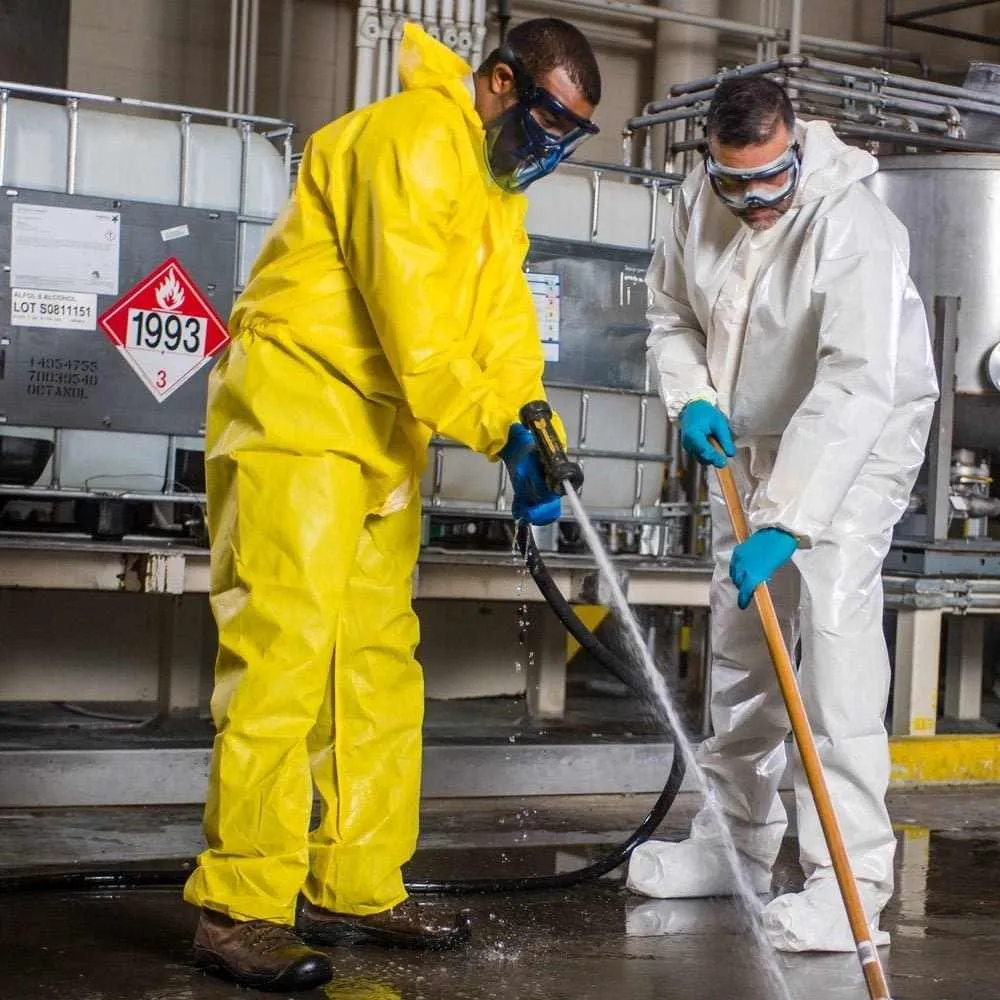
Petrochemical and chemical handling is another strong fit. The A40 and A35 hold up against splashes, oil spills, and pressure washing. In oil and gas operations, NFPA 2112/70E certification covers hot liquid and flammable gas exposure. That’s a narrow use case. Getting it wrong also carries real consequences.
Asbestos removal, fiberglass manufacturing, sewage work — the A40’s particle-and-liquid barrier covers all three. Lead abatement and mold remediation fall in the same category.
Spray painting and aerospace surface prep belong to the A30 and A35. Reflex technology cuts tear risk. It holds up even with flying particles and repeated chemical contact.
|
Application |
Recommended Model |
|---|---|
|
Metal manufacturing, agriculture |
A20 |
|
Aerospace prep, pharma research |
A30 |
|
Maintenance, pressure washing |
A35 |
|
Sewage, fiberglass, biohazard |
A40 |
Where KleenGuard Falls Short?
All-day outdoor work in the heat is a real problem. The A40’s laminate doesn’t breathe well enough for long shifts in warm, unventilated spaces. Fatigue sets in. Workers start cutting corners on the suit.
Precision tasks that need high mobility are another poor match. The fabric’s barrier strength comes at the cost of flexibility. For static protection work, that trade-off is fine. For tasks with constant bending and fine motor movement, the stiffness builds up fast and slows workers down.
The Procurement Angle
Safety managers running high-volume operations will appreciate the A40’s 25-per-case vending machine compatibility. On-site access control matters more than it sounds — especially across large facilities with rotating shifts. The A20’s 24-count zipper-front cases also cut down on donning time.
Plus, the disposable design removes laundering from the equation. Across a large manufacturing or pharmaceutical operation, that means lower overhead costs and more consistent compliance.
Pros and Cons of KleenGuard Coveralls (Honest Assessment)
Most protective coveralls fail in small, costly ways — a rip at the knee, a zipper that sticks, a hood that gaps at the wrong moment. KleenGuard avoids most of those problems. But “most” is worth looking at more closely.
What Works?
Protection that clears real benchmarks. The A40 and A45 coveralls carry ASTM F1670 bloodborne pathogen resistance and NFPA 99 anti-static certification. Bound seams and a taped storm flap seal off the weak points where cheaper suits start to fail.
The fit is better — and you’ll feel it. You get 12% more chest room and a body length that runs 6% longer. No front seams pushing into your core. Elastic at the back, wrists, and ankles. A hood built wide enough to fit over a respirator. These aren’t small comfort upgrades. They’re the difference between a suit you work in and one you fight against all shift.
Durability holds up under pressure. These suits are 7.5x less prone to ripping than ANSI minimums require. Fewer torn suits mean fewer mid-shift changeouts. At scale, that adds up fast.
What Doesn’t?
Heat builds up over a long shift. The film laminate that keeps the A40 liquid-resistant also traps warmth. Hour one feels fine. Hour six is a different story.
The price climbs in high-volume orders. Per-unit cost runs higher than uncertified alternatives. Your hazard level may not require NFPA or ASTM compliance — and if it doesn’t, you’re paying for certifications that don’t apply to your job.
Sizing covers a narrow range. The fit options lean toward standard body types. Workers at either extreme will likely need to look elsewhere.
The Honest Bottom Line
|
|
KleenGuard |
Basic Alternatives |
|---|---|---|
|
Rip Resistance |
7.5x ANSI minimum |
ANSI minimum |
|
Chest Room |
+12% |
Standard |
|
Certifications |
NFPA 99, ASTM F1670 |
Often none |
|
Breathability |
Limited (laminate models) |
Varies |
The strengths are real and specific. So are the trade-offs. Worth the cost — only if the job demands what this suit delivers.
Are KleenGuard Coveralls Worth the Price? Final Verdict
The math works — but the risk has to be real.
For healthcare techs, lab workers, and anyone handling fluids or fine particulates regularly, the A40 and A45 earn their price tag. Here’s what backs that up:
-
ASTM F1670 certified
-
NFPA 99 anti-static compliant
-
90% less lint than leading competitors
-
2.5x the tear resistance of standard disposables
These aren’t marketing numbers. One contained incident versus a $50,000–$250,000 contamination cleanup — that gap is what you’re paying for.
The breakeven point is closer than most buyers think. Avoid one breach every ten uses, and high-risk operations land in positive ROI territory. That’s a low bar for what’s at stake.
Dry work is a different story. Dust, light particulates, no fluid exposure — the A40 is more than you need. The A20 coverall covers it at a lower price point and breathes better, too.
|
User Profile |
Verdict |
|---|---|
|
Lab / Healthcare |
Buy A40/A45 |
|
Dry particulates only |
Use A20 instead |
|
General / Low-risk |
Skip — cheaper alternatives hold up fine |
Buy it for the hazard. Not the brand.
FAQ: KleenGuard Coveralls Common Questions
People tend to ask the same questions about KleenGuard. That’s a good thing — they’re the right questions.
Are KleenGuard coveralls reusable?
No. These are single-use. Expose the suit to particles, fluids, or chemical splash — discard it. The Reflex design improves mobility and cuts rip risk. That’s a durability feature, not a reusability one. Reusing a contaminated suit defeats the purpose entirely.
What’s the real difference between the A20 and A40?
It comes down to material.
The A20 uses breathable SMS fabric:
– Air permeability: 29.5 cfm
– Moisture vapor transmission: 4,506 g/m²/24hr
The A40 uses microporous film laminate:
– 30% stronger than A20
– 3.8x better liquid barrier
– Up to 8x less lint
The A40 also blocks isocyanates at 40% and passes ASTM F1670 blood penetration testing. You get stronger protection — but less airflow. That’s the trade-off.
Do KleenGuard coveralls protect against chemicals?
The A40 and above — yes, but within limits. It handles:
– Liquid splash
– Solid particulates
– Paint prep
– Fiberglass handling
– Tank cleaning
The A40 records 4.41% average inward leakage. It’s not built for full chemical immersion. Keep that in mind before choosing a model.
Where do you buy in bulk?
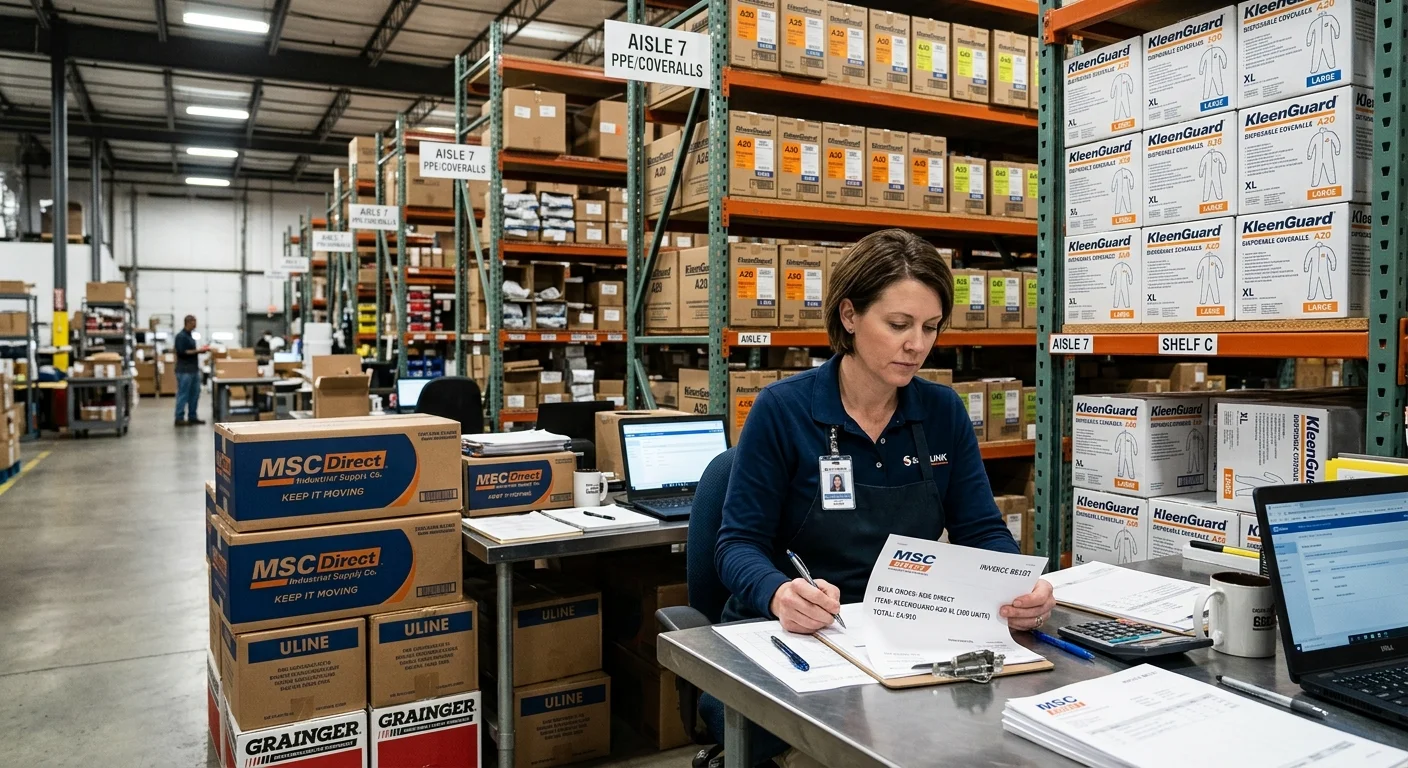
MSC Direct, Arbill, OpticsPlanet, and Creative Safety Supply all carry KleenGuard stock. Switching volume orders from Tyvek to A30/A40 can save around 10% after 30 days. Bring that up with your distributor — it’s worth the conversation.
Conclusion
Here’s the honest truth: KleenGuard coveralls aren’t perfect — but neither is any PPE.
They are a solid choice for most industrial work environments. Lighter than Tyvek, fair on price, and the model lineup (A20, A40, A45) maps directly to real-world hazard levels. No guessing required.
For light particulate work, the A20 gets the job done without overheating you. Dealing with liquid splashes or light chemical exposure? Move up to the A40. Stop second-guessing yourself at the safety cabinet.
Most PPE regrets come down to one of two mistakes:
-
Under-speccing to save a few dollars — and paying for it later
-
Over-speccing and ending up with gear that sits on the shelf because nobody wants to wear it
Don’t be that person.
Pick the right model for your hazard level. Order a sample pack first. Let the work tell you the rest.