
Here’s the hard truth nobody tells you before your first lap: a swim cap is not a shower cap. It won’t seal out every drop of water. So if you’ve been putting one on and wondering why your hair still comes out damp — or worse, smelling like a pool chemical experiment — you’re not doing anything wrong. That’s just how swim caps work.
But here’s the interesting part: the right cap, worn the right way, makes a real difference. It can protect your hair from chlorine damage, dryness, and color fade.
Comparing a silicone swim cap to a latex one? Trying to fit a full head of curls underneath? Just want to stop your ends from turning to straw by September? This guide covers all of it — and it will help.
The Honest Answer: Does a Swim Cap Keep Your Hair Dry?
Let’s get straight to the point. No standard swim cap gives you complete waterproof protection. A good cap blocks about 60–80% of water. Your ends stay dry. Your hairline, ears, and roots still get wet. You cannot build a perfect seal around those irregular human shapes.
Hold onto your cap. Water-resistant gear brings real value to your routine. A cap blocks water from reaching your hair. This cuts down chlorine damage. It limits protein breakdown. Plus, your hair dries much faster after your swim. A well-fitted cap offers strong protection from harsh pool chemicals.
Why Water Still Gets In: How Swim Caps Work (and Where They Fall Short)
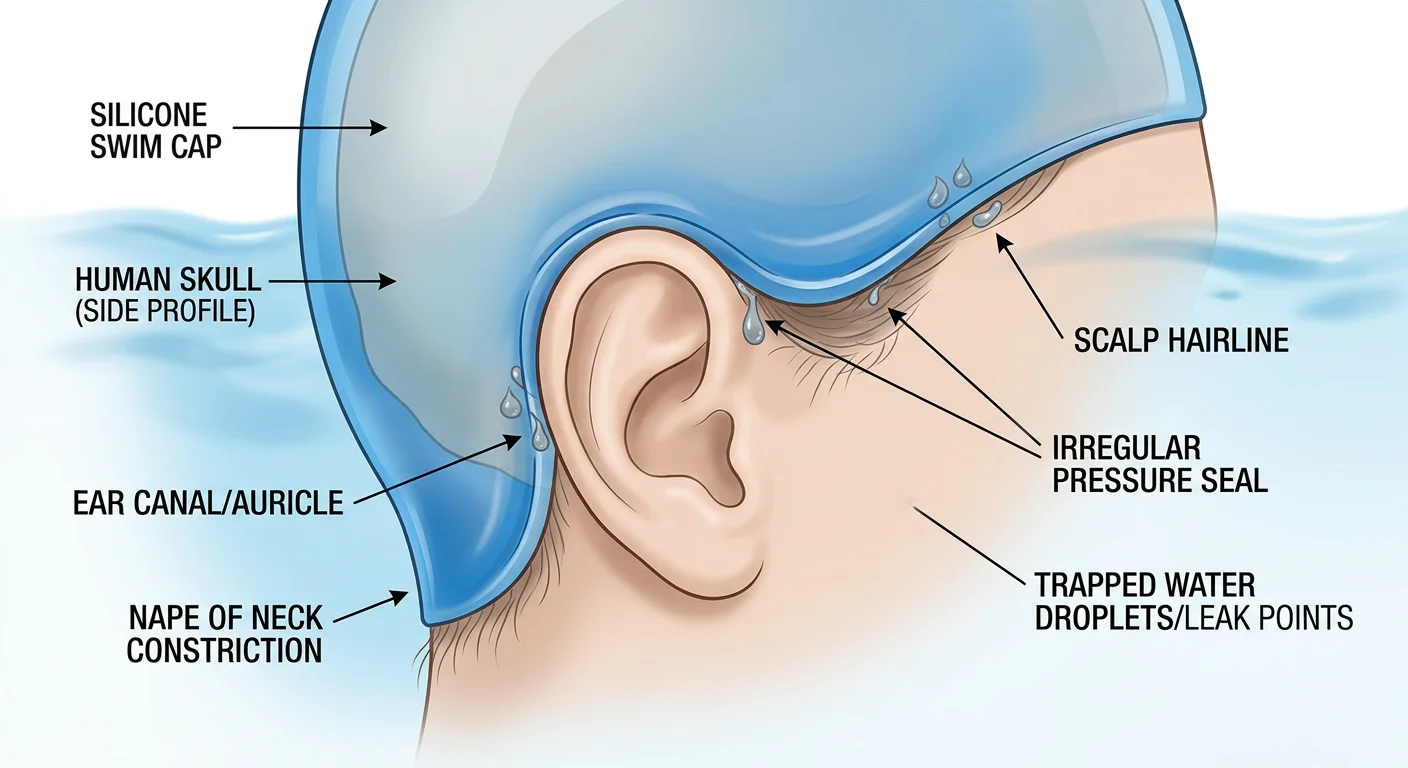
Physics doesn’t negotiate. A human head is full of curves — around the ears, at the nape, along the hairline. None of that shape was built with a watertight seal in mind.
That’s the core problem. A swim cap works through elastic tension. The rim presses against your skin using the stretch of silicone or latex to hold its position. There’s no rigid clamp. No locking gasket. Nothing like the firm compression ring on a diving mask. It’s just elastic against skin — and that’s an imperfect system the moment your head goes underwater.
The Three Places Water Always Finds a Way In
The forehead edge is the most common entry point. Every forward stroke pushes water pressure against the front rim. That pressure nudges the cap upward, stroke by stroke. Add sunscreen or moisturizer to the hairline, and the rim loses grip — it slips, it lifts, and water moves in.
The nape of the neck flexes non-stop. Every breath, every flip turn, every shoulder rotation shifts the angle of the cap’s back edge. Long or thick hair makes this worse. A bun or ponytail creates a raised point under the cap. That raised point stops the rim from sitting flat against the skin.
Around the ears is where the geometry beats the cap outright. The curves there are too irregular for a simple oval rim to follow. Pull the cap away even a little to relieve pressure — something most swimmers do — and a small gap opens right away.
Why Movement Makes It Worse Over Time?
A cap that fits tight at the wall won’t fit the same way at the 800-meter mark. Dynamic forces matter. Hydrodynamic pressure pushes the front rim up with every stroke. Neck movement puts repeated stress on the back seal. Past 1,000–1,500 meters, swimmers report the cap lifting — especially at the rear. Once the rim shifts even a few millimeters, spots that were sealed become open channels.
Hair volume speeds this up. Silicone and latex are non-porous — water only gets in at the rim or through a tear. Thicker hair forces the rim to sit higher and less securely, especially at the temples and nape. That reduces the contact surface where the seal needs to hold most.
Swim Cap Material Comparison: Which Type is Best?
Your swim cap material controls water entry. Check out this breakdown of your options:
Silicone (The Best Seal) : Pick silicone for maximum dryness. This thick and smooth material gives you a tight seal against the scalp. You get fewer wrinkles. Fewer wrinkles block water from passing through. Silicone outlasts other materials. It resists tearing. It does trap extra body heat.
Neoprene (For Warmth) : Use neoprene to stay warm in cold open water. It seals well. It feels far too hot for everyday indoor pool training.
Latex (The Budget Pick) : Latex feels lightweight, flexible, and cheap. It forms a weak seal. The material tears and wears out fast. It might trigger latex allergies in some users.
Lycra/Fabric (For Comfort) : Fabric allows water to pass right through. It fails to keep your hair dry. It serves as a comfortable inner layer underneath a silicone swimming cap . This setup reduces hair-pulling. It improves your overall seal, too.
The Dryness Ranking
Cap Type | Dryness Level | Best For |
|---|---|---|
Silicone | ⭐⭐⭐⭐⭐ Best seal | Training, long hair, chlorine protection |
Neoprene | ⭐⭐⭐⭐ Good seal | Cold water, open-water swimming |
Latex | ⭐⭐⭐ Moderate | Budget training, short sessions |
Lycra/Fabric | ⭐ Minimal | Comfort, inner layer only |
The takeaway: Choose silicone for the driest hair possible. Pair it with a fabric inner cap for better results. This double-layer setup cuts seepage effectively. A single cap fails to match this performance.
The Double Swim Cap Method: The Most Effective Way to Keep Hair Dry
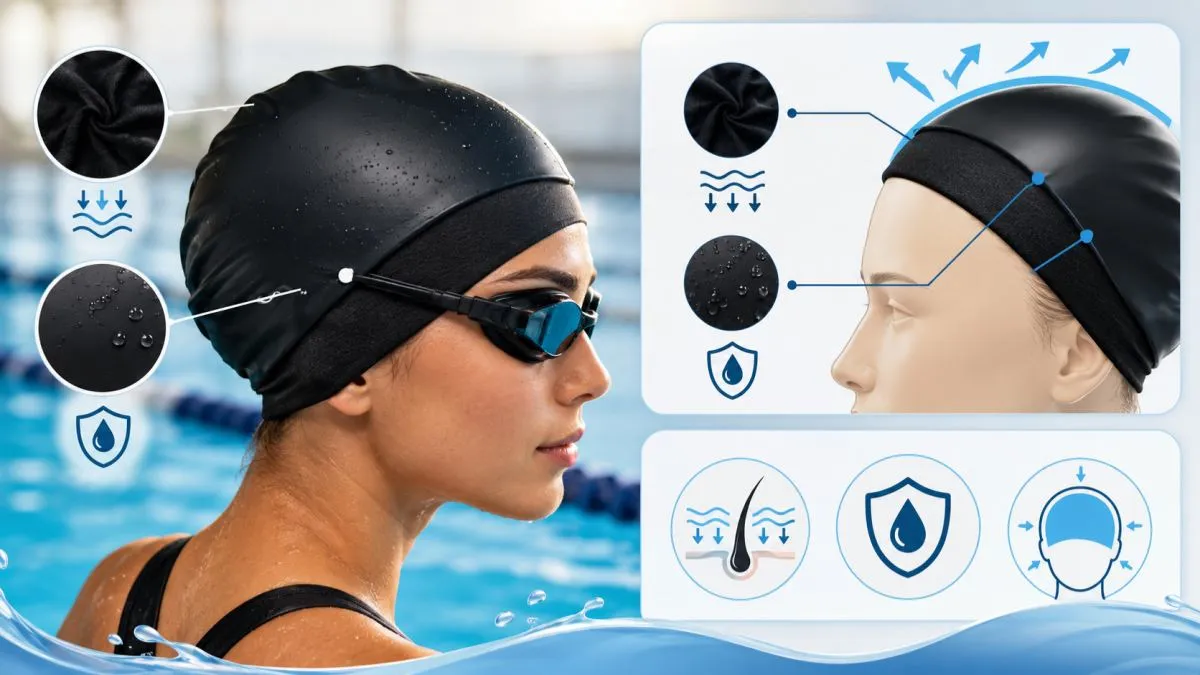
Wearing two caps sounds like a lot. Yet, it works wonders. Competitive swimmers do this to block water. The physics make sense. An inner cap flattens your hair. This gives the outer silicone cap a solid, smooth surface for a tight seal. Less bulk underneath leaves fewer gaps for water.
The Two-Cap Setup
You need two specific layers to make this work:
Inner Layer (Compression): Grab a fabric or Lycra swim cap . This squashes your hair down. The fabric adds friction. That grip stops the outer cap from sliding around during your swim.
Outer Layer (The Shield): Get a standard silicone cap. This acts as your waterproof wall.
Step-by-Step Guide
Wet your hair first. Most people skip this step. Do not make that mistake. Dry hair acts like a sponge. It soaks up harsh pool chemicals fast. Wash your hair with clean tap water. Add a little conditioner to block the chlorine.
Step 1: Form a Low Bun
Pull your hair into a flat, compact bun at the base of your neck. A high bun creates a bump. That bump breaks the outer cap’s seal. Got braids? Keep them to just one or two.
Step 2: Put on the Inner Cap
Pull the fabric cap over your head. Tuck your bun inside it completely. Run your hands over your head. Press out any hidden air pockets. A flat surface works best.
Step 3: Put on the Outer Cap
Place the front edge of the silicone cap just above your eyebrows. Pull it straight back over your head. Do not stretch it side to side. Smooth out any large wrinkles. Pay close attention to your ears and neck.
Step 4: The Final Check
Press around the edges. You might feel soft air bubbles. Lift the edge of the cap to let that trapped air out. Then press it back flat against your skin.
This whole process takes about two minutes with practice. Frequent swimmers need this trick. It protects your hair from damage. The extra effort pays off.
Best Swim Cap to Keep Hair Dry by Hair Type
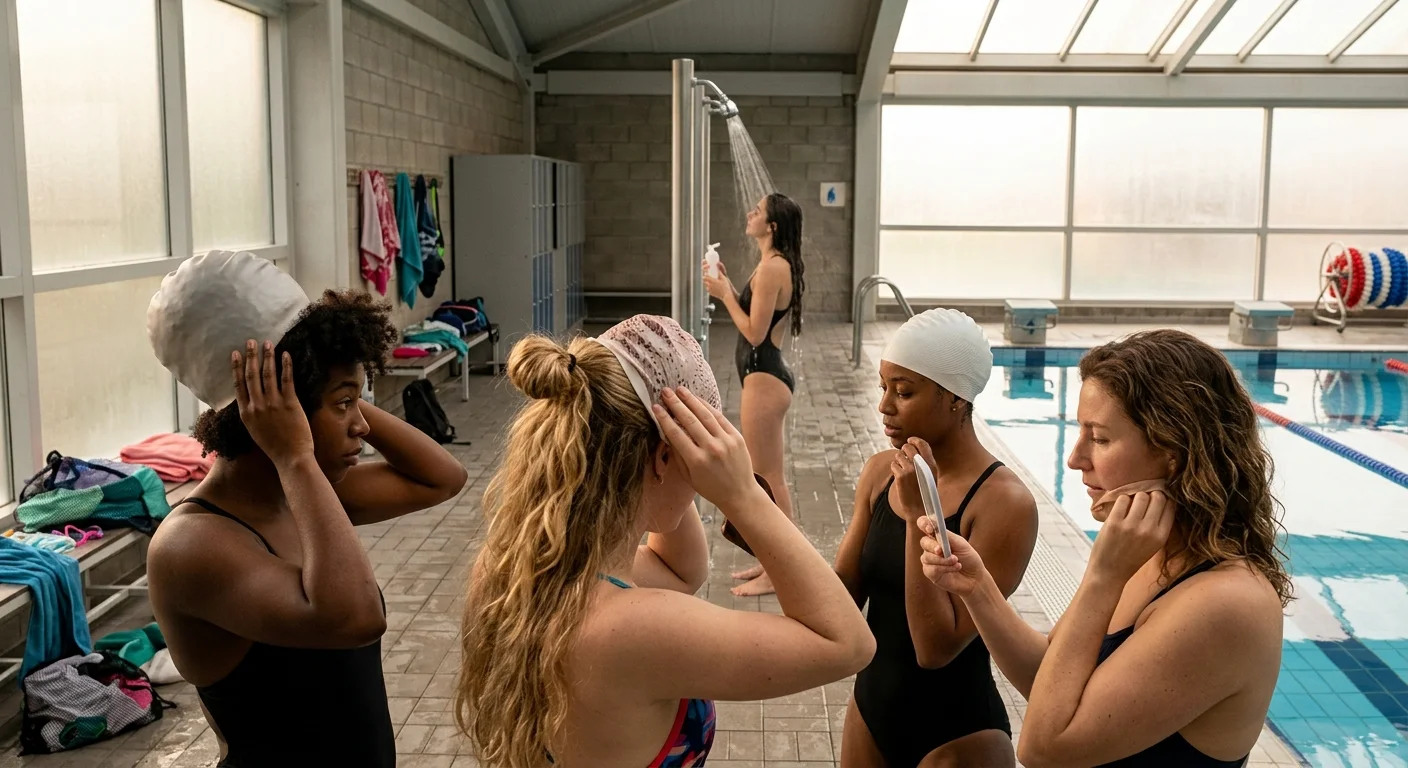
Your hair type is the variable most swim cap guides skip right over. A standard silicone cap that fits a short pixie cut will gap, lift, and leak fast on thick, shoulder-length waves. That’s not a sizing problem — it’s a structural mismatch. The right cap for your hair isn’t the most expensive one or the most popular one. It’s the one built around what your hair does.
Long or Thick Hair
The core issue is volume. A standard adult silicone swim cap has an interior circumference of about 48–52 cm. Long or thick hair coiled inside pushes the cap dome upward. The rim then lifts away from the skin. That small gap at the forehead or nape is all the water needs.
Long-hair specific caps fix this with a taller dome and wider body. Zoggs Long Hair Latex Cap claims “100% more internal volume” compared to standard caps. SOUL CAP’s large silicone cap is built for thick hair, locs, and braids. It adds extra height at the crown to stop the lift-and-gap problem.
What to look for:
– Size labeled Large / XL / Long Hair with a circumference range of 51–61 cm
– Silicone material — thicker, more forgiving stretch than latex, and gentler on strands
– Still leaking? Try a fabric inner cap + long-hair silicone outer cap. This double-layer approach is the fix long-hair swimmers report working best
One positioning rule most people overlook: keep the bun low. A hair coil sitting at the crown pushes the dome too high. Place it at the base of the skull instead. It stays inside the cap’s natural curve and keeps the rim flat against the skin.
Curly, Natural, or Protective-Style Hair
Curly and natural hair brings a different challenge. The volume is uneven — the surface is textured, not smooth. Mid-length Afro hair or a set of box braids can create enough bulk to break the outer seal at the forehead and neck.
Caps for this hair type focus on dome height and wall softness. Softer silicone bends to follow the shape of your hair. It doesn’t press against one high point and create a gap. Brands worth checking: SOUL CAP, Zoggs Long Hair, Nike Voluminous Hair Cap , Zone3 Large Silicone — all built around extra interior space.
For protective styles:
– Use a large, metal-free hair tie to gather hair at the back before capping. Keep it loose — pulling tight strains follicles and creates uneven pressure ridges
– Layer a Lycra cap underneath first to compress the hair surface. Then place the silicone cap over it. This smooths out the most irregular texture before the waterproof layer goes on
– Once both caps are seated, press along the full rim — forehead to temples to nape. Push out any trapped air. That compression against the scalp strengthens the seal
On conditioning before swimming: There’s a real trade-off here. A leave-in conditioner protects curly and natural hair from chlorine. But a heavy product makes the scalp slippery, and the cap shifts more easily. The practical middle ground: wet your hair with clean water first. Then apply a light detangling spray or thin oil — not a thick cream. Layer the fabric cap before the silicone cap goes on. The fabric absorbs the slip and keeps the silicone from sliding.
Fine or Damaged Hair
The priority flips for fine or damaged hair. Dryness still matters, but breakage prevention comes first. A cap that keeps water out but pulls out ten strands every removal is causing more harm than good.
Latex is the main problem. Its surface grabs fine, fragile strands on the way off. Silicone is smoother, stretches more evenly, and releases without that snagging friction. Is your hair already stressed from color, heat, or chemical treatments? A soft silicone cap is the one material worth using.
Removal technique matters as much as material choice:
1. Slip one finger under the rim edge before pulling the cap off. This breaks the seal and lets water in. It releases the suction that makes removal rough
2. Use both hands, start at the rear, and roll the cap forward and up — don’t yank from the front
3. Wet your dry hair with tap water before capping. Damp fine hair stretches more, so there’s less friction against the cap interior
Caps with internal headbands — like the Arena Smartcap — cut down on pulling along the hairline. That’s where fine hair breaks most often. For extra protection, apply a light hair oil at the ends before swimming. It lowers friction. Keep it minimal, though — too much makes the inner cap unstable.
Short Hair
Short hair is the simpler case, but size still matters more than most people expect. A cap that’s too large has gaps right away at the nape and temples. Standard silicone caps marked “one size” usually run 48–55 cm in circumference — that covers most people, but not all.
Fit checklist for short hair:
– Front rim sits 1–2 cm above the eyebrows, covering the full hairline
– Back edge extends 1–2 cm below the nape hairline — the rear neck is the most common leak point. Short hair doesn’t guarantee a good fit there
– No soft spots or bubbles along the rim when you press outward
One small adjustment worth making: wear your goggles strap over the cap. The strap adds a second point of compression across the front and top. This cuts down on the small shifts that let water sneak in during longer sessions.
Hair Type | Cap Recommendation | Key Priority |
|---|---|---|
Long / Thick | XL silicone or Long Hair silicone (51–61 cm) | Dome height, low bun placement |
Curly / Natural / Braids | Afro/Volume silicone + fabric inner layer | Interior space, surface compression |
Fine / Damaged | Soft silicone; avoid latex | Breakage prevention, removal technique |
Short | Standard silicone, correct circumference | Rim fit at nape and forehead |
There’s no single cap that works for every head. It comes down to matching the cap’s structure to the shape and volume of your hair. Get that match right, and the protection holds.
FAQ: Your Top Questions About Swim Caps and Hair Protection Answered
These seven questions come up again and again — in swim forums, product reviews, and poolside chats. Here are straight answers to all of them.
Does a swim cap protect colored hair from fading?
It helps, but it won’t save a fresh dye job on its own. Speedo recommends waiting at least one week after coloring before you swim. After that, wet your hair with clean water first. Add a light conditioner or coconut oil from mid-lengths to ends. Then secure everything under a well-fitted silicone swim cap.
For serious color protection, try the double swim cap method. That’s a fabric inner layer plus a silicone outer cap. This combination cuts water contact enough to slow fading at a visible rate.
Is there a 100% waterproof swim cap?
No. No swim cap on the market guarantees dry hair. Your head goes underwater. You rotate to breathe. Water finds the gaps at the forehead, nape, and ears — every time. Specialty caps like the Aqua Sphere Aqua Glide use an ear pocket design and block most water at the sides. Still not watertight. Think of any swim cap as water-resistant, not waterproof.
How often should a swim cap be replaced?
It depends on the material and how hard you use it:
Cap Type | Lifespan (3–5x/week use) |
|---|---|
Silicone | 6–12 months |
Latex | 3–6 months |
Lycra/Fabric | 6–12 months (loses elasticity) |
Chlorine, sunlight, and rough removal all speed up wear. Replace your cap when you see visible cracks, it rolls off mid-session, or it no longer covers your head with a snug fit.
Can a swim cap stop water from getting into my ears?
Standard caps reduce direct water flow around the ears. They don’t seal the ear canal. For real protection, pair an ear-pocket silicone cap with dedicated silicone earplugs. The cap holds the plugs in place. The plugs do the actual sealing.
Got a perforated eardrum or chronic ear infections? Medical-grade earplugs are your primary defense. The cap acts as a backup layer on top of that.
Does a swim cap protect the scalp too?
Yes — it creates a physical barrier that cuts direct chlorine contact and reduces UV exposure at outdoor pools. That said, “reduces” is the keyword here. Some water still gets in.
For sensitive scalps, here’s the most effective routine:
Rinse with fresh water before you swim
Put a thin layer of conditioner on your roots
Cap up with a secure fit
Rinse with clean water and a gentle shampoo within 15 minutes of getting out
This layered approach gives your scalp the best chance of staying protected.
How much does a swim cap reduce chlorine damage?
Quite a bit — and even more so with a solid pre-swim routine. Swimmers who get in the pool with dry, unprotected hair often see visible dryness, split ends, and color shift within weeks. A silicone cap alone makes a clear difference. Add the wet-hair-plus-conditioner step before capping, and your hair stays softer with much slower color fading.
Products like Philip Kingsley Swimcap — a pre-swim conditioning mask — take it a step further. They build a chemical barrier under the physical one, giving your hair two layers of defense instead of one.
What’s the quickest way to get a better seal when putting on a swim cap?
Five steps, two minutes:
Pull hair into a low bun at the nape — not the crown
Wet your hair and add a small amount of conditioner
Position the front rim one finger-width above the eyebrows
Pull the cap straight back — not side to side
Press along the full rim from forehead to temples to nape, pushing out any air pockets
One detail most people miss: never use your fingernails to adjust the rim. Each small scratch in silicone becomes a future tear point — and a future leak.
Conclusion
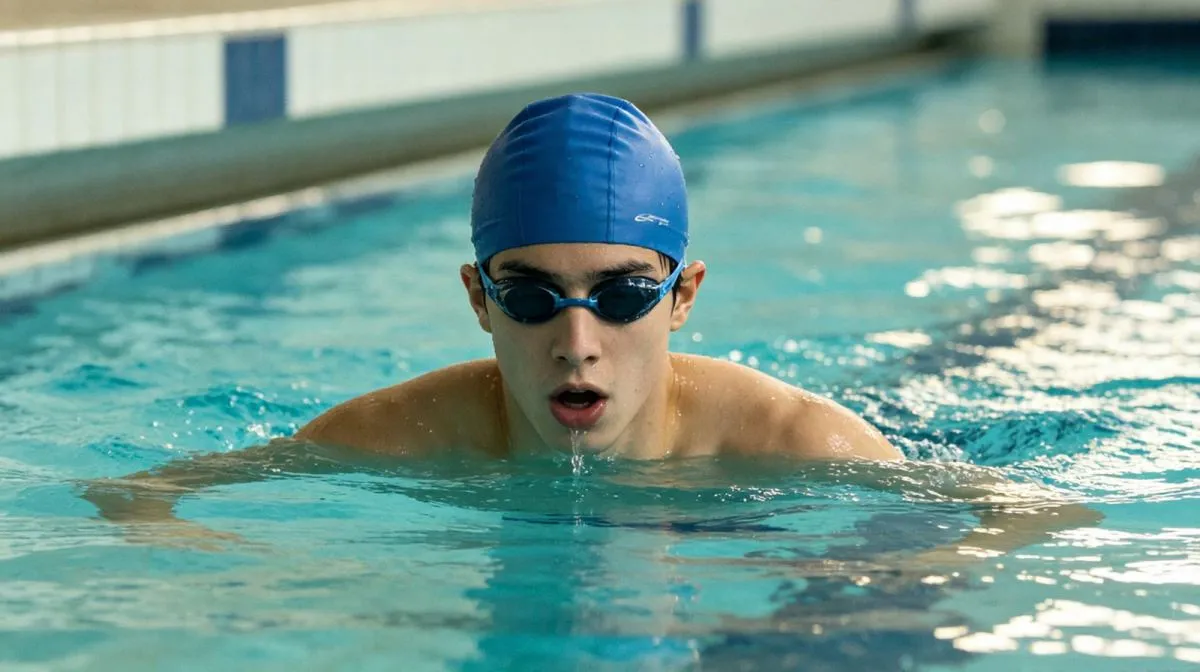
Here’s what most swim cap brands won’t tell you: no cap keeps your hair completely dry. But the right cap, worn the right way, gets you very close.
Your goals may differ. You might be protecting a fresh blowout. You might be keeping chlorine off color-treated hair. Or you just want to finish practice without a soaking ponytail. Either way, three things decide your results: material matters, fit is everything, and preparation seals the deal.
A quality silicone swim cap plus a solid pre-swim routine isn’t optional. It’s what separates hair that makes it through pool season from hair that takes damage every session.
So don’t settle for a cap that barely does the job. Browse Morntrip ‘s swim cap collection. Find the style built for your hair type. Then get back in the water with real confidence.
Your hair didn’t come this far to lose a fight with a lap pool. 🌊





