You’re standing in your kitchen, or behind the line at your restaurant, about to handle raw chicken. You reach for a box of gloves without a second thought. But not all gloves are created equal, and the one you grab can mean the difference between keeping your food safe and inviting a lot of trouble.
So which gloves are best for food preparation? The answer depends on what you’re cooking, who’s wearing them, and whether latex allergies are a concern in your kitchen. We’re breaking down every material—from nitrile to vinyl to latex-free food gloves—so you can pick the right one with confidence. No guesswork required.
Nitrile Gloves for Food Handling
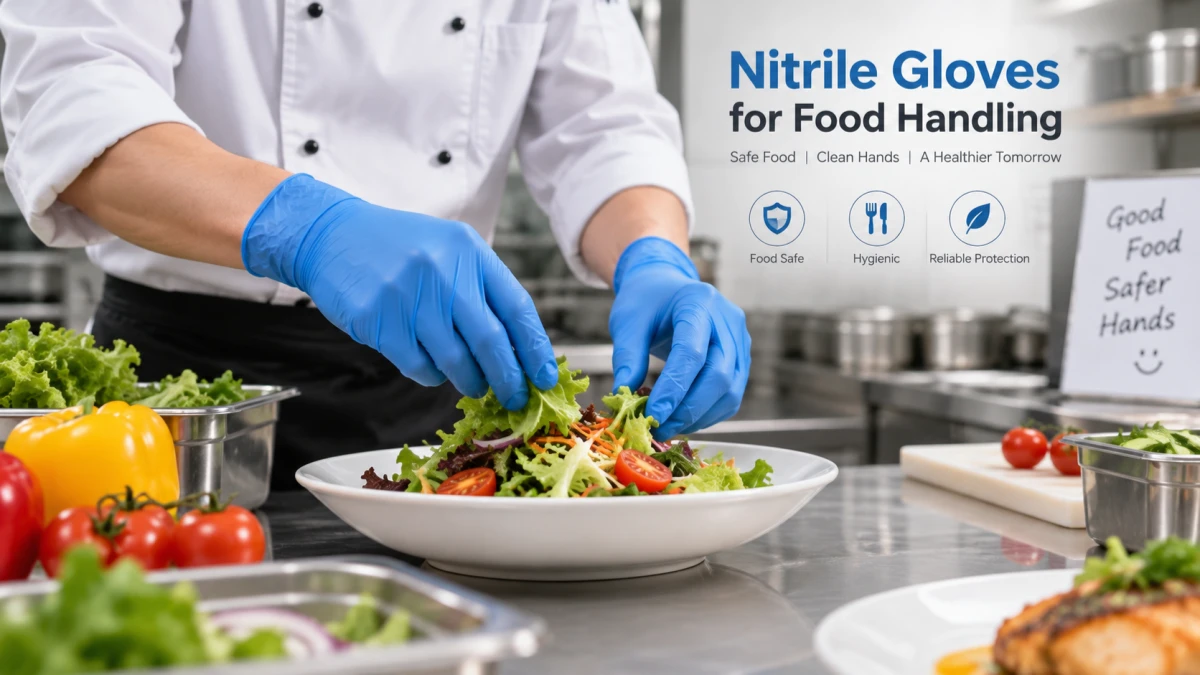
Nitrile gloves are the workhorse of any serious kitchen. Their puncture resistance is 3–5 times stronger than latex, which matters when you’re breaking down a chicken or wrestling with fish bones. Testing shows 6 mil nitrile gloves withstand 6.8 N of puncture force, compared to 4.2 N for latex—a 62% edge in durability.
Tensile strength tells a similar story. Nitrile typically ranges from 14–25 MPa, holding its own against latex’s 18–24 MPa, while PVC lags behind at 8–13 MPa. One sample test found 4 mil nitrile hit 24 MPa, beating both latex (20 MPa) and vinyl (11 MPa) hands-down.
Grease resistance sets nitrile apart in the food world. These gloves shrug off animal fat, cooking oils, and solvents like nothing—perfect for handling raw meat, seafood, and anything greasy that would tear through a flimsier glove. And since nitrile contains zero latex proteins, it’s the go-to for kitchens juggling allergy concerns among staff or diners.
Picking the Right Thickness
3 mil : Great for quick tasks like cold prep, plating, and front-of-house work.
4 mil : The everyday workhorse for prep, cutting, and general meat handling.
5–6 mil : Built for tough jobs like shellfish, bones, extended wear, and heavy cleaning.
8 mil+ : Industrial-grade, rarely needed in a restaurant setting.
What You’ll Pay?
Bulk buyers typically see 3–4 mil boxes run $4.50–$6.50, with landed pricing up to $9.20. Step up to 4–5 mil food-grade and expect $5.00–$7.80 per box. Retail boxes on Amazon often run higher, around $11.99, but that’s not your wholesale benchmark.
Nitrile shows failure rates of just 0–4% during use, while vinyl can fail up to 61% of the time.
PE (Polyethylene) Gloves: Best for High-Frequency Glove Changes
Price talks, and PE gloves say it loudest. At roughly $0.006 per Glove (think $3.08 for a box of 500), they’re the cheapest food-grade option on the shelf by a mile. Compare that to nitrile at $0.18 per glove or latex at $0.22 to $0.26, and you’ll see why PE gloves work for quick glove changes every few minutes.
Where PE Gloves Shine?
Deli counters : slicing meats, assembling sandwiches, plating, jobs where you’re swapping gloves constantly
Bakeries : finishing pastries, handling bread, light contact with finished goods
Cafeterias and concession stands : dishing up food, quick handoffs, counter transfers
These gloves are built for speed. Loose-fitting and lightweight, they slide on and off in under two seconds flat. That’s huge when you’re bouncing between raw ingredients and ready-to-serve plates all shift long. They’re also 100% latex-free, so allergy concerns are off the table entirely.
Where They Fall Short?
Don’t reach for PE gloves when precision matters. That loose fit means less dexterity, so fine cutting, delicate plating, and small assembly work all suffer. They tear easily, hate heat, and the seams are notorious weak points. For heavy-duty prep, long shifts, or anything near hot surfaces, skip the PE and grab nitrile instead.
Latex Gloves: Strong Fit But Allergy Risk in Food Service
Latex gloves hug your hand like a second skin. Natural rubber latex has this snappy elasticity that lets you feel everything, from a delicate herb sprig to a thin slice of prosciutto. If you’re piping frosting, arranging a garnish, or doing any work where your fingertips need to feel what they’re doing, latex is hard to beat. Nothing else matches that grip.
But the industry’s moving away from latex, and fast.
The reason is allergies. Somewhere between 1% and 6% of the general population reacts to latex proteins. For people who wear these gloves all day, like healthcare workers, the rate climbs to 12% and has historically been as high as 17%. And it’s not just the person wearing the glove. The HHS reports that latex residue can transfer to food and trigger reactions in customers who never touched a glove themselves.
States are responding. Illinois banned latex gloves in food service starting January 1, 2023. Washington followed with a ban effective January 1, 2024. Where latex is still allowed, operators typically must offer non-latex alternatives and post clear warnings. Illinois even permits temporary use during shortages, but only with a visible notice at the ordering counter.
The Practical Takeaway
Latex gives the best sensitivity and touch. For compliance, allergy risk, and long-term reliability, most kitchens now default to nitrile first, with vinyl or polyethylene as backup.
Vinyl/PVC Gloves: Low-Cost Option for Short-Term Tasks
Budget matters, especially when you’re stocking a busy kitchen or feeding a big family on a regular basis. That’s where vinyl gloves for cooking earn their keep. They’re the cheapest food-grade gloves on the market, but that low price tag comes with real trade-offs you need to know about before you buy a case.
PVC lacks the elasticity of latex and the chemical resistance of nitrile. Industry guides consistently rank vinyl lowest for puncture and tear resistance among common disposable glove materials. Vinyl typically runs 2–3 mil thick, compared to nitrile’s 4–8 mil range. The polymer itself lacks cross-linking, and the plasticizers used to keep it flexible actually weaken the structure over time. Some vinyl gloves develop micro-punctures after a few hand flexes. In practice, certain batches start leaking the moment you pull them on.
Grease is vinyl’s kryptonite. Nitrile handles oils, fats, and solvents with ease, but vinyl breaks down fast when fat, heat, or extended contact enter the picture. One food-safety guide notes plasticizer migration rises with heat and fat exposure—that’s why vinyl gets ruled out for greasy work.
Where Vinyl Gloves Actually Work Well?
Save vinyl for quick, dry, low-stakes jobs:
Handling packaged items
Wiping counters or light surface cleaning
Portioning baked goods
Tossing salads
Handling bread and raw vegetables
Cold prep with low-fat foods
Frequent glove-change tasks with minimal stress on the material
Where Vinyl Falls Short?
Longer wear means more exposure to micro-punctures and leakage, sometimes after a handful of flexes. Vinyl gloves show higher permeability to bacteria and viruses than other materials, and they’re linked more often to cross-contamination in food handling settings. One cited food-safety analysis found vinyl gloves were up to three times more likely to spread bacteria than quality nitrile gloves for meat handling and similar high-risk tasks.
There’s also the phthalate issue. Cheap vinyl can contain plasticizers that leach into food, particularly fatty foods. So for fried foods, oily curries, butter-heavy pastries, cream-rich desserts, ghee-coated sweets, fatty meats, cheese, or anything involving hot oil, skip the vinyl. Reach for nitrile or another glove built for that job.
Think of vinyl as your budget pick for short, dry, low-fat, low-abrasion tasks. When oil, heat, sharp edges, or a long shift come into play, nitrile is the safer all-rounder every time.
If you lined up all four glove materials side by side, one would win almost every category except price and stretch. Here’s where each one stands:
Category | Nitrile | Latex | Vinyl | PE |
|---|---|---|---|---|
Overall Protection | Highest | High | Low | Lowest |
Durability | Strong | Strong | Weak | Weakest |
Allergy Risk | Low | Highest | Low | Low |
Price | Mid-High | Mid | Lowest | Lowest |
Fit & Flexibility | High | Highest | Low | Lowest |
Best For | Meat, seafood, grease, allergy-safe kitchens | Fine plating, garnishing | Cold prep, quick swaps | Deli, bakery, high-turnover tasks |
Line them up by category, and the patterns get real clear:
Overall protection : Nitrile > Latex > Vinyl > PE
Puncture resistance & durability : Nitrile > Latex, then a big drop-off to Vinyl > PE
Allergy risk (low to high): Nitrile ≈ Vinyl ≈ PE, then Latex way out front, in the bad way
Fit and flexibility : Latex > Nitrile > Vinyl > PE
Price (cheapest to priciest): PE and Vinyl tie for the bargain bin, Latex and Nitrile sit up top
So Which One Do You Grab?
It depends on what’s on your cutting board.
For high-risk or multi-purpose work, grab nitrile. It balances protection, durability, and allergy safety better than anything else on the shelf. For fine motor control, latex wins, as long as nobody in your kitchen has a latex allergy. For low-risk, budget-conscious tasks, vinyl does the job for quick, dry work. And for ultra-light, frequent changes, PE gloves cover the basics without breaking the bank.
How to Choose the Right Glove for Your Specific Task?
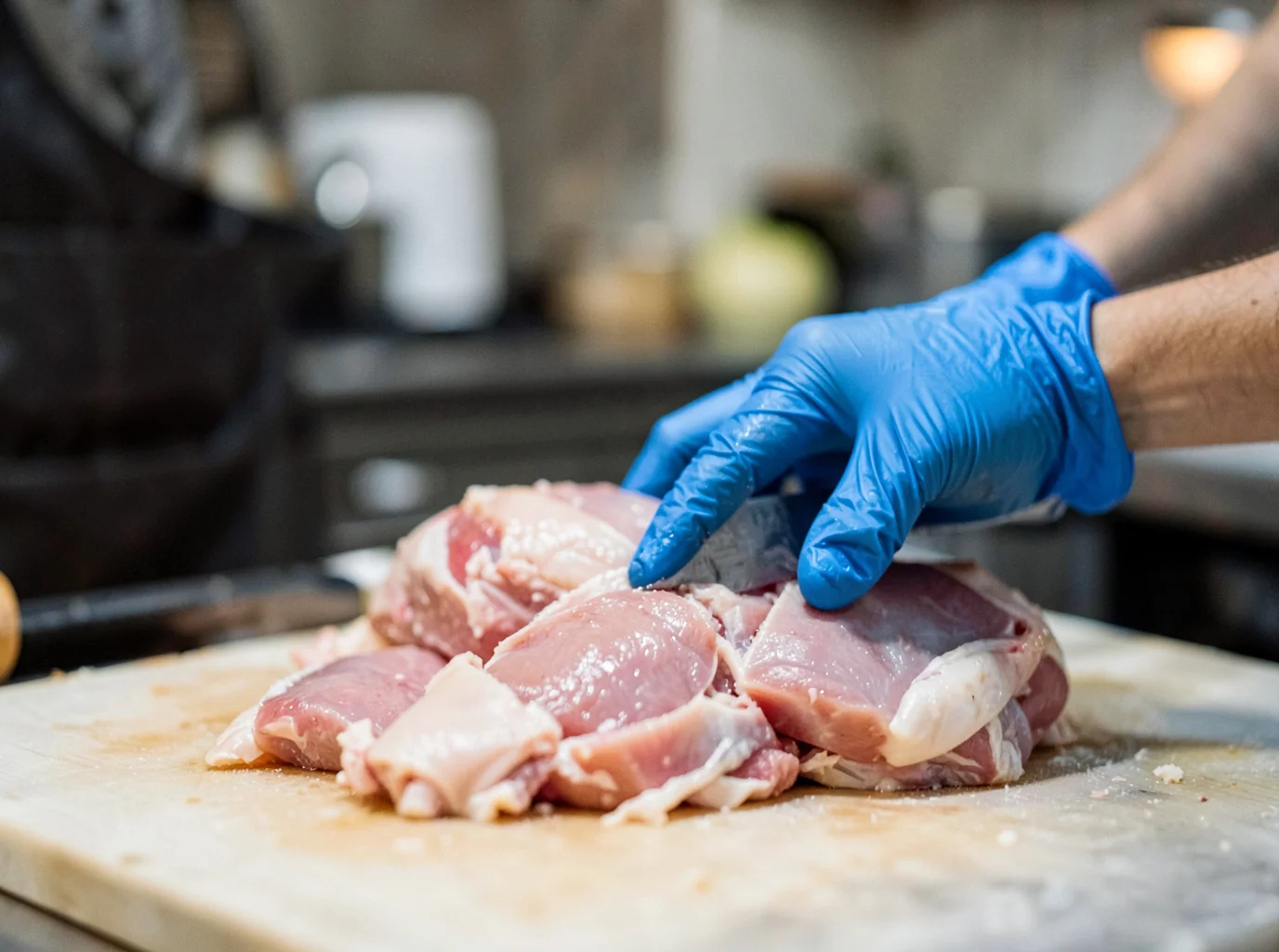
The “best” glove changes depending on what’s happening on your cutting board that day. Let’s break it down by task, so you’re not standing there guessing.
Raw meat and seafood? Grab nitrile every time. It’s latex-free, it shrugs off punctures from bones and shells, and it holds up through a long prep session without falling apart on you.
Greasy, long-haul cooking? Nitrile again, but reach for the textured-fingertip, powder-free, food-contact-grade version if you can find it. Grease and fat break down flimsier gloves fast, and you need something that grips even when your hands (and the counter) are a mess.
Bakery work or building sandwiches? This is PE’s moment to shine. You’re swapping gloves every few minutes anyway, so why pay nitrile prices for a job that light? PE keeps up with the pace without draining your budget.
Running a general kitchen with a mix of tasks? Default to nitrile for anything longer or riskier, and keep a box of PE on hand for the quick, low-stakes stuff.
Changeover Frequency vs. Durability: The Real Decision Point
Ask yourself one question: how often are you actually changing gloves?
Changing every few minutes? PE wins. It’s cheap and light, though it won’t survive heavy use.
Wearing gloves continuously for a stretch? Nitrile wins. Fewer punctures mean fewer interruptions.
As a rule, swap gloves when you switch tasks, after touching raw food, if they tear, or after about four hours of continuous wear. If your station demands constant changes, lean toward PE. If you’re aiming to stretch out one pair longer, nitrile is your friend.
FDA Compliance & Food Safety Standards for Gloves
The FDA does not approve your box of gloves like it approves a new medication. It regulates the material, not each individual glove. Food prep gloves are not medical devices, so they do not go through the 510(k) review process. They fall under 21 CFR Parts 174–178, the rules for food-contact materials. The most commonly cited regulation on packaging is 21 CFR 177.2600, which covers rubber articles in repeated food contact. An “FDA-compliant” label means the material is allowed near food.
What HACCP Actually Requires?
HACCP rules require one glove per task. Washington state’s food code says gloves are for “only one task” and “no other purpose.” That means swapping gloves between raw meat and ready-to-eat food, after handling cash, after cleaning, after taking out the trash. Wash your hands first, glove up, and toss them the second they tear, get dirty, or you step away from your station. Gloves are a backup for handwashing.
Reading the Label Like a Pro
Skip labels that slap “FDA” on the box with nothing else. Look for food-contact, food-safe, or a specific citation like 21 CFR 177.2600. When buying in bulk, ask suppliers for their regulatory basis, material breakdown, and migration testing. That paperwork tells you more than any logo ever will.
Key Buying Criteria for Food Prep Gloves
The material stamped on the box is only half the story. Start with powder-free gloves . The FDA defines “powder-free” as no more than 2 mg of residual powder per glove, tested using methods like ASTM D6124. Powder drifts onto food, onto counters, onto everything—so any commercial kitchen worth its salt skips it.
Don’t stop at “nitrile” or “vinyl” on the label either. Ask your supplier for the full formulation—plasticizers, colorants, stabilizers, coatings—plus an SDS, TDS, a compliance statement, and a batch number. That paperwork tells you how the glove actually performs, not just what it’s made from.
For heavy-duty prep, industry guidance points to 4–6 mil nitrile when you need extra puncture protection, and 6–8 mil for the toughest jobs, though flexibility and cost both take a hit at that thickness.
Your quick checklist: food-contact compliance and powder-free status first, thickness matched to your task second, full formulation documentation third.
Frequently Asked Questions About Food Prep Gloves
A lot of kitchen habits die hard, and glove reuse is one of the toughest to break. Here’s what the experts actually say.
Can You Reuse Disposable Food Gloves?
Nope. The FDA treats single-use food gloves as one-task tools, full stop. Food safety guidance is blunt: never wash and reuse them. Once a glove touches raw ingredients, equipment, doorknobs, cash, trash, or your phone, contamination rides it straight back to your food. Washing doesn’t undo that. It just gives you clean-looking contamination.
When Should You Change Gloves?
Change gloves the second they tear, rip, get punctured, or look dirty. Switch after handling raw meat, poultry, or fish—before touching anything ready-to-eat. Same rule for switching tasks: raw to cooked, prep to cleaning, one ingredient to another. Touched money, garbage, a phone, or cleaning chemicals? New gloves. And if nothing’s happened, FDA training materials set a hard ceiling: four hours max, then wash up and glove up fresh.
Are Nitrile Gloves Food Safe?
Yes, as FDA-approved food gloves that meet food-contact standards. Under FDA rules, nitrile counts as a food-contact surface, not a medical device—completely different regulatory path. In the EU, look for compliance with Regulation (EU) No. 10/2011, EC 1935/2004, or EC 2023/2006, with migration levels documented below legal limits. Don’t just trust the word “nitrile” on the box. Look for an actual food-contact or BfR compliance statement.
What’s the Best Overall Glove for Food Prep?
For most kitchens, food-grade nitrile disposable gloves are best. They handle punctures, grease, and high-frequency changes better than the alternatives, as long as you confirm food-contact compliance and stick to the task-switch and four-hour rule.
Conclusion
Choosing which gloves are best for food preparation means matching the material to the job: nitrile for raw meat and heavy-duty kitchen work, PE for quick, high-turnover tasks, and latex-free food gloves whenever allergy safety is a concern. Vinyl has its place too, but only for short, low-risk jobs. FDA-approved, powder-free disposable gloves are your first line of defense against cross-contamination, allergic reactions, and costly food safety violations.
So before you restock your kitchen or commercial supply closet, take a hard look at what you’re actually using day to day. If your current gloves are tearing too fast, causing skin irritation, or just don’t feel right for the task at hand, it’s time for an upgrade. Browse Morntrip ‘s certified food-grade glove collection and outfit your kitchen with gloves that protect your food, your team, and your reputation.