
You’ve seen it before — someone wearing a satin bonnet or shower cap while grabbing groceries, waiting at the bus stop, or running a quick errand. And you’ve probably wondered why.
It’s not as simple as “they forgot to take it off.”
For Black women and men with coily, kinky, or 4C hair, black hair moisture retention isn’t optional. It’s a daily act of preservation. Afro-textured hair has a structure that leaves it open to dryness, breakage, and frizz the second it meets the wrong environment. That bonnet isn’t a careless choice — it’s an intentional one, backed by hair science and cultural practice.
Once you understand the why , the whole conversation shifts.
What Are They Wearing? Bonnet vs. Shower Cap
Let’s clear something up: most of the time, it’s not a shower cap .
What you’re seeing in the grocery store, on the bus, at the gas station — that’s a satin or silk bonnet. Most people don’t know the difference. But it matters.
Here’s the breakdown:
|
Bonnet |
Shower Cap |
|
|---|---|---|
|
Material |
Silk or satin fabric |
Plastic or vinyl |
|
Purpose |
Protect style, reduce friction, retain moisture |
Keep hair dry during showering |
|
Where you’ll see it |
Public spaces, errands, and everyday wear |
Bathrooms, spas, showers |
The confusion makes sense — both are round, elasticized, and sit on top of the head. Look closer, though. The difference is clear. A bonnet has a soft, fabric drape. A shower cap crinkles, rustles, and shines like a plastic bag.
Bonnets protect natural hair. The satin lining cuts down friction against coily and 4C strands. That’s the opposite of what a cotton pillowcase or rough environment does to your hair. Many bonnets use a snug elastic band around 19.5–20 inches. That’s a touch smaller than the average 21-inch adult head. The tighter fit keeps the bonnet in place — no slipping, no falling off overnight.
Some people wear both — a satin bonnet underneath, a plastic shower cap on top. You get friction protection and a water barrier at the same time. That’s not overkill. That’s a smart, focused 4C hair care routine doing its job.
Why Black Hair Needs Protection?
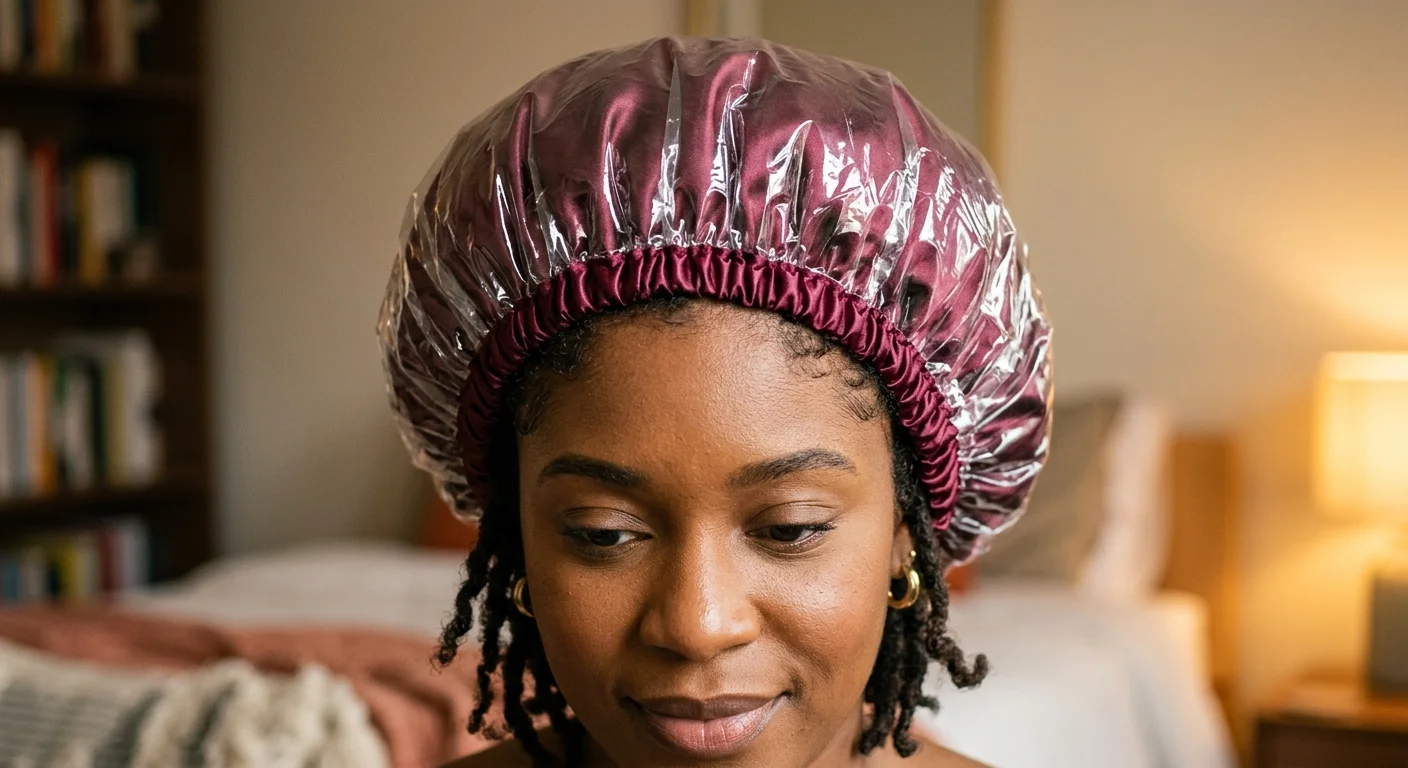
Black hair is built differently — and that difference requires a different level of care.
Afro-textured hair shafts are elliptical or flattened, not round like straighter hair types. That shape might sound like a small detail. But it matters a lot. An elliptical shaft bends, twists, and breaks more under friction and tension than a round one. The American Academy of Dermatology says it plainly — Black hair is fragile and prone to injury and damage. That’s not opinion. It’s biology.
The Science Behind the Dryness
Here’s something most people don’t realize: dryness in Black hair isn’t about how much oil the scalp produces. It’s about distribution .
Coiled strands make it very hard for natural sebum to move from root to tip. The oil stays on the scalp. The mid-lengths and ends — the oldest, most fragile parts of every strand — stay dry. Plus, a higher porosity structure means any moisture that does reach those ends escapes fast. It barely stays long enough to absorb.
Science is clear on this: the tighter the curl, the drier and weaker the hair fiber. For 4C hair, that’s not a warning. It’s a daily reality.
How Damage Builds Up
The fragility doesn’t stop at structure. It stacks.
-
Combing and brushing dry Afro hair causes far more mechanical damage than on straight hair types. That’s why dermatologists recommend detangling wet hair only
-
Chemical relaxers applied too often, or over already-processed sections, are linked to burns, hair loss, and scalp disease
-
Heat tools used without a protectant or at high, uncontrolled temperatures crack the cuticle of flat-shaped strands much faster than on round shafts
-
Tight protective styles — braids, weaves, cornrows — cross from protective to damaging the moment they pull or cause pain
The numbers show the full picture: more than half of African American women report hair thinning or hair loss as a concern. That statistic has a cause. It comes from repeated exposure to chemical, thermal, and mechanical stress — often pushed by social pressure to conform. Research shows 80% of Black women feel they must change their natural hair texture to get a job.
Protection isn’t vanity. It’s a science-backed response to hair that needs real, consistent care just to maintain — not even to thrive.
Why Wear a Bonnet Outside? Practical Reasons
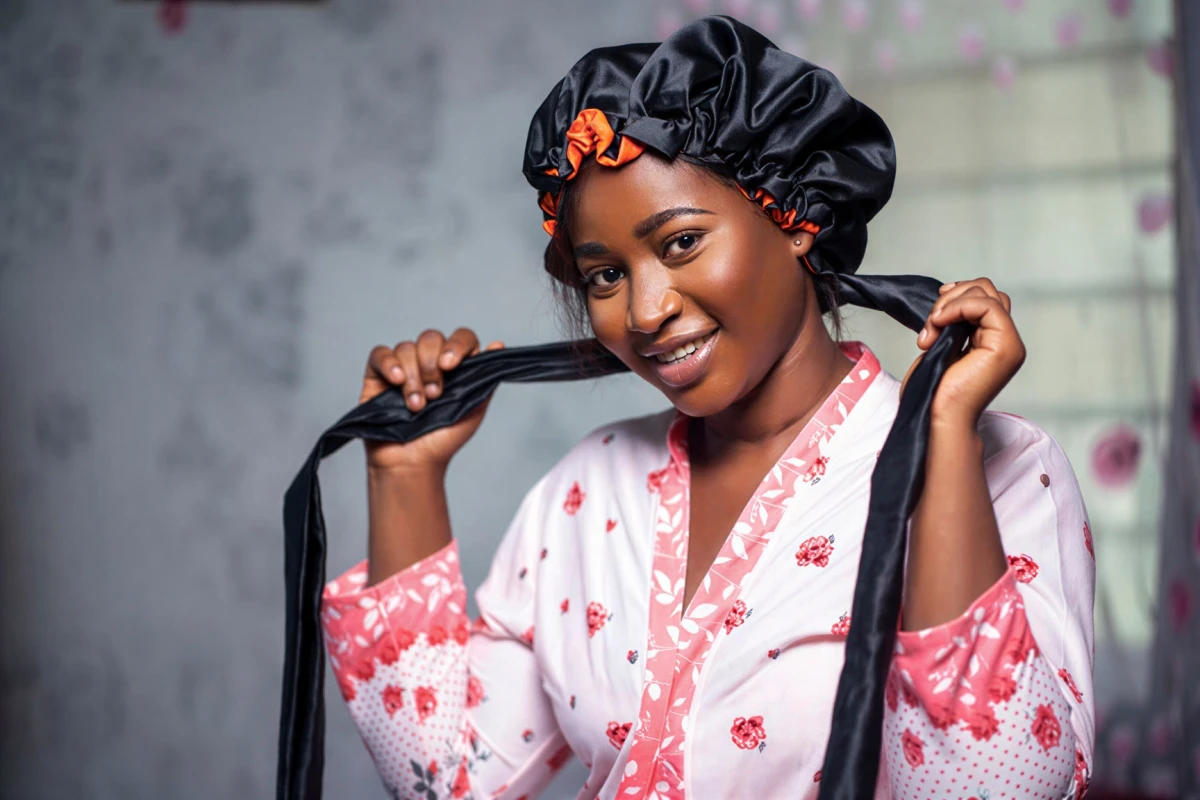
Stepping outside with a bonnet on isn’t an accident. It’s a decision — and most of the time, a smart one.
Black hair meets wind, friction, and dry outdoor air the second you step out. Without protection, damage starts stacking right away. A bonnet puts a barrier between your moisturized, styled hair and everything outside. That’s the whole point.
Friction Is the Silent Wrecker
Your hair rubs against car headrests, coat collars, cotton hood linings, and seat belts all day. Strands snap. It’s not dramatic. It’s slow and cumulative. But over days and weeks, that friction builds into real breakage and split ends.
Satin and silk bonnets cut that friction by a lot. Research cited by bonnet brands puts the number at up to 43% less breakage with friction under control. For 4C hair — elliptical in structure and prone to snapping under tension — that reduction isn’t a luxury. It’s maintenance math.
Moisture Doesn’t Stay Without Help
Low humidity and wind pull moisture from exposed strands fast. Natural hair already has a hard time moving oil from root to tip. Add outdoor air to that, and dryness and brittleness set in before you’ve reached your destination.
A bonnet slows that process down. It keeps natural oils where they belong — on the hair, not stripped away by rough fabrics or wind. Better moisture retention gives you stronger, more elastic strands and less dryness-related breakage over time.
Style Has a Lifespan — Bonnets Extend It
A fresh silk press, a just-done roller set, a clean braid-out — these styles take hours and real money. Walking out the door without protection, humidity swings, wind, and friction shortens that lifespan fast.
Put a bonnet on in transit — during a commute, a grocery run, a drive across town — and it acts as a temporary transport shield. Many stylists put one on their clients before they even leave the salon chair. The bonnet comes off at the destination. The style stays intact, often lasting one to three extra days compared to hair left with no cover.
The Practical Breakdown
Here’s where a bonnet earns its place outside the bathroom:
-
Car rides and commutes — Cuts friction against headrests, scarves, and coats. Most protective at the nape and ends, where breakage builds up fastest
-
Outdoor work or sports — Worn under a helmet or cap , a satin bonnet creates a smooth layer so the lining doesn’t grind against hair during movement
-
Long flights or travel — Detangle, add a light leave-in, put hair in low-tension braids or a loose bun, then cover. The bonnet takes care of hours of headrest friction you’d otherwise ignore
-
Deep conditioning on the go — Add treatment at home, cover with a bonnet, run errands. The bonnet keeps product off your clothes and holds warmth against the hair shaft, so the conditioning works better
One Practical Compromise
Not everyone wants to walk into every environment in a full bonnet. That’s a real and valid consideration. A common workaround: wear the satin bonnet underneath a wrap, turban, or hat. The outer layer reads as a style choice. The inner layer does the protective work. Hair health stays intact. Social comfort is managed. Both things can be true at once.
The bonnet outside isn’t a fashion statement or a forgotten errand. It’s overnight hair protection carried into the day — a practical response to the real demands of afro-textured hair in a world that wasn’t built with those demands in mind.
The Cultural Meaning Behind Bonnets
The bonnet has never been just a head covering. It has always been a statement about power, identity, and who gets to control both.
Black women have worn satin bonnets to protect their 4C curls for generations. But long before that, headwraps carried deep cultural weight across African societies. Garments like the duku and doek worked as layered social codes. The placement of a knot, the quality of the fabric, the way the wrap sat on the head — all of it communicated wealth, marital status, ethnicity, and emotional state. Nothing about it was casual. Every choice was made with purpose.
Then colonization happened. And the meaning of head coverings changed by force.
From Resistance to Ritual
In late 18th-century Louisiana, tignon laws forced Black women to cover their hair. The intent was punishment — a visible, legal mark of racial inferiority. These laws tried to strip headwraps and bonnets of their cultural meaning. They pushed to turn a form of expression into a tool of control, stamping race and caste onto the body.
Black women refused that narrative.
They pushed back with bright colors, elaborate tying styles, and bold artistry. A state-imposed marker became a declaration of beauty and dignity. The covering stayed. The meaning got reclaimed. That act of creative resistance is part of what the modern bonnet carries — whether its wearer knows the full history or not.
A Century of Care Built Into the Ritual
By the 1900s, entrepreneurs like Madam C.J. Walker had built entire industries around Black hair care. Inside those routines, the bonnet became standard equipment — not decorative, but functional. It locked in moisture. It cut down on breakage. It kept styles intact through the night.
That dual role — practical tool and cultural ritual — defines the modern bonnet’s place in Black life. It shows up in nightly routines the same way certain recipes or prayers get passed down through families. It is care, made physical.
Today, wearing a bonnet in public sits at a crossroads of respectability politics, generational tension, and Black bodily sovereignty. Some view it as too personal for public space. Others see it as a daily claim of identity — a refusal to perform comfort for outside audiences.
Both reactions point to the same truth: this garment carries centuries of history in its elastic band. The culture attached to it didn’t appear overnight. It grew through survival, resistance, and a steady commitment to caring for Black hair on Black women’s own terms.
Why Is Wearing Bonnets in Public Controversial?
The debate didn’t start with one video. Mo’Nique’s May 2021 airport clip changed things. She called out “young sistas” for wearing bonnets, slippers, and pajamas in public. That moment lit a fire — but the fire had been building for years.
This controversy isn’t about fabric. It never was.
The Criticism Comes From Inside the House
The bonnet debate hurts in a specific way. It’s not outsiders driving it. It’s not institutions. It’s often Black women themselves — older generations, professionals, community voices — telling younger Black women that wearing a bonnet in public signals a “lack of self-respect.” Or worse, it invites poor treatment.
The language gets sharp fast. Words like “ghetto,” “lazy,” and “not presentable” show up over and over in comment sections, Reddit threads, and Facebook debates. A Black dentist posted a sign in her own practice banning “bonnets, house shoes, and pajamas.” The backlash that followed showed just how deep this tension runs.
One popular YouTube commentary pushed the argument further. The creator said the only times she was ever “raggedy in public” were when “something was off mentally.” That framing turned the bonnet into a visible sign of personal neglect. Not just about hair. About everything.
The Professionalism Flashpoint
Refinery29 published a piece questioning whether wearing a bonnet on a Zoom work meeting was professional. It went viral. Not because it gave an answer — but because it exposed the fault line everyone already felt.
Formal spaces — clinics, offices, video calls, airports — carry unspoken dress rules. Bonnets belong to sleep and home routines. They clash with those norms in people’s minds. A TikTok explainer put it directly: a bonnet “sends a message” without words — and not the message its wearer intends.
The Double Standard Nobody Wants to Name
Here’s what the criticism keeps skipping over. Non-Black women wear messy buns, baseball caps , and headscarves in every public space you can think of. No one calls that a community crisis.
Bonnets get singled out. It’s the same category of casual hair covering. The judgment isn’t applied the same way.
Some writers covering this debate said it straight — if you judge someone’s entire character based on a bonnet, ” you were already bigoted .” The bonnet didn’t create that prejudice. It just made it visible.
What the Divide Reveals?
The split runs along generational lines. Older voices connect public appearance to pride and protection from discrimination. That logic came from decades of pressure inside white institutions — places that demanded Black women dress and groom a certain way just to be taken at face value. Younger voices reject that framing. They push back with bodily autonomy, practical hair protection, and refusal to follow a standard that was never applied to everyone equally.
Both sides come from real experience. That’s what makes this debate so loaded. It’s not about bonnets. It’s about who gets to define what “put together” means — and who that definition was built to protect in the first place.
How to Protect Black Hair: Bonnets and Other Methods
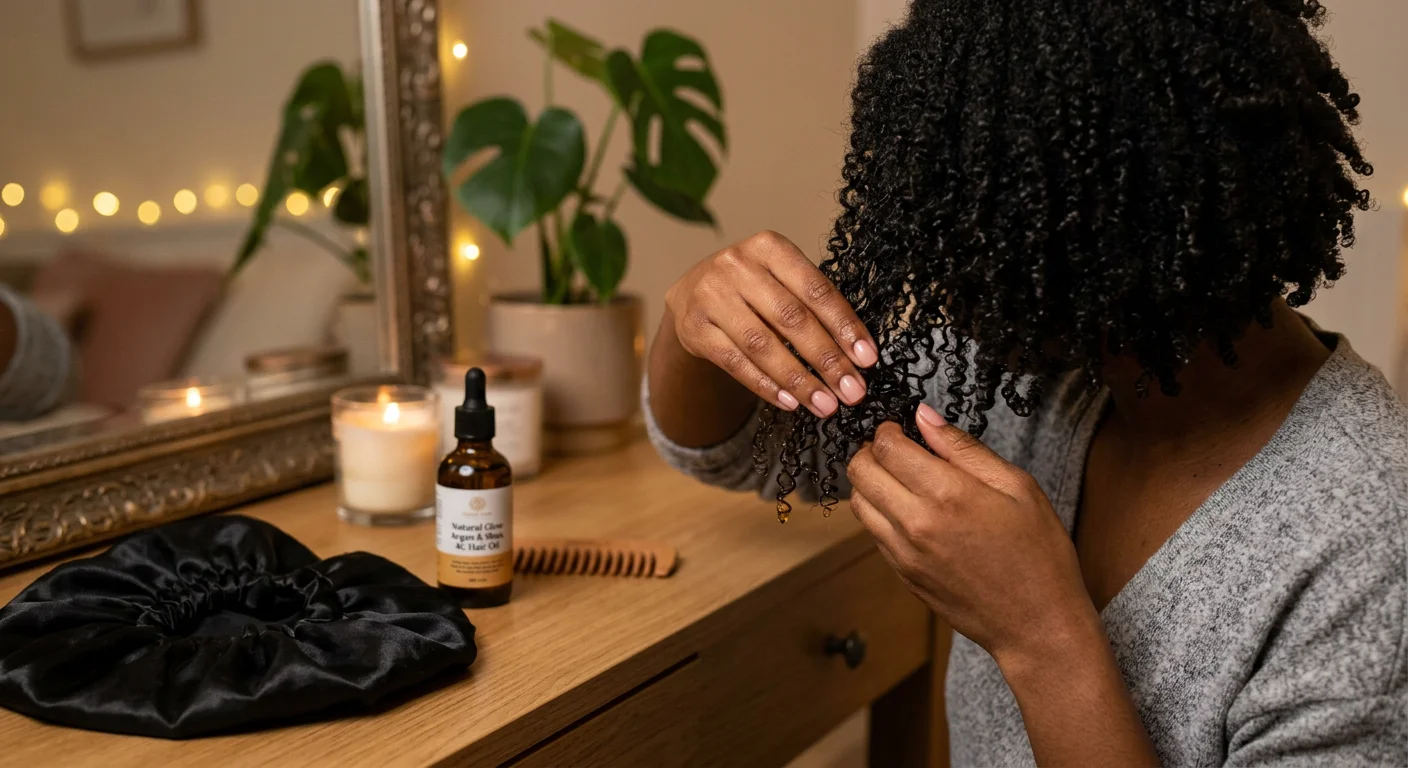
Protecting Black hair is not a trend. It is a discipline — passed down through hands and habits, refined through trial, and backed by science that caught up to what Black women already knew.
The bonnet is the anchor of that protection. But the how matters just as much as the what .
Start With the Right Material
Cotton is the enemy of moisture. A cotton pillowcase can absorb up to 27 times its weight in water and oils — pulling everything your hair needs right out of your strands while you sleep. Silk and satin create a low-friction surface instead. Less friction means fewer split ends, less breakage, and styles that survive the night.
The rule is simple: silk or satin. Bonnets, pillowcases, scarves — the material matters everywhere it touches your hair.
Build a Nightly Routine That Works
-
Moisturize your ends first. Use 1–2 pea-sized drops of lightweight oil or leave-in conditioner on your ends before covering. This locks in moisture and cuts morning frizz.
-
Choose a protective style. Options include:
-
Pineapple — gather hair at the crown, secure with one loose scrunchie (never double-wrap)
-
Two-strand twists — section into 10–15 parts, twist to within an inch or two of the ends, finger-coil the tips
-
Bantu knots — about 10 sections, each twisted and wrapped onto itself, secured before covering
-
-
Cover your edges. Pull your bonnet so it covers your edges and hairline. Snug — not tight. Too much tension at the hairline is a direct path to traction alopecia.
-
Back it up with a satin pillowcase. Bonnets slip. A satin pillowcase is your second line of defense when that happens.
Protecting Your Hair in the Pool
Chlorine does real damage to afro-textured hair — your edges take the worst of it. Use the SOAK–COAT–COVER method to cut that damage:
-
Soak your hair with clean tap water before getting in the pool. Your strands absorb less chlorinated water this way.
-
Coat with 1–2 tablespoons of moisturizing leave-in conditioner to seal the hair shaft
-
Cover with a fabric cap first — something like an EBAN cap — to protect your hairline. Then layer a rubber or silicone swim cap on top.
After every swim, shampoo. Water and conditioner alone will not remove chlorine.
No Bonnet? Here’s What to Do
A satin or silk scarf wrapped around your head gives you close to the same protection as a bonnet. A satin pillowcase, at minimum, controls friction and cuts overnight damage. Neither is a permanent substitute, but both beat sleeping on cotton with nothing.
The goal is the same across every method: keep moisture in, keep friction out, and protect those edges like the irreplaceable asset they are.
Conclusion
Black hair is not an inconvenience to be explained — it’s a crown that requires intentional care.
A silk bonnet, a satin-lined cap, or even a shower cap grabbed in a hurry — each one is a real choice. Protecting natural hair in public comes from science, self-respect, and generations of cultural wisdom. Afro-textured hair loses moisture faster. It breaks more often and needs protection that straight hair does not. That’s not a quirk — that’s biology meeting heritage.
Knowing why black people wear bonnets outside goes beyond trivia. It’s a chance to replace judgment with curiosity. Curiosity, in turn, builds genuine respect.
Ready to build a hair care routine that works for your texture? Check out Morntrip’s guides on natural hair protection methods. You’ll find the right overnight cap to keep your 4C curls thriving — not just getting by.
Protect your hair. Honor your culture. Own your routine.





