
Most people never think twice about it — you pull on a disposable cap, use it, and toss it. Simple enough, right? But the numbers tell a different story. A surprising number of people in hotels, kitchens, and clinical settings reuse them. Some do it out of habit. Others do it to save money. Many just don’t know the rules.
That small decision carries real hygiene risk. More than most people expect.
So whether you’re a food handler staying compliant, a traveler grabbing that thin shower cap by the sink, or a buyer placing bulk orders, the replacement rules for disposable caps matter. This guide breaks it down scene by scene, with clear guidance you can put to use right away.
The Short Answer: How Often Should You Change A Disposable Cap?
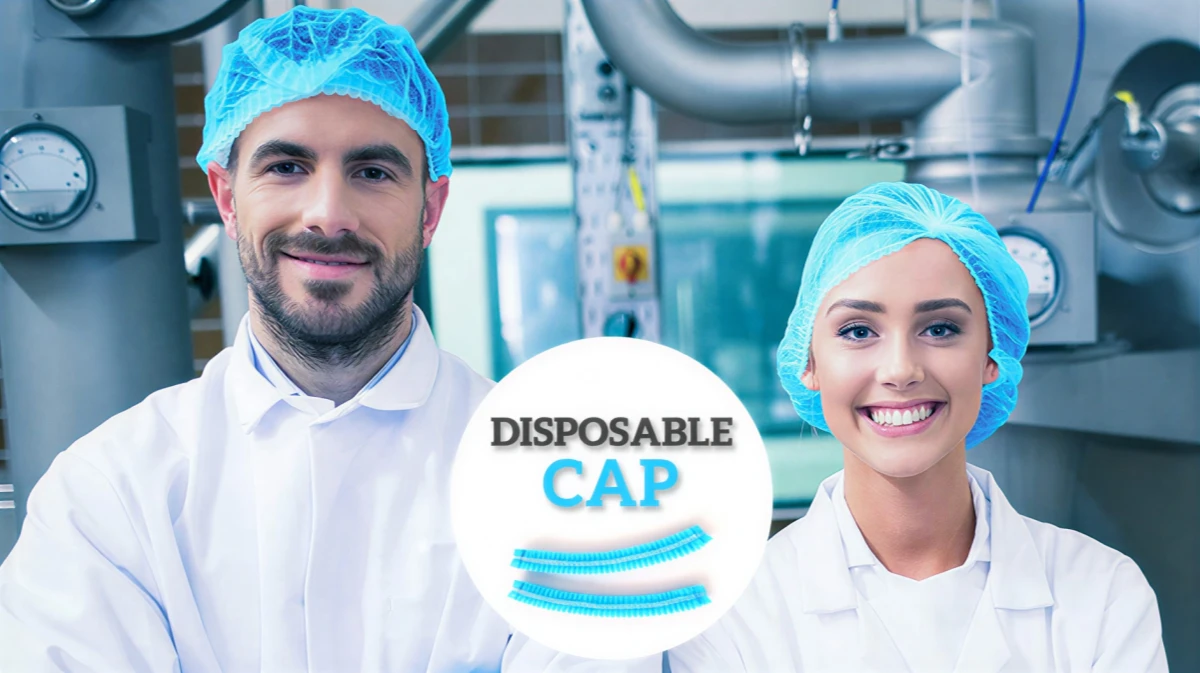
Once. Just once.
That’s the answer — clean and absolute. A disposable cap is built for a single use: one shift, one procedure, one exposure. The moment you remove it, its job is done. It doesn’t get a second round.
This isn’t an arbitrary rule. The logic lives in the material itself. Single-use caps — a disposable bouffant cap in a surgical suite or a disposable hair cap in a commercial kitchen — are built to collect one round of contamination, then go straight into the bin. Once you pull it off, the outer surface holds everything it caught: particles, pathogens, grease, and moisture. Putting that surface back near your hair or scalp undoes the entire point of wearing one.
The WHO puts it simply for personal protective equipment: replace it if it gets wet, becomes visibly soiled, or is damaged, or after any removal mid-task. For disposable caps, the rule is even cleaner — one task, one cap, full stop.
There is one narrow exception. Check the packaging. Some caps carry a clear “reusable” label that lists a maximum wash count and total wear time. Follow those instructions to the letter. No such label? Default to single use, every time.
Not sure what the standard is in your setting? Cap hygiene rules across food service, medical, and hospitality environments all point the same way — replace it, don’t reuse it.
Disposable Cap Replacement by Use Case: A Scene-by-Scene Breakdown
The rules shift depending on where you are. A surgeon scrubbing in for a six-hour procedure works by a different standard than a line cook flipping burgers. A hotel guest grabbing that crinkled cap beside the shampoo has different needs, too. Same product, different worlds. Here is what each setting demands.
1. Food Service & Commercial Kitchens
In a professional kitchen, a disposable hair cap goes on at the start of each shift and comes off at the end. That’s the full lifespan. No carrying it through a break. No, setting it on the counter and pulling it back on. Once it leaves your head, it’s done.
Food service cap replacement follows strict sanitation logic. Heat, grease, and moisture build up inside the cap throughout a shift. A used cap left on a surface picks up whatever that surface holds. Put it back on, and you transfer that contamination to your scalp — and back into the food.
The rule for kitchens: – One cap per shift, minimum – Replace right away if the cap becomes wet, torn, or soiled – Never reuse a non-woven disposable cap removed mid-shift — treat removal as retirement
2. Medical & Surgical Settings
Operating rooms and clinics follow strict rules. You use one cap for one procedure.
Many hospitals now choose washable, reusable scrub caps . This cuts clinical waste and costs. Your facility might still rely on single-use polypropylene or disposable bouffant caps. You cannot stretch their lifespan. You step out of the sterile field. The cap is done. You finish with a patient. You throw the cap in the trash.
The reason is simple. Medical Bouffant caps pick up skin flora and pathogens on contact. Reusing them creates cross-contamination risks. Treat every removal as the end of the cap’s life.

3. Hotels & Personal Travel
That disposable shower cap folded beside the hotel toiletries? One use. One shower. Done.
It isn’t about cost — it’s about structure. Thin polyethylene caps trap moisture inside after a single use. Residual heat and humidity turn the interior into a breeding environment within hours. The cap that felt clean at checkout may not be by morning.
For travelers: take a fresh cap each time. The hotel should replace it daily. Ask if they don’t. That’s a fair request, not an unusual one.
4. Beauty Salons & Personal Care
In salon environments, a single-use cap used during a treatment — coloring, conditioning, steam treatments — goes in the bin the moment the client leaves the chair. Cross-use between clients creates real liability. It doesn’t matter if the cap looks clean. That still violates basic cap sanitation guidelines.
Replace after: every client, every treatment, every time.
What Happens If You Reuse A Disposable Cap? (Hygiene Risks Explained)
The cap sits on the bathroom counter, or tucked into a locker, or folded into a pocket for tomorrow. It still looks clean. That’s the problem.
Reusing a disposable cap doesn’t feel like a risk. It feels like common sense — waste less, spend less, move on. But the material tells a different story. That story plays out at a microscopic level. Your eyes can’t see it. Visual inspection tells you nothing useful.
What the Material Was Never Built to Handle?
The CDC defines a disposable device plainly: used once, by one person, then discarded. No cleaning. No re-sterilization. No second round. That definition isn’t just administrative caution. It reflects a material reality.
Non-woven disposable caps and thin polyethylene shower caps share the same structural problem: – Their fibers and surfaces break down under any effective re-processing – High-temperature washing degrades the material fast – Chemical disinfectants absorb into the fabric — then release against your skin on reuse – The protective function deteriorates after a single use, visible damage or not
The cap exists for one purpose. After one use, that purpose is spent.
What Builds Up Inside?
Your scalp is not a neutral surface. Within hours of wear, sweat, sebum, dead skin cells, and resident microorganisms coat the interior of a disposable hair cap. That warm, damp, nutrient-rich environment is exactly what bacteria and fungi need to grow. Heat plus humidity plus organic matter equals a working incubator.
Research on reused single-use face coverings found measurable bacterial and fungal colonies on the surface after repeated wear. Researchers recommended that immunocompromised individuals skip reuse to cut the risk of respiratory, digestive, and skin infections. That finding applies to disposable bouffant caps and disposable shower caps, too. These materials trap moisture against the scalp. They were never built to be cleaned.
A disposable shower cap reused across two or three showers builds the right conditions for mold growth, more so if stored damp. Putting that cap back on your scalp can cause itching, irritation, and in stubborn cases, a fungal scalp infection.
The Cross-Contamination Chain
Medical and food environments raise the hygiene stakes even higher.
A medical disposable cap worn during a procedure picks up that patient’s skin flora on both its inner and outer surfaces. That flora may include MRSA or gram-negative pathogens. Wearing the same cap near a second patient brings that microbial load into a clean clinical space. Direct contact isn’t required. Particles shed from a cap that shifts, slips, or brushes a surface are enough to start a transmission chain.
Studies comparing reusable and single-use surgical head coverings found that poor laundering control led to reusable caps with far higher bacterial colony counts and growth grades than disposable ones. The takeaway is direct: a disposable cap reused without proper laundering carries a bacterial load equal to — or worse than — a poorly washed cloth cap. The material just hides it better.
Food production settings carry the same risk. A food service cap worn across multiple shifts collects airborne kitchen grease, flour dust, and bacteria. Mixed with scalp secretions, the cap surface becomes a contamination source. It transfers bacteria from hands and hair straight to food contact surfaces and ingredients.
The Structural Problem Gets Worse Over Time
Each reuse adds micro-tears and fiber fractures that your eyes can’t detect. Those rough patches and surface cracks become anchor points for bacterial and fungal biofilms. These colonies resist simple rinsing. They keep growing between uses.
Cap hygiene standards in the medical and food industries exist for a clear reason: informal cleaning cannot replace validated sterilization. A quick rinse under the tap doesn’t remove biofilm. It just shifts it around.
The reality of disposable cap lifespan is structural, not sentimental. Once the cap comes off, its safety margin is gone. What looks like a clean cap is a surface that has already done its job — and can’t do it again.
How to Choose the Right Disposable Cap for Your Industry?
The wrong cap doesn’t just fail at a convenient time. It fails during an audit, mid-shift, or in the middle of a sterile procedure — exactly when you need it most. The right disposable cap comes down to three things: material, fit, and certification. Get all three right, and the cap does its job without you thinking about it again.
Match the Material to the Risk Level
Material is where most purchasing decisions go wrong. There’s no single best material — just the right one for your environment.
PP non-woven (Polypropylene) is the standard choice across most industries. At 10–25 g/m², it works well for food processing lines, general medical settings, and lab environments. It breathes. It blocks hair and particles. Staff can wear it through a full shift without discomfort. For surgical and sterile environments, go with heavier PP at 30–40 g/m². That weight gives you tighter particle control.
PE (polyethylene film) is built for high-liquid environments — butchery, frying stations, wet processing lines. It doesn’t breathe, so wear time is limited. But it stops oil and liquid splatter that non-woven caps would soak up. Always specify food-grade PE — look for FDA food contact or GB 4806 compliance on the label. Industrial-grade PE contains plasticizers. Those have no place near food or skin.
SMS composite fabric (spunbond-Meltblown-spunbond, 35–60 g/m²) is the right call for operating theatres, ICUs, pharmaceutical fill lines, and ISO-classified cleanrooms. The meltblown middle layer adds real liquid and particle barrier protection. Standard non-woven can’t match that level of performance.
Get the Fit Right — Poor Fit Drives Up Replacement Frequency
A disposable bouffant cap that gaps at the temples or rides up the neckline is not a minor issue. In a food audit, it’s an immediate fail. In a sterile field, it’s a contamination event.
Coverage requirements for food service:
– Full scalp, hairline, ears, and nape — no exceptions
– Elastic band should sit below the top of the ear
– Test by bending forward, tilting back, and turning side to side — any hair showing means the size is wrong
Sizing by hair volume:
– Standard hair: 18–21 inch diameter
– High-volume or long hair: 24–28 inch diameter
Elastic tension matters as much as diameter. A band that’s too tight slides down to the neck. Too loose, and the front gaps open within the hour. A 5–10 mm medium-tension elastic holds position and leaves no pressure marks. Run the three-movement check before placing a bulk order.
For staff with facial hair longer than 3 mm, a beard cover is required. It must overlap the cap’s edge at the cheekline. No overlap means a gap. A gap means a compliance issue.
Check the Certification Before You Buy
For food environments: Check the packaging for FDA food contact designation or GB 4806.7-2023 compliance. GMP and HACCP programs require zero hair exposure from any angle. The material certification is what backs that up.
For medical settings: Domestic procurement should reference the group standard for single-use sterile medical caps . That standard covers material composition, microbial limits, and labeling requirements. For export markets or high-spec hospital contracts, look for CE marking (PPE or medical device directive) or FDA Class I registration.
For cleanrooms and pharmaceutical production: Match the cap spec to the classified zone. Standard PP non-woven works for general packaging areas. SMS protective caps or hood caps — covering the head, neck, and sometimes shoulders in one piece — belong in high-risk fill and compounding zones. The barrier standard is higher there, and so is the cost of a contamination event.
Frequently Asked Questions About Disposable Cap Hygiene
The same questions come up again and again — in break rooms, procurement meetings, and compliance audits. Here are direct answers to the ones that matter most.
How long does a disposable cap last?
One use. That’s the full lifespan of a disposable cap. Once it leaves your head, its job as a contamination barrier is done. Gets soiled, damp, or leaves a restricted area before that point? It ends there, too.
Are disposable caps sanitary?
Yes — with correct use. Single-use caps cut cross-contamination by trapping hair and reducing particle shedding. That protection relies on three things: proper donning, single use, and quick disposal. Reuse cancels it out.
What are the key cap sanitation guidelines to follow?
-
Sanitize your hands before putting the cap on
-
Tuck in all hair, including the nape and sides
-
Once in place, do not touch the cap
-
Remove by the elastic edge only — keep your hands off the outer surface
-
Drop it in the designated waste bin right away
-
Wash your hands again after removal
What material performs best for hygiene?
Spunbond polypropylene nonwoven is the go-to choice across medical, food, and cleanroom settings. It’s light and breathable. You get solid hair containment without losing comfort over a full shift. For higher-risk environments, SMS composite fabric adds a meltblown barrier layer. That extra layer gives you stronger control over particles and liquids.
Conclusion
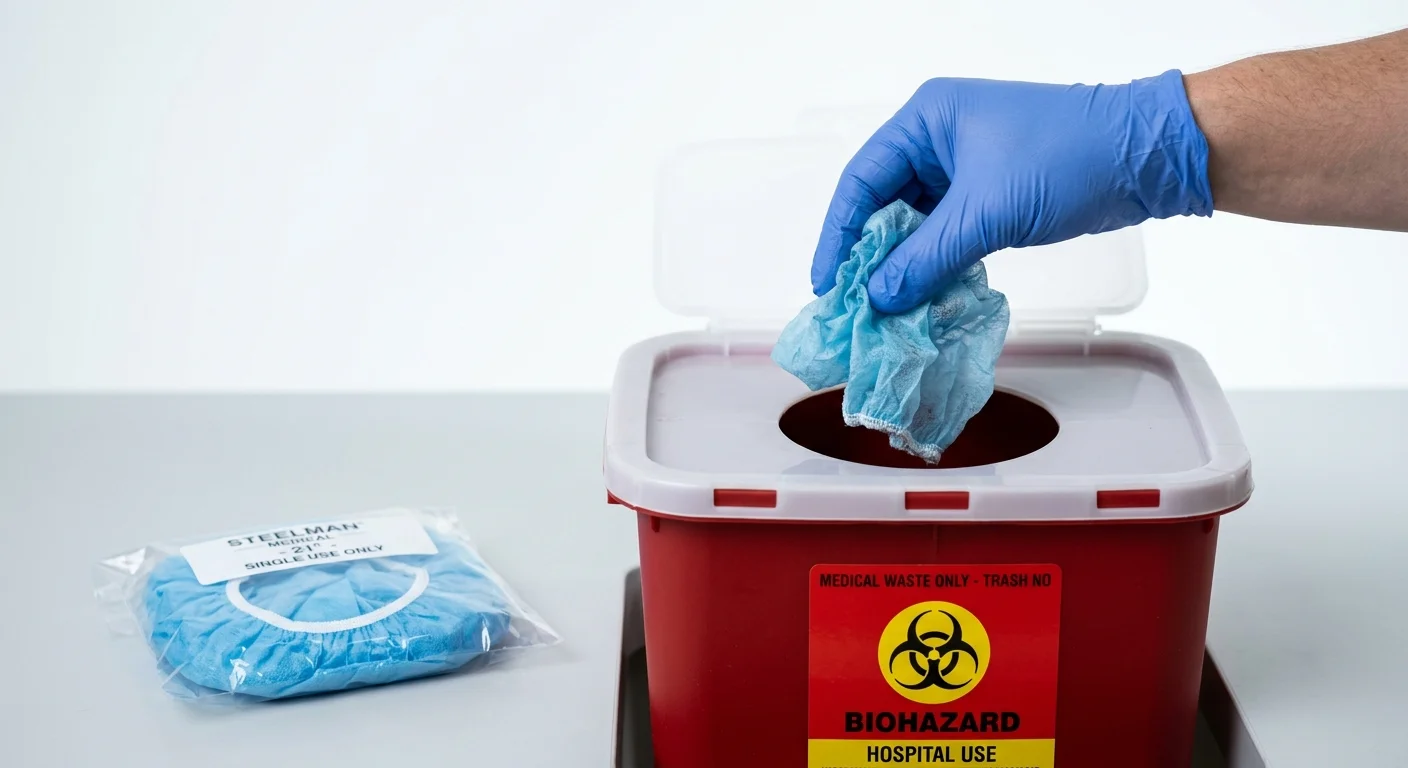
The answer is simpler than it looks: one use, one cap — no exceptions.
You might be running a commercial kitchen. You might be working a hospital shift. Or you’re just unwrapping that little folded cap in a hotel bathroom. No matter the setting, once a disposable cap comes off your head, its job is done. Reusing it saves almost nothing — but the hygiene risks are very real.
Good cap hygiene isn’t about being too cautious. It’s about using these products the way they were meant to be used.
Sourcing disposable caps for your team or facility? Pick the right material and style for your environment. Not all caps offer the same level of protection — so the match matters.
Morntrip ‘s full range of single-use caps covers food service, medical, and personal care needs. One use, then replace. That’s the standard worth keeping.





