
A chemical spill hits fast. The coverall your worker is wearing at that moment isn’t a last-minute choice — it’s a decision a safety manager made months before, either after doing the research or skipping it.
Lakeland coveralls have protected workers in petrochemical plants, hazmat response teams, and pharmaceutical cleanrooms for decades. Yet most buyers don’t know the full story. Who manufactures them? Where does production happen? What quality controls exist between the factory floor and your team’s skin?
That gap in knowledge leads to bad procurement decisions. Expensive ones.
This is a straight look inside Lakeland Industries’ protective clothing supply chain. You’ll find:
-
The manufacturing infrastructure behind the brand
-
Where and how the facilities operate
-
The certifications that matter
-
What all of this means for your sourcing decision
The Short Answer: Who Manufactures Lakeland Coveralls?
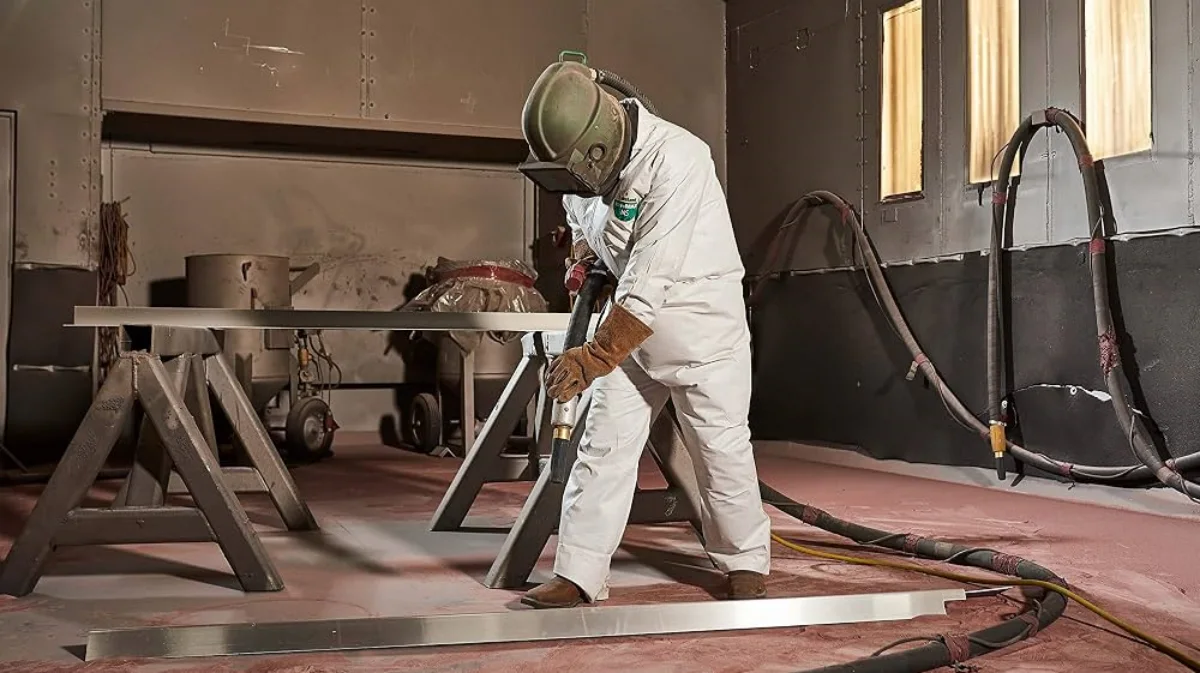
Lakeland Industries, Inc. makes Lakeland coveralls . Full stop.
It’s a U.S.-based PPE manufacturer. The company is headquartered at 1525 Perimeter Parkway, Suite 325, Huntsville, Alabama. Its roots go back decades to Ronkonkoma, New York. Lakeland holds the brand, owns the IP, and controls the product line. Buy Lakeland, and you’re buying straight from the source.
Here’s what the company looks like at scale:
-
~1,700 employees across global operations
-
~$137.7 million in annual revenue
-
Manufacturing footprint spanning the U.S., Mexico, Canada, China, and India
-
India operations run through Lakeland Gloves and Safety Apparel Pvt Ltd in Noida, Uttar Pradesh — a 100% subsidiary and Lakeland’s first dedicated coverall manufacturing facility in the region
Procurement teams pay attention to this: Lakeland identifies itself as the original manufacturer of non-woven-based disposable protective coveralls. That’s not a marketing claim. It points to deep, institutional experience in hazmat coveralls production that most competitors don’t have.
Product lines like Safegard® and MicroMax® NS come out of this same manufacturing system.
One company. One ownership structure. Multiple production locations. All feeding a single quality framework. That’s the answer to who manufactures Lakeland coveralls .
Where Are Lakeland Coveralls Made?
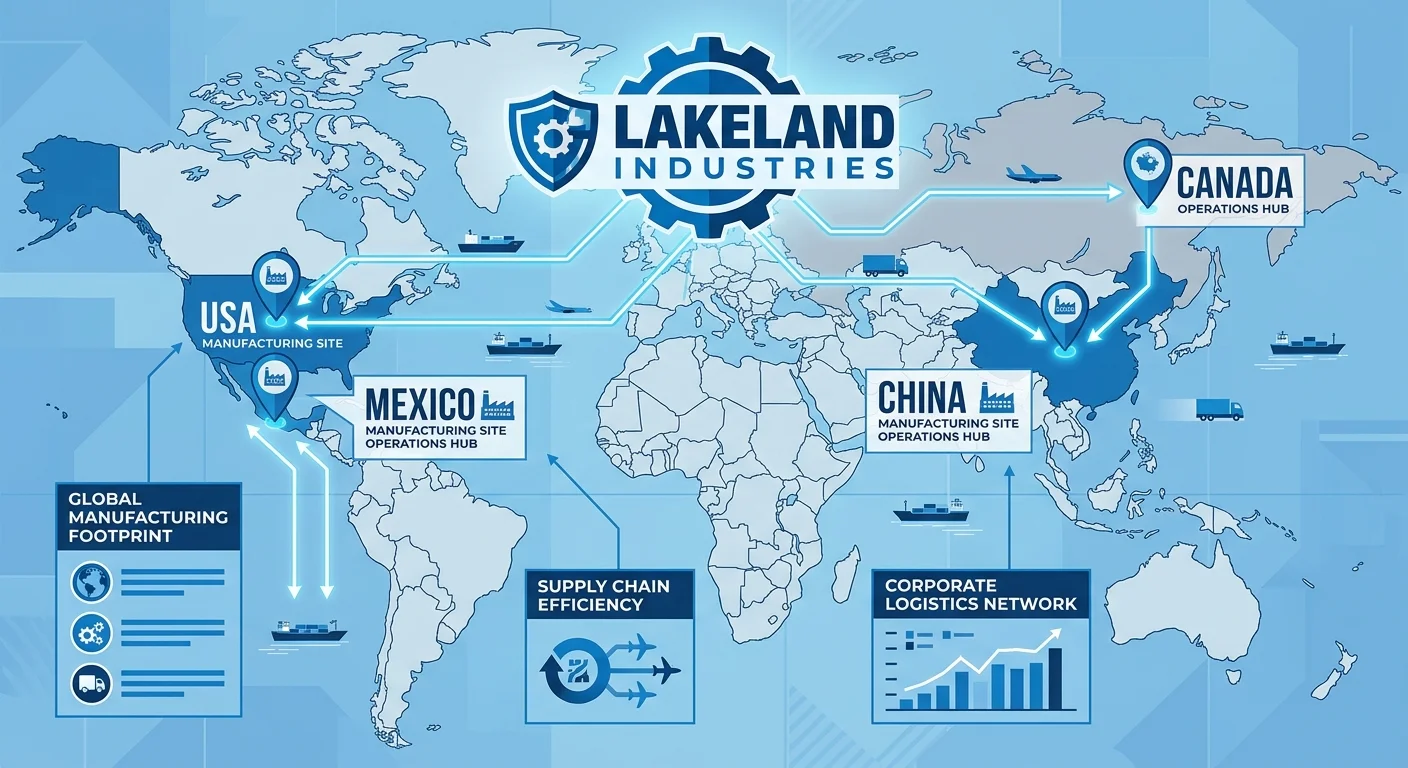
Lakeland coveralls come from four countries. Which country made your coverall matters more than most buyers think.
Lakeland runs manufacturing facilities in the United States, Mexico, Canada, and China. The UK and India are also part of the picture, but those sites focus on regional distribution and sales — not core production. Here’s how the manufacturing locations break down.
U.S. Manufacturing: Decatur, Alabama and Iowa
Three confirmed U.S. facilities handle domestic production:
-
202 Pride Lane SW, Decatur, Alabama — Lakeland’s main U.S. manufacturing and distribution hub for protective garments
-
1301 Ohio St., Des Moines, Iowa — U.S. manufacturing and distribution
-
3710 W. Milwaukee St., Spencer, Iowa — U.S. manufacturing and distribution
Your coverall label reads ” Made in USA ” ? It came from one of these three plants. For buyers with domestic sourcing requirements — federal contracts, Buy American compliance, or personal preference — these are the facilities to know.
Mexico and China: Where Most Disposable Coveralls Are Built
Budget-friendly and limited-use lines — microporous, PE-coated, and cleanroom coveralls — come out of Lakeland’s Zacatecas, Mexico plant (Tomas Urbinia #1, Colonia Villa Flavia, Jerez de García Salinas) and its China operations based in Anqiu City, Weifang, Shandong Province.
This is standard practice. Most disposable PPE manufacturers across the industry follow the same sourcing model. One key point worth knowing: these are not outside contract manufacturers working on their own. They are part of Lakeland’s own production network, all tied into a single quality system.
Canada: Woven and FR Coveralls for North America
Canada’s plants focus on the durable woven coverall side of Lakeland’s lineup — FR cotton, polycotton, and similar heavy-duty garments built for repeated use. These facilities serve the North American industrial market alongside the U.S. sites.
What This Means for Your Label — and Your Order
|
Coverall Type |
Primary Manufacturing Source |
|---|---|
|
Disposable / limited-use |
China, Mexico |
|
Durable woven / FR coveralls |
USA (Decatur, IA), Canada |
|
EU-distributed coveralls |
China or Mexico → UK distribution |
For procurement teams: Always check the country-of-origin label on the exact SKU you’re ordering. Manufacturing location can shift based on your region, order volume, and product variant — even within the same Lakeland product family. “Lakeland coveralls” is not a single-origin product. It’s a quality-controlled output from a multi-site global manufacturing system.
What Makes Lakeland Different From Other PPE Brands?
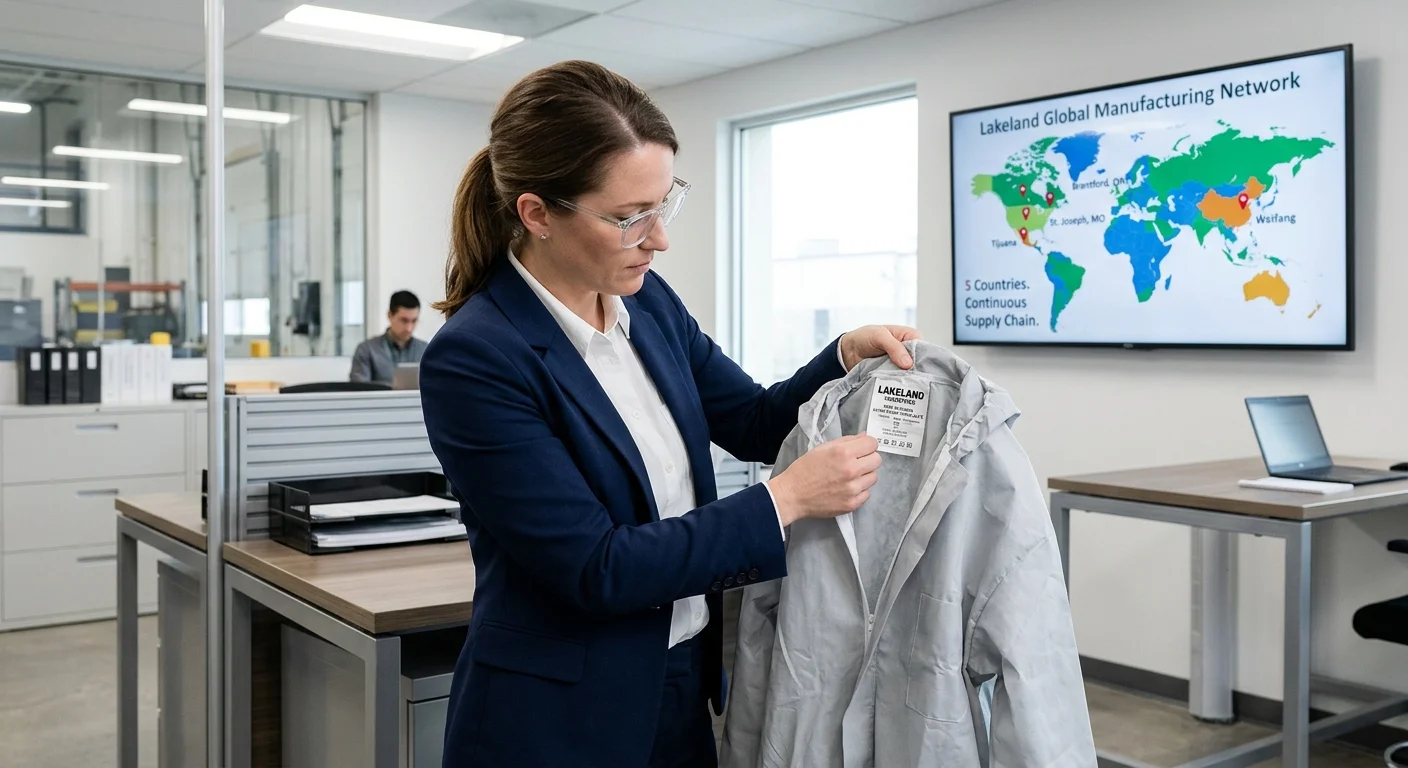
Forty years is a long time to get something right.
Lakeland has been making protective solutions since before most of today’s PPE brands existed. Over that time, the company built something hard to copy: a fully integrated manufacturing system, hazard-specific engineering, and cross-regional certification — all under one roof.
Most PPE brands don’t have that. They design at HQ, outsource production to contract manufacturers, and piece together certifications market by market. Lakeland is built differently, from the ground up.
Here’s where that difference shows up.
They Own the Factories. They Own the Certifications.
Lakeland controls product quality. That’s not a marketing claim. It’s a description of real infrastructure. Their factories span multiple continents. That global footprint lets them earn and maintain certifications across regions at the same time — EN standards in Europe, ASTM compliance in North America, and others worldwide.
For procurement teams sourcing PPE across multiple markets, this matters. One supplier that can certify to EN 14126 for biological hazard protection and meet ASTM F903 penetration resistance from the same product line cuts a major coordination burden. You’re not chasing multiple vendors across different compliance markets.
A Hood Designed Around the Respirator — Not the Other Way Around
This is a small detail with large consequences in the field.
Lakeland’s CE-certified chemical safety coveralls use a three-piece hood with a shaped center section. The alternative — a two-piece hood — is what many manufacturers default to. Why? It’s cheaper to produce.
The problem is fit. A flat two-piece hood gaps and pulls against respirator masks. Lakeland’s shaped three-piece design follows the mask ‘s profile. You get a tighter seal between hood and respirator. In a chemical environment, that gap isn’t a comfort issue. It’s an exposure risk.
Protection Engineered for Specific Hazards
Lakeland doesn’t make one coverall and push it across every hazard category. MicroMax® NS Global, for example, targets protection against infectious agents and biological hazards under EN 14126. It also delivers chemical repellency and penetration resistance per EN 6530. That’s a purpose-built product, not a general-purpose garment stretched to fit.
Lakeland covers chemical, pharmaceutical, mining, environmental remediation, offshore, recycling, fire, and composites industries. Each garment is designed around the actual exposure profile of that industry — not adapted from a base model meant for something else.
Comfort Isn’t a Compromise
Lakeland treats comfort as a design input, not a side effect. “Best-in-class wearing comfort” isn’t just a tagline. It reflects real engineering choices — material selection, seam placement, range-of-motion considerations — that decide how long a worker stays productive in a hazardous environment. Better comfort means longer, safer wear time.
Lakeland also addresses PPE ensemble compatibility directly. Combining multiple protective items can reduce each item’s performance. Lakeland’s design process accounts for that. Most brands don’t.
The Bottom Line on Differentiation
|
Differentiator |
What It Means in Practice |
|---|---|
|
Owned global factories |
Quality consistency across all production sites |
|
Cross-region certification |
One supplier, multiple compliance markets |
|
Three-piece shaped hood |
Better respirator seal, lower exposure risk |
|
Hazard-specific garment design |
Right protection for the right environment |
|
Ensemble compatibility focus |
PPE systems that work together, not just as separate pieces |
|
40+ years of manufacturing history |
Institutional knowledge competitors can’t fast-track |
Lakeland was also a founding member of the first company worldwide to manufacture protective suits from extruded polymer fiber nonwovens — the material technology behind most modern chemical protective coveralls . That’s not a footnote. That’s the origin point of an entire product category.
Evaluating PPE brands side by side? The question isn’t just who has a coverall in your size at the right price point . It’s who built the systems, the certifications, and the engineering depth to back up the protection claims on the label.
What Types of Coveralls Does Lakeland Manufacture?
Lakeland doesn’t make one coverall. They make a system of them. Each one is built for a specific threat level, a specific hazard type, and a specific set of conditions. The wrong garment choice has real consequences.
Knowing which product line does what is the fastest way to match the right protection to the right environment. Here’s how the lineup breaks down.
Type 5/6 Disposable Coveralls: Dust and Light Spray Protection
Lakeland’s entry-level range is built around three fabric technologies:
SMS/SMMS (Spunbond-Meltblown-Spunbond) — Polypropylene non-woven construction. This is the foundation of the SafeGard™ GP and SafeGard™ 76 lines. You get general-purpose dust and liquid aerosol protection. Three-thread overlocked seams. Elastic at hood, waist, wrists, and ankles. The SafeGard 76 steps up to SMMS for a better barrier-to-comfort ratio. It comes in white, orange, and blue — color-coding that lets facilities tell apart duty levels and work zones at a glance.
Microporous Polyethylene Film Laminate (MPFL) — this is MicroMax® NS. A microporous PE film laminated to a non-woven backing, weighing in at 65 g/m². It gives you a stronger liquid and aerosol barrier than SMS, and still breathes through the micropores. The “Super-B” ergonomic cut tightens fit at the hood, cuffs, waist, and ankles. This closes off the gaps where particles get in. Some MicroMax NS models also carry EN 14126 certification for protection against infectious agents and biological hazards.
MicroMax NS Cool Suit uses the same MPFL technology and tackles heat stress head-on. MPFL covers the front for chemical barrier. SMS or SMMS covers the back panel for ventilation. Type 5/6 protection. Built for hot environments where a standard MPFL suit creates its own heat risk.
The certification baseline across Type 5/6 lines: EN 13982 (dry particle protection, Type 5) and EN 13034 (reduced chemical spray, Type 6). Many models are also tested to EN 1073-2 for radioactive contaminated particle protection.
Type 3/4 Chemical Coveralls: The ChemMax Range
As the hazard shifts from dust and aerosols to chemical splash and liquid-tight scenarios, Lakeland’s answer is ChemMax . It’s a tiered range of limited-use chemical protective coveralls built around multi-layer barrier film laminates.
ChemMax® 1 — PE laminate construction, yellow. Stitched and taped seams. Double zipper under flap. Reinforced knees. Type 3/4. This is the starting point for chemical and petrochemical work, pharma environments, waste handling, and emergency response with less aggressive chemicals. Available S through XXXL.
ChemMax® 2 — a more advanced multi-layer barrier film. Lakeland describes it as “extremely soft and flexible” — and that matters. A rigid chemical suit cuts down wear time, and shorter wear times raise exposure risk. Type 3/4. It handles a wider chemical resistance list than ChemMax 1.
ChemMax® 3 — superior barrier film. Built for more aggressive chemical environments. Some versions include double-layer cushioned knee pads for extended kneeling tasks.
ChemMax® 4 Plus Plus — the top of the range. Spunbonded polypropylene combined with a proprietary barrier film laminate. Tan color. Sized at 2XL and beyond. Built for the most aggressive chemicals and emergency response deployments.
TomTex® completes the Type 3/4 range with a purpose-built agricultural spray suit. Type 3 liquid-tight plus Type 4 splash. Certified under EN 14605. Built for pesticide and agrochemical spraying operations.
Flame-Resistant Coveralls: Pyrolon and FR Wovens
Two product categories cover the FR segment.
Woven FR coveralls — Lakeland makes both 7 oz/yd² 88/12 FR cotton-nylon blend and 7 oz/yd² 100% FR cotton options. These are built for oil and gas, utilities, and general industrial environments that need durable flame-resistant workwear for repeated use.
Pyrolon™ FR chemical coveralls — this is where flame resistance and chemical protection meet in one garment. Standard disposable fabrics melt and drip in flame exposure. Pyrolon handles both threats at once. Certified to EN 14116 Index 1 flame spread requirements. You get it in Type 3, Type 4, and Type 6 configurations depending on the model. That makes it the go-to choice where the hazard includes both chemical splash and fire risk.
Quick-Reference: Lakeland Coverall Ranges by Protection Type
|
Product Line |
Fabric Technology |
EN Protection Type |
Primary Use Case |
|---|---|---|---|
|
SafeGard GP / 76 |
SMS / SMMS |
Type 5, Type 6 |
Dust, light aerosols; entry-level disposable |
|
MicroMax NS |
MPFL |
Type 5, Type 6 |
Higher barrier; biological hazard variants available |
|
MicroMax NS Cool Suit |
MPFL front + SMS/SMMS back |
Type 5, Type 6 |
Hot environments; balanced barrier and breathability |
|
ChemMax 1–4 |
Multi-layer barrier film laminates |
Type 3, Type 4 |
Chemical splash; tiered by chemical aggression |
|
TomTex |
Barrier film |
Type 3, Type 4 |
Agricultural spray; pesticide application |
|
Pyrolon FR |
FR chemical fabric |
Type 3, Type 4, Type 6 |
Combined flame + chemical hazard environments |
|
FR Woven Coveralls |
88/12 or 100% FR cotton |
Durable workwear |
Oil & gas, utilities, industrial FR |
The range covers everything from entry-level dust protection to coveralls built for chemical and flame exposure at the same time. For procurement teams assessing Lakeland Industries Protective clothing against a specific hazard profile, the real question isn’t just “which Lakeland coverall.” It’s which protection type, which certification, and which fabric technology actually matches the threat your workers face.
How to Buy Genuine Lakeland Coveralls
Counterfeit PPE exists. It shows up on legitimate-looking platforms with legitimate-looking product photos. The protection level is the one thing that isn’t legitimate — and you won’t find out until it’s too late.
Three steps keep you from ending up there.
Buy from an authorized distributor — not just any seller with Lakeland in the listing title.
Authorized industrial safety distributors get their inventory straight from Lakeland Industries. Northern Safety is one confirmed authorized seller. They stock Lakeland Disposable coveralls, including the disposable coverall with Boots (product code 415001). Reach their sales and customer support line at 1-800-571-4646, Monday through Friday, 7:30am–7:00pm ET. One quick call before a large order confirms stock, checks the manufacturer name, and validates the SKU. That’s two minutes of your time — and it cuts out a real sourcing risk.
Match the product name, SKU, and manufacturer name before you pay.
Genuine Lakeland listings name the brand as Lakeland® up front. You won’t see just “chemical coverall” or “disposable suit” with a Lakeland logo buried somewhere in the description. The full product description states the brand by name, specifies the variant (for example, with boots ), and includes the exact item number. All three should match — listing title, SKU, and the Lakeland® brand call-out. That combination tells you it’s the real product.
One detail out of place? Don’t talk yourself into it.
Counterfeit listings count on buyers skipping verification. The price looks right. The delivery timeline fits. So the check gets skipped. Run it anyway. Pull up Lakeland’s product documentation and compare it against the seller’s listing line by line. A coverall stands between a worker and a chemical hazard. “Close enough” is not a sourcing standard.
FAQ: Common Questions About Lakeland Coveralls
Buyers ask the same questions before every major PPE order. Here are the straight answers.
What safety standards do Lakeland FR coveralls meet?
Lakeland flame-resistant coveralls are built to NFPA 2112 — the industry benchmark for flash fire protection. Arc-rated models are tested to ASTM F1959. ATPV ratings fall in the 8–12 cal/cm² range for light-to-medium duty work. Heavier garments hit ≥20 cal/cm². These coveralls are built for environments where NFPA 70E arc flash standards and OSHA 1910.132/1910.269 PPE requirements are in force.
How long do FR properties last?
For the life of the garment — as long as you follow the care instructions. No chlorine bleach. No fabric softeners. Keep wash temperatures moderate. Skip those rules, and you degrade the protection the garment was certified to deliver.
What sizes are available?
Lakeland’s disposable and chemical coverall ranges cover chest sizes from 34–36 in (S) up to 60–64 in (5XL/6XL). Height accommodation across most lines runs 5’2″–6’5″ (157–196 cm). Chemical protective ranges go S through 4XL.
How should coveralls fit when worn with other PPE?
Size up. You want 4–6 inches (10–15 cm) of extra chest girth over base layers. Check that you have full range of motion — arms raised, squatting — with no seam tension or zipper stress. Pairing with an SCBA harness or body-worn equipment? That clearance is not optional. Stressed seams in a chemical environment aren’t a fit problem. They’re a breach.
MicroMax NS or SafeGard GP — which one?
One question settles it: is liquid splash a real exposure risk on this job?
-
Yes → MicroMax NS (MPFL construction, superior liquid holdout, biological hazard variants available)
-
No — dry particulates or light non-critical splashes only → SafeGard GP (SMS construction, higher breathability, better heat stress management)
Lakeland’s own comparative testing shows MPFL garments outperform SMS on liquid penetration resistance by a clear margin. Is the chemical in liquid phase? That gap matters a lot.
Before you order any chemical task coverall, run through four steps:
-
Identify the chemical and its concentration
-
Determine whether exposure involves pressurized spray or low-pressure splash
-
Check Lakeland’s permeation data for breakthrough time at your expected exposure duration
-
Balance protection level against heat stress risk
How do I contact Lakeland?
Lakeland Industries — U.S. (Decatur, AL) – Toll-free: 800-645-9291 – Direct: 256-350-3873 – Email: [email protected] / [email protected]
Lakeland India (Noida, Uttar Pradesh)
– Phone: +91 98105 37266 / +91 120 4249261
– Email: [email protected]
Got technical selection questions, order confirmation needs, or compliance documentation? Go straight to the source. A two-minute call to Lakeland’s customer service line beats any third-party listing description — faster and more reliable.
Conclusion
The real question was never who makes Lakeland coveralls. It was whether you can trust what’s inside that bag before your workers step into a hazardous environment.
Now you have your answer.
Lakeland Industries has spent decades building a manufacturing setup that doesn’t cut corners. Their facilities are tightly integrated from production to packaging. Certifications are recognized across global markets. Product lines like ChemMax and Pyrolon are built for the specific threats your team faces — not generic risks, but the actual hazards on your job site. That’s not marketing language. That’s a supply chain built to hold up when everything else is under pressure.
So here’s your next move: don’t let procurement become a liability.
Sourcing Lakeland industrial safety coveralls for one facility or across multiple sites? Follow these steps:
-
Buy through verified distributors — avoid unverified third-party sellers
-
Request compliance documentation — certifications should match your industry’s requirements
-
Match the product spec to your hazard level — ChemMax for chemical splash, Pyrolon for flame and arc exposure
The right coverall doesn’t just protect a worker.
It protects your decision to choose it.





