
You just finished scrubbing a sink full of greasy pots, peeled off your rubber gloves, and stared at them a second too long. They’re grimy, a little slimy inside, and you wonder: can you put rubber gloves in the dishwasher ? Tossing them in with the rest of the load feels like the obvious shortcut. But you risk ending up with cracked, brittle, or ruined gloves.
Here’s what happens when rubber meets high heat and detergent: which materials can handle it, and which absolutely cannot. Plus a smarter way to clean your gloves if you’re determined to use the dishwasher. By the end, you’ll know when to run them through the machine and when to skip it.
Can You Put Rubber Gloves in the Dishwasher?
It’s usually a bad idea. There’s a slim chance it works, but not much.
Dishwashers run hot. Standard wash cycles hit 60–70°C (140–158°F), and sanitize settings go even higher. That heat, combined with strong water jets and alkaline detergent, is what rubber can’t handle. Gloves warp, lose their shape, or turn brittle. Some actually melt. “It is not recommended to put rubber gloves in the dishwasher,” say cleaning professionals. Home cleaning blogs give the same warning: high heat and aggressive drying cycles damage rubber. Most gloves sold for dishwashing aren’t rated dishwasher-safe, and manufacturers routinely print “hand wash only” right on the packaging.
There’s a narrow exception. If your dishwasher has an Eco or low-temp mode running under 50°C, and your gloves are thick, reusable synthetic rubber (not thin disposable latex), you might get away with an occasional run. Skip sanitize cycles and skip the heated dry. That’s where most of the damage happens.
Even under ideal conditions, you’re trading durability for convenience. Rubber that’s been through hot water and detergent repeatedly starts to soften, get tacky, or stiffen up. Run it through a dishwasher on top of that, and you’re accelerating wear you can’t undo.
So while a rare low-temp cycle won’t destroy your gloves outright, it’s still a gamble. Hand washing remains the safer default and the easier habit to build.
Material Matters: Which Rubber Gloves Are Dishwasher-Safe?
Not all rubber is the same. The material determines how much heat it survives, how long it holds its shape, and whether it turns tacky or brittle after one hot cycle.
Latex gloves are the most common and the least dishwasher-friendly. A typical latex dishwashing glove is rated for just 32–122°F (0–50°C). Your dishwasher’s wash cycle alone often hits 120–150°F. That’s already pushing past the glove’s ceiling before the heated dry even kicks in. COOLJOB, a popular latex glove brand, spells it out on the label: “hose off easily, not dishwasher safe.” No ambiguity there.
Nitrile does a little better. It resists chemicals and punctures more than latex, and it handles slightly more heat. But “slightly more” isn’t “dishwasher-ready.” No major nitrile dish glove brand markets its gloves as dishwasher-safe. Expect the same failure pattern eventually: softening, dulling color, then micro-cracking that kills the glove’s barrier function.
PVC and neoprene are the strongest contenders. Commercial-grade versions can resist up to 350°F (177°C), which is overkill for glove-cleaning purposes. Brands like PACIFIC PPE make premium PVC gloves specifically for dishwashing and household cleaning, latex-free and phthalate-free. Even so, the care instructions point to hand rinsing and air drying, not a spin through the dishwasher. High heat tolerance on your hands doesn’t automatically mean the manufacturer approves machine washing.
Silicone is the outlier. It’s genuinely heat-resistant; kitchen-grade silicone often handles 200–450°F. Almost no rubber dishwashing gloves on the market are pure silicone. Most blend latex, nitrile, or PVC, so the silicone heat advantage rarely applies in practice.
Quick Material Check
Before you even think about running gloves through a cycle, check three things:
-
The label: Does it say “dishwasher-safe” or “top-rack safe”? If it says “hand wash only,” that’s your answer.
-
The temp rating: Compare it to your dishwasher’s wash and dry temps. Anything rated below 122°F is a hard no.
-
The material: Heavy-duty PVC and neoprene have the best odds. Latex has the worst.
If none of that gives you a green light, skip the machine.
The Right Way to Wash Rubber Gloves in the Dishwasher (If You Must)
Okay, so you’re doing this anyway. Fair enough. If you’re going to run your gloves through the dishwasher, follow this exact process to keep the damage minimal.
Start with a pre-rinse. Wearing the gloves, rinse them under lukewarm water (around 30–35°C) and rub off any loose grime, just like you’d hand wash them. Check the inside is dry before loading.
Placement matters more than you’d think. Put gloves on the top rack only. The bottom rack sits closer to the heating element and runs hotter. Drape the gloves over the tines with fingers open, not folded, so water can move through instead of pooling inside.
Pick the gentlest cycle available. Go with eco, light, or delicate. You want the peak temp at or below 50–55°C. Skip anything labeled intensive or sanitize; those cycles hit 65–70°C or higher, and that’s exactly the heat range that warps rubber. Turn off heated dry too. Air-dry only.
Cut the detergent in half. Dishwasher detergent is alkaline and harsher than the mild soap rubber gloves are designed for. Use about half a tablet or roughly 3–5 grams of powder. Skip bleach, ammonia, or any booster tablets entirely.
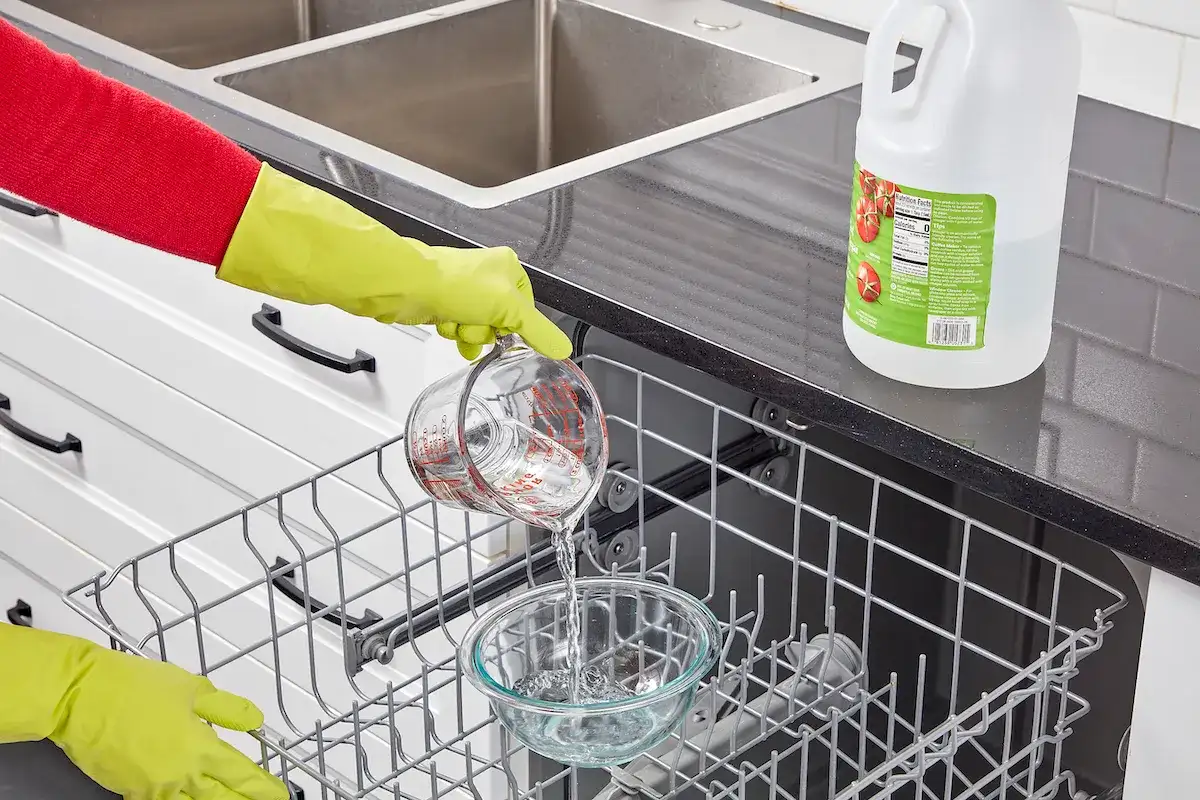
Add a vinegar rinse if you want extra insurance. Pour 50–100 ml of white distilled vinegar into the rinse-aid compartment, or set a small cup of it on the top rack. It cuts detergent residue and helps with odor, similar to how a vinegar spray works on hand-washed gloves.
Pull them out fast. Open the dishwasher within five minutes of the cycle ending. Trapped heat and steam do more damage the longer gloves sit inside. Hang them by the cuff somewhere ventilated, fingers down, and let them air-dry fully, usually 6–12 hours, before storing.
Check them afterward for stickiness, softening, or cracking. If you see any of that, treat it as a one-time experiment, not a routine.
Hand-Washing vs. Dishwasher: Which Is Better for Rubber Glove Longevity?
Numbers settle this argument fast. One test on silicone kitchen mitts, a close cousin to rubber gloves, found machine washing cut average lifespan by roughly 67% compared to hand-washing. Hand-washed mitts lasted 24+ months. The same mitts run through a dishwasher lasted 18–24 months. Toss them in a laundry machine with detergent and agitation, and you’re down to 12–18 months. The pattern holds for rubber dish gloves too: careful hand-washing plus full drying stretches a glove’s life 2–3x longer than sloppy care.
The math isn’t complicated. Dishwasher detergents run pH 10–12, loaded with enzymes and oxidizers built to strip grease off ceramic and steel. Hand dish soap sits closer to pH 7–9. That difference matters on rubber, because harsh chemicals eat away at the outer layer over time, causing the cracking and stiffness that signal a glove is done.
Heat compounds it. Dishwashers run 50–65°C on normal cycles and can spike past 70°C on sanitize. Compare that to care labels on comparable products: Honeywell’s safety gloves cap out at 30°C for washing. Mercer Culinary’s cut-resistant gloves max at 82°C wash and 71°C dry, capped at 10 minutes. Rubber dish gloves sit even lower, often needing water under 40°C to avoid damage. Every dishwasher cycle above that threshold quietly ages the material.
Drying tells the rest of the story. Hand-washing lets you rinse the interior and hang gloves fingers-down until they’re fully dry, which prevents the trapped moisture that breeds mold and weakens rubber from the inside out. Dishwashers dry the exterior well but often leave the interior damp, meaning you’ll need a manual air-dry step anyway. Skip it, and odor and degradation show up faster.
The trade-off is real: dishwashers disinfect faster and pull out embedded odors better, rated “excellent” for stain removal versus “fair” for hand-washing. But if longevity is the priority, hand-washing wins on nearly every metric that matters.
When to Skip the Dishwasher: Warning Signs & Better Alternatives
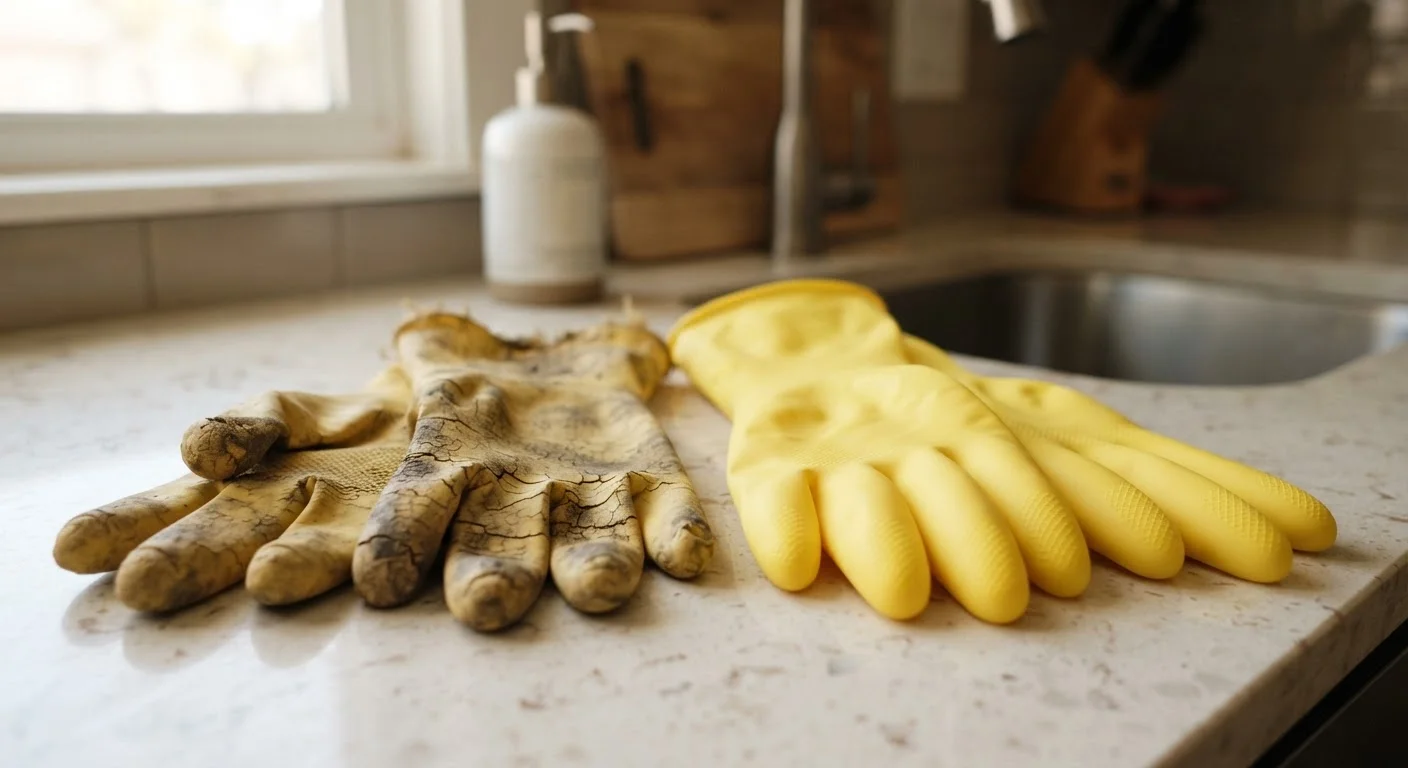
Some gloves have no business going anywhere near a dishwasher, no matter how gentle the cycle. Skip the machine entirely if you spot any of these:
-
Visible cracks or holes 1–2mm or larger, or thin spots that show white stretch marks when you pull the material
-
A tacky or sticky surface signaling the rubber has already started breaking down
-
Dark yellow or brown patches mean chemical degradation is underway. Lab data on PVC and rubber shows repeated dishwasher cycles can drop tensile strength by more than 20%
-
Mold spots or persistent musty smell in cotton-lined gloves, especially if the odor sticks around after 24 hours of air-drying
-
No material label and no dishwasher-safe symbol. If there’s no “Nitrile,” “Latex,” or ” PVC ” marking and no dish-and-water icon, keep it out of the machine
-
Your dishwasher has no delicate or low-temp setting. Without an eco or gentle cycle running under 50°C, every wash is a gamble
There’s also a hard stop. If your dishwasher smells like burning plastic, leaks water, won’t latch shut, or trips the breaker, don’t run anything through it, gloves included. That’s a dishwasher problem, and it needs fixing before any glove goes in.
Better Alternatives to the Dishwasher
For light grime with no damage, hand wash with a diluted bleach soak. Mix 1:50 to 1:100 with regular household bleach (4-6% concentration) and soak for 5–10 minutes. Rinse thoroughly, then hang to dry inside-out.
For odor without mold, sprinkle 5–10g of baking soda inside and out, let it sit 30–60 minutes, then wash with mild pH-neutral soap.
If mold’s already there, toss the gloves. Spores don’t fully wash out, and reuse risks skin irritation. Buy a labeled replacement instead, and default to hand washing.
FAQ
Is it ever safe to run all rubber gloves through the dishwasher?
No. The deciding factors are heat tolerance and what the glove is made of. Only gloves labeled heat-resistant or dishwasher-safe have a real chance. Everything else needs gentler care.
What if my latex gloves come out warped or tacky?
That’s damage, not dirt. Once latex loses its shape, elasticity, or surface quality, no amount of cleaning will fix it. Throw them away.
How do I sanitize gloves without a dishwasher?
Rinse off debris right away. Wash with warm water and mild dish soap. Rinse again. Air-dry completely with cuffs open, then store in a dry, ventilated spot.
Does vinegar actually kill odor?
Often, yes. Mix equal parts white vinegar and water, soak briefly, then rinse and air-dry. If the glove turns sticky or brittle afterward, stop using vinegar and go back to mild soap.
How often should I wash them?
After every use that involves food, chemicals, or bodily fluids. At minimum, wash them whenever they’re wet, dirty, or smell off. For frequent use, a daily rinse-and-dry works.
Is nitrile safer for dishwasher cycles than latex?
It’s more heat-resistant. But dishwasher-safe? Not automatically. Neither material earns that label unless the manufacturer says so.
Signs It’s Time to Replace, Not Clean
-
Cracks or splitting at fingers, palm, or cuff
-
Sticky surface after drying
-
Loss of elasticity or fit
-
Persistent odor even after washing
-
Discoloration, whitening, or chalking
-
Pinholes or thin spots
-
Warping or melting-like deformation
Quick test: stretch the glove and check for cracks, then fill it with water and check for leaks. Fail either one, and it’s time to replace it, not wash it again.
Conclusion
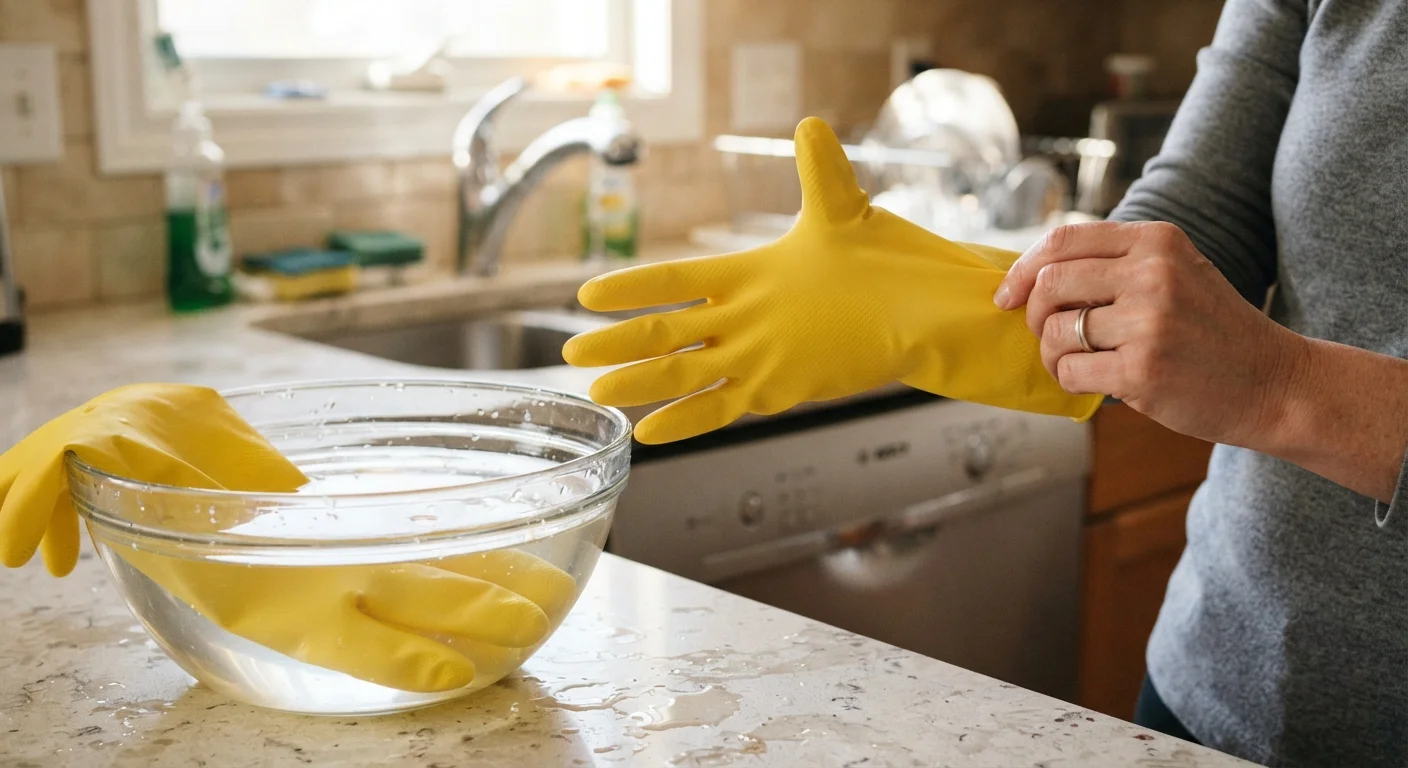
So yes, you can put rubber gloves in the dishwasher. But it depends. Sturdy, thick nitrile or heavy-duty rubber gloves survive an occasional top-rack cycle. Thin latex ones will likely melt into a sad, misshapen mess.
Hand-washing with mild soap and air-drying is still best for longevity. The dishwasher works as a quick disinfecting shortcut when you’re in a pinch. Just watch for cracks, stiffness, or a chemical smell that means it’s time to toss them.
Your rubber gloves are cheap. Your hands aren’t. Check the material tag before loading them in, inspect them after each wash, and replace them the moment they show wear. A fresh $3 pair beats a hospital visit for a chemical burn. Next time you load the dishwasher, give your gloves a once-over first.





