
You grab a pair of gloves off the shelf, they feel fine in your hand, and twenty minutes into the shift, you nick your palm on a sheet metal edge anyway. Or the “chemical resistant” pair starts breaking down after one contact with a solvent you use every day. Sound familiar? Most people don’t pick the wrong gloves because they’re careless. They pick the wrong gloves because glove labels are confusing, and nobody explains what the ratings and model names actually mean in plain terms.
This guide walks through how Uvex gloves are built, what the different series are actually made for, and how to match a pair to your specific hazard instead of guessing. By the end, you’ll know how to read a Uvex glove’s protection rating in ten seconds, how to size a glove so it doesn’t slip or bunch up, and roughly how long a pair should last before it’s time to swap it out.
What Makes Uvex Gloves Different From Other Safety Brands?
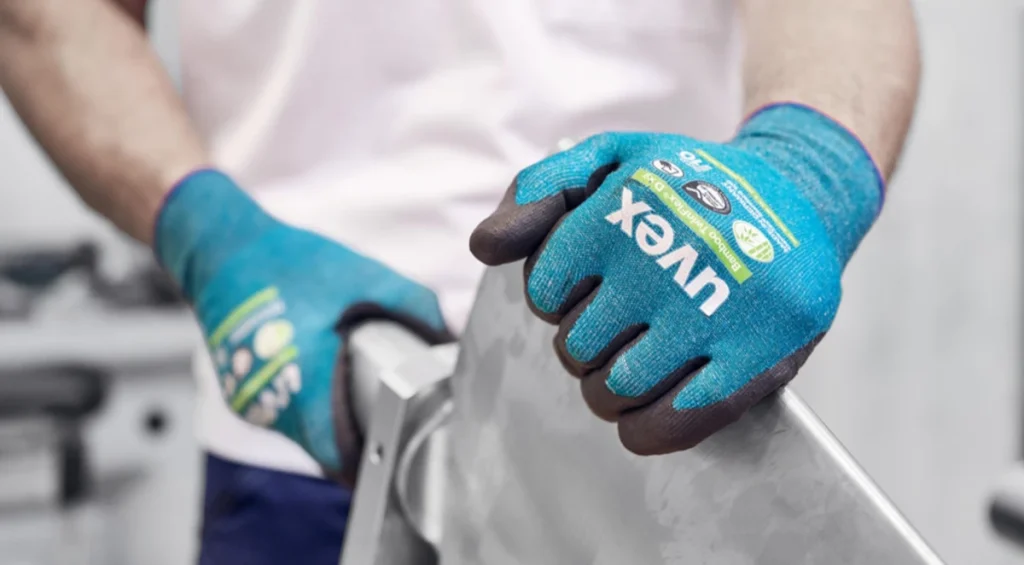
Uvex is a German manufacturer that has built its reputation on testing gloves against real workplace conditions rather than just meeting the minimum standard. That’s the short version. The longer version is that Uvex runs its own in-house labs for abrasion, cut, and chemical permeation testing, which is part of why its gloves tend to carry consistent ratings across batches instead of the wide variance you sometimes see with cheaper imports.
The company splits its glove lineup into a few core families: Phynomic for mechanical and general-purpose work, Unipur for oil and grease environments, Rubiflex and Profastrong for chemical handling, and C500 or D500 series for heavier cut protection. Each family is engineered around one dominant hazard, which is actually the most useful thing to understand before you buy anything. A glove that’s excellent against abrasion isn’t automatically good against chemicals, and vice versa. If you already know your main risk, you can browse the full range of Uvex safety gloves and narrow things down fast instead of reading twenty product pages.
How Do You Read a Uvex Glove’s EN388 Rating?
The EN388 rating tells you exactly how a Uvex glove performs against abrasion, cut, tear, and puncture, using a set of numbers and letters printed right on the glove or its packaging. Once you know what each digit means, you can compare two pairs in seconds without needing a sales rep.
| Test | What It Measures | How to Read It |
|---|---|---|
| Abrasion | Cycles before the material wears through | Higher number = more durable (scale 1-4) |
| Cut Resistance (Coup) | Blade passes before cut-through | Higher number = better cut protection (scale 1-5) |
| Tear | Force needed to tear the glove | Higher number = harder to tear (scale 1-4) |
| Puncture | Force needed to puncture the material | Higher number = more puncture resistant (scale 1-4) |
| Cut Resistance (ISO 13997) | Blade force in newtons, more precise than Coup test | Letter grade A-F, F is highest |
So when you see a rating like “4131C” on a Uvex glove, you’re looking at abrasion level 4, cut level 1, tear level 3, puncture level 1, and an ISO cut rating of C. That’s a glove built more for general handling than heavy cutting work. If you’re working with sharp sheet metal or glass, you’d want to look at Uvex cut-resistant gloves rated higher on the cut scale, typically D or above.
Which Uvex Glove Fits Your Job? A Side-by-Side Look
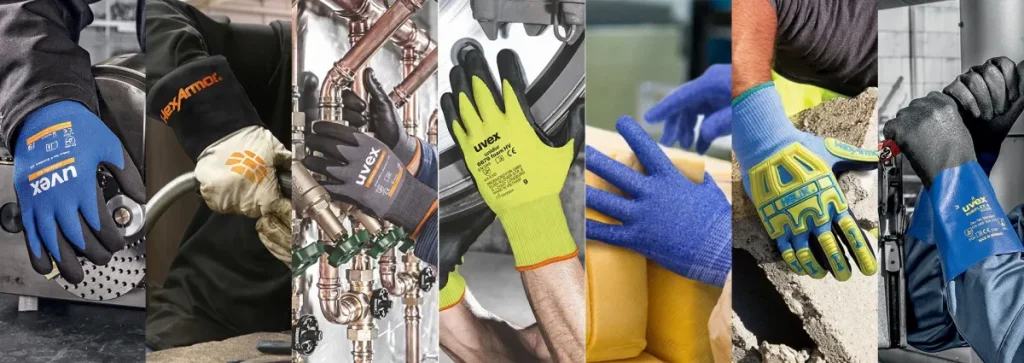
The fastest way to find the right pair is to match your main hazard to a specific Uvex series, since each one is built around a dominant use case rather than trying to do everything at once.
| Uvex Series | Best For | Cut Rating (ISO) | Grip Type |
|---|---|---|---|
| Phynomic | General assembly, light mechanical work | A-B | Dry/light oil |
| Unipur | Oiled parts, greasy machinery | B | Excellent wet/oily grip |
| Rubiflex | Chemical handling, acids, solvents | Not applicable | Chemical-resistant coating |
| D500 Foam | Heavy cutting, metal fabrication | D-E | Textured, heavy-duty |
| C500 Dry | Sharp edges, dry cutting environments | C-D | Dry grip coating |
Warehouse and logistics workers usually do fine with Phynomic, since the main risks there are abrasion and repetitive handling rather than sharp blades. Machine shops and automotive techs lean toward Unipur because the grip holds up even when your hands are covered in oil. Lab technicians and anyone mixing cleaning chemicals should be looking at Rubiflex or a comparable coated glove, not a mechanical-hazard pair, because cut ratings don’t tell you anything about chemical permeation.
Cut, Chemical, or Grease: Matching the Glove to the Hazard
A glove rated highly for cut resistance can still fail completely against a solvent, because cut resistance and chemical resistance are tested in totally different ways and don’t transfer between each other. This trips up a lot of buyers who assume a “tougher” glove automatically covers every risk.
If your main hazard is sharp materials, sheet metal, or glass, prioritize the ISO 13997 cut rating over anything else. If it’s oil, grease, or wet handling, prioritize grip performance and abrasion resistance instead, since a high cut rating won’t help you if the glove slips off a wrench. And if you’re dealing with acids, solvents, or industrial cleaners, you need a glove with a documented chemical permeation breakthrough time, not just a general “chemical resistant” label on the box. Some workers end up needing two pairs on hand for different tasks during the same shift, which is more common than you’d think in mixed-use environments like maintenance or facilities work.
Getting the Size Right: A Step-by-Step Method
Uvex gloves run true to European sizing, which means a US size medium buyer often needs to size up rather than assume the labels match. Getting this wrong is one of the most common (and most avoidable) mistakes people make.
- Measure around your palm at its widest point, excluding the thumb, using a soft tape measure.
- Round the measurement in centimeters to the nearest whole number — this is roughly your Uvex glove size.
- Check the size against the Uvex glove size chart for the specific series you’re buying, since sizing can shift slightly between Phynomic and Unipur models.
- If you’re between two sizes, size up for cut-resistant or coated gloves and size down for close-fit mechanical work.
- Try flexing your fingers into a fist while wearing the glove — if the fabric bunches at the fingertips, go up one size.
A glove that’s too tight reduces dexterity and tires your hand out faster during a shift. One that’s too loose is a snag hazard around moving machinery, so neither extreme is really a safe compromise.
How Long Do Uvex Gloves Actually Last Before You Should Replace Them?
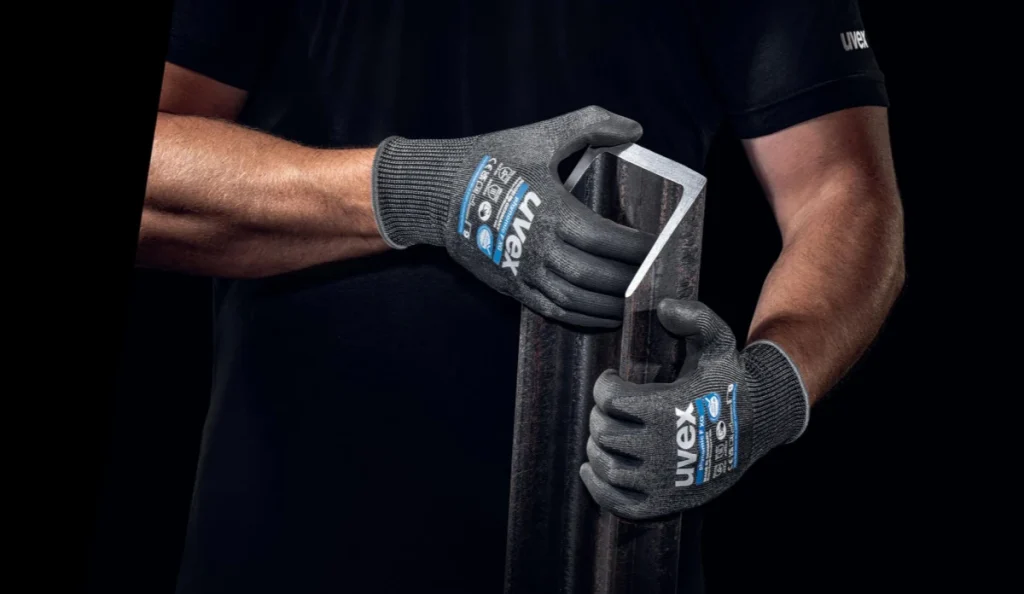
Most people don’t think about glove lifespan until a pair fails mid-task, but Uvex gloves have a fairly predictable wear pattern once you know what to look for. Coated gloves like Unipur or Phynomic typically hold up for two to six weeks of daily use in moderate conditions, while heavier cut-resistant gloves like the D500 series can last two to three months depending on how abrasive the work is.
The real signal isn’t a calendar date though, it’s the coating. Once the palm coating starts to thin, crack, or peel, the underlying protection drops fast even if the glove still looks mostly intact from a distance. For chemical-handling gloves specifically, replace them immediately after any confirmed chemical breakthrough or visible degradation, regardless of how long you’ve had them. Waiting until a glove “looks bad enough” is how a lot of preventable hand injuries happen. Occupational safety guidelines from the Occupational Safety and Health Administration recommend routine inspection before each use rather than relying on a fixed replacement schedule, which is worth building into your team’s habits if you manage a crew.
Uvex Gloves Compared to Other Safety Brands
Buyers often ask how Uvex stacks up against brands like Ansell or Honeywell before committing to a bulk order. In general, Uvex tends to lead on chemical and cut testing precision, Ansell is known for its broad industrial catalog, and Honeywell often wins on price for bulk mechanical gloves. None of the three is objectively “best” across every category, so the right call really depends on your dominant hazard and budget. If you want a closer breakdown, this comparison of Uvex gloves compared to other brands walks through the testing differences in more detail.
Frequently Asked Questions
Can I wash and reuse Uvex gloves?
Yes, most Uvex mechanical and general-purpose gloves can be hand washed with mild soap and air dried, but check the specific product label first since some coated or chemical-resistant models are not designed for washing. Washing a chemical-handling glove can actually damage the protective coating, so it’s safer to replace those rather than clean them.
Does Uvex make gloves for food handling?
Yes, Uvex offers gloves specifically certified for food contact under EN388 and food-safe material standards, separate from their industrial mechanical lines. These are usually thinner and prioritize dexterity and hygiene over heavy cut resistance.
What happens if I use a cut-resistant glove for chemical work by mistake?
The glove won’t protect you, because cut resistance and chemical resistance are tested and rated completely separately. A high cut score gives you zero information about how the material reacts to solvents or acids, so using the wrong category can lead to skin exposure even though the glove looks intact.
Are Uvex gloves true to size across all their series?
Mostly, but not perfectly. Coated and cut-resistant series like D500 tend to run slightly tighter than the Phynomic line, so it’s worth checking the size chart for the exact model rather than assuming your usual size carries over.
How do I know if my Uvex gloves are still safe to use?
Check the palm coating for cracking, thinning, or peeling, and check the fingertips for holes, since these are usually the first areas to wear through. If you handled chemicals and noticed any staining, swelling, or stiffness in the material, retire the gloves immediately even if they look otherwise fine.
Can Uvex gloves be used for both wet and dry work?
It depends on the series. Unipur is specifically built for oily and wet grip performance, while Phynomic and C500 Dry are optimized for dry handling and may lose grip quickly once they get wet or oily. Matching the glove to the actual condition of your hands during the task matters more than most people expect.





