Choosing the right Halyard lab coat shouldn’t feel like guesswork. With enough models on the market—each offering different fluid resistance ratings, fabric blends, and protection levels—procurement teams end up stuck comparing spec sheets without a clear winner. Blue or gray? SMS or SMMMS? Level 1 or Level 2 barrier protection? Those details matter, especially when you’re outfitting an entire department or negotiating bulk pricing with a supplier.
This guide puts the most popular Halyard models side by side. It shows where each one excels and where it falls short, and walks you through how to match a disposable lab coat to your facility’s specific risk exposure. Whether you’re stocking a busy ER or sourcing alternatives for cost efficiency, you’ll know what to order—and why.
Popular Halyard Lab Coat Models
Five names dominate the Halyard lineup. Each one targets a different combination of budget, fabric performance, and department risk level. Here’s the breakdown procurement teams actually need.
HALYARD BASICS Lab Coat sits at the entry point. It’s built from 3-layer SMS fabric, sometimes labeled tri-layer, which gives it decent fluid resistance without the premium price tag. Features include a traditional collar, knit cuffs, four snaps, and two reinforced pockets. SKU P110271 is the go-to reference. A related SKU, 10120, covers the white, small, knee-length version. This model works best for low-risk areas: general clinics, administrative zones, non-invasive procedure rooms.
HALYARD BASICS Plus Lab Coat steps up the game slightly. Same 3-layer SMS fabric, but with knit collar and cuffs, a 5-snap closure, and three reinforced pockets instead of two. SKU P110272 identifies this model; SKU 10020 covers the white, small, knee-length variant with snap-front closure. It’s the mid-tier choice, giving you more coverage and more durability while staying budget-friendly.
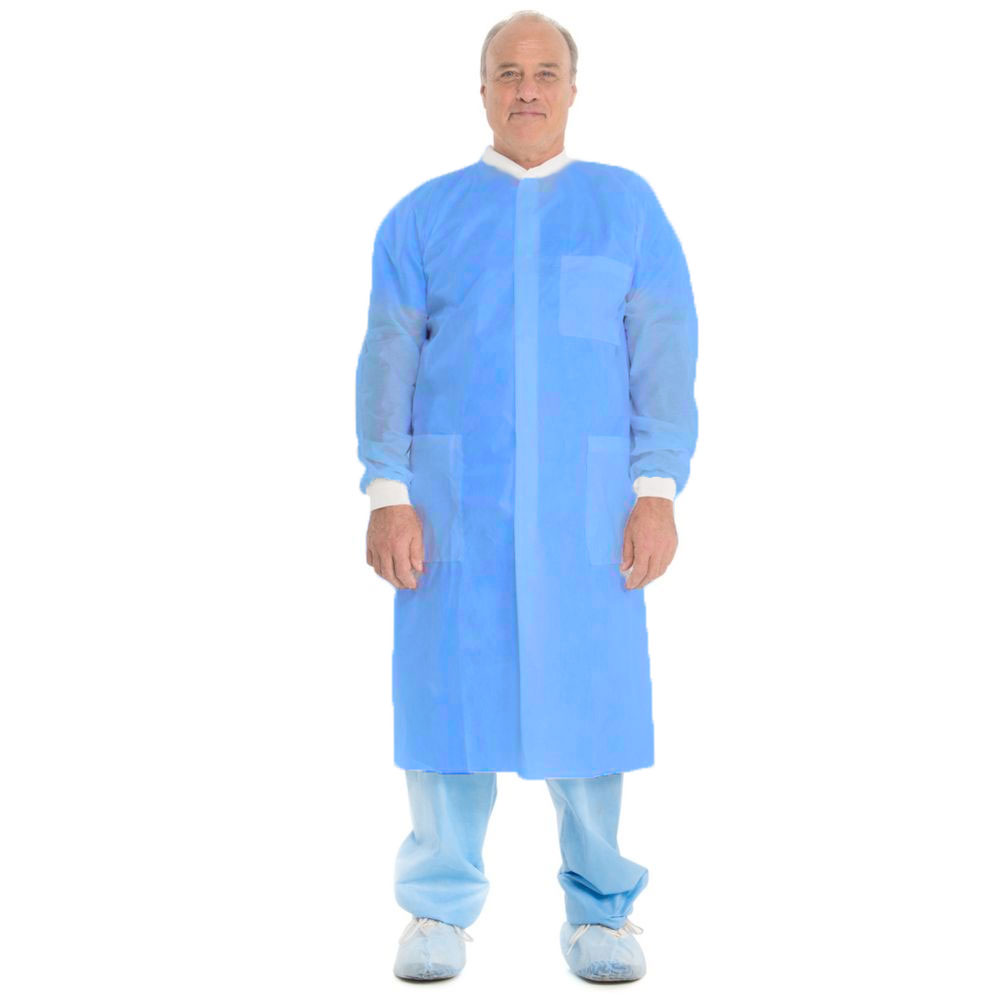
HALYARD Universal Precautions Lab Coat is the top performer. Built on the same 3-layer SMS / tri-layer fabric base, it adds extras: traditional collar, knit cuffs, a 6-snap front closure, three reinforced pockets, a back vent for airflow, and a neck loop for hanging storage. SKU P110273 is the primary reference. Regional catalogs list size variants under 10045, 10046, and 10047 (blue), and 10040 for the white, small, 25-per-case version. If your facility handles higher fluid exposure (ER, surgical prep, lab bench work), this is the model to stock.
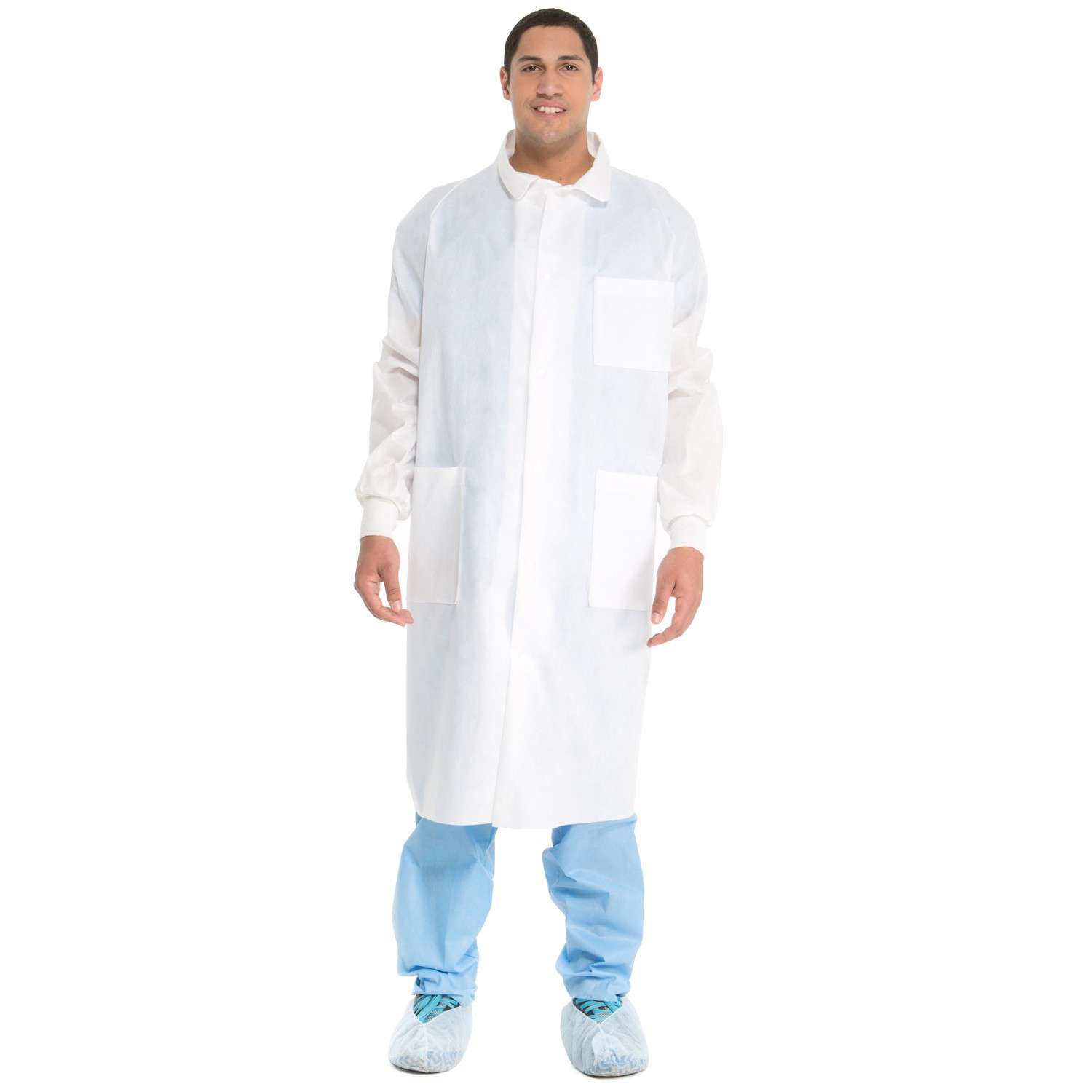
HALYARD Spunbond Lab Coat takes a different approach entirely. Instead of SMS layering, it uses lightweight polypropylene spunbond fabric. Knee-length, five snap closures, three reinforced pockets, knit cuffs. It’s not built for fluid-heavy environments; think of it as a lightweight barrier for short-duration, low-splash tasks. Staff who need mobility over heavy protection tend to prefer this one.
HALYARD Professional Lab Jacket rounds out the lineup, though it’s technically a jacket, not a full coat. Still made from 3-layer SMS fabric, but with a shorter cut. Singapore catalog listings reference SKUs 10067 and 10078 for blue size variants. It’s useful for facilities wanting SMS-level protection without full coat coverage.
Ordering basics across the range: standard case packs run 25 units per case, sizes span Small through XX-Large, and white and blue dominate available color options.
Quick positioning summary: Highest protection comes from Universal Precautions, mid-tier balance from BASICS Plus, budget entry from BASICS, and the lightweight alternative from Spunbond.
Halyard Lab Coat Models Compared
Numbers tell the story better than descriptions do. So Here’s the data procurement teams actually pull up when they’re comparing quotes.
Feature Comparison at a Glance
|
Model |
SKU |
Fabric |
Snaps |
Collar |
Pockets |
|---|---|---|---|---|---|
|
Universal Precautions |
P110273 |
Heavyweight 3-layer SMS |
6 |
Traditional knit collar |
3 |
|
BASICS Plus |
P110272 |
3-layer SMS |
5 |
Knit collar |
3 |
|
BASICS |
P110271 |
3-layer SMS |
4 |
Traditional collar |
2 |
|
Spunbond |
P243614 |
Polypropylene spunbond |
5 |
Knit cuffs only |
3 |
|
Professional Lab Jacket |
P110274 |
3-layer SMS |
— |
— |
— |
Notice the pattern: as snap count and fabric weight climb, so does barrier protection. That’s not a coincidence. Halyard built this lineup as a ladder, not a flat menu.
What Third-Party Specs Confirm?
McKesson ‘s product listings confirm the manufacturer data. Their Universal Precautions entry specifies knee length, 3-layer SMS, snap front closure, knit cuff, traditional collar, three pockets, unisex, adult, disposable. Their BASICS Plus listing matches closely—knee length, 3-layer SMS, snap front, knit collar and cuffs, three pockets, disposable, adult. When two independent distributors describe the same specs, you can trust the sheet you’re working from.
Pricing and Case Packs
Real reseller pricing gives a clearer picture than list prices alone. One reseller quotes BASICS Plus at $169.96 per case for Large, dropping to $161.87 per case for X-Large and XX-Large. That’s a 25-count case, sized across Small, Large, X-Large, and XX-Large. Universal Precautions runs the same 25-per-case structure in most reseller inventories.
Buying Cues That Actually Matter
-
Universal Precautions — strongest barrier, most features, highest snap count. Pick this when fluid exposure is a real concern.
-
BASICS Plus — solid middle ground. Same SMS fabric as the top model, fewer bells and whistles, lower cost per case.
-
BASICS — bare minimum for low fluid/chemical exposure. Fewer pockets, simpler collar, smallest price tag.
-
Spunbond — skip this one if barrier protection is the priority. Choose it when breathability and all-day comfort outrank splash resistance.
Which Halyard Lab Coat Should You Choose?
Match the coat to the risk. Procurement teams that skip this step end up over-buying protection for admin staff or under-protecting ER techs. Neither mistake is cheap.
Match the Coat to the Exposure Level
Every Halyard lab coat in this lineup shares a common baseline: disposable, knee-length, long sleeve, unisex, snap-front closure, knit cuffs. What changes is fabric weight, snap count, and pocket configuration, and that’s where your decision should focus.
-
Moderate fluid exposure, splash risk, or contamination control needs? Go with Universal Precautions. This is the fluid-resistant lab coat built for the moments when a lighter SMS fabric lab coat just won’t cut it.
-
General lab support, patient-room pulls, low-risk handling? BASICS Plus covers it without overspending.
-
Basic disposable SMS coat, standard pockets, no frills? BASICS does the job.
-
Breathability and light-duty comfort matter more than barrier strength? Spunbond wins here every time.
Halyard built this same logic into the product line from day one.
Sizing and Code Details Worth Knowing
McKesson listings show these coats sold in Small, Large, and X-Large, with pocket counts shifting between 2 and 3 depending on the model. On the lab coat manufacturer side, BASICS Plus carries part number 10020 for Small and 10022 for Large—useful if you’re cross-referencing catalogs from different distributors.
Universal Precautions shows up under code 10044 in some reseller data, sold in smaller 10-per-case packs at roughly $94 per case. That’s a different case structure than the 25-per-case format you’ll see elsewhere, so double-check the listing before you commit to a quantity.
Verifying Before You Order
Public device registry listings confirm the SMS lab coat product family, and Halyard lists a direct contact line for US and Canada buyers—1-844-HALYARD (1-844-425-9273)—for spec verification. If you’re comparing healthcare workwear across suppliers, that direct line (plus Halyard’s official product pages) is the fastest way to confirm you’re not working off outdated specs.
What to Look for in a Halyard Lab Coat Alternative?
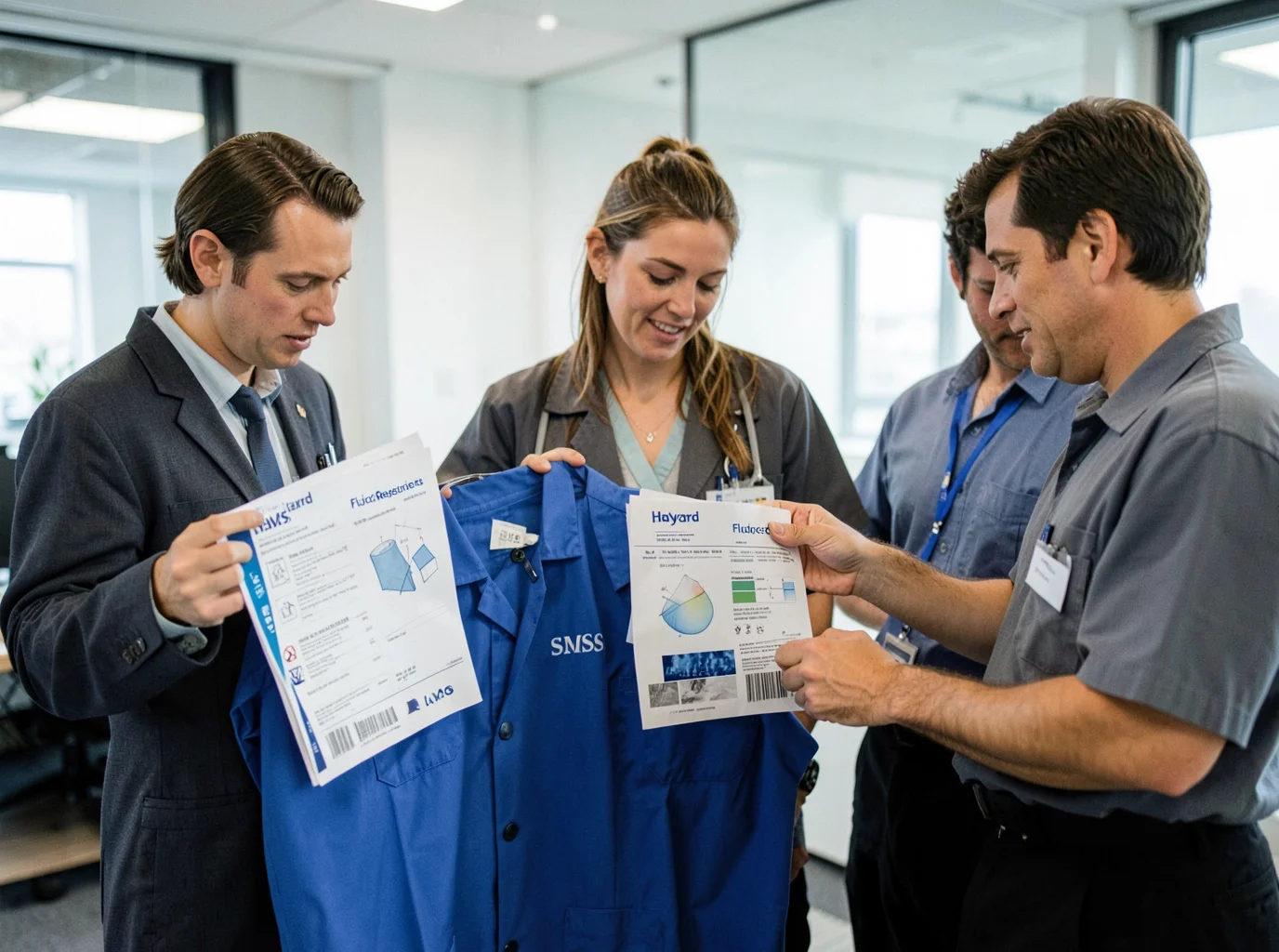
Supply chains hiccup. Prices spike. Sometimes the Halyard model you’ve standardized on just isn’t in stock when you need 200 units by Friday. That’s when procurement teams start hunting for a comparable lab coat material that won’t leave staff under-protected.
3‑layer SMS Polypropylene remains the benchmark. Halyard’s Universal Precautions coat runs on heavyweight 3‑layer SMS with knit collar, raglan sleeves, and a 6‑snap closure. BASICS uses the same SMS base for lighter exposure zones. Any alternative worth considering needs to hit that fabric spec, or come close enough that the trade‑off is justified by price or availability.
Barrier Performance Specs to Request
Don’t take a vendor’s word for “protective.” Ask for numbers.
-
AAMI PB70 Level 1 or Level 2 — the standard reference point for splash and fluid barrier claims
-
ASTM F1670 — synthetic blood penetration resistance
-
ASTM F1671 — viral penetration resistance (tested against Phi‑X174 bacteriophage)
-
EN 14126 — biological protection certification
-
OSHA 29 CFR 1910 — general compliance marker many listings reference alongside AAMI ratings
If a listing skips these, keep looking.
Real Numbers Worth Comparing
Some SMS alternatives publish hard data including 90% bacterial filtration efficiency, 16.7 g H₂O resistance, 965 g/m²/24h water vapor transmission, fabric weight around 50.45 g/m², and air permeability near 95.3 cu ft/min/sq ft. Cleanroom‑rated versions add ISO 7 / Class 10,000 certification with Level II particle shedding.
Fit and Feature Checklist
-
Length in the 38.25–43.5 in range, chest 27–29.5 in, sleeves 32.5–37.5 in
-
Snap front closures, knit or elastic cuffs, raglan sleeves, side vents, functional pockets
-
Latex‑free, low‑linting, breathable lab coat fabric construction
Comparable market examples—VWR Basic Protection SMS coats, DenLine Protection Plus, generic 50 gsm SMS coats—hit most of these marks. Match specs line by line before switching suppliers.
Frequently Asked Questions
Buyers ask the same handful of questions before they commit to an order. Here’s what gets asked—and the straight answers procurement teams need.
Are Halyard lab coats reusable, or strictly disposable?
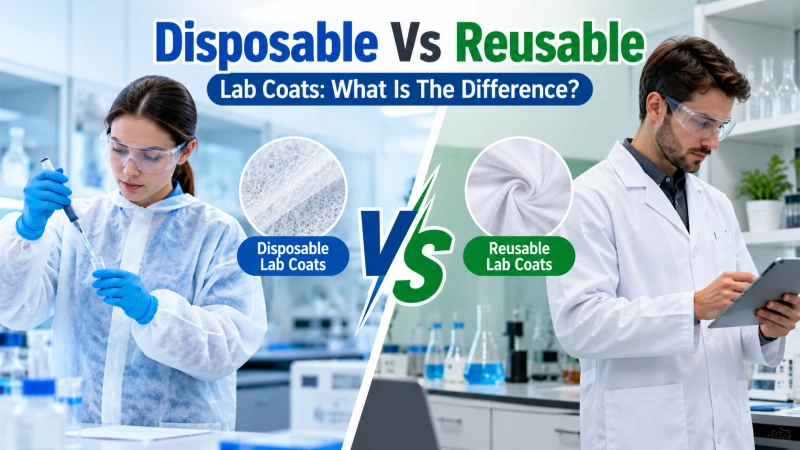
Disposable, full stop. Every model in this lineup—BASICS, BASICS Plus, Universal Precautions, Spunbond—is built for single-use. Attempting to launder and reuse an SMS fabric lab coat breaks down the fluid barrier, which defeats the purpose entirely.
What certification standards should I check before ordering?
Look for AAMI PB70 Level 1 or 2 ratings, plus ASTM F1670 and F1671 for blood and viral penetration resistance. Some SMS coats also carry EN 14126 biological protection certification. If a listing doesn’t disclose these, ask the supplier directly before placing a bulk order.
How do I know which size to order?
Halyard sizes run Small through XX-Large across most models. Chest measurements typically fall between 27 and 29.5 inches, with garment length in the 38.25–43.5 inch range. Order one size sample before committing to a full case run—fit varies slightly between BASICS and Universal Precautions cuts.
Can Morntrip supply comparable alternatives if Halyard stock runs low?
Yes. Our SMS-based medical protective clothing matches the same fabric weight, snap configuration, and barrier certifications outlined above, often at lower per-case pricing. Reach out for spec sheets and sample pricing before your next bulk order deadline.
Conclusion
Match the Halyard lab coat to your actual risks: fabric weight, fluid resistance, and AAMI level. There’s no universal “best” model, only the one that fits your workflow. Whether you’re stocking a busy ICU or a low-risk clinic, the models we compared give you a starting point—without guesswork or inflated distributor markups.
Procurement teams now know that brand-name lab coats aren’t the only way to get compliant, comfortable protection. If you’re buying in bulk or looking for a more affordable fluid-resistant lab coat supplier , request samples and spec sheets first. Compare fabric certifications side-by-side, ask for barrier test data, and walk away from any supplier who can’t back up their claims. Your staff—and your budget—deserve better than a guess.