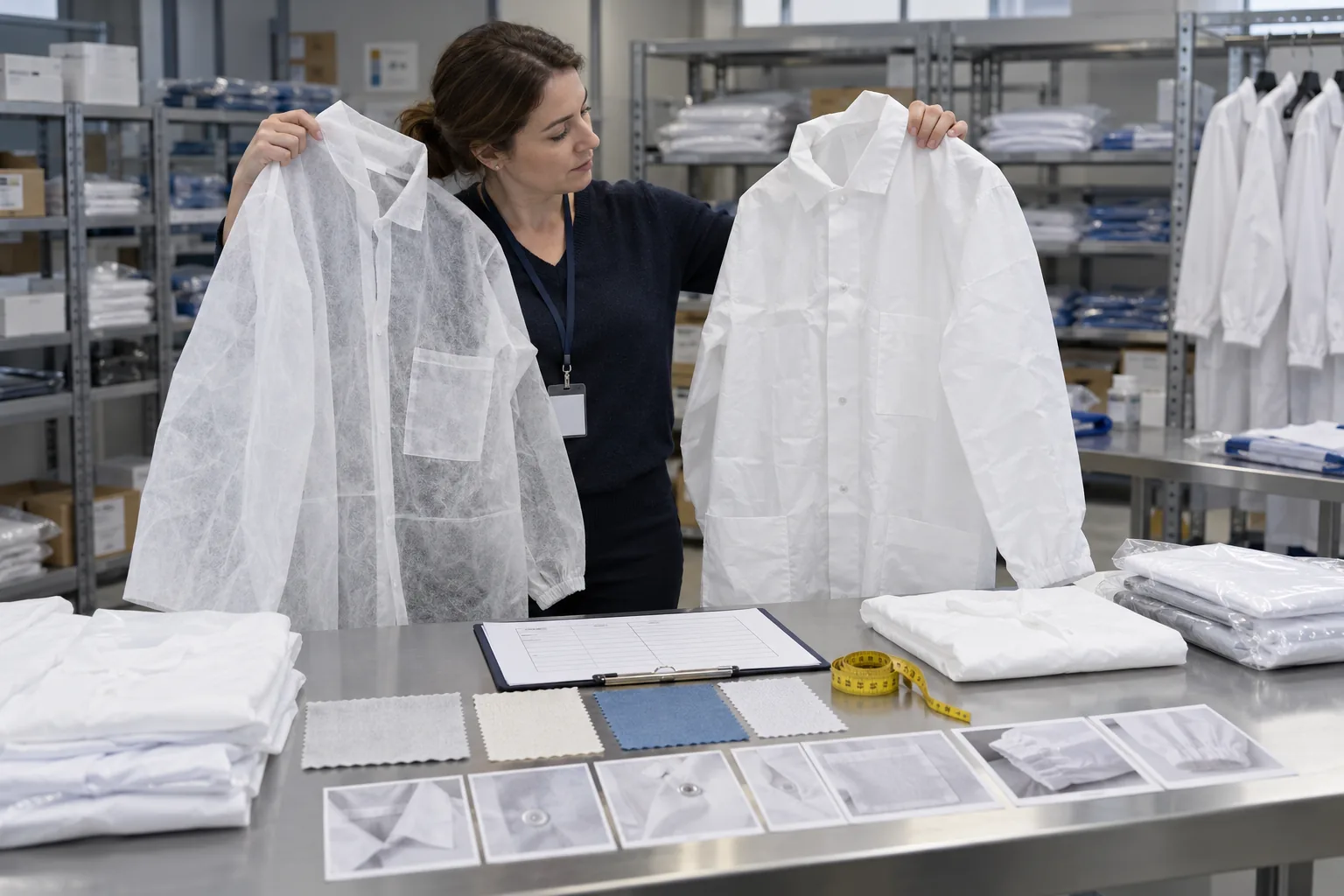
Disposable Lab Coats With Pockets are a practical purchasing question for laboratory managers, EHS teams, procurement specialists, and distributors choosing protective apparel for daily operations. The decision is less about adding a pocket and more about matching garment design to the work area, handling tasks, disposal process, and budget. Buyers in laboratory, medical, industrial, cleanroom, food processing, electronics, and catering environments may need to compare pocket quantity, material, closure method, cuff style, sizing, colors, packaging, and application requirements before placing an order.
Pockets can provide convenient storage for small work items, but they also add another design consideration for contamination control and garment use. A purchasing team should decide whether pockets are needed, how many are practical, and whether the selected coat supports the required balance of liquid resistance, breathability, comfort, and disposable use. Available product formats include PP, SMS, microporous materials, polypropylene, and Tyvek, with options such as knitted or elastic cuffs, front snaps, and knee-length construction. Review OSHA Personal Protective Equipment for general PPE considerations, then compare product specifications and order formats. For suppliers planning branded or tailored programs, the Custom Disposable Lab Coats: OEM and Private Label Guide offers a useful starting point. The right choice depends on the task, workplace, purchasing volume, and required specification—not on pocket count alone.
Fit for the Work Environment
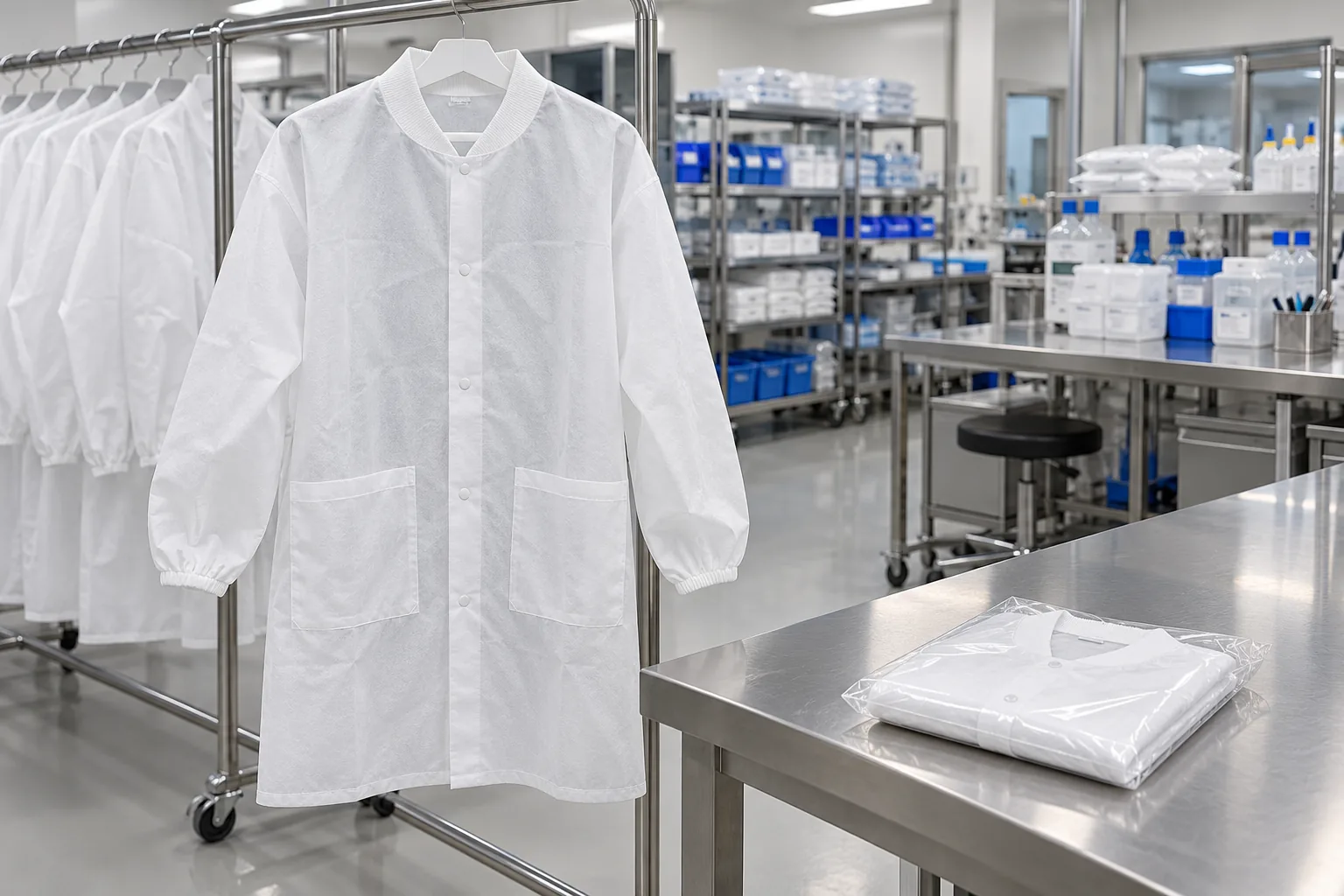
Disposable Lab Coats With Pockets can suit several work environments, but the right format depends on the task and contamination-control requirements. First identify whether the coat will be used in a laboratory, cleanroom, medical, industrial, food-processing, electronics, or catering setting. A cleanroom application may require closer review of pocket quantity, closure method, cuff style, material, packaging, and stated cleanroom-use scenario. Medical, industrial, and laboratory buyers may place greater weight on liquid-barrier performance, breathability, comfort, and movement.
Pocketed designs are useful when workers need to carry small items, but pockets can also affect contamination control and disposal decisions. Review whether two or three pockets are appropriate, whether front snaps or another closure suits the workflow, and whether knitted or elastic cuffs provide the required fit. PP, SMS, microporous materials, polypropylene, and Tyvek appear across disposable coat options, so procurement teams should compare the material against liquid exposure, required mobility, comfort expectations, and disposal procedures.
Before placing an order, ask suppliers to confirm the intended application, available product documentation, minimum order quantity, lead time, and certification status. Request clear details on sizes, colors, package quantities, customization, and any stated liquid-resistance or cleanroom suitability. A supplier directory such as Top 10 disposable isolation gown manufacturers in the United States may support early market screening, but final approval should follow your site-specific requirements and purchasing controls.

Pocket Count and Closure Selection
For Disposable Lab Coats With Pockets, pocket count should reflect the items users must carry, not a standard preference. List the required tools, forms, labels, pens, or personal items for each task, then check whether they must remain separated. A coat used for brief handling work may need only two pockets. A three-pocket design may suit staff carrying more items or needing separate storage zones. Product categories in this market include both two- and three-pocket options, so buyers can match the layout to the work area and garment policy.
Access frequency should guide the selection. If users repeatedly reach for forms or small tools, place those items in the easiest-to-reach pockets and avoid adding storage that is rarely used. In contamination-sensitive work, fewer pockets may support a simpler garment layout and reduce unnecessary handling. For other laboratory, medical, food-processing, electronics, or industrial tasks, a third pocket may offer practical separation without changing the basic coat format.
Closure style also affects daily purchasing value. Front snaps support quick opening, replacement, and user preference, and are listed on disposable lab coat specifications alongside knitted or elastic cuffs. Buyers should compare snap placement, fit range, and the time required to change garments between work periods. Other closure methods may suit specific application or wearer preferences, so the specification should state the required closure clearly. Review pocket count, closure method, material, sizing, packaging, and application together before approving a supplier sample.
Material and Protective Feature Comparison
Material selection should match the laboratory’s required balance of barrier performance, breathability, comfort, and cost. Buyers should compare PP, SMS, microporous materials, and Tyvek against the intended work setting rather than choosing solely by price. Product information may list these materials for disposable lab coats, but the specification should state which performance priorities matter most for the application, including cleanroom, laboratory, medical, industrial, food processing, electronics, or catering use.
Cuff construction affects both coverage and day-to-day usability. Knitted cuffs can provide a close connection at the wrist, while elastic cuffs may support a more flexible fit during movement. Compare the cuff design with glove use, sleeve overlap, donning requirements, and user comfort. Collar construction also deserves review: buyers should assess how well the collar covers the neck area, whether it supports comfortable movement, and how it works with the front closure.
Liquid resistance requires more than a general product claim. Ask suppliers to identify the stated liquid-barrier performance, provide relevant test documentation, and define the application limits. Review whether the claim applies to the full coat, selected fabric areas, or specific exposure conditions. Product details may list liquid resistance, breathability, and comfort, yet procurement approval should depend on documented performance that matches the laboratory’s actual tasks. This comparison helps purchasing teams select a practical disposable lab coat specification without paying for features that do not support the intended use.
Sizing, Color, Packaging, and Customization
Buyers should start with a size chart rather than relying on labels such as small, medium, or large. Request finished garment measurements, available size range, and the stated garment length. Compare these details with the workforce profile, including the range of body sizes and the required coverage for the task. If a knee-length design is needed, confirm that the selected model provides this length across the relevant sizes, not only in a sample size.
Color should be assessed as an operational choice, not only a visual preference. Different colors can support role identification, separate work areas, organize cleanroom or laboratory activities, or standardize purchasing across sites. Ask suppliers to confirm the available color range and whether the same colors are offered across all required sizes and package formats. This helps prevent substitutions during repeat orders.
Packaging affects storage, distribution, and unit-cost comparison. Review the number of coats per package, carton configuration, and whether packaging information is provided consistently across models. A product directory may show package quantities alongside specifications and price ranges, but buyers should still request a formal quotation for the exact configuration.
Customization should be defined before approval. Confirm whether the supplier offers private-label packaging, custom colors, printed labeling, branded cartons, or special packing instructions. Clarify minimum order requirements, artwork handling, production timing, and approval samples in the quotation. Buyers should also state material and design requirements, such as PP, SMS, microporous, or Tyvek options, pocket quantity, closure method, and cuff style, so the supplier compares like-for-like products rather than presenting mismatched alternatives.
Choosing the Right Purchasing Route
The right purchasing route depends on how much product choice and specification control your operation needs. A lab coat supplier is a practical option when the main priorities are product selection, sourcing support, and purchasing coordination. This route can suit buyers comparing Disposable Lab Coats With Pockets across different materials, pocket configurations, sizes, colors, closure methods, and cuff styles without managing direct factory communication.
A lab coat manufacturer is more suitable when product specifications must remain consistent across repeat orders. Consider this route if your team requires customization, private labeling, controlled material selection, or a stable supply arrangement for a defined model. This is particularly relevant for buyers evaluating options such as PP, SMS, microporous materials, or Tyvek, as well as designs with two or three pockets, knitted or elastic cuffs, and different closure methods. The purchase discussion should cover packaging, sizing, color, application, and any required changes to the standard product.
Retailers are useful for smaller orders or purchases that combine lab coats with other protective items. They can provide a broad comparison of brands and models in one purchasing channel. Before placing an order, compare model data, package quantities, specification options, and price ranges rather than relying only on the product name. For Disposable Lab Coats With Pockets, confirm the pocket count, material, fit, closure, cuff style, and intended laboratory or cleanroom use. A retailer may be the simplest route for mixed-item buying, while a supplier or manufacturer can offer a better fit for structured procurement and repeat demand.
Manufacturer Evaluation Before Quotation
Before requesting a quotation for Disposable Lab Coats With Pockets, buyers should first review the manufacturer’s product information in detail. Check material options, pocket quantity and placement, closure method, cuff and collar styles, available sizes and colors, and packaging format. These specifications help buyers confirm whether the product matches laboratory work requirements and internal purchasing standards.
Ask the lab coat manufacturer to clarify MOQ, production lead time, sample terms, customization scope, quality records, and available certification documents. Customization discussions should cover artwork, labels, packaging, colors, pocket designs, and other requested product details. Buyers should also confirm whether the manufacturer owns the tooling or artwork, or whether approval from another party is required before production.
The quality of the response is an important screening point. A reliable supplier should provide clear specifications, consistent answers, and practical explanations for any differences between standard products and customized versions. Compare how each manufacturer presents sizes, materials, closures, cuffs, collars, pockets, and package quantities. Vague replies can create problems during sampling, quotation review, and mass production.
Before moving forward, request the lab coat supplier’s after-sales process, including how product issues, specification deviations, and documentation gaps are handled. Record the answers in a comparison sheet, then shortlist manufacturers that provide complete and easy-to-check information. After this review, submit your selected requirements through the product page and inquiry form to request samples or a formal quotation.
Related resources
FAQ
Are pockets necessary on disposable lab coats?
Pockets are useful when workers must carry small approved items during tasks. They may be less suitable where pocket contents create a contamination or safety concern.
What material should buyers choose for disposable lab coats?
Compare PP, SMS, microporous materials, and Tyvek against the work setting, liquid exposure, breathability, comfort, barrier needs, and budget.
What should a quotation request include?
List pocket count, closure, material, cuffs, collar, liquid-resistance needs, sizes, colors, package quantity, customization, MOQ, lead time, and required documents.
How can buyers compare a supplier and a manufacturer?
Compare specification control, customization, repeat supply, MOQ, lead time, documentation, sample support, packaging options, and response quality.