
That dripping sound after a rainstorm. The faint rustling from somewhere inside your chimney. Smoke is filling your living room instead of escaping where it should. These aren’t random quirks of an old house — they’re your fireplace sending distress signals. Don’t brush them off.
A good cap for the fireplace is one of those small, unglamorous fixes that does a lot of heavy lifting. It stops water damage before it starts. It keeps wildlife out. It blocks dangerous backdrafts. And it saves you from repair bills that will make your stomach drop.
So, do you need one? Almost certainly yes. This guide gives you a clear, honest look at the warning signs, your options, and how to make a smart call before a small problem turns into a costly one.
Do You Need a Chimney Cap for a Fireplace? (The Honest Answer)
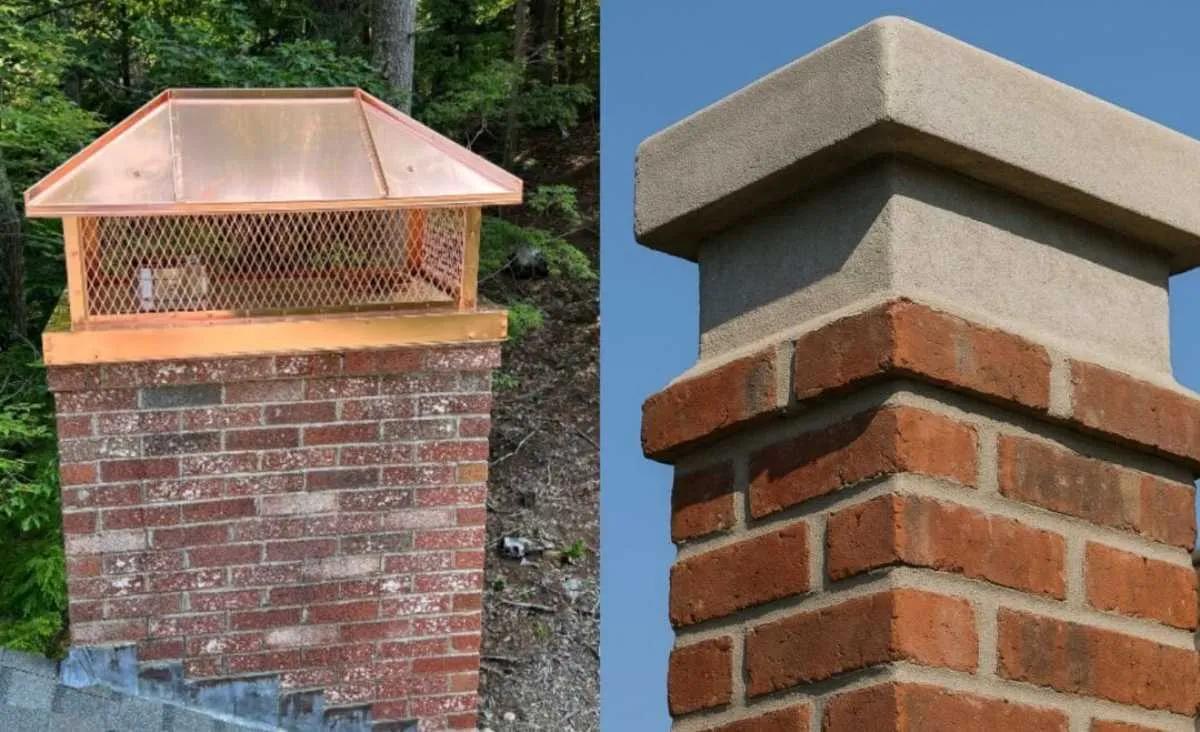
No, not by code. North American building codes don’t require a cap for your fireplace. Your fireplace will light, burn, and vent without one. So the rulebook gives you an out.
But “works without one” and “smart to skip it” are two very different things.
Chimney professionals see what an uncapped flue does to a home over time. Their position is clear: every active chimney should have a cap. Not “should consider.” Not “might benefit from.” Should have.
The Honest Risk Calculation
The gap between code minimum and professional standard — that’s where expensive problems live.
An open flue is a direct, unfiltered passage from outside straight into your home. Rain falls straight in. Snow melts inside the liner. Animals move in. Wind hits the flue opening and pushes smoke back into your living room.
The cost gap is uncomfortable to look at:
A quality stainless steel chimney cap : $60–$100, lasting 10–15 years
Chimney masonry repairs from water damage: hundreds to several thousand dollars
Animal removal and cleanup: hundreds of dollars per incident — and that’s before you fix what they damaged or left behind
One chimney professional said it straight: “You could use a fireplace without a cap, but you shouldn’t. The risks far outweigh the convenience.”
You Need One If…
Go through this checklist:
You burn wood in your fireplace or stove
You live somewhere with rain, snow, or hard freeze-thaw winters
There are trees near or over your roofline
Your roof has wood shingles, cedar shakes , or dry vegetation nearby
You’ve noticed water stains, rust, or musty smells around the damper or firebox
You’ve heard scratching, chirping, or rustling inside the chimney
Got a gas unit? A chimney cap still matters. Gas burns cleaner, sure — but moisture and pests don’t care what fuel you use. Your liner and masonry are just as exposed.
And an unused fireplace? Cap it anyway. An idle flue is an open door. Rain, bats, and squirrels aren’t checking whether you had a fire last winter.
The honest answer is simple: you can go without one. You just shouldn’t.
5 Warning Signs Your Fireplace Is Crying Out for a Chimney Cap
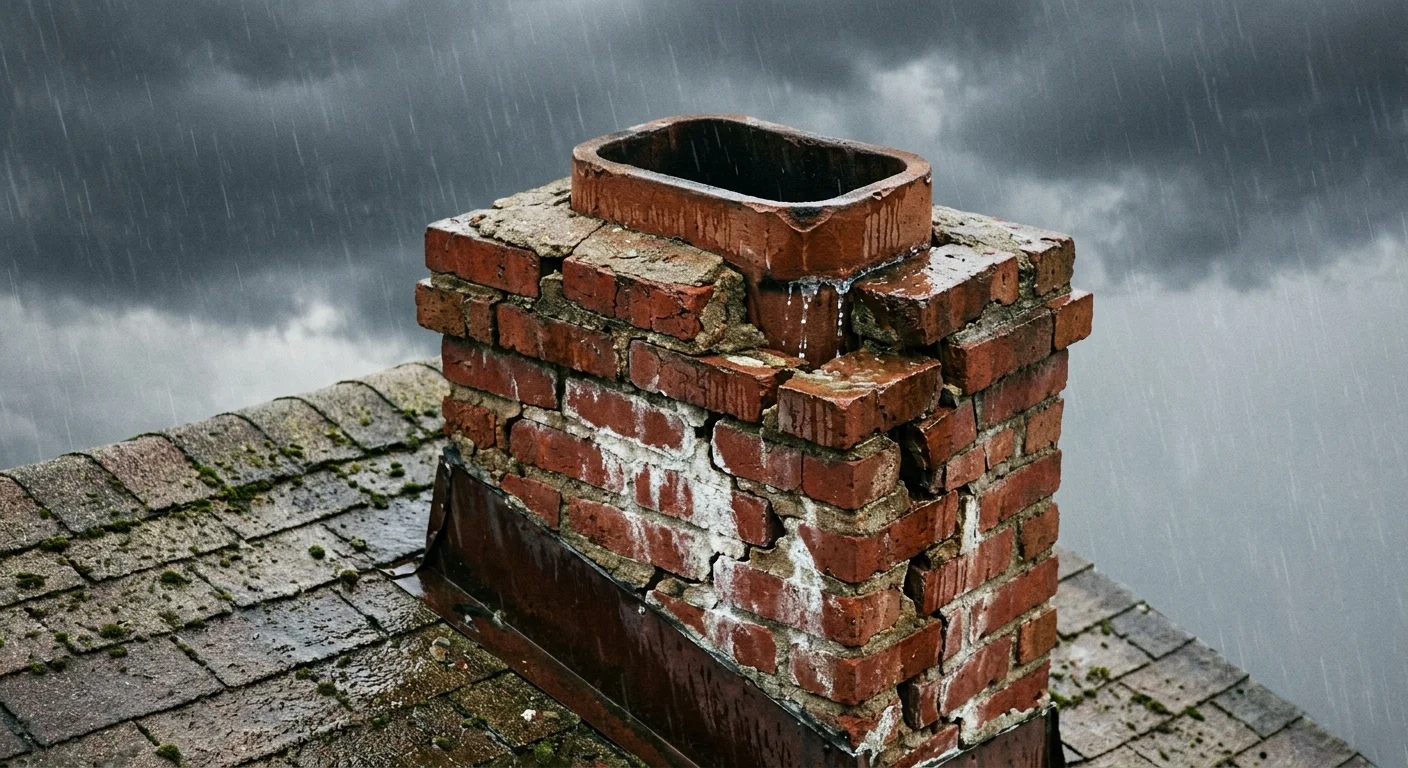
Most homeowners don’t think about their chimney until something goes wrong. By then, the damage is done — and the repair bill is waiting.
Here’s the truth: your fireplace has been sending signals the whole time. You just need to know how to read them. These five warning signs mean one thing: your chimney needs a cap, and it needs one yesterday.
Sign #1: Water Is Getting In — and Your Masonry Is Paying for It
After a rainstorm, go check your firebox. Look at the bottom, under the grate, around the damper. Do you see water droplets? Wet spots? A rusted damper that groans and sticks when you try to open it?
That’s not normal wear. That’s an uncapped flue doing what physics says it will: channeling rain straight down into your chimney.
Now look at the outside of your chimney. See a chalky white crust — a powdery film along the brickwork? That’s called efflorescence. Water soaks through the masonry and pulls salts to the surface. Think of it as your chimney running a fever. Something is wrong inside.
The financial reality is uncomfortable:
Minor masonry patching (tuckpointing, small brick repairs): $300–$800 per visit
Extensive water damage requiring partial chimney rebuilds: $1,000–$3,000+
Moisture spreading into interior walls, ceilings, and insulation: bills that often exceed $5,000
A quality stainless steel chimney cap with a rain guard runs $60–$150. It lasts over a decade. The math is simple.
Sign #2: You’re Hearing Things — and It’s Not the House Settling
Scratching sounds. Chirping. A low, persistent rustling that seems to come from inside the walls — except it’s coming from above.
Birds, squirrels, and raccoons aren’t being clever. They’re being practical. An uncapped flue is warm, sheltered, and wide open. From a nesting standpoint, it’s prime real estate.
Once they move in, noise is the least of your problems. Nests block airflow. Animal waste creates dangerous carbon monoxide backup. An animal that gets trapped and dies inside the flue? That smell — deep, rotting, impossible to ignore — seeps into your living space for weeks.
Your chimney sweep keeps pulling out twigs, feathers, dry grass, and full-on structural nests? Your flue is working as a chimney animal guard — but for the animals. That’s the wrong arrangement.
A capped chimney with a tight mesh screen (openings of ¾” or less) fixes this cold. No negotiation required.
Sign #3: Smoke Is Coming the Wrong Way
Here’s a simple test: light a fire on a windy day and watch where the smoke goes.
Smoke traveling up and out? You’re fine. Smoke rolling back into your living room — lazy, gray, and unwelcome — means you have a fireplace draft problem. Cold air pushing down from the fireplace opening on days with no fire? Your chimney is acting as a wind tunnel, not a ventilation system.
Rainy days make this worse. A musty, smoky, earthy smell that gets stronger on wet days is a clear signal. Stale air, water, and old organic material are getting pushed back down through an open, unprotected flue.
A fireplace cap breaks that cycle. The solid hood redirects wind at the flue exit. This cuts the turbulence that causes backdrafts. It won’t guarantee perfect airflow in every condition — but it removes one of the most common causes of fireplace smoke problems, fast.
Sign #4: You Can See Sparks Flying — For Real
Stand outside on a cold night while a fire burns. Look at your chimney top.
Sparks or small embers arcing out of the flue opening? You’re watching a fire hazard in real time. Those embers travel. They land on wood shingles, dry leaves in gutters, and tree branches hanging close to the roofline.
Check your roof near the chimney. Look for small dark scorch marks on shingles. Check gutters for burnt leaf fragments. Check nearby tree branches for singed tips. Does any of that sound familiar? Your chimney has been running without a spark arrestor — and you’ve been getting lucky.
A chimney cap with a well-gauged mesh screen works as a spark arrestor fireplace accessory. It catches embers before they exit. Smoke and gases still vent out without a problem. For homes with wood shingles, cedar shakes, or heavy tree coverage overhead, this isn’t optional. It’s a real line of defense.
Sign #5: The Chimney Cap Is Broken — or Gone
Sometimes the diagnosis is easy. Just look up.
Grab a pair of binoculars. Stand back from your house and look at the very top of your chimney. Ask yourself three questions:
Is there a solid metal hood covering the full flue opening?
Is there an intact metal mesh screen on all four sides?
Is the cap sitting level, with no visible tilting, rust, or open gaps?
Answer “no” or “not sure” to any of those? You have a problem worth fixing before the next rainstorm hits.
A cap blown sideways by the wind offers close to zero protection. A cap with mesh openings larger than 1 to 1.5 inches lets small animals walk right in. Heavy rust and cracked metal mean water and sparks pass straight through.
Industry professionals rank damaged or missing chimney caps among the top five chimney emergencies — right alongside cracked masonry, separated structure, and active smoke backdrafts. A chimney cap replacement is one of the fastest, most cost-effective fixes in home maintenance. It takes under an hour. The alternative — a full chimney flue cover and masonry restoration after years of unprotected exposure — can take weeks and cost thousands.
The pattern across all five signs is the same: small, visible signal today; large, expensive problem tomorrow. Does one of these warning signs sound familiar? The next step is simple. It’s a cap.
Types of Fireplace Chimney Caps: Which One Fits Your Setup?
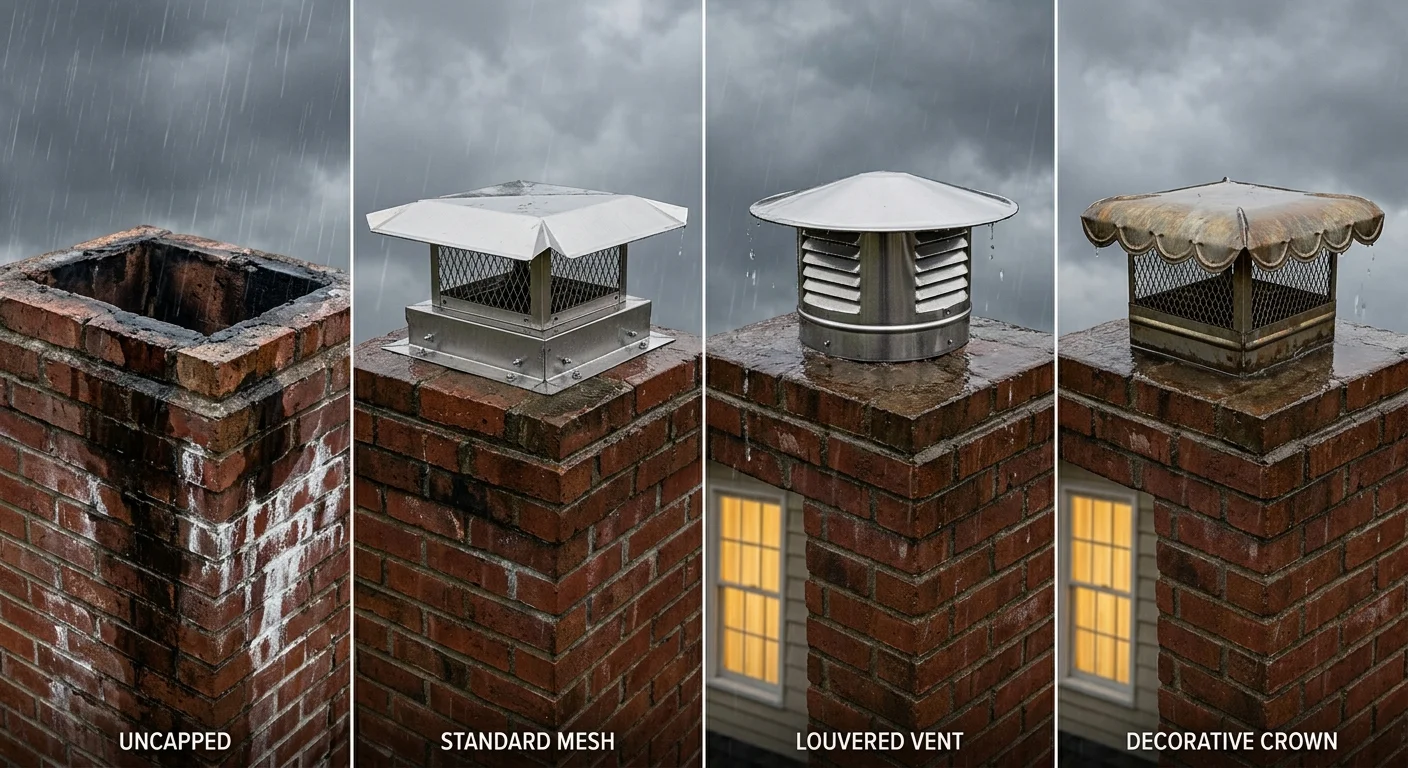
Choosing the right cap involves three clear factors. You need to look at structure, material, and mesh size. We will keep this quick and simple.
1. Structure: How Many Flues?
Single-Flue Caps: A basic pick for a single fireplace. They attach right to one clay tile. These leave your surrounding concrete crown open to rain.
Multi-Flue (Full-Coverage) Caps: A smart upgrade. These caps span the entire chimney top. This covers multiple flues. It also protects the whole masonry crown from water damage.
Draft-Increasing Caps: A perfect match for windy areas. Consider these for homes with constant smoke rollback. They use air flow to pull smoke up and out.
Gas Vent Caps: Never put a wood fireplace cap on a gas line. Buy the manufacturer-matched model. This stops carbon monoxide risks.
2. Material: The Long-Term Value
Stainless Steel (Top Pick): This metal lasts 10–20 years. You get great rust resistance and zero maintenance. It offers the best mix of price and toughness.
Copper: Copper lasts for decades. It brings a premium, high-cost option to your home. The material develops a green patina over time. Choose this for high-end looks.
Galvanized Steel: Expect this to last 3–7 years. It looks like the cheapest choice upfront, but it rusts over time. Use this as a temporary fix. It works well before a full chimney repair.
3. Mesh Size: Airflow vs. Pests
Standard Mesh (¾”): Best for regular fireplace users. This size catches sparks. It keeps bugs out. Plus, it avoids fast soot buildup.
Finer Mesh (½”): A great pick for bad pest issues. You can also use it for rare fires. It clogs faster, though. Plan an annual cleaning. This stops smoke backup.
The 30-Second Decision Checklist
1 flue, standard budget: Single-flue stainless steel cap
2+ flues or maximum water protection: Multi-flue stainless steel cap
Windy area / smoke blows inside: Draft-increasing cap
Short-term fix: Galvanized steel cap
Grab a tape measure. Check the outer dimensions of your flue tile first. A bad fit gives zero protection.
Can You Install a Chimney Cap Yourself?
Chimney cap installation is simple for some homeowners and dangerous for others. The difference comes down to a few honest questions you need to ask yourself before you go anywhere near a ladder.
DIY Makes Sense Here
A single-flue cap on a standard clay tile flue is about as straightforward as home maintenance gets. One manufacturer put it well: “If you can assemble your own furniture, you can install your own chimney cap” — for simple setups, at least.
DIY is a solid choice if:
Your roof pitch is low to moderate (3:12–6:12), and you’re comfortable at height
You have one standard flue that fits a stock size — sizes like 9″×9″, 13″×13″, and 9″×13″ cover about 90–95% of residential chimneys
The flue is visually clear with no sign of nests, blockages, or draft problems
You own basic tools: a drill, a tape measure, a nut driver, and a steady hand
The installation itself? Most DIY-oriented vendors report it takes 15–25 minutes once you’re up there. A quality stainless steel chimney cap runs $60–$250, depending on size. Professional chimney cap installation costs $150–$500 total. So DIY saves you $100–$300 — and that’s real money.
Call a Pro Instead
Stop and call a professional if any of the following apply:
Multiple flues sharing one chimney crown — a multi-flue cap requires drilling into masonry at height, correct layout, and weatherproof sealing. That’s not beginner work.
Animals or nests inside the flue — clear and inspect the flue first. The cap goes on after , not before.
Factory-built or prefab fireplaces — these need model-specific listed caps to keep their UL rating. The wrong cap can hurt draft performance or void the listing.
A steep, high, or complex roof — manufacturers say it straight: don’t climb a two-story roof for this job without the right equipment and experience.
Cracked masonry, a damaged crown, or a history of leaks — cap installation and the underlying repair must happen together. One without the other won’t hold up.
Measure Before You Buy
Measurement comes first — whether you go DIY or hire someone. A cap that doesn’t fit right offers no real protection.
Square or rectangular flues : measure the outside length and width of the clay tile at the top
Round flues : measure both the inside and outside diameter of the flue pipe
Multi-flue setups : measure the total area of the chimney crown and the height of the tallest flue
Get this wrong, and you’re buying twice. Take your time with it.
After Installation: Don’t Skip This
A chimney cap is not a set-it-and-forget-it fix. Inspect it — and your chimney crown — at least once a year.
Here’s what to check each time:
Mesh openings should be no larger than ¾ inch. Wider gaps let embers escape.
Mounting screws should be tight and rust-free.
The cap should sit level with no contact against the damper hardware.
A well-fitted stainless steel chimney cap can last 10–15 years in normal residential conditions. That’s a decade-plus of protection from rain, animals, sparks, and backdrafts — for less than what most people spend on a single dinner out.
The job is small. The consequences of skipping it are not.
FAQ: Fireplace Chimney Cap Questions Answered
Real questions. Straight answers. No padding.
Q: Am I legally required to have a chimney cap?
Not in every location — but “not required” and “not expected” are two different things. NFPA 211 is the fire code most local jurisdictions follow. It requires chimneys to be maintained against water damage, animal entry, and fire hazards. A chimney cap with a screen is the standard way inspectors confirm compliance. Your homeowner’s insurance policy may go even further. If a claim traces back to an uncapped flue — spark-caused roof fire, animal nest blockage, or water damage, your insurer has grounds to deny it. Check your local code and your policy. Don’t assume you’re in the clear.
Q: What size cap do I need?
Measure first. Buy the second. Always.
Square or rectangular flue : measure the outside length and width of the flue tile to the nearest ⅛ inch
Round flue : measure the outside diameter of the pipe
Multi-flue chimney : measure the full crown length and width, plus the height of the tallest flue tile. Then pick a multi-flue cap that overhangs the outermost edge by at least 1–2 inches on all sides
Here’s the good news: four standard-size ranges cover 90–95% of U.S. chimneys. Get your measurements right, and a stock cap that fits will be easy to find.
Q: What does a chimney cap cost?
Here’s the honest range:
Cap Type | DIY Cost | Installed by Pro |
|---|---|---|
Galvanized single-flue | $40–$90 | — |
Stainless steel single-flue | $75–$200 | $250–$600 total |
Stainless multi-flue | $150–$400+ | Varies by crown size |
Custom copper | $400–$1,000+ installed | — |
Stainless steel chimney caps offer the best value. Many carry lifetime or 20-year warranties. In wet climates or coastal areas, stainless is the clear long-term choice. Other materials simply don’t hold up as well.
Q: What mesh size should I choose?
Standard spark arrestor mesh for wood-burning fireplaces is ¾ inch. It stops embers without cutting your draft. In areas with bats, small birds, or heavy debris, ½-inch mesh gives tighter protection. Go smaller than that, and you speed up creosote buildup and invite fireplace draft problems. Most state and local fire codes require chimney caps to function as spark arrestors. In practice, that means a mesh screen is non-negotiable on wood-burning setups.
Q: Can one cap cover multiple flues?
Yes — and it’s often the smarter, more cost-effective choice. A multi-flue chimney cap covers the entire crown in one piece. The base needs to extend at least 1–2 inches beyond the outermost flue in both directions. The lid should overhang the base by about 2–3 inches per side. This keeps water off the crown. Got three or more flues on one stack? A single multi-flue cover almost always beats buying separate caps for each.
Q: Can a chimney cap keep animals out?
Yes. A cap with a properly sized mesh screen helps prevent birds, squirrels, raccoons, bats, and other animals from entering the chimney.
Conclusion
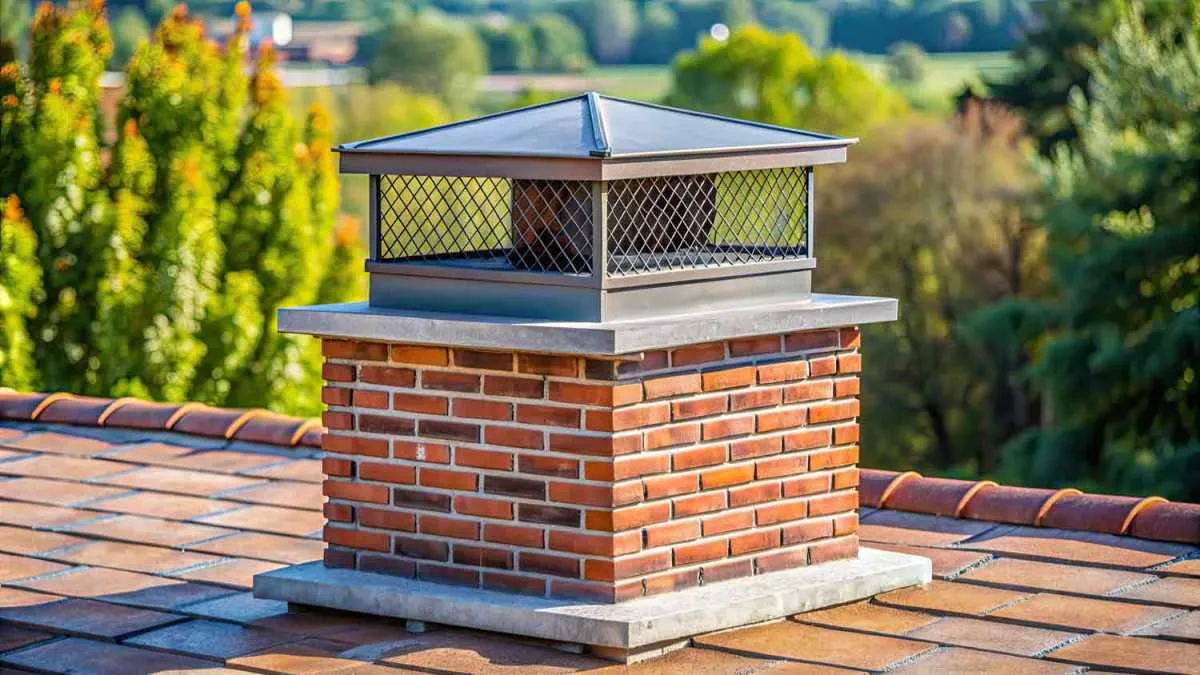
Your fireplace doesn’t send emails. It can’t schedule a calendar reminder or file a complaint. What it can do is drip, smoke, smell, and let a family of raccoons move in rent-free — all of which are its version of waving a red flag.
A chimney cap for your fireplace isn’t a luxury add-on. It’s the most cost-effective layer of protection your chimney can have. Rain, debris, birds, backdrafts, wayward sparks — the outdoors throws a lot at it. A chimney cap stops all of that.
The good news? You now know what to look for. You know what each cap type does. You know whether to handle it yourself or pick up the phone.
Don’t wait for the drip to become a disaster.





