Cracked heels, tight legs, skin that soaks up lotion and still wants more — sound familiar? You’ve tried half the drugstore shelf already. Medline Remedy keeps showing up in hospital supply rooms and in Amazon carts from real people with dry skin. So the question is fair: is this the real deal, or just clinical-sounding packaging?
I dug deep into the ingredients, the science, and the real-world results to give you a straight answer. That includes who this product is made for, where it beats the competition, and the one skin type that should look elsewhere first.
The Short Answer: Is Medline Remedy Good for Very Dry Skin?
Yes — and not in a “good enough” way. In a built-for-this way.
Medline Remedy creams are made for dry to very dry, cracked, and dehydrated skin. A board-certified dermatologist quoted in Drug Store News said the Remedy body cream gives “welcome relief to people who suffer from extremely dry, cracked, and dehydrated skin.” That’s not a marketing line. That’s a clinical statement.
The formula proves it. Safflower oleosomes release lipids over time — not a quick surface fix, but all-day nourishment that keeps very dry skin soft for up to 24 hours. Real users back this up. One verified reviewer said her very dry legs “felt great” right after applying it.
Bottom line? Your skin is past “a little flaky.” It’s cracked, tight, and thirsty. Remedy was built for exactly that.
Why Do So Many Hospitals Use Medline Remedy?
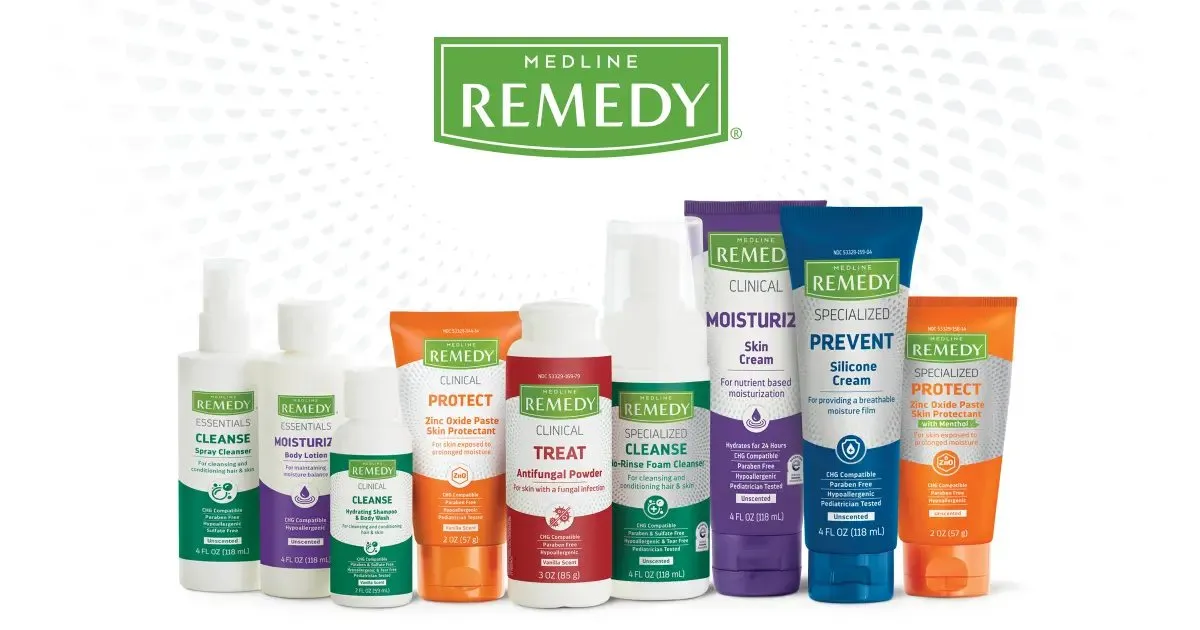
Over half of all acute and post-acute care facilities in the U.S. have standardized on Medline Remedy. Not a few hospitals. Not a regional trend. More than 50% market share across hospitals, nursing homes, wound care clinics, and surgical centers. That kind of dominance doesn’t happen by accident. It tells you something important about what this product delivers.
It’s Built Around How Nurses Work
Here’s what makes Medline Remedy different from every other clinical skin care line: frontline clinicians co-designed the packaging. Busy nurses don’t have time to read fine print on a bottle at 2 a.m. So Remedy fixed that.
Every product carries one bold word on the front — Cleanse, Moisturize, Prevent, Protect, or Treat. There’s also a color code printed on both ends of every tube and bottle:
🟣 Purple = Moisturize — deep hydration for dry, cracked skin
🟢 Green = Cleanse — gentle hair and skin cleansing
🔵 Blue = Prevent — silicone barrier protection against moisture-related skin breakdown
🟠 Orange = Protect — for skin exposed to prolonged moisture
🔴 Red = Treat — antifungal treatment for fungal infections
Grab the right product fast. Every time. Even from a crowded supply drawer.
Three Tiers That Map to Real Patient Needs
Hospitals don’t just buy one version of Remedy. They use a three-tier system:
-
Remedy Essentials — routine care on general medical floors
-
Remedy Clinical — higher-acuity needs, like incontinence-associated dermatitis
-
Remedy Specialized — complex skin conditions in wound care, ICU, and oncology units
This setup lets a single health system run one unified skin care protocol from the hospital bed through rehab and home care. That matters for you too. The moisturizer your loved one uses in a nursing home is the same clinically-validated formula you can get for home use.
The full line also aligns with the Coalition for At-Risk Skin ( CARS ) 21 consensus statements. These are the gold-standard guidelines for preventing pressure injuries, incontinence-associated dermatitis, and adhesive-related skin damage. That’s not a marketing badge. Hospitals can point to Remedy during compliance reviews and say: yes, this is evidence-based care.
A product that earns this level of institutional trust — at this scale — is worth paying attention to.
My Findings: Where Medline Remedy Works Well
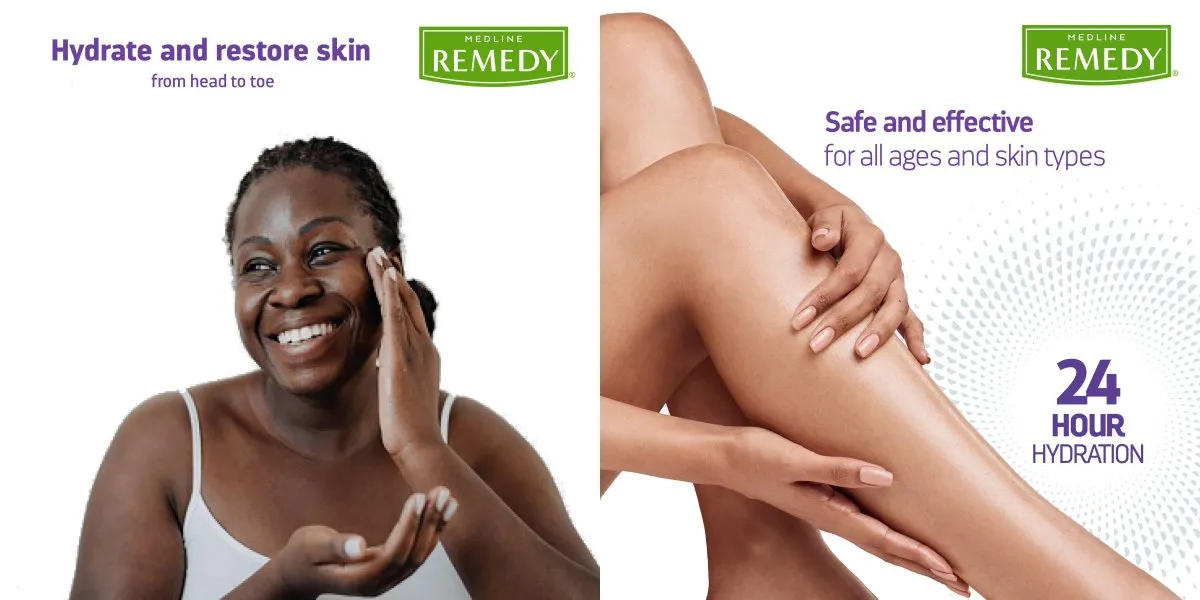
Three skin types keep coming up in my research on who gets real results with Medline Remedy. The pattern is hard to miss.
Dry, Cracked, and At-Risk Skin
This is Remedy’s home turf. The Skin Repair Cream targets all patients at high risk for skin breakdown. Dry and cracked skin gets called out right on the label. That covers arms, legs, hands, feet — anywhere tight, flaky dryness settles in and won’t quit.
What makes it work here isn’t just moisture. It’s the moisture that stays. The formula restores the skin’s natural barrier. That matters a lot for aging skin, immobile patients, and anyone with already-compromised skin. Use it as needed, as much as needed — that’s the clinical guidance — and let it do the repair work underneath.
Aging and Crepey Skin (Yes, Really)
One Remedy formula takes things further. It combines Retinol, Bakuchiol, and Hyaluronic Acid — built to “smooth and tighten the look of wrinkles, loose and crepey skin.” Got thin, lax skin on your forearms or décolletage? The kind that crinkles like tissue paper? This formula is worth a serious look. It’s not a basic moisturizer. It’s targeted skin renewal.
Seasonal and Sun-Exposed Skin
Real users have pointed to this one: Remedy Moisturizing Body Lotion, part of the clinically-tested Dermatology Series, handles seasonal dryness well — summer heat, sun exposure, low-humidity conditions. One reviewer called it a “perfect solution” for staying hydrated through warmer months. It’s light enough to use every day without dreading the routine.
The common thread across all three? Remedy performs best on real skin problems — not mild dryness any lotion could fix, but the persistent, stubborn kind that needs a formula with genuine clinical intent behind it.
Where Medline Remedy Falls Short?
No product earns a perfect score — and Medline Remedy is no exception. Here’s what you need to know before buying.
The Packaging Needed a Full Redesign (And Got One)
In 2023, Medline overhauled the entire Remedy line. The goal? Make it “more intuitive for clinicians.” They added clearer labeling, stronger color-coding on both ends of every package, and updated education aligned with the Coalition for At-Risk Skin’s 21 consensus statements.
That’s a real upgrade. It’s also an honest admission — the original packaging wasn’t working. Nurses had trouble grabbing the right product fast. Bottles stored in different orientations made it worse. For a clinical system built around speed and accuracy, that’s a serious gap.
It’s Not a One-Size-Fits-Everything System
The Remedy zinc cream targets a narrow set of conditions: diaper rash, moisture-related maceration, and incontinence-associated skin breakdown. It does those things well. But that’s the full scope. Pick it up, looking for a general dry skin solution, and you’ll walk away disappointed.
It’s a focused tool, not a broad one. Know what you need before you buy.
One Product Raised a Serious Safety Flag
This one matters. The Remedy Essentials No-Rinse Cleansing Foam got tied to an FDA-investigated multistate outbreak of B. cepacia complex. That’s a bacterial contamination issue — not a performance complaint. Big difference.
This does not point to the full Remedy moisturizer line. The problem was isolated to that one product. Still, know this before you shop.
Medline Remedy vs CeraVe vs Eucerin
Three different products. Three different jobs. Comparing them head-to-head makes sense only after you know what each one was built to do.
Medline Remedy belongs in hospitals and long-term care facilities. It was made for fragile, high-risk skin — the kind that breaks down from incontinence, immobility, or age. CeraVe is your dermatologist-recommended drugstore pick, built around ceramides and hyaluronic acid to restore and protect the skin barrier for daily use. Eucerin targets specific conditions — eczema, diabetic skin, psoriasis — using urea, colloidal oatmeal, and focused actives to treat stubborn skin problems.
Same category. Very different formulas.
What’s Inside the Bottle?
This is where things get interesting.
CeraVe Moisturizing Cream uses three ceramides (1, 3, and 6-II) plus hyaluronic acid. These are delivered through MVE technology — a multi-layered release system that keeps the actives working for about 24 hours. It also contains petrolatum as a core occlusive. That gives it a rich, skin-sealing feel without leaving a greasy finish.
Eucerin Advanced Repair relies on urea (5–10%) as both a keratolytic and a humectant. It breaks down rough, flaky skin and pulls moisture in at the same time. The Eczema Relief formula adds 1% colloidal oatmeal — an FDA-recognized OTC active — plus ceramides and licochalcone A for anti-inflammatory support. It feels heavier and more occlusive. For very dry, thickened skin, it’s a strong choice.
Medline Remedy Phytoplex goes a different route. No ceramides. No urea. Instead, it uses plant-based emollients — safflower, canola, jojoba — paired with dimethicone and glycerin. No petrolatum. No mineral oil. That’s a practical advantage in clinical settings where frequent reapplication and linen laundering are real concerns. Most Phytoplex formulas are also fragrance-free and CHG-compatible. So they won’t disrupt the chlorhexidine bathing protocols hospitals use every day.
Who Should Use What?
|
Situation |
Best Pick |
|---|---|
|
Very dry body skin, no major condition |
Eucerin Advanced Repair (urea does the heavy lifting) |
|
Daily barrier maintenance, balanced texture |
CeraVe Moisturizing Cream |
|
Eczema-prone or atopic skin, outpatient |
Eucerin Eczema Relief or CeraVe |
|
Nursing home, hospital, or post-acute care |
Medline Remedy Phytoplex |
|
High-frequency incontinence skin care |
Medline Remedy — hands down |
The Real Difference: Cost and Context
Here’s a number worth knowing. Under institutional GPO pricing, Medline Remedy costs 30–70% less per ounce than CeraVe or Eucerin at retail. That gap explains why more than half of U.S. acute care facilities stock Remedy as their main skin care line. It’s not about aesthetics. It performs at scale, in bulk, across hundreds of patients every day.
CeraVe and Eucerin work best as home-use, patient-recommended products — the ones your dermatologist tells you to grab on the way out. Remedy is what the facility already has waiting for you.
The bottom line: for very dry skin at home, CeraVe and Eucerin both deliver solid results through well-studied actives. But for fragile, at-risk, or institutionally-cared-for skin — or for a loved one in a care setting — Medline Remedy fills a role those two brands were never built to handle.
Who Should Choose Medline Remedy?
Not every product fits every bathroom — or every supply room. Medline Remedy was built for specific people in specific situations. Knowing you’re one of them saves time, money, and real frustration.
Remedy is the right call for these groups:
-
Nurses and caregivers handling high-volume skin care — color-coded packaging (green, purple, blue, orange, red) lets you grab the right product fast. Even from a crowded supply drawer at 2 a.m., there’s no guessing.
-
Facilities standardizing across multiple units — Remedy holds 50%+ market share in acute and post-acute care. That means teams get one unified protocol from ICU to rehab, no patchwork systems needed.
-
High-turnover teams or tricky storage environments — the redesigned packaging lets staff spot the correct product no matter how it’s stored or oriented. Rotation, stacking, tight shelves — none of that matters.
-
Teams managing at-risk skin — the full system lines up with the Coalition for At-Risk Skin’s 21 consensus statements. Facilities get solid, evidence-based protocol documentation they can actually stand behind.
Want simple, error-resistant product selection at the point of care? Remedy handles that better than anything else in this category.
Tips to Get Better Results With Medline Remedy
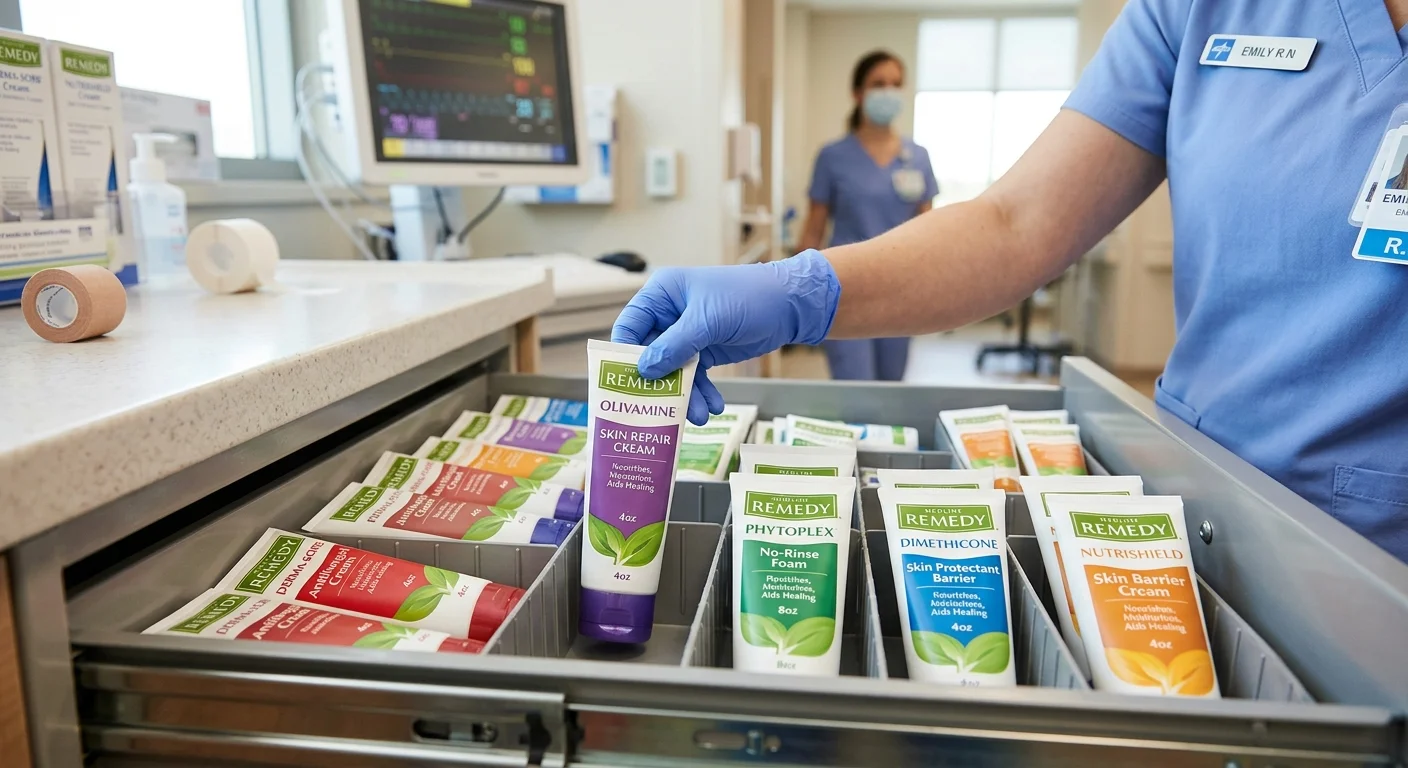
The gap between “this works okay” and “this changed my skin” comes down to how you use the product — not which one you buy.
Medline built the Remedy system around one idea: make it impossible to grab the wrong thing. Each product tells you what it does, right on the front label — Cleanse, Moisturize, Prevent, Protect, or Treat . Start there. Match the label to your goal before you open the cap.
Here’s how to use the system the way it was designed:
-
Start with your skin goal, not the product name. Trying to hydrate very dry skin? You want purple — Moisturize. Protecting fragile or exposed skin? That’s orange — Protect. Let the outcome drive the choice.
-
Check both ends of the packaging. The color code appears on both ends of every tube and bottle. It doesn’t matter how it’s stored, stacked, or sitting on your shelf. You’ll always know what you’re reaching for.
-
Follow the step sequence. Cleanse first. Moisturize second. Prevent or protect after that. The system works as a layered routine. Skipping steps weakens results.
-
Let the label guide you. The updated packaging lines up with the Coalition for At-Risk Skin’s 21 consensus statements. That’s real clinical guidance, built right into what you’re holding.
One rule that cuts through everything: choose by outcome first, confirm by color second. Clinical teams use it that way. You should, too.
Frequently Asked Questions About Medline Remedy and Dry Skin
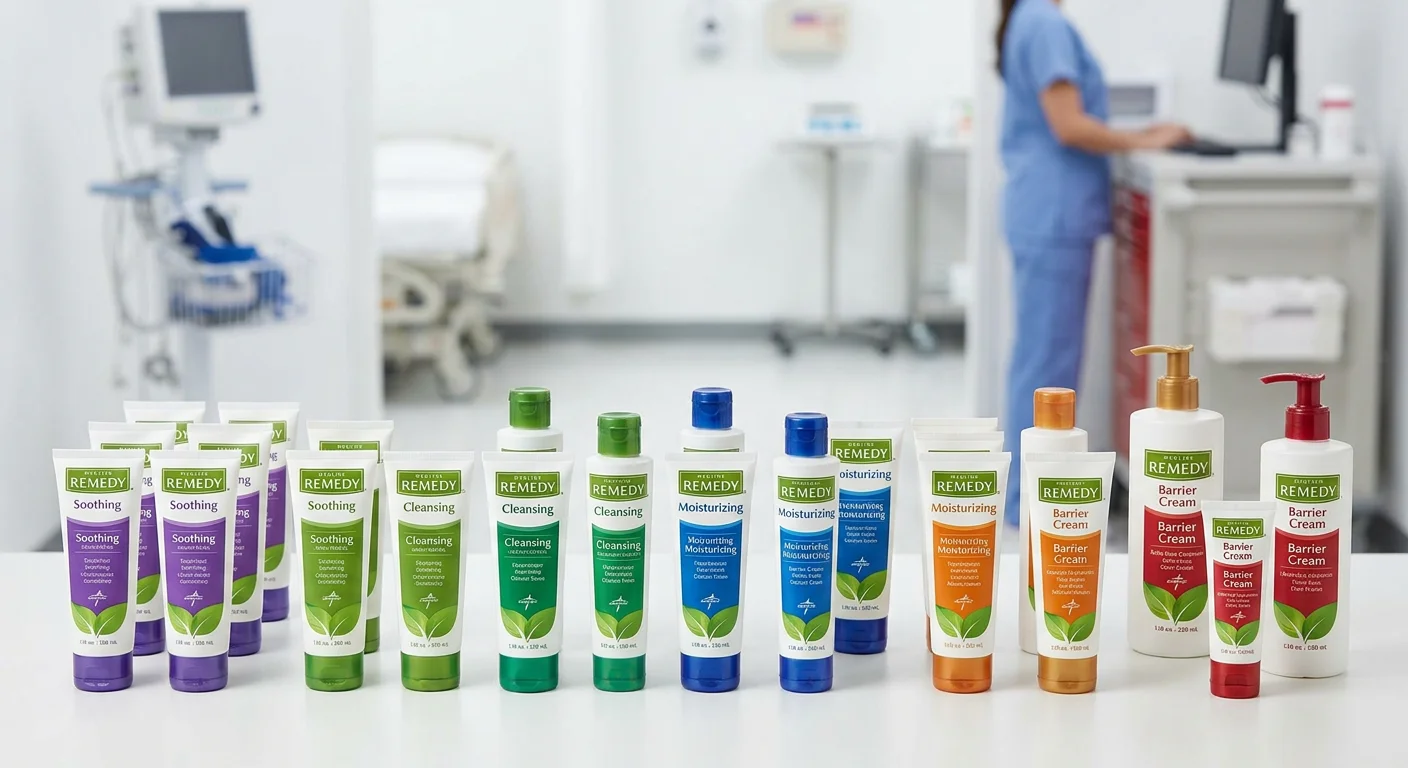
Real questions deserve real answers — not vague product-speak. Here’s what you need to know.
How often should I apply Remedy moisturizer for very dry skin?
Aim for at least 2–3 times a day. Always apply within a few minutes after bathing, on skin that’s still a little damp. That timing matters. Damp skin traps water in the outer layer before it evaporates. For severely cracked hands or heels, go heavier at night. Apply a thick layer, then pull on cotton gloves or socks and sleep in them. Clinical nursing protocols call for twice-daily full-body moisturization, plus extra applications after handwashing or perineal care.
Which Remedy product is for dry skin?
Reach for purple — “Moisturize.” That’s the line built for dry, flaky, tight skin. Cleansing first? Grab green. For fragile or high-risk areas — around incontinence zones in particular — add blue “Prevent” after moisturizing. The color code appears on both ends of every tube, so it’s easy to read no matter how it’s stored.
Can Remedy creams be used on the face?
Check the label first. A product marked noncomedogenic and suitable for all skin types is fine for face use. Heavier barrier formulas stay on the body in clinical settings. Clinicians save lighter options for facial skin.
What else supports Remedy’s effectiveness beyond the product itself?
The details add up fast:
-
Bathing: Use warm water, 5–10 minutes max, once a day. Hot water strips natural oils and undoes what the moisturizer does afterward.
-
Fabrics: Keep soft cotton against dry skin. Use fragrance-free detergents.
-
Environment: Run a humidifier indoors. Dry heated air pulls moisture out of skin faster and cuts how long any moisturizer stays effective.
-
Outdoors: Apply Remedy before and after cold or dry air exposure — hands especially.
When should I add something stronger than a Remedy moisturizer?
Dryness turns itchy or inflamed? OTC hydrocortisone 1% on localized spots, short-term, is standard guidance. Apply your moisturizer right after. Open cracks, bleeding, or any sign of infection — that’s a clinician conversation, not a DIY fix. The red “Treat” line addresses fungal complications in persistently dry or softened skin. Active wounds need professional evaluation first.
Conclusion
Here’s the truth: you’ve been layering on drugstore lotion. You still wake up to tight, flaky, uncomfortable skin. The problem isn’t the amount of moisturizer you’re using — it’s the kind .
Medline Remedy isn’t glamorous. No pretty packaging. No spa-day scent. But for dry, parched skin, it works. This is especially true if you’re caring for an aging parent, dealing with diabetes-related dryness, or just tired of products that overpromise and underdeliver. This dry skin cream — tested in clinical settings — gets the job done without fanfare.
The PhytoPlex formula tackles dryness at the root. The fragrance-free formula keeps irritation out of the picture. The barrier-rebuilding ingredients restore what your skin has lost. Together, they deliver real, functional relief — not just a temporary fix.
So what’s next? Pick the right product for your skin:
-
Medline Remedy Hydrating Lotion — a good fit for mild to moderate dryness
-
Medline Remedy Phytoplex Cream — the stronger option for severe, cracked, or problem skin
Apply it every day. Give your skin two full weeks. The results speak for themselves — soft, comfortable skin that stays that way.