Finding a reliable disposable coverall manufacturer in Germany is harder than it should be. Procurement managers, safety officers, and import traders all know the pain — outdated supplier lists, unverified certifications, and wasted RFQ cycles that go nowhere.
Germany’s protective clothing market is dense and demanding. A small group of manufacturers controls most of it, and they don’t compete on price alone.
So what do you actually need? Maybe you’re sourcing EN 13982-certified Type 5/6 coveralls for industrial use. Maybe you’re looking for an OEM partner for private-label production. Or you just want to tell the real manufacturers apart from the catalog middlemen.
This guide does that for you. Nine disposable coverall manufacturers . Real company profiles. Procurement-ready intelligence. Let’s get into it.
#1 DACH Schutzbekleidung GmbH (Germany)
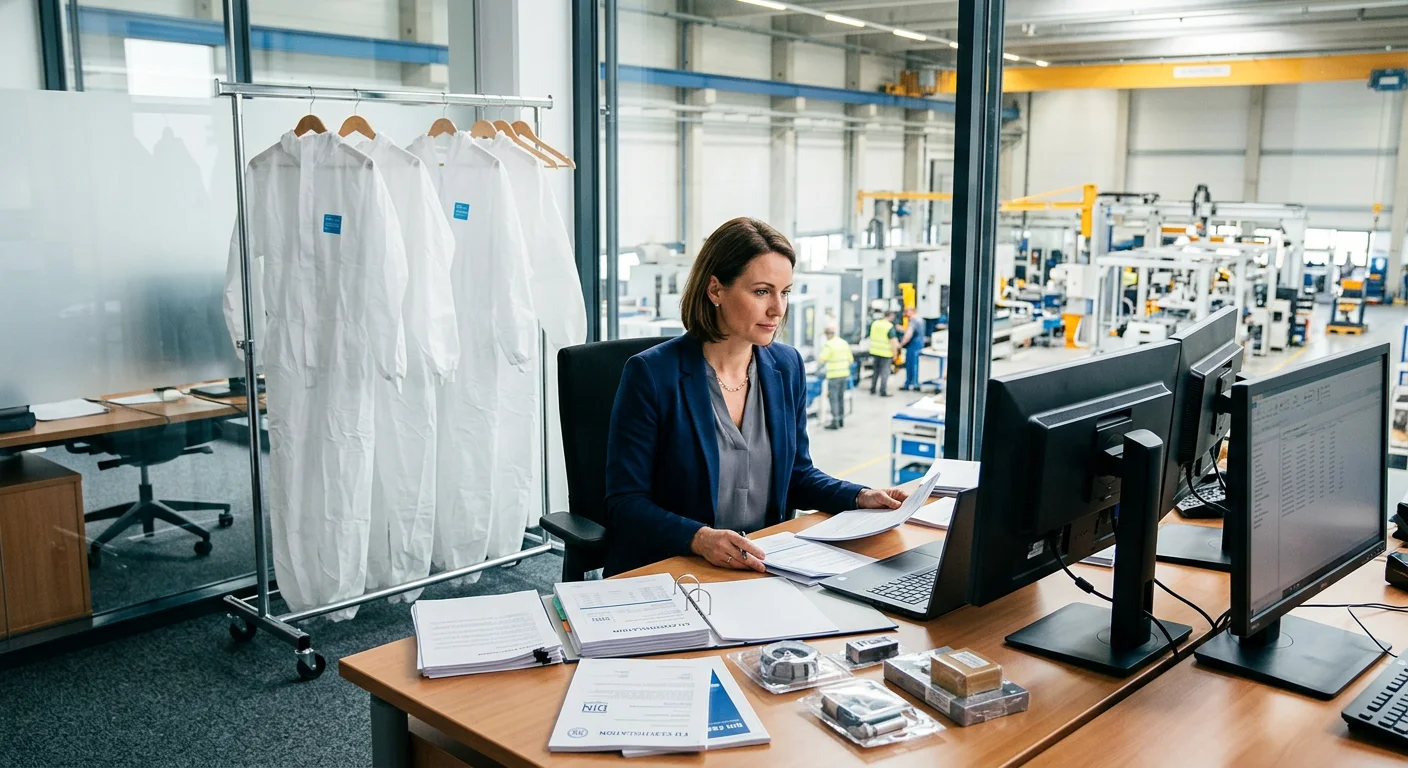
DACH Schutzbekleidung GmbH & Co. KG is based in Rastatt, Baden-Württemberg. Founded in 1996, it is still owner-managed today. Over 30 years, they’ve built what most PPE suppliers just talk about: a fully integrated operation with their own CE-marked products and EU Declarations of Conformity.
This is not a trading company putting a German label on Asian stock. DACH manufactures and brands its own product line — coveralls, respirators, surgical gowns , boot covers, and protective kits. They hold all the regulatory paperwork to back it up.
What Do They Make?
Their core catalog includes:
-
Disposable coveralls across multiple protection levels
-
FFP2 respirators , including the Neolution® Air Loop (EN 149 compliant)
-
Surgical and isolation gowns
-
PE aprons
-
PPE protection kits — bundled “Komplettlösung” sets built for hospitals and emergency responders
These kits put everything in one box. No separate sourcing, no extra steps.
Key standards covered in their portfolio:
-
EN 14126 — protection against infectious agents
-
EN 149 — filtering half masks
-
All products fall under EU Regulation 2016/425
Who Buys From Them?
-
Hospitals and surgical facilities
-
Emergency services (ambulance, fire & rescue)
-
Food processing and pharmaceutical operations
-
International distributors via direct export
MOQ starts at one carton per SKU — 25–50 pieces for coveralls, 240–400 for respirators. Larger institutional contracts scale up to pallet lots.
#2 ASATEX AG (Bergheim, Germany)
ASATEX AG started in 1982. Since then, they’ve built something most small PPE companies never reach: a fully integrated operation with its own brands, its own warehouse, and its own customs clearance advantages.
The Bergheim facility sits just outside Cologne. It runs 8,500 m² of high-rack warehouse space. For a company with under 25 employees, that’s a serious logistics footprint. You get real stock depth, faster fulfillment, and a supplier that isn’t rushing to consolidate orders before shipping.
What Sets Them Apart?
ASATEX holds AEO-C (Authorised Economic Operator – Customs) status, active since March 2011. This means simplified customs procedures. Cross-border lead times are shorter. International orders move with less friction.
Their branded portfolio covers Cover-Line® , Prevent® , and NI.TECH® — three lines that span protective workwear across multiple application categories. Production runs across Germany, Poland, India, and China. So buyers get flexibility on both spec and price point.
They also exhibit at A+A Düsseldorf , the benchmark trade event for European PPE professionals.
#3 DS SafetyWear GmbH (Lohmar, Germany)
Twenty-three years in disposable PPE leaves a mark. DS SafetyWear has run out of Lohmar — a quiet industrial town near Cologne — since 2001. It grew out of the Kappler Germany operation. Today, it sits inside the Storskogen Group AB portfolio. Storskogen is a Swedish industrial conglomerate. That means serious financial backing stands behind what looks, on the surface, like a small regional supplier.
Don’t let the headcount fool you. Ten people run the Lohmar office. Behind them sits a 2,000 m² high-bay warehouse. It holds 1,000–2,000 pallet spaces across dozens of SKUs. That’s enough stock to support next-day delivery across Germany and 2–4 day fulfillment into Western Europe.
What Do They Specialize In?
Their niche is narrow and deliberate: “Schutzkleidung mit begrenzter Tragedauer” — protective clothing with limited wearing time. In plain terms, that means disposable:
-
Limited-use protective coveralls (Cat. III, chemical and particulate protection)
-
Overshoes and disposable footwear covers
-
General disposable workwear for pharma, food, lab, and industrial environments
Their products meet key standards, including EN 13982, EN 14126, and EN 1149. That’s the certification range you’d expect from a serious Category III supplier.
You can also reach their stock through B2B distributors and platforms like Droppe. So if you prefer marketplace procurement, that option is available across much of Europe.
#4 P. Glatzeder GmbH (SafeComfort Schutzanzug, Germany)
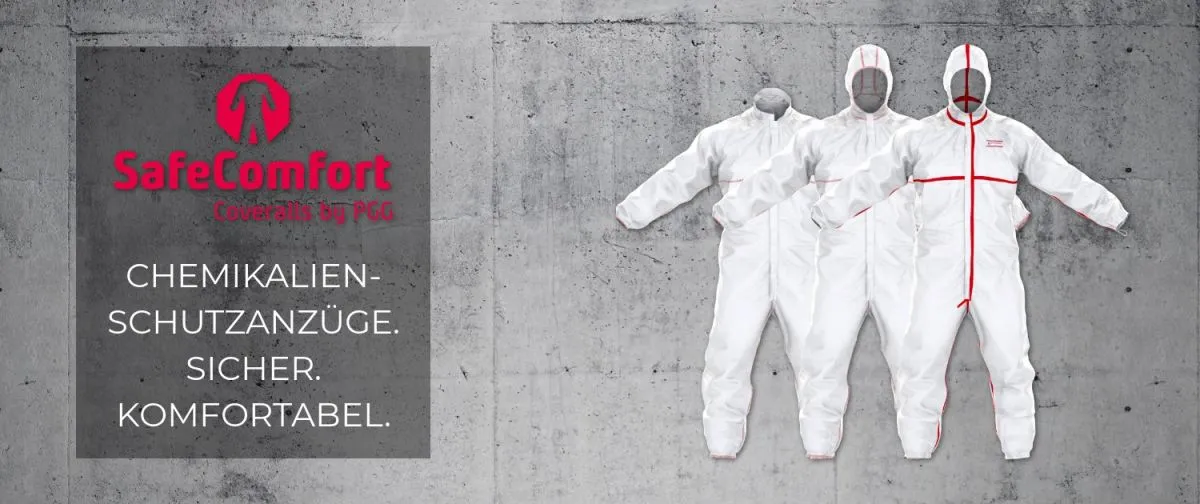
P. Glatzeder GmbH is based in Detmold, North Rhine-Westphalia. The company built its name on one material breakthrough: Truetec® — a proprietary microfilament nonwoven that outperforms most fabrics the disposable coverall market treats as standard.
The number that defines SafeComfort is < 50 g/m². That’s lighter than the industry norm of 50–70 g/m² for comparable Cat. III protection. Yet the fabric absorbs 400% of its own weight in moisture, pulling sweat outward the whole time you wear it. No heat buildup. No clammy lining. For anyone doing hard physical work in a sealed suit, that difference is real.
Product Lines and Protection Levels
Three core models cover most industrial needs:
-
Model H — Cat. III, Type 5b/6b : particle and limited liquid splash protection
-
Model T — Cat. III, Type 4b/5b/6b : spray-tight, EN ISO 14605 compliant seams, built for heavier chemical exposure
-
Model N — Type 5/6 baseline; distributed through pharmacy channels (PZN 15305478)
All suits are antistatic, silicone-free, and free of paint-wetting-inhibiting substances. That makes them ready to use in spray painting and automotive environments, straight out of the bag.
Certifications
-
EN ISO 13982-1 (Type 5 particulate)
-
EN 13034 (Type 6 liquid chemical)
-
EN 14126 (biological hazard protection)
-
EN ISO 14605 (Model T only)
#5 BICAP Inh. Nacke GmbH & Co. KG (Haan, Germany)
BICAP has been running out of Haan, North Rhine-Westphalia, since 2005. It’s a family-owned business, registered at the Amtsgericht Wuppertal (HRA 21844). The core focus is straightforward: manufacturing and distributing protective clothing under the BICAP brand.
The business model covers three roles at once. BICAP operates as a brand owner, large-scale importer, and B2B wholesaler. They source from international production sites and supply German and European buyers with hygiene-critical disposable workwear.
What They Supply?
Their disposable range covers head-to-foot protection for lab, medical, pharmaceutical, and food production environments. You’ll find coveralls, hygiene disposables, and personalized corporate workwear — all under one roof. The workwear options include print and embroidery customization.
That’s a practical combination for procurement teams. You can handle PPE compliance and brand identity sourcing from a single supplier, rather than splitting orders across multiple vendors.
Standard stock items ship within 24–72 hours across Germany.
#6 ams Umweltschutz GmbH (Berlin, Germany)
Forty years in the hazardous materials game isn’t an accident. AMS Berlin has been operating out of the German capital since 1983. Over the last four decades, dozens of competitors have tried to enter the remediation equipment space, only to fade out. AMS is still standing.
Their secret? A hyper-focused catalog. They don’t try to serve everyone. Instead, they give demolition firms, municipal remediation teams, and industrial maintenance crews exactly what they need to handle legacy contamination and asbestos removal.
Beyond Coveralls: A Complete Remediation Ecosystem
If you’re tearing down an old building, you need a lot more than just a chemical suit. That’s where AMS Berlin shines. They offer a mix of leading industry brands alongside their own highly cost-effective and eco-friendly “artic” product line. When contractors buy from them, they get top-to-bottom site compliance.
Here is what their actual product footprint covers:
-
Protective Clothing & PPE: Disposable coveralls , winter-rated workwear, specialized cold protection and work gloves , overshoes, and even base layers.
-
Respiratory Protection: Everything from basic dust masks to half/full-face respirators, specialist filters, and built-in ventilated breathing systems.
-
Heavy-Duty Containment: UN-approved Big Bags, specific asbestos and mineral wool bags, form-stable packaging bags, and their proprietary artic.bag PE disposal sacks.
-
Site Prep & Sealing: Primer artic FB30, zipper doors, flame-retardant films, painter’s fleece, glass protection films, construction plastic tarps, and heavy-duty PVC/fabric tapes.
-
Heavy Decontamination Equipment: Industrial-grade asbestos vacuums, negative-pressure units, glove bags, and full tent lock systems.
Basically, if German TRGS 519 standards require it for a hazardous site, AMS stocks it. You aren’t just buying disposable workwear here; you’re sourcing an entire compliant job site from one warehouse.
#7 Morntrip (China-Based Manufacturer — OEM/Wholesale Supplier to German Importers)
Not every supplier on this list ships from a German postcode. Morntrip doesn’t. Wuhan Morntrip Trading Co., Ltd. is based in Hubei Province — sitting deep inside China’s nonwoven textile supply chain. That’s the whole point.
German importers, B2G tender managers, and private-label buyers treat Morntrip as a cost-engineering tool. The numbers are blunt. Type 5/6 coveralls from DuPont or 3M land in Germany at 4.0–6.0 EUR/unit. The same protection category — CE-certified, sourced OEM from Morntrip — comes in at FOB pricing between $0.80–$1.50 USD/unit. Add ocean freight to Hamburg and local handling. Your landed cost still runs 40–65% below European brand pricing at volume.
Compliance Credentials
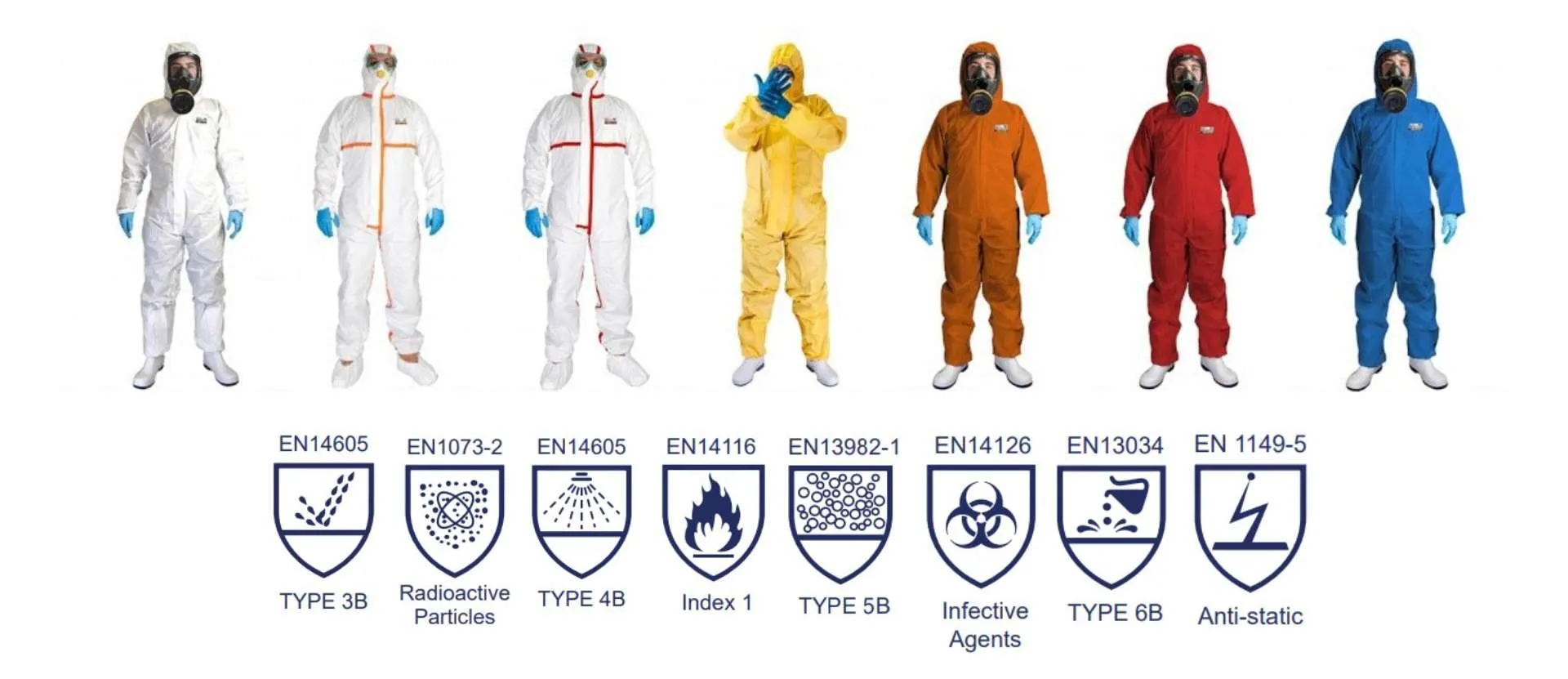
Morntrip’s coveralls hold certification under EU PPE Regulation 2016/425 (Category III). Testing covers:
-
EN ISO 13982-1 (Type 5B particulate)
-
EN 13034 (Type 6B liquid splash)
-
EN 14126 (biological agent protection)
-
EN 1149-5 (antistatic)
SGS, TÜV Rheinland, and CTC all handle third-party testing. You can request the EU Type Examination Certificate, full test reports, and a German-language Declaration of Conformity before placing any order.
OEM Parameters
|
Parameter |
Standard Range |
|---|---|
|
MOQ (Type 5/6 white) |
3,000–5,000 pcs/SKU |
|
MOQ (EN 14126 / special color) |
5,000–10,000 pcs |
|
First-order lead time |
30–45 days |
|
Repeat order lead time |
20–30 days |
|
Ocean freight to Hamburg |
30–40 days |
Private-label packaging comes with bilingual DE/EN labeling, CE marking, lot numbers, and IFU text. Everything is ready for B2B or tender submission under your own brand.
Contact: www.morntrip.com
#8 Dräger (Lübeck, Germany)
135 years is a long time to be right about something. Dräger started building safety technology in 1889. The fifth generation of the founding family still runs it today.
Drägerwerk AG & Co. KGaA posted EUR 3.482 billion in net sales for fiscal 2025. Over 16,000 employees. Subsidiaries in 50 countries. Commercial reach into more than 190. This is not a PPE company. It’s a global safety technology giant — one that makes some of the most trusted chemical protective clothing in Europe.
The CPS Line: Built for the Worst-Case Scenario
Dräger’s chemical protective suit range — the CPS series — sits at the top of the EN classification ladder. Type 1 gas-tight. Not Type 5. Not Type 6. Above them.
The flagship CPS 7900 is an encapsulating suit. It covers toxic gases, organic solvents, and CBRN response scenarios. The CPS 6900 targets industrial chemical plant maintenance. The CPS 5900 moves into limited-use territory. You get lighter composite materials and cost control — but it’s still gas-tight.
All three are tested against EN 943-1/943-2. That testing also meets EN 13982 (Type 5) and EN 13034 (Type 6) requirements.
Primary industries served:
– Petrochemical
– Refinery operations
– Hazmat emergency response
– Nuclear facilities
– Fire services
#9 Uvex Safety Group (Fürth, Germany)
Uvex has been at this long enough to stop proving itself. The Fürth-based operation is registered as UVEX ARBEITSSCHUTZ GmbH at Würzburger Str. 181–189. It sits inside a group that pulls in $551.5 million in annual revenue across 48 subsidiaries in 22 countries. Two-thirds of the workforce stays in Germany. Production follows the same logic.
Full-Spectrum PPE, Not Just Coveralls
Uvex Safety Group doesn’t lead with disposable workwear. The catalog runs wider than that:
-
Eye protection
-
Safety helmets
-
Hearing protection
-
Respirators
-
Gloves
-
Safety footwear
The coverall line fits inside that broader offering. You get Type 5/6 SMS and microporous constructions, CE-marked under EN 13982 and EN 13034. These are built for industrial dust, chemical splash, and pharmaceutical environments where contamination control is critical.
Buyers notice the consistency. Products are glass-fiber free and low-lint. Sizing runs S through 3XL. Those specs hit the mark in automotive, chemical processing, and electronics manufacturing.
Market Position
In German industrial procurement, uvex sits in the first tier alongside 3M and Honeywell. In 2021, uvex acquired a majority stake in HexArmor. That move pushed their reach into high-performance hand and body protection for North American markets.
Standard B2B orders ship within 2–7 working days through authorized distributors. Project volumes above 5,000 units run 3–6 weeks.
Comparison Table: Top 9 Disposable Coverall Suppliers at a Glance
Nine suppliers. Three countries. One table that saves you weeks of research.
Start here before reading individual profiles. The most important columns for B2B procurement — protection level, key certifications, and industry fit — come from verified sources. Where data wasn’t confirmed, the field says so. That’s a feature, not a flaw. A table you can audit is worth more than one that looks complete but guesses at half the data.
|
Manufacturer |
Main Products |
Protection Level |
Key Certifications |
Best For |
Core Strength |
|---|---|---|---|---|---|
|
DACH Schutzbekleidung GmbH |
Coveralls, respirators, PPE kits |
Type 5/6, Cat. III |
EN 14126, EN 149, EU 2016/425 |
Medical, pharma, emergency services |
Integrated production; own CE-marked product line |
|
ASATEX AG |
Branded protective workwear |
Contact supplier |
Contact supplier |
Industrial, multi-sector |
AEO-C customs status; 8,500 m² warehouse |
|
DS SafetyWear GmbH |
Limited-use coveralls, cleanroom suits |
Cat. III, Type 5/6 |
EN 13982, EN 14126, EN 1149 |
Pharma, food, lab, industrial |
Storskogen-backed; 2,000 m² high-bay stock |
|
P. Glatzeder GmbH (SafeComfort) |
Truetec® microfilament coveralls |
Type 4b/5b/6b |
EN ISO 13982-1, EN 13034, EN 14126 |
Automotive, chemical, industrial |
Sub-50 g/m² fabric; 400% moisture absorption |
|
BICAP Inh. Nacke GmbH |
Disposable workwear, hygiene PPE |
Contact supplier |
Contact supplier |
Lab, medical, food production |
24–72hr Germany fulfillment; brand + PPE in one |
|
AMS GmbH (ams Berlin) |
Hazmat site equipment, coveralls |
Contact supplier |
TRGS 519 compliant |
Asbestos removal, remediation |
40+ years; specialist hazardous contamination focus |
|
Morntrip |
Cat. III, Type 5B/6B |
EN ISO 13982-1, EN 13034, EN 14126, EN 1149-5 |
Industrial, B2G, private label |
FOB $0.80–$1.50/unit; 40–65% below EU brand pricing |
|
|
Dräger |
CPS chemical protective suits |
Type 1 gas-tight; EN 943-1/2 |
EN 943-1/2, EN 13982, EN 13034 |
Petrochemical, CBRN, nuclear |
135-year legacy; €3.48B revenue; encapsulating suit range |
|
Uvex Safety Group |
Full-spectrum PPE incl. coveralls |
Type 5/6 SMS/microporous |
EN 13982, EN 13034, EU 2016/425 |
Automotive, chemical, electronics |
First-tier German brand; glass-fiber free; S–3XL sizing |
A few things to flag before you move on:
-
Protection levels vary widely. Dräger covers gas-tight Type 1. Most others sit at Type 5/6. Check which EN category your application needs before you shortlist anyone.
-
“Contact supplier for details” isn’t missing data — it’s a pointer. Certifications and MOQ all belong in a direct RFQ conversation anyway.
-
Morntrip is the one non-German manufacturer here. German importers and private-label buyers routinely use Chinese OEM suppliers to close the cost gap. The landed-cost numbers — even with Hamburg freight added — make it useful procurement data.
-
German local manufacturing affects lead time, compliance, traceability, and eligibility for EU public tenders. Six of the nine suppliers manufacture or distribute from German soil.
FAQ: Disposable Coverall Procurement in Germany — 5 Questions Buyers Always Ask
Five questions. The ones that derail procurement timelines, trigger audit failures, and cost real money when answered incorrectly.
Q1: What EU compliance does Germany require when importing disposable coveralls from China?
Two regulatory tracks. Which one applies depends on end use.
Industrial and non-medical applications fall under the EU PPE Regulation 2016/425. Most disposable coveralls qualify as Category III PPE — the high-risk category covering chemical and biological hazards. No shortcuts here.
Medical use — isolation gowns for hospitals, clinical environments — adds another layer: EU Medical Device Regulation 2017/745 (MDR), as a Class I device.
The harmonized standards you’ll need to cover:
-
EN ISO 13982-1 — Type 5 solid particle protection
-
EN 13034 — Type 6 limited liquid splash
-
EN 14126 — biological agent protection
-
EN 14605 — spray-tight suits (Type 3/4)
-
EN 1149-5 — antistatic properties
Every compliant product needs a CE mark with a 4-digit Notified Body number on both the product and packaging. That number proves a third party ran a type-examination. Without it, the CE mark means nothing.
The supplier must also hand over a full EU Declaration of Conformity. It should list the applicable regulation, PPE category and type, EN standards covered, and the Notified Body name and certificate number.
German importers carry real liability here. Under 2016/425, you are classified as an economic operator. That means keeping the DoC, test reports, and EU Type-Examination Certificate on file — ready for German authorities (BAuA) on demand.
Q2: Who issues CE certification, and how do I verify it’s real?
CE is not issued by any single authority. The manufacturer self-declares conformity. But for Category III PPE, that declaration carries no weight unless an EU Notified Body has completed an EU Type-Examination (Module B) and issued a formal certificate first.
To verify a certificate before you wire money or submit a tender:
-
Find the 4-digit Notified Body number on the product or certificate.
-
Pull up the NANDO database — the EU Commission’s official Notified Bodies list.
-
Confirm the body’s scope covers Regulation (EU) 2016/425, Modules B, C2, or D .
-
Request the PDF EU Type-Examination Certificate and Declaration of Conformity from the supplier. Check that the product model and photos match what you’re buying, the certificate isn’t expired, and the standards cited are current.
-
For large orders, email the Notified Body with the certificate number. Most will confirm whether it’s legitimate.
Certificates older than five years deserve a direct question: has the relevant EN standard been revised since issue?
Q3: German brand vs. Chinese CE-certified import — when does the price difference justify itself?
The numbers are clear. Chinese CE-certified Type 5/6 coveralls land at 1.20–2.00 EUR/unit (FOB basis, 1×40HQ minimum, depending on SMS vs. microporous, gsm, seam tape, and EN 14126). European brands — DuPont Tyvek , 3M, uvex — run 4.00–8.00 EUR/unit at point of purchase. That’s a 2–4x cost gap.
The gap is worth paying for:
-
High-risk applications — petrochemical, pharmaceutical GMP, nuclear
-
Sites with frequent third-party audits or multinational EHS requirements
-
Cases where the brand name carries weight in internal compliance reviews
Chinese CE-certified product makes sense for:
-
Large-volume, lower-risk applications — general dust, routine maintenance, logistics
-
Budget-sensitive procurement cycles where the compliance documentation checks out
-
Private-label programs where your brand, not the disposable coverall manufacturer’s, goes on the box
The most common setup among German industrial buyers: European brands for high-risk roles, Chinese CE products for auxiliary positions. The math holds up.
Q4: What MOQ and lead times should I expect for orders shipped from China to Germany?
MOQ benchmarks for disposable coveralls:
-
Bulk/neutral packaging: 2,000–3,000 units per SKU (a standard 20GP container holds around 8,000–10,000 units)
-
Printed outer cartons with basic logo labeling: 5,000–10,000 units
-
Full private label (custom printed bags/boxes, branded packaging): 10,000–20,000 units per style
Lead times, China to Hamburg or Bremerhaven:
For established styles with no significant customization:
– Production: 15–25 days
– Ocean freight: 28–35 days
– Total port-to-port: 6–9 weeks
For new styles or full private label (including packaging design and pre-production samples):
– First orders run 8–12 weeks from design confirmation to vessel loading
Build those numbers into your procurement calendar before committing to customer delivery dates.
Q5: If I put my own brand on imported coveralls, what compliance liability do I take on?
Under EU PPE Regulation 2016/425, placing your own brand, trade name, or trademark on a product — or changing it in a way that affects compliance — reclassifies you as the disposable coverall manufacturer in the eyes of the law. The original Chinese producer’s CE mark and Declaration of Conformity no longer cover you.
You become responsible for:
-
Holding a valid EU Type-Examination Certificate issued to you (or to the product under your brand) by a Notified Body
-
Issuing your own EU Declaration of Conformity
-
Maintaining full technical documentation
-
Bearing liability for any product failure or market surveillance action
German importers running private-label programs need this sorted before the first shipment arrives. The CE certificate should list your company name. If it doesn’t, the arrangement must be covered in the disposable coverall manufacturer’s authorization documentation. Notified Bodies can issue certificates to the brand owner, which is the cleanest path forward.
Conclusion
Germany’s disposable coverall market has plenty of options — but picking the right supplier goes beyond price. Sourcing EN 13982-compliant Type 5/6 coveralls for a chemical plant in Bavaria? Building a private-label line for European retail? The disposable coverall manufacturers on this list are solid starting points for your procurement.
Here’s a quick breakdown of what each type of supplier brings to the table:
-
Established German brands like Dräger and Uvex deliver strong regulatory credibility and proven field performance.
-
Regional specialists like ASATEX and DS SafetyWear give you more flexibility and faster turnaround times.
-
OEM-focused disposable coverall manufacturers like Morntrip meet European compliance standards while keeping wholesale costs competitive.
Don’t let supplier research slow down your sourcing. Use the comparison table above to shortlist two or three candidates. Request samples. Check certifications yourself.
The best protective coverall isn’t the priciest one. It’s the one that arrives on time, passes inspection, and keeps your workers safe.