
Finding a reliable disposable coverall manufacturer in Chile isn’t just a procurement task — it’s a risk management decision. Pick the wrong supplier, and you face delayed shipments, failed certifications, or worse — workers exposed to hazardous environments without proper protection.
Your sourcing needs may vary. Mining operations in the Atacama have different demands than construction sites in Santiago or healthcare facilities across the country. But in every case, your supplier choice shapes both compliance results and worker safety.
This guide evaluates 10 credible disposable coverall manufacturers serving the Chilean market today. You’ll find local leaders, proven global brands, and cost-competitive Chinese exporters — so you can make a faster, smarter sourcing decision.
1. Steelpro Safety — Chile’s Leading Local PPE Manufacturer
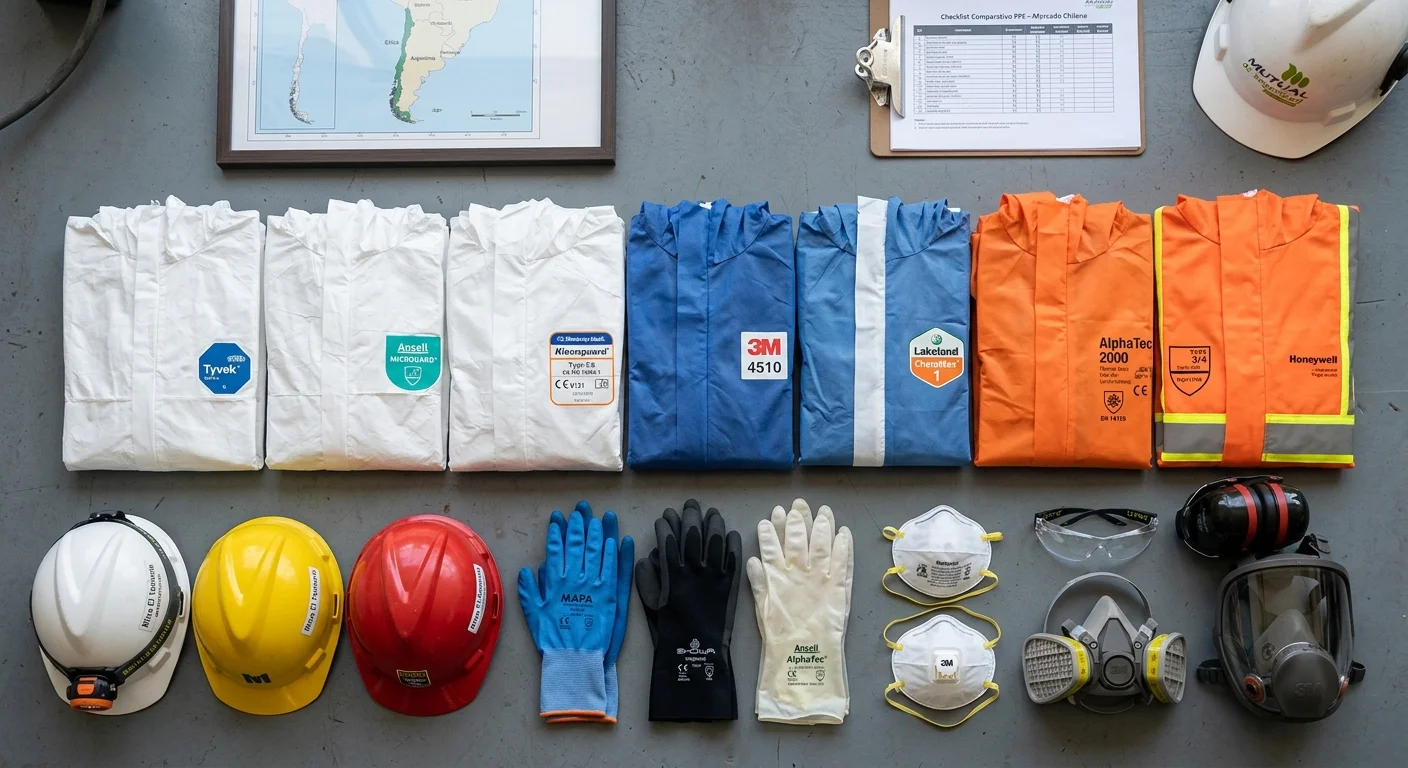
Steelpro Safety offers something most international suppliers cannot match: a physical presence across Santiago’s industrial corridors.
They run four retail locations in the Región Metropolitana — San Joaquín, Conchalí (two branches), and Pudahuel. Your procurement team can walk in, check stock, and leave with the product the same day. That matters a lot when a mining shift kicks off Monday morning.
What do they offer?
Steelpro’s catalog covers a wide PPE range: – Protective suits (buzos de protección) – Helmets – Respiratory and auditory protection – gloves – Chemical decontamination equipment, including emergency eyewash stations
Their chemical-resistant lines are a strong fit for Chile’s mining and energy sectors. Acid and caustic exposure are constant hazards in those industries, and Steelpro’s products are built around that reality.
Distribution goes beyond their own stores, too. Partner network Apro.cl stocks 173 Steelpro SKUs for ready-ship orders. Segurycel — with 30+ years serving Chilean businesses — carries the full catalog as well.
The Trade-Off Worth Knowing
Steelpro’s local advantage does come with one real limitation. Their disposable coverall range is narrower than what dedicated importers carry. You won’t find Type 1–6 specifications, anti-static variants, or microporous models listed in their available catalogs.
Pricing reflects the local premium, too. Comparable imported coveralls (DuPont Tyvek-style) run $8–12 USD wholesale. Steelpro’s local pricing sits 20–30% higher. You’re paying for same-day availability — so factor that into your sourcing decision.
Best For: Operations that need fast stock replenishment, local after-sales support, or consolidated PPE sourcing across several product categories.
2. DuPont — Global Authority in Chemical Protective Coveralls
Tyvek® earned its place as the global standard in protective coveralls . DuPont put decades of engineering into it. You’ll see the results in mining operations, chemical plants, and hazmat response teams across six continents.
The Product Line That Matters
DuPont’s coverall range breaks down into two core families:
-
Tyvek® — flash-spun high-density polyethylene, built for dry powders, particles, and light aerosols (Type 5/6 protection)
-
Tychem® — heavier-duty coverage for liquid splashes, vapors, and biohazards (Type 3/4 protection)
Tyvek® 400 weighs just 42 g/m². Tyvek® 600 steps up to 57 g/m² with taped seams and stronger chemical resistance. The choice between the two depends on your job. Dust control on a copper extraction site calls for something different than handling concentrated acid runoff. Pick the right weight for the right hazard.
What does it cost in Practice?
Tyvek® 400 runs $8–12 per suit at baseline pricing. Tyvek® 600 sits at $15–22. Chile’s import duties add 20–30% above global benchmarks. So your landed cost will be higher than the base price suggests. Build that into your budget early.
The value still holds. Independent EN 14605 testing shows Tyvek® delivers 15–25% better breathability-to-durability performance than comparable competitors. That’s a real gap, not a marketing claim.
Best For: Mining operations, chemical processing facilities, and procurement teams that need Type 5/6 protection with certified, documented field reliability across global standards.
3. Delta Plus — European-Standard Disposable Coveralls with Latin America Presence
Delta Plus built its reputation in Europe. Then it expanded south.
Through Delta Plus do Brasil, the group now serves Chile, Argentina, Colombia, and Peru. They bring EN-certified disposable PPE to industries that need documented compliance — no guesswork allowed.
Core Products for Chilean Buyers
Two models stand out:
-
DT223 — Polypropylene-SMMS, 60 g/m², certified to EN ISO 13982-1 Type 5 (dry particles) and EN 13034 Type 6 (liquid splash). No silicone. No latex. Sizes run from M to 3XL. This one is built for chemical processing, mining shutdowns, and hazmat work.
-
PO106 — Lightweight 30 g/m² non-woven polypropylene. Safe for food industry use. You get a single-use design with an elasticated hood, waist, and cuffs — simple and practical.
What Landed Cost Looks Like?
Sea freight from Santos to Valparaíso takes 2–4 weeks. Add Chile’s ~6% import duty plus 19% VAT, and your total landed cost lands at 25% above base price. Need it faster? Air freight gets urgent orders there in 3–7 days, but you’ll pay a premium.
MOQ starts at 500–1,000 units per SKU. That’s standard for EN-certified suppliers at this tier.
Best For: Chemical processing plants, oil and gas contractors, and mining operations. Any site that needs verified Type 5/6 coverall certification backed by traceable European standards.
4. Kimberly-Clark Professional (Kleenguard™) — Trusted Brand for Industrial Disposable Workwear
KleenGuard ™ doesn’t compete on price. It competes on precision.
The A-Series is built around one simple idea: match the suit to the hazard, not the other way around. Four models, four protection levels, each with a clear job to do.
The A-Series Breakdown
-
A10 — Microporous film, fluid-resistant, AAMI Level 1. Good for light factory work and janitorial tasks.
-
A20 — PE laminate with better breathability, AAMI Level 2. Works well for food processing inspections and light cleanroom use.
-
A40 — Multi-layer SMS fabric, AAMI Level 3. Handles pharmaceutical compounding, industrial painting, and dusty work environments.
-
A60 — AQUASHIELD® technology, AAMI Level 4. Built for sterile pharma fill/finish lines and heavy food processing with bloodborne pathogen risk.
Real-World Performance
One Chilean pharmaceutical plant switched to A60 and cut contamination defects by 22%. That’s not a marketing claim — that’s a real, measurable result.
A20 and A40 both carry NSF/ANSI 173 certification for food contact environments. In meat-packing facilities, 95% of users rate splash resistance as satisfactory.
Availability in Chile
A10 and A20 stock in Santiago and Valdivia hubs. A40 and A60 ship from the Mexico plant with a 4–6 week lead time. Local delivery in the Región Metropolitana takes 2–5 business days. Standard stock runs an 80%+ fill rate.
MOQ starts at 100 units via kcprofessional.com/cl. Order 1,000+ units and you get 15–25% off. Per-unit pricing runs from $2.50–$5.50 across the full A-Series range.
Best For: Food processing plants, pharmaceutical manufacturers, and light industrial operations. A solid pick for any site that needs AAMI-graded disposable PPE with documented contamination control results.
5. Libus Safety — Argentina-Based Regional Supplier Serving the Chilean Market
Libus Safety has been building industrial PPE across Latin America since 1998. Four manufacturing plants. Six countries. One clear focus: industries where protective clothing is a must.
Regional Reach That Works in Chile’s Favor
Buenos Aires is the home base. Chilean buyers don’t pull from a distant catalog, though. Libus runs a dedicated Chile plant. Orders ship by land or sea and arrive in 7–14 days. Mercosur and ALADI trade deals cut cross-border costs. Duties and VAT stay lower than what you’d pay on comparable Brazilian imports.
What They Supply?
-
PP non-woven and SMS coveralls (45–70 gsm range)
-
Sizes S to XXXL
-
NIOSH-certified models: 9571(S), 9572(M), 9573(L)
-
Pricing: $2–5 per unit at 1,000-unit MOQ
Mining, construction, pharmaceuticals, and energy — those are their core verticals. Also, the same sectors are pushing Chile’s PPE demand higher.
Best For: Chilean buyers who need a solid regional supply chain, NIOSH-certified disposable coveralls, and 30–60 day credit terms. No intercontinental wait times.
6. Bracol Safety — Brazil’s Established PPE Manufacturer with Export Capability
Twenty-five years of manufacturing builds something certifications alone cannot: a distribution network that holds up under real demand.
Bracol Safety is part of Brazil Safety Brands (BSB) — a group of six PPE brands. The company runs five industrial plants and employs over 2,000 people. Their chemical-resistant coveralls target heavy-industry use: mining, oil and gas, chemical processing. These are the same sectors pushing Chile’s PPE demand higher.
Certifications and Compliance
CE and ANSI certifications give Bracol solid cross-border standing. Brazilian ABNT standards line up well with ISO/EN frameworks. That makes Chilean regulatory approval a fairly smooth process in most cases.
What to Expect on Pricing and Lead Times?
Bracol does not publish SME pricing on its site. Based on industry benchmarks for comparable South American suppliers, expect:
-
Price range: $2–8 per unit
-
MOQ: 500–2,000 units
-
Lead time: 30–60 days standard
Best For: Industrial buyers sourcing chemical-resistant disposable coveralls. This is a strong fit if you want an established Latin American manufacturer with OEM/private-label options and regional distribution already in place.
7. Morntrip — China-Based Manufacturer Offering Bulk Disposable Coveralls to Chile
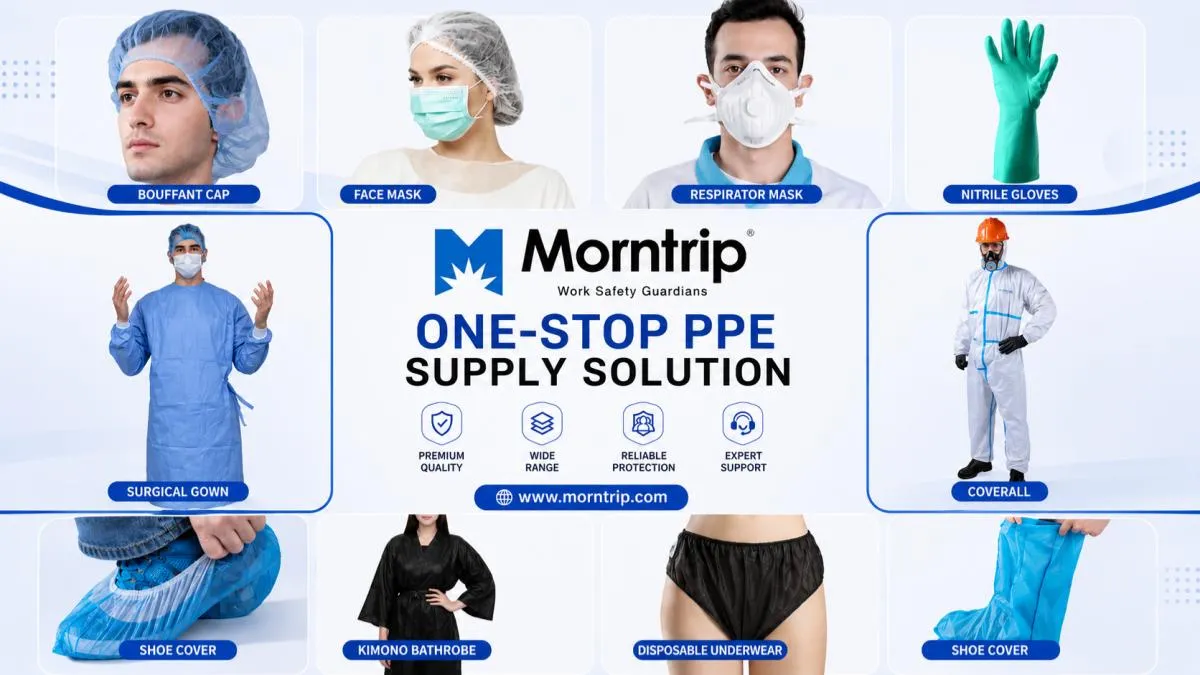
Factory-direct pricing cuts the cost of bulk coverall sourcing. Wuhan Morntrip Trading Co., Ltd. offers CE-certified disposable coveralls at $0.3–$2 per unit. Their 6,000 sqm production facility runs at full capacity for high-volume export orders.
What do they manufacture?
Morntrip’s catalog covers the key materials industrial buyers need:
-
PP and SMS coveralls — lightweight, cost-effective, and good for general industrial use
-
Microporous coveralls — 50–60 GSM, waterproof, breathable, with hood included
-
Type 5/6 chemical protective suits — CE and ISO certified, available in white, blue, and dark blue
Sizes run S to 3XL. You can also request OEM options for custom colors and specs.
Certifications That Clear Chilean Customs
CE, ISO 9001, and ISO 13485 certifications keep your shipment moving. No paperwork delays. Full documentation — COA, MSDS, packing list — ships with every order. This speeds up ISP and customs clearance at Valparaíso or San Antonio.
Shipping Reality
Sea freight from Shanghai or Ningbo hits Chilean ports in 25–35 days. MOQ runs 10,000–50,000 units. This supplier works best for procurement teams placing large volume orders — not one-off spot purchases.
Best For: Chilean buyers sourcing bulk disposable coveralls or Microporous PPE at competitive factory prices, with full CE/ISO compliance documents included.
8. Segpro — Peru-Based Specialist for Mining & Construction Coveralls
Peru’s mining industry is one of the toughest PPE environments on the planet. Segpro has been built around it since 2003.
Based in Lima, Segpro supplies disposable industrial coveralls built from the ground up for mining and construction conditions. These are not adapted from general industrial designs. That difference matters. Your workers are pulling 8–12-hour shifts in Atacama lithium pits or Antofagasta copper tunnels — they need gear made for that reality, not repurposed from something else.
What the Product Delivers?
The coveralls use 50–70 GSM spunbond polypropylene and SMS laminate. Tensile strength runs 20–30N. You also get EN 530 Level 2 abrasion resistance. Particulate filtration reaches 95%+ efficiency against fine mining dust under 5μm. That’s IP65-equivalent performance.
High-visibility orange and yellow options include 2″ reflective tape rated at 50 cd/lx/m² per ANSI/ISEA 107. In low-light mine shafts, that’s not a style choice — it’s a safety requirement.
Chilean Compliance and Logistics
Segpro’s coveralls meet Decreto Supremo N° 132, Chile’s core mining safety regulation. Category II/III particulate protection covers Articles 132.1–132.3 with no gaps.
Peru–Chile trade corridors keep lead times short: 2–4 weeks, with MOQ at 500–1,000 units. Spanish-language technical documentation comes standard. No translation delays in your procurement process.
Best For: Mining and construction operations in northern Chile that need Type 5/6 chemical protective suits with documented compliance, high-visibility options, and a regional supplier who already knows the local safety standards and terrain.
9. Imbat Safety — Colombia’s Growing PPE Supplier for Healthcare & Industrial Sectors
Colombia’s PPE manufacturing sector has been expanding its regional footprint. Imbat Safety is a clear example of that growth.
The company covers both healthcare and industrial supply. Imbat Safety sources and distributes disposable protective clothing across Colombia’s key sectors. Their catalog includes SMS and polypropylene coveralls, masks , aprons, and fluid-resistant garments. These products work for clinical environments and light industrial use.
What Makes Them Relevant to Chilean Buyers?
Colombian disposable PPE manufacturers price 30–50% below comparable European brands. That gap is real. For cost-conscious procurement teams, it makes a difference.
ProColombia’s export framework supports cross-border logistics into Chile. It cuts down friction on documentation and customs clearance — so your shipments move with less hassle.
The Honest Limitation
Imbat Safety does not publish ISO 13485 or CE certifications. These are required for Type 5/6 compliance. For general-purpose healthcare and light industrial use, they’re a solid choice. For mining or chemical exposure environments, look for a supplier with stronger documented credentials.
Best For: Healthcare facilities and light industrial operations that need budget-conscious no
n-woven coverall suppliers with regional delivery capability.
10. Argos Safety — Argentina’s Versatile Coverall Supplier for Agriculture & Food Processing
Córdoba, Argentina, sits at the center of South America’s farming belt. That geography shaped Argos Safety from day one.
Founded in 2005, Argos Safety builds disposable coveralls for two specific settings: pesticide application in open fields and contamination control inside food processing plants. These aren’t general-purpose designs stretched to fit farm work. They’re built for it from the ground up.
What They Supply?
-
PP and SMS coveralls (est. 50–80 gsm), made for agrochemical exposure
-
Chemical-resistant variants tested against organophosphates, pyrethroids, and fungicide drift
-
Food-grade designs with particulate and liquid splash barriers for processing lines
The Logistics Advantage
Mendoza Province sits one border crossing from Chile’s Central Valley. Via Paso Los Libertadores, the transit from Córdoba to Santiago runs 8–12 hours. That’s a fast regional link. Peak spray season runs from September through March. Plan for 4–8 week lead times during that window. Order early to stay on schedule.
The Honest Gap
No CE, ISO 13688, or ANSI documentation shows up in their listings. For general farming and food processing use, that’s manageable. For chemical-heavy or regulation-strict environments, ask for full certification documents before you place an order.
Best For: Chilean farming operations and food processing facilities that need field-tested disposable PPE with solid regional logistics and South American climate compatibility.
Key Comparison: Top Disposable Coverall Manufacturers for Chile at a Glance
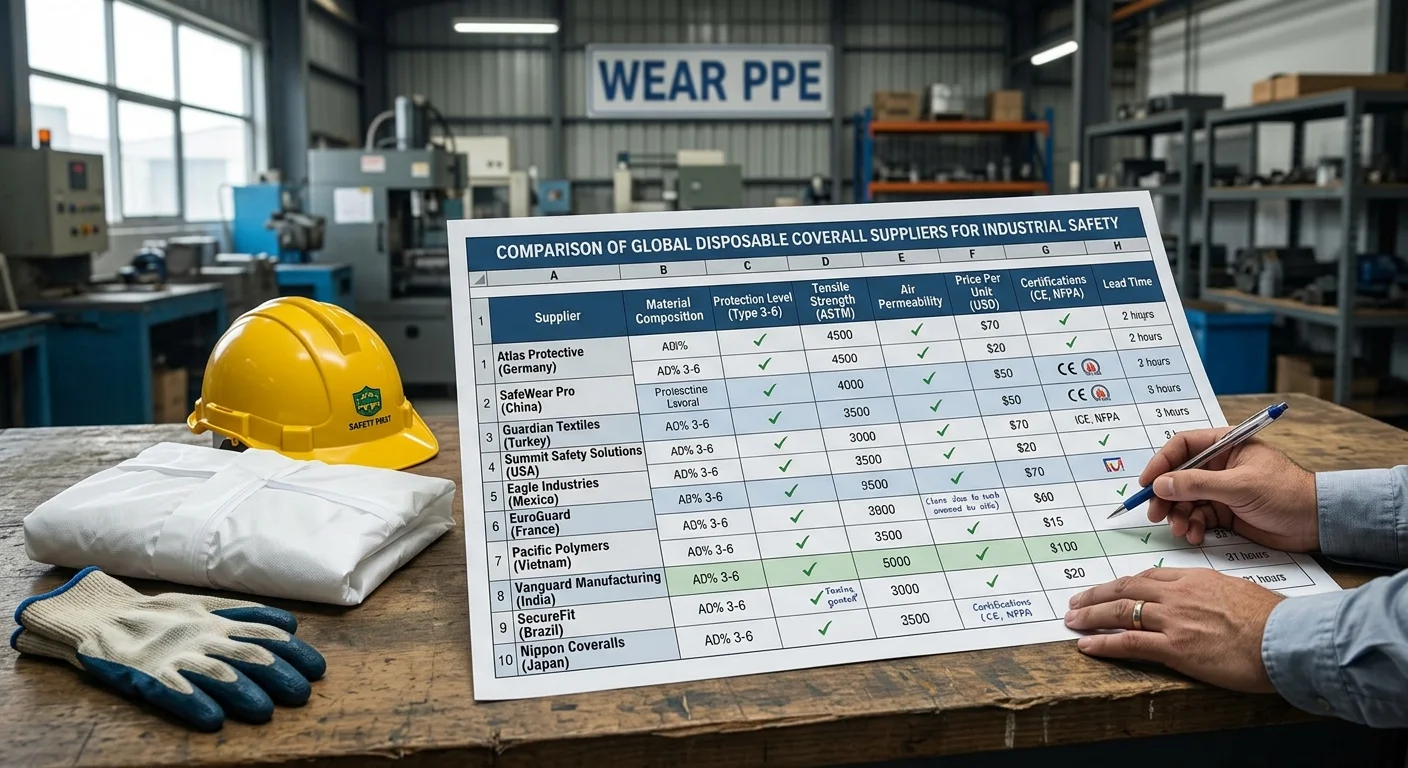
Ten disposable coverall manufacturers. Dozens of variables. One decision that affects every worker on your site.
The table below cuts through the noise. It maps the key dimensions — material, protection level, certification, MOQ, lead time, and price. Compare everything in one place instead of chasing quotes across six time zones.
|
Supplier |
Material |
Protection Level |
CE Certified |
MOQ |
Lead Time |
Price ($/unit) |
|---|---|---|---|---|---|---|
|
Steelpro Safety |
PP, chemical-resistant |
General industrial |
Benchmark yes |
100 pcs |
1–2 weeks |
$4–7 |
|
DuPont |
Tyvek® HDPE, Tychem® |
Type 3–6 |
Yes |
500+ pcs |
2–4 weeks |
$8–22 |
|
Delta Plus |
PP-SMMS, 60 g/m² |
Type 5/6 |
Yes |
500–1,000 pcs |
2–4 weeks |
$3–6 |
|
Kleenguard™ (KC) |
SMS, microporous, AQUASHIELD® |
AAMI L1–L4 |
Yes |
100 pcs |
2–6 weeks |
$2.50–5.50 |
|
Libus Safety |
PP/SMS nonwoven |
Type 6 industrial |
Yes |
200–1,000 pcs |
2–4 weeks |
$2–5 |
|
Bracol Safety |
Chemical-resistant composites |
Type 5/6 |
CE + ANSI |
500–2,000 pcs |
30–60 days |
$2–8 |
|
Morntrip |
PP, SMS, microporous |
Type 5/6 |
Yes |
10,000–50,000 pcs |
25–35 days |
$0.30–2 |
|
Segpro |
PP spunbond, SMS laminate |
Type 5/6 |
Yes |
500–1,000 pcs |
2–4 weeks |
$2–5 |
|
Imbat Safety |
SMS, PP nonwoven |
Type 6 light industrial |
Limited |
500–2,000 pcs |
3–5 weeks |
$2.50–5 |
|
Argos Safety |
PP/SMS, chemical-resistant |
General/agricultural |
Limited |
Regional std |
4–8 weeks (peak) |
$3–6 |
Three Trade-Offs Every Buyer Faces
Speed vs. Price. Local suppliers like Steelpro deliver in 1–2 weeks. Chinese exporters like Morntrip ship at a much lower cost. The catch — sea freight from Shanghai to Valparaíso takes 25–35 days. You can’t have both. Pick based on whether you’re building safety stock or filling an urgent gap.
Certification depth vs. budget. DuPont and Delta Plus carry the best-documented Type 5/6 certifications. Imbat Safety and Argos Safety have limited CE documentation available. For mining and chemical environments, full certification records are a hard requirement. For general agricultural or light industrial use, that gap matters less.
Volume flexibility vs. unit cost. Morntrip’s price drops to $0.30/unit — but that requires 10,000+ units. Kleenguard™ starts at just 100 units. Regional suppliers like Segpro and Libus fall in between: 500–1,000 unit MOQs with unit costs in the $2–5 range.
The right supplier isn’t the cheapest or the fastest. It’s the one whose limits fit your actual situation on the ground.
Frequently Asked Questions About Disposable Coverall Manufacturers in Chile
Good procurement starts with clear answers. Below are the questions Chilean buyers ask most — each one answered with real numbers, not general advice.
What is the minimum order quantity for disposable coveralls?
It depends on the product type. Standard PP and SMS coveralls start at 1,000–5,000 pieces per color and size. Type 5/6 certified suits drop to 500 pieces minimum. Custom hooded styles or printed designs need 10,000 pieces or more. Regional suppliers like Segpro and Libus work in the 500–1,000 unit range. That’s a solid middle ground for mid-size operations.
How long does shipping from China to Chile take?
Sea freight from Shanghai to Valparaíso runs 25–35 days. Add 7–15 days for factory production. Also, add 3–7 days for customs clearance at Valparaíso or San Antonio. Total door-to-door: 35–50 days. In 2025, a 10,000-piece SMS coverall shipment averaged 42 days. Air freight cuts transit to 5–10 days but adds $2–4 per unit to your cost.
What import duties apply to coveralls shipped from China?
Chile charges a 6% ad valorem duty on disposable protective coveralls (HS 6210.10), plus 19% VAT. Both are calculated on the CIF value. FTA preferential rates can bring the duty down to 0–4% for certified PP and SMS fabrics. You’ll need a valid Certificate of Origin to get that rate.
Which protection level does my industry require?
Most buyers get this wrong. Here’s a straight breakdown:
-
Mining operations need EN 14605 Type 3/4 — microporous 70gsm or heavier, with taped seams. Type 6 does not meet the standard for copper or lithium mine environments.
-
Healthcare and hospitals need EN 14126 Type 4B for bloodborne pathogen protection. Hood and boot covers are mandatory under Chilean MINSAL guidelines.
-
Food processing and agriculture can use PP 30–40gsm Type 6 for low-risk dust environments. Any liquid exposure means upgrading to PE-coated microporous material.
What certifications does Chile customs require?
EN 14605 or EN 13034 compliance is mandatory. Most industrial imports also need ISO 9001 and ISO 13485 documentation. Test reports from accredited labs — SATRA or Intertek — are required to clear customs without delays. CE Type 5/6-B marking is optional, but it speeds up customs processing by a noticeable margin.
What do coveralls cost in Chile?
|
Type |
Material |
FOB Price (5K+ units) |
Chile Landed Cost |
|---|---|---|---|
|
Type 6 |
PP 50gsm |
$0.90–1.50 |
$1.40–2.20 |
|
Type 5/6 |
SMS 45gsm |
$1.40–2.20 |
$2.10–3.20 |
|
Type 3B |
Microporous 60gsm |
$1.80–2.80 |
$2.70–4.10 |
Local Chilean coverall distributors add 20–30% on top of these prices. At 20,000 units, bulk discounts reach 15% off the base rate.
Conclusion
Finding the right disposable coverall manufacturer has little to do with picking the most famous brand. It’s about finding the right fit for your industry, your order volume, and your budget.
The 10 suppliers listed here cover the full range of what the Chilean market offers. You get local responsiveness from Steelpro, global certification authority from DuPont, and cost-efficient bulk manufacturing from suppliers like Morntrip. Each option serves a specific purpose. Match your requirements to the right source — that’s the whole job.
Here’s your practical next step: narrow your list to three disposable coverall manufacturers. Request samples. Compare lead times and certifications side by side. Don’t focus on price alone. A failed coverall in a mining shaft or a chemical plant costs far more than whatever margin you saved.
The best disposable coverall manufacturers don’t just protect workers. They protect decisions.
Start with the right disposable coverall manufacturer. Everything after that gets easier.





