Medline pulls in over $20 billion in annual revenue — without a single share trading on a public exchange. Yet it still faces hard pressure from some of the biggest names in healthcare distribution.
You might be a procurement decision-maker. You might be an investor reading the medical supply chain. Or you just want to know who controls the flow of gloves , catheters, and surgical kits into America’s hospitals. Either way, the competitive picture around Medline runs deeper than most industry overviews show.
Here’s where each rival stands:
-
Cardinal Health moves to a higher total product volume
-
McKesson has stronger pharmaceutical integration built into its model
-
Owens & Minor has built a surgical specialization that cuts straight into Medline’s core territory
So who is the real threat? And where does Medline’s private-label dominance give it an edge that no distributor rival can match? That’s what we’re breaking down here.
Quick Answer: Who Is Medline’s Biggest Competitor?
McKesson is generally considered Medline’s biggest competitor because both companies compete directly in medical-surgical distribution, hospital procurement, and healthcare supply chain services.
Cardinal Health ranks as the second-closest rival, while Owens & Minor and Henry Schein compete in more specialized segments.
How Do We Compare Medline’s Biggest Competitors?
Most people get this wrong from the start.
They see ” medical supply distributor ” and benchmark Medline against other distributors. That’s a flawed comparison — because Medline isn’t just a distributor. It’s a hybrid manufacturer-distributor. That distinction changes everything about how you define a real competitor.
To qualify as a true Medline competitor, a company must operate on two separate axes at once:
-
Distribution depth — hospital systems, nursing facilities, home care, and the full range of healthcare supply channels, at scale
-
Product ownership — manufacturing, private-label control, or vertical integration across core categories like gowns , wound care, wheelchairs, and exam tables
A company that wins on only one axis is a partial competitor, not a full peer. Pure distributors don’t control product economics. Pure manufacturers don’t have built-in replenishment relationships. And marketplace platforms? They own neither inventory nor the supply chain.
That’s what makes Medline’s position so defensible — and so hard to replicate.
The practical screening filter looks like this:
|
Criteria |
Requirement |
|---|---|
|
SKU breadth |
Must compete across categories, not a single product line |
|
Channel penetration |
Healthcare-specific, not general retail or commerce |
|
Product economics |
Manufacturing depth or private-label capability |
|
Scale |
Multi-billion-dollar revenue to compare at the same level |
Medline’s 2021 majority-stake transaction — valued at ~$34 billion including debt — sets the scale benchmark. Any company claiming competitor status needs to operate somewhere close to that level.
McKesson Corporation — Medline’s Biggest Direct Competitor
$231 billion in annual revenue. That’s what McKesson puts on the board every year — 11 times Medline’s total revenue.
Most competitive analyses miss this: raw revenue doesn’t tell the whole story. A massive chunk of McKesson’s top line comes from pharmaceutical distribution, not medical-surgical supplies. Strip that out, and you’re looking at a very different picture.
The real fight happens in one specific arena — med-surg supplies to hospitals, IDNs, ambulatory surgery centers, and long-term care facilities. That’s where these two companies collide head-on, every single day.
Where McKesson Competes with Medline?
McKesson’s medical-surgical division carries over 300,000 SKUs — exam gloves, syringes, PPE , wound care, OR supplies, IV sets, incontinence products, and durable medical equipment. The product overlap with Medline’s core catalog is substantial.
Both companies chase the same customers:
-
Large hospital systems and Integrated Delivery Networks (IDNs)
-
Ambulatory surgery centers and physician offices
-
Government facilities, VA, and DoD buyers
-
Long-term care and home care providers
McKesson brings real firepower to those conversations. Its nationwide distribution network delivers next-day service to 95% of customers with 99.8% order accuracy. For any IDN evaluating supply chain partners, those numbers carry weight.
McKesson also plays a card Medline can’t match: combined pharma and med-surg delivery. Health systems manage hundreds of delivery touchpoints. A single-truck solution that bundles pharmaceuticals with surgical supplies cuts that complexity down. It’s a practical, cost-saving offer.
Stack on McKesson’s technology services — ordering platforms, inventory management, supply chain analytics — and you’ve got a vendor that shows up to an RFP with both products and infrastructure.
The Margin Gap That Changes Everything
Here’s where Medline’s structural advantage is impossible to ignore.
Medline runs an estimated EBITDA margin of ~13%. McKesson’s distribution model runs at ~2% EBITDA margin.
That gap isn’t a rounding error. It’s a core difference in how each business is built.
McKesson’s model runs on scale and logistics efficiency — move enormous volume, cut every basis point of cost from the distribution chain, and survive on razor-thin spreads. Medline’s model runs on product ownership. Manufacture your own gloves, gowns, wound dressings, and catheters, and you capture the manufacturing margin that a pure distributor gives away for good.
The bottom line: Medline has more room to negotiate. Industry analysis puts Medline’s break-even economics at a ~30% Medline private-label product mix within an account. Push that ratio higher, and Medline’s margin structure opens up space for aggressive pricing. A 2%-margin distributor cannot go there.
How to Use This Rivalry in a Negotiation?
You’re a procurement leader sourcing med-surg supplies. This dynamic gives you real leverage at the table.
McKesson is the stronger play when you:
– Bundle pharmacy and med-surg into a single contract to maximize total landed-cost savings
– Lock in service-level guarantees tied to the 95% next-day fill rate and 99.8% order accuracy benchmarks
– Push for technology platform access — inventory systems and analytics — at minimal extra cost. McKesson needs to grow its higher-margin service lines, which gives you room to negotiate
Medline is the stronger play when you:
– Commit to a ≥ 30% Medline private-label product mix to unlock deeper pricing and better margin economics
– Use Medline’s 13% EBITDA margin as direct negotiation leverage in high-volume categories. McKesson’s thin margins limit how far it can go on price
– Point to Medline’s $370.1M government contract base as a pricing benchmark for what’s achievable on med-surg SKUs at scale
McKesson is a formidable competitor — no question. But it’s fighting Medline with one hand tied behind its back. Shift the conversation from pharmaceutical volume to who owns the product, who controls the margin, and who wins government med-surg bids — and Medline holds a structural edge that McKesson’s total revenue figure doesn’t show.
Cardinal Health — The Most Balanced Rival in Medical Supply Distribution
Cardinal Health doesn’t win by dominating one thing. It wins by being competent at everything. That makes it a different kind of threat than McKesson — one that’s harder to out-maneuver.
$223 billion in total annual revenue (FY2025). That’s the scale Cardinal brings to the table. Its Global Medical Products & Distribution (GMPD) segment pulls in ~$150 billion in medical product revenue alone. That number gets attention in every hospital RFP room in America. The medical division serves over 100,000 healthcare touchpoints and delivers products to more than 75% of U.S. hospitals. That’s not just a distribution network. That’s infrastructure.
Where Cardinal and Medline Are Fighting for the Same Accounts?
The product overlap between Cardinal’s GMPD segment and Medline’s core catalog is large — and it’s no accident.
Cardinal competes head-to-head in:
-
Surgical supplies — surgical gloves , gowns, drapes, masks , procedure packs, and custom OR kits
-
Medical consumables — syringes, IV sets, catheters, wound dressings, infection control products
-
Lab consumables — specimen containers, centrifuge tubes, clinical lab basics
These are Medline’s core categories. Any large IDN or hospital system picking between the two vendors is really choosing between two companies that can fill the same purchase order. The difference isn’t the products — it’s the economics behind them.
The Private Label Divide
This is where the real strategic split shows up.
Medline builds its entire model around private-label ownership. Industry estimates put Medline’s private-label revenue mix at 70–80%+ of total sales. That’s not just a product strategy. It’s a margin strategy.
Cardinal runs a dual-track model instead. It sells its own branded consumables, and it also distributes third-party products from manufacturers like 3M and BD. Cardinal’s pitch to buyers: “brand-neutral supply chain efficiency.” Medline’s pitch: “lower unit cost through ownership.”
Here’s what that means for procurement teams:
|
Factor |
Medline |
Cardinal Health |
|---|---|---|
|
Private-label depth |
70–80%+ of revenue |
Selective, category-specific |
|
Pricing leverage |
Stronger on standard consumables |
Stronger on mixed-brand bundles |
|
Brand strategy |
Ownership-first |
Channel-platform-first |
What Procurement Teams Use to Choose?
Four variables drive most buying decisions between Cardinal and Medline:
-
Total cost of ownership — Medline’s private-label mix can cut standard consumable costs by 5–15% versus branded alternatives. Cardinal’s bundled pharma-and-supplies model can lower internal logistics and emergency procurement costs, which offset higher per-unit pricing.
-
SKU requirements — Large academic medical centers lean toward Cardinal for acute-care breadth. Long-term care chains lean toward Medline for post-acute depth.
-
Supply chain resilience — Cardinal’s pharmaceutical distribution relationships give it a risk-diversification edge during shortage events. Medline’s concentrated private-label production creates a bit more single-source exposure in tight categories.
-
Contract structure — Cardinal supports unified pharma-plus-supplies billing. Medline focuses on clinical co-creation and private-label cost modeling.
Cardinal Health is the most balanced competitor Medline faces. Not the largest by medical supply revenue. Not the most specialized. But it’s the one company that can walk into any account and put supply chain integration, product coverage, and bundled economics on the table — all three at once. No other rival does that as convincingly.
Owens & Minor — The Specialized Med-Surg Distribution Challenger
Narrow focus beats broad coverage. That’s the core bet Owens & Minor has built its entire business on.
Cardinal Health and McKesson spread revenue across pharmaceuticals, specialty drugs, and diversified healthcare services. Owens & Minor takes a different path — over 95% of its revenue goes into one lane: medical-surgical supply distribution. That concentration isn’t a weakness. It’s a competitive weapon pointed straight at Medline’s core territory.
In practice, that means 220,000+ SKUs sourced from 1,600+ suppliers, delivered to 4,500 healthcare customers through a national network of 40+ distribution centers. Gloves, surgical gowns , wound dressings, IV sets, urological products, sterile procedure packs — the product list reads like a page pulled from Medline’s own catalog.
The Acute Care and OR Overlap Is No Accident
Owens & Minor built its distribution network around the exact accounts Medline fights hardest to keep: acute care hospitals, Integrated Healthcare Networks (IHNs), and Group Purchasing Organizations (GPOs). These aren’t side accounts. They’re the highest-volume, highest-frequency buyers in the entire medical supply chain.
Its role as the U.S. Department of Defense’s prime vendor for medical-surgical supplies adds another layer. Military hospital logistics demand extreme precision — consistent fill rates, zero-tolerance for stockouts, and verified product quality at scale. Owens & Minor has proven it can deliver on all three. That government track record carries real weight. Large IDNs take notice when evaluating supply chain partners for acute care contracts.
From Hospital Walls to the Front Door
The more recent strategic move is what makes Owens & Minor harder to dismiss.
Its stated positioning — “hospital to home” — signals a clear push beyond the operating room and into post-acute and home care. Through alignments with businesses like Apria (home respiratory and durable medical equipment) and Halyard (surgical and infection prevention products), Owens & Minor is building a manufacturer-plus-distributor model. That structure starts to mirror the integrated approach Medline pioneered.
The implications for Medline are concrete:
-
In acute care , Owens & Minor competes on surgical OR supply chain outsourcing — warehousing, inventory management, and unit-of-use delivery straight to the OR suite. Hospitals hand over the operational complexity. Owens & Minor absorbs it.
-
In post-acute care , Home respiratory supplies, chronic care consumables, and durable medical equipment extend the competitive overlap into long-term care and home care. That’s the same ground where Medline has built deep contract relationships.
-
On PPE : The Expanded Access Standardization program consolidates fragmented hospital purchasing from dozens of manufacturers into a single Owens & Minor channel. It cuts SKU complexity, reduces direct-buy relationships, and lowers total logistics costs. That’s a direct challenge to Medline’s private-label pitch.
The Structural Limit That Keeps This a Challenger Story
Owens & Minor’s revenue sits at $10 billion per year — half of Medline’s $20 billion. That gap matters.
Beyond revenue size, Owens & Minor is still a distribution platform at its core, not a manufacturer at Medline’s scale. Its competitive strength lies in supply chain efficiency, operational outsourcing, and GPO channel relationships — not product ownership economics. Push price negotiations deep enough, and a company that makes its own gloves and surgical gowns holds a structural ceiling advantage. No distributor can replicate that, regardless of how tight its logistics operation runs.
That said, Owens & Minor offers procurement teams a distinct value pitch: operational KPIs and cost-reduction modeling over product-margin ownership. Your hospital system is prioritizing supply chain simplification and OR logistics outsourcing over private-label cost savings? Owens & Minor competes hard on that ground.
Is your priority locking in long-term unit cost reductions through private-label mix economics? Medline’s model wins that conversation.
Henry Schein — The Office-Based Care Market Overlap
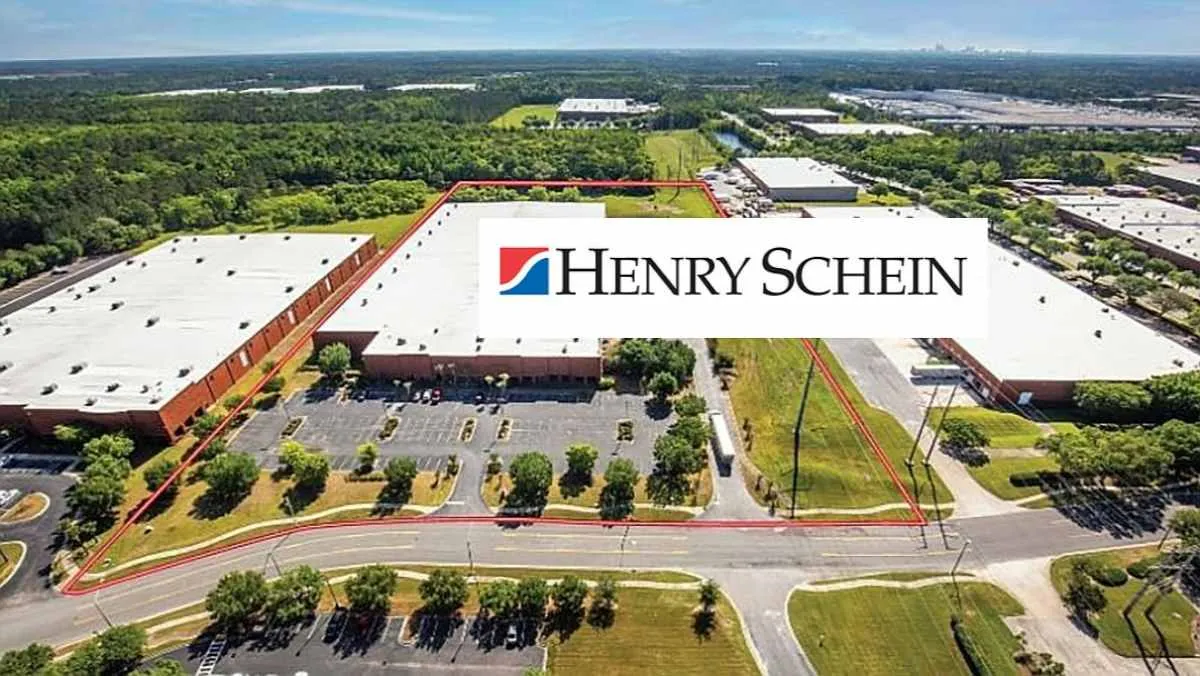
Henry Schein steers clear of hospitals. It built a $12.7 billion business by focusing on smaller locations. You will find them dominating dental offices, physician practices, and ambulatory clinics. These places need medical tools. Yet, they lack dedicated procurement teams for the job.
Both companies sell similar items, such as exam gloves and syringes. Their business models take very different paths. Henry Schein brings a one-stop shop setup to independent offices. You get clinical gear, practice management software, and IT support. They even sell office furniture. This exact bundle cures a massive operational headache for mid-size group practices. You deal with one vendor and pay one invoice.
Medline fights for these exact same accounts. They offer standard consumable costs, GPO pricing extensions, and purchasing reliability. The market shifted a bit. Henry Schein bought Cardinal Health’s office-based medical sales team. This move expanded their product range. Plus, it closed the catalog gap with Medline.
The Bottom Line: Henry Schein acts as a partial competitor. It lacks Medline ‘s deep manufacturing power. Also, it ignores acute-care hospitals. A specialty clinic might want integrated digital workflows and easy operations. Here, Henry Schein takes the win. Other clinics demand bottom-line unit costs and volume delivery reliability. Medline holds the clear edge for those needs.
Medline vs. Competitors: Side-by-Side Comparison Table

Five companies. One table. Here’s where each rival stands against Medline — measured by the metrics that drive real procurement decisions.
|
Factor |
Medline |
Cardinal Health |
McKesson Med-Surg |
Owens & Minor |
Henry Schein |
|---|---|---|---|---|---|
|
Annual Revenue (Medical) |
~$21–22B |
~$17–18B (medical segment) |
~$10–12B (med-surg est.) |
$10.1B |
$12.3B |
|
Ownership |
Private (Blackstone-led) |
Public (NYSE: CAH) |
Public (NYSE: MCK) |
Public (NYSE: OMI) |
Public (NASDAQ: HSIC) |
|
Private-Label Depth |
★★★★★ (70–80%+ of revenue) |
★★★★☆ |
★★★☆☆ |
★★★☆☆ (Halyard brand) |
★★☆☆☆ |
|
Core Customer |
IDNs, LTC, hospitals |
Hospitals, ASCs |
Clinics, physician offices |
Acute hospitals, OR suites |
Dental offices, clinics |
|
GPO Presence (Acute Care) |
High (Vizient + Premier) |
High (all major GPOs) |
Medium |
Medium–High |
Low |
|
Geographic Focus |
North America |
North America |
North America |
North America |
30+ countries |
|
Key Differentiator |
Manufacturer-distributor hybrid |
Pharma + med-surg bundle |
Community & clinic depth |
OR supply chain outsourcing |
Practice management platform |
The biggest takeaway from this table : Medline is the one company here running at full scale on both manufacturing and distribution at the same time . Every competitor leads on one side. Medline holds both, and that structural edge gets stronger at every contract renewal.
Why Medline Stays Competitive Against Industry Giants?
The numbers tell a story most analysts miss.
From a $25M net loss in 2022 to $1.2B in net profit by 2024 — that’s a $1.175 billion swing in two years. Revenue also climbed from $21.45B to $25.5B over the same period. A 20% top-line increase. Few companies in any industry pull off a profitability turnaround that clean.
That’s not luck. That’s a structural advantage building on itself.
The Private-Label Engine Is the Moat
Here’s the number that changes everything: 48.7% of Medline’s revenue comes from its own branded products — but those products generate 81.8% of total segment EBITDA .
Read that again. Less than half the revenue is doing more than four-fifths of the profit work.
Cardinal Health and McKesson move massive volumes. But both run distribution platforms — thin-margin logistics operations that depend on third-party manufacturers for the products they sell. Medline owns its products. About one-third of its private-label items are made in-house across 20+ North American production facilities. That’s a completely different cost structure. Competitors can’t close that gap by adding trucks or software.
Scale That Gets Harder to Match Every Year
Medline has posted 50 consecutive years of revenue growth — an 18% CAGR over that period. During the 2008–2009 financial crisis, sales still grew 17%. During the pandemic years of 2020–2022, annual growth held at 11%.
Healthcare supply chains don’t shrink during recessions. Medline built its entire operating model around that fact before most competitors even noticed it.
The infrastructure behind that consistency is just as hard to copy:
-
50+ distribution centers across North America, with single facilities exceeding 1 million square feet
-
$2B+ invested in the Healthcare Resilience Initiative since 2018, targeting manufacturing capacity and supply chain infrastructure
-
335,000–550,000 SKUs covering medical-surgical, consumables, equipment, and software solutions — true one-stop procurement
The Lock-In Mechanism Competitors Can’t Copy
Medline’s 98% customer retention rate isn’t a marketing stat. It’s the result of a specific contract structure.
The Prime Vendor model works like this: hospitals sign multi-year, near-exclusive medical-surgical supply agreements. Over time, purchasing shifts toward Medline’s private-label products — the high-margin segment. The longer the relationship runs, the more Medline becomes part of the hospital’s clinical and operational workflow. Clinical education programs, supply chain consulting, VMI replenishment — these aren’t extras. They’re the switching costs.
McKesson and Cardinal can compete on price for a single product category. Replicating a model where manufacturing economics, distribution infrastructure, and clinical integration run as one system — that’s a different challenge entirely.
Medline is also planning an IPO targeting $5B in proceeds at a ~$50B implied valuation. That capital lets Medline extend its lead further. Its publicly-traded competitors will have to respond — quarter by quarter.
The giants have scale. Medline has leverage — and in healthcare supply chain management, those two things are not the same.
Conclusion
Medical supply distribution isn’t a one-horse race. Knowing that is what separates smart procurement decisions from bad ones.
Medline has built something hard to copy: a private-label powerhouse with strong hospital relationships and a tightly connected supply chain. McKesson brings massive scale. Cardinal Health balances operations well. Owens & Minor zeroes in on surgical needs. No single supplier wins every situation.
Here’s the bottom line: the “biggest competitor” depends on your specific use case.
-
Buying for a large hospital network? McKesson and Cardinal Health are worth a close look.
-
Focused on med-surg? Owens & Minor belongs in that conversation.
Don’t choose your healthcare supply chain partner based on brand name alone. Start with this competitive breakdown. Then test each supplier against your facility’s real volume, contract flexibility, and service needs.
The right distributor isn’t the biggest one. It’s the one built for your operation.