
Uline sells millions of coveralls every year — but do you know who makes them? For procurement managers and safety buyers placing bulk orders, that’s not a small question. The manufacturer behind a product shapes everything: material consistency, compliance certifications, and what happens when something goes wrong on the job site. Yet Uline keeps its sourcing opaque. That leaves buyers making high-stakes decisions with thin information.
This guide pulls back the curtain on Uline coveralls . You’ll find out who manufactures them, how they compare to name-brand options like DuPont Tyvek, and what to verify before committing to a bulk order.
Who Manufactures Uline Coveralls?
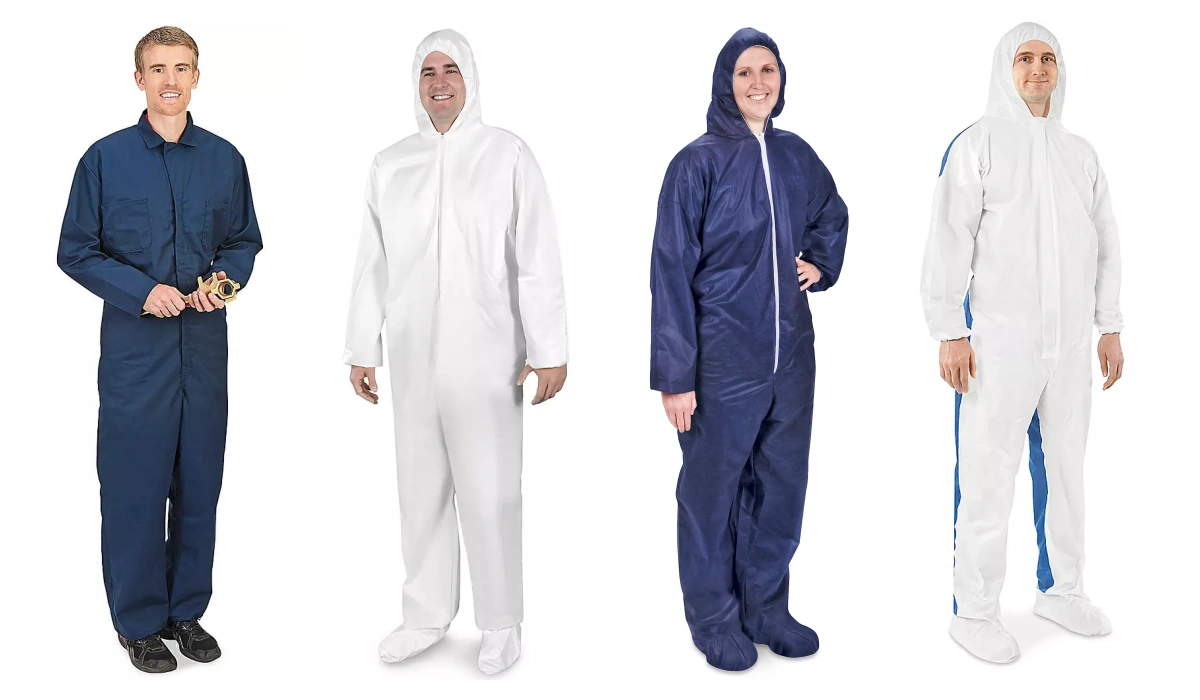
The short answer: Uline doesn’t tell you.
Uline runs as a distributor and private-label brand — not a garment manufacturer. Its catalog covers 45,000+ products across dozens of categories. Coveralls are just one small piece of that. Uline buys from a wide network of contract manufacturers. It does not run its own production facilities.
There are two distinct categories of coveralls on Uline’s shelves. The manufacturer question has a very different answer depending on which one you’re buying:
-
DuPont-branded lines (Tyvek 400, Tychem 2000 QC): DuPont is the confirmed manufacturer. Uline distributes them.
-
Uline-branded lines (Economy, Deluxe, Industrial, CoolFlow): No OEM factory is named — anywhere. Not on the product page, not in the catalog, not in the SKU documentation.
That second category is where things get murky. Industry patterns point to Uline’s Economy line sourcing from overseas contract factories. These factories produce standard Polypropylene nonwoven garments. Typical ex-factory costs run $1–$3 per unit at volume. Higher-spec lines like Deluxe and CoolFlow appear to involve more specialized SMS or breathable barrier material suppliers.
Uline’s own listing states that “a majority of ULINE products are Made in USA, but not all of them.” So the coverall line is split between domestic and overseas manufacturers. There’s no easy way to tell which is which from the catalog alone.
How to Find Out Who Made Your Coverall?
Need the factory name for compliance documentation or a supplier audit? Here’s what works:
-
Use Uline’s “Made in USA” filter — search by specific SKU. It won’t name the factory, but it narrows down the country of origin.
-
Call Uline at (800) 295-5571 — request the country of origin and OEM disclosure for your specific SKU.
-
Check the physical garment label — look for “Made in [Country]” tags and any RN or CA registration numbers. You can trace those numbers back to the legal manufacturer through apparel registries.
That last step tends to be the most revealing. RN numbers can surface the actual garment factory or importer of record — details you’ll never find on Uline’s website.
What You Can (and Can’t) Learn Before Buying
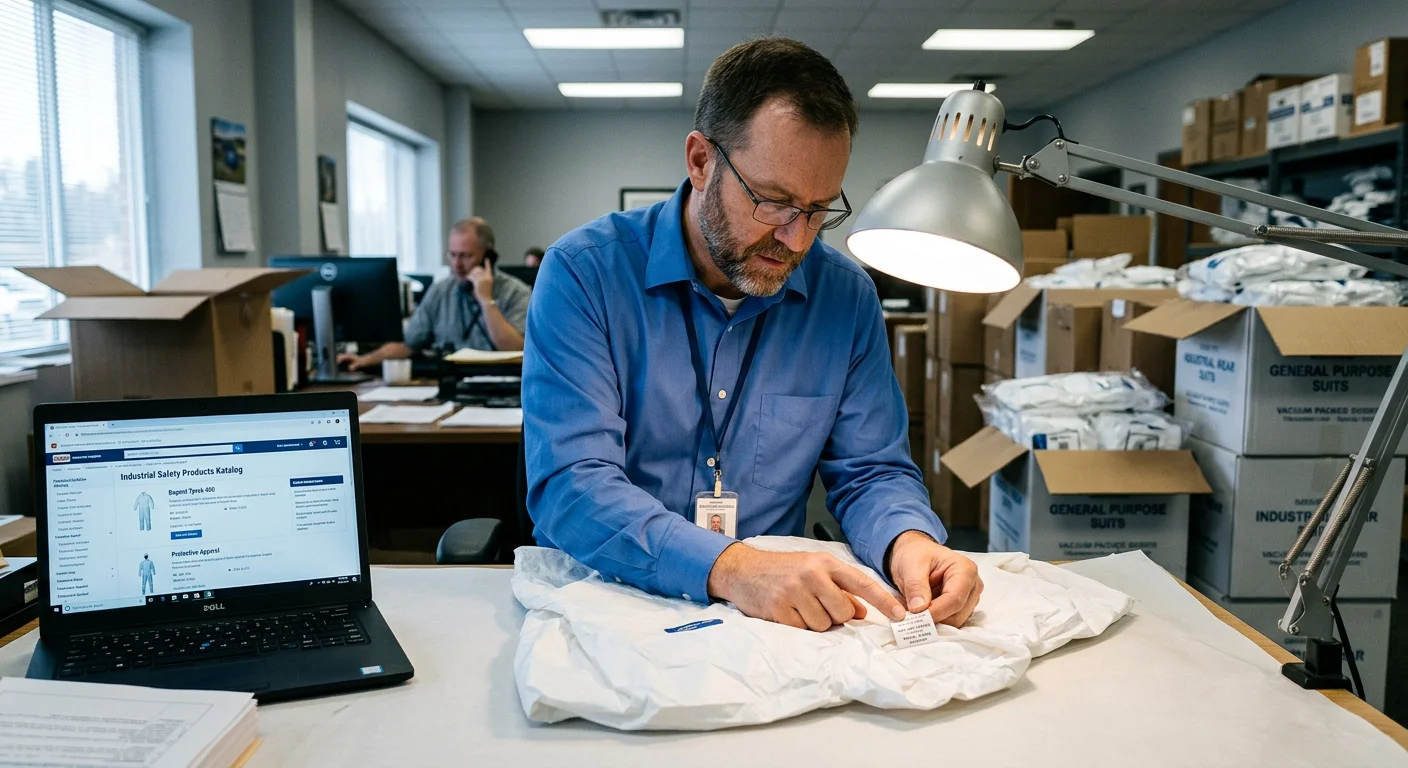
Uline’s product pages give you some of what you need. But they leave critical gaps right where bulk buyers can’t afford them.
Here’s how to split what’s knowable from what isn’t.
What you can verify before placing an order:
-
Material specs — Uline lists fabric type (polypropylene, SMS, Tyvek), weight, and basic barrier properties. That’s enough to match material to hazard level.
-
Sizing range — Most Uline coverall lines run S through 5XL. Check availability in your specific SKUs before committing to volume.
-
Certifications on DuPont-branded lines — Tyvek 400 and Tychem 2000 QC carry documented OSHA and EN 13982 compliance. Spec sheets are downloadable. You can verify these directly.
-
Price tiers and MOQ — Uline publishes per-unit pricing at volume breaks. Useful for budget modeling, though final quotes may shift.
What you can’t confirm before buying:
-
Factory identity on Uline-branded lines — No OEM is named. No audit trail is published. You’re trusting Uline’s quality control — not a named manufacturer’s.
-
Lot-to-lot consistency — Contract manufacturing relationships change. The coverall you validated last quarter may come from a different factory next quarter.
-
True compliance documentation — For Uline’s own Economy or Deluxe lines, third-party test reports aren’t available to the public. Your site may require documented PPE certification. That’s a real procurement risk.
The practical move: Build a pre-order checklist. Confirm country of origin via the SKU filter or a direct call. Request any available test reports in writing. For regulated environments — chemical exposure, asbestos abatement, cleanroom work — stick to certified branded lines. The manufacturer should be named, and the documentation should be solid.
The information gap isn’t a dealbreaker for every buyer. For general maintenance or low-hazard applications, Uline’s specs may be enough. But for safety-critical procurement, “trust us” isn’t a compliance strategy.
Which Uline Coverall Is Right for Your Job?
The wrong coverall doesn’t just waste money — it creates a liability. Picking the right Uline coverall comes down to four variables: hazard type, required coverage, compliance standards, and how long the garment needs to last.
Here’s how to work through each one.
Start with the Hazard, Not the Price Tag
Different jobs need different protection levels. Uline’s coverall lineup reflects this, even if the catalog doesn’t always make the differences clear.
-
Hazardous dry dust, aerosols, or light liquid splash → DuPont Tyvek® Coverall . This is the one line in Uline’s catalog with a named, tested barrier material. Tyvek has documented protection against hazardous particles. That makes it the go-to choice for pharmaceutical work, lab environments, and industrial processes with airborne contaminants.
-
Heavy mechanical work — abrasion, snagging, rough surfaces → Uline Industrial Deluxe Coverall. This coverall is built to resist tearing and abrasion. That matters in warehouses, construction sites, and plant environments where a damaged garment is a real operational risk.
-
Dirty, damp environments with repeated use → Economy Deluxe Coverall with Hood (Navy). The dark blue fabric hides dirt and stains. That’s useful for garments worn across multiple shifts. It’s also non-allergenic and mildew-resistant — a real plus in humid or mixed-workforce conditions.
-
Low-hazard needs — general maintenance, facility visitors, light cleaning → Uline Coverall (standard). Sized for easy movement, with a zip front and open wrists and ankles. It meets ANSI/ISEA 101-1996, so it holds up as a solid choice where basic compliance documentation is required.
Hood and Booties Matter More Than Most Buyers Realize
Two features decide whether a coverall gives you true full-body contamination control:
|
Feature |
Standard Uline Coverall |
Tyvek® Coverall |
Industrial Deluxe |
Economy Deluxe – Navy |
|---|---|---|---|---|
|
Hood |
✗ (fold-down collar) |
✗ (fold-down collar) |
✓ Elastic hood |
✓ Elastic hood |
|
Booties |
✗ Open ankles |
✗ Open ankles |
✓ Integrated |
✓ Integrated |
|
Elastic wrists |
✗ |
✗ |
✓ |
✓ |
Your job involves blowing dust, paint overspray, fiber handling, or overhead contamination risk? You need a model with an integrated hood and booties. That means Industrial Deluxe or Economy Deluxe — not the standard or Tyvek® options. Workers can add separate boot covers and hard hats, sure. But a hooded model with integrated booties is faster and cleaner for most controlled environments.
The Fast-Selection Framework
Work through these decisions in order:
-
Identify your hazard class. Hazardous dust or aerosols → Tyvek®. Abrasion and tear risk → Industrial Deluxe. Dirty and damp with repeated wear → Economy Deluxe Navy. General-purpose, low-hazard → standard Uline Coverall.
-
Decide on coverage. Head and feet need protection → go hooded with booties. Workers wear separate boots and head PPE → open wrist/ankle models work fine.
-
Confirm compliance requirements. ANSI/ISEA 101 is specified in your facility SOP → the standard Uline Coverall meets that standard directly. Type 5/6 particulate or spray classifications are required → check against Tyvek® spec sheets or equivalent datasheets before ordering.
-
Account for fit under conditions. Cold rooms, outdoor work, or jobs with base layers all need extra room. Uline’s “generously sized” description isn’t marketing fluff — it’s a real functional feature. It stops restricted movement and early tearing when workers layer up.
-
Set your reuse expectations. Single-use in high-contamination environments → Tyvek®, disposed after exposure per facility SOP. Multi-shift dirty environments → Economy Deluxe Navy. The stain-hiding fabric and mildew resistance extend the usable life of each garment. Frequent contact with sharp edges or heavy equipment → Industrial Deluxe, where the durability justifies the spec.
The right coverall lines up protection level, coverage features, compliance documentation, and material traits with the real demands of your job. Not just the lowest per-unit cost at checkout.
Uline vs Tyvek vs KleenGuard: What’s the Real Difference?
Three names show up on industrial PPE orders all the time — but they don’t mean the same thing. Treating them as interchangeable is how procurement mistakes happen.
Here’s the core reality: Tyvek is a material. KleenGuard is a product line. Uline is a distributor. Once that clicks, the comparison gets a lot more useful.
The Material Science Really Does Matter Here
Start with what’s inside the garment. That’s what drives real-world performance.
DuPont Tyvek is built from 100% high-density Polyethylene (HDPE), spunbonded into a continuous fiber structure. There’s no film coating. No laminate layer. The barrier runs through the full thickness of the fabric. So abrasion doesn’t degrade it. After sustained rubbing, Tyvek still blocks particles down to 0.5 microns. That’s not marketing copy. That’s a built-in property of the material structure itself.
KleenGuard A40 is a composite: about 50% Polypropylene, 45% polyethylene, plus additives, bonded with a microporous film laminate. The film does the barrier work, not the fiber layer underneath. That difference becomes a real problem under mechanical stress. Film laminates can crack under repeated bending. Tyvek’s continuous fiber network doesn’t have that failure point.
Uline’s house-brand coveralls fall into a third category. They’re polypropylene or PE-coated PP — built closer to KleenGuard’s microporous film design, not Tyvek’s solid HDPE barrier. Uline sells genuine DuPont material under the “Tyvek” label. But the Economy or Industrial Deluxe lines? You’re getting a PP/PE laminate. Same category as A40-class suits. A completely different fabric from Tyvek.
Breathability vs. Liquid Barrier: The Real Trade-Off
This is where most buyers get it wrong — and where the Tyvek vs. KleenGuard gap hits hardest.
DuPont’s own data is clear: Tyvek is six times more breathable than microporous film garment materials. That’s not a close comparison. In hot environments, high-exertion jobs, or long shifts, that gap has a direct impact on heat stress risk and worker compliance. Workers wearing uncomfortable PPE cut corners. That’s a real safety cost — not a theoretical one.
KleenGuard markets its lighter lines — the A20 in particular — around breathability, and user testing backs that up. Survey data shows KleenGuard users rated it more breathable than a leading competitor. But the A40 Reflex, the line built for pressurized liquid spray and aerosol resistance, goes in the opposite direction. More barrier film means less vapor passes through. That’s just how microporous laminates work.
The practical split:
|
Scenario |
Better Choice |
|---|---|
|
Hot warehouse, dry dust, long shifts |
Tyvek (6× breathability advantage) |
|
Paint booth, solvent mist, spray hoses |
KleenGuard A40 or Uline microporous film |
|
General maintenance, nuisance dust |
Tyvek or KleenGuard A20 |
|
Pharmaceutical powder handling (<1 µm) |
Tyvek (0.5 µm particle barrier, sustained post-abrasion) |
Protection Standards: What Type 5/6 Tells You
Both Tyvek and KleenGuard coveralls can hit EN Type 5 and Type 6 certifications — covering airborne dry particulates and limited liquid chemical splash. On paper, they look the same. In practice, the base material shapes what that certification covers in real use.
Tyvek’s edge is fine particulate environments. Its 0.5 µm barrier and abrasion-resistant fiber structure make it the more dependable pick where steady protection from respirable dust is the priority. KleenGuard A40 is built for pressurized liquid penetration — hose washdowns, aerosol exposure, spray-heavy workspaces where a film barrier does better than an open fiber network.
Uline’s Tyvek suits carry DuPont’s certifications. Uline’s PP/PE house-brand suits are advertised as Type 5/6 equivalents — and from a structural standpoint, that’s fair. But there’s no published third-party test report for buyers to check. In regulated environments, that missing documentation is a real gap.
The Short Version
Dry, dusty, hot job — Tyvek wins. Liquid spray, solvents, or pressurized washdown — KleenGuard A40 or a Uline microporous film suit is the stronger pick. Ordering through Uline? Know which type you’re buying before the pallet ships.
Looking for a Direct Manufacturer Instead?
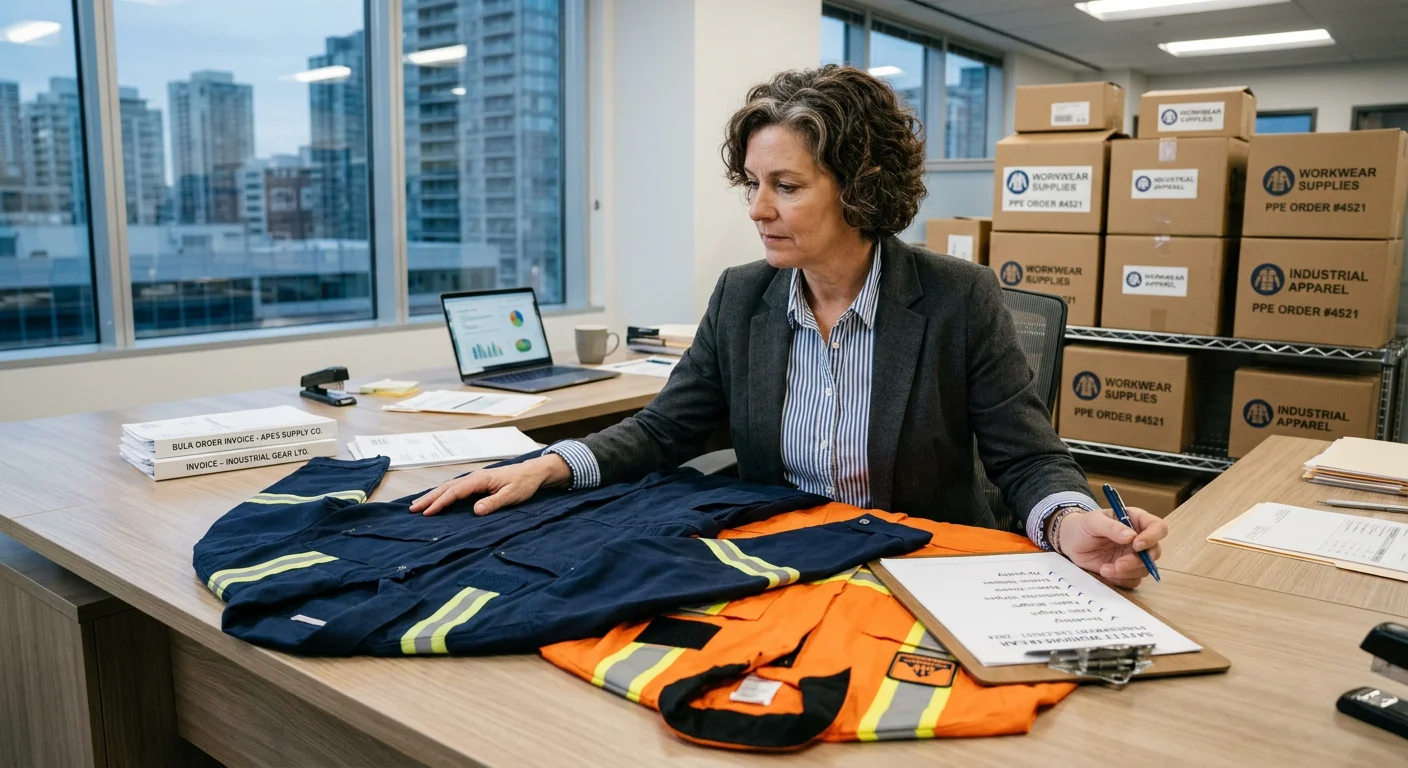
Uline is a distributor. That’s not a criticism — it’s just the business model. And like any distributor model, it adds a built-in cost layer to every unit price you pay.
Here’s what that means in real dollars: trading companies and importers add a 15–50% margin on top of the factory price. A direct manufacturer relationship cuts out most of that spread. Go factory-direct on industrial coveralls, and you’ll see 10–30% reductions on ex-works unit cost versus distributor pricing.
That gap compounds fast on bulk PPE orders.
But cost is one part of the picture. Buying direct from a coverall OEM manufacturer also changes what you control:
-
Quality oversight — you set AQL levels, inspection steps, and audit rights. Direct sourcing cuts defect rates by an estimated 20–40% compared to uncontrolled distributor channels.
-
Lead times — cut out intermediary handoffs and total lead time drops by 15–25%.
-
Custom specs — need a specific material weight, color, or label? Direct OEM engagement turns that into a two-to-six-week conversation, not a catalog dead-end.
-
Full traceability — lot documentation, process controls, ISO 9001 compliance — all of it sits in your hands. No data filtered through a middleman.
Safety managers sourcing Uline industrial coveralls at volume face a real compliance gap: you can’t name the manufacturer. A direct manufacturer relationship closes that gap.
The practical threshold: run your 12-month landed cost — unit price, freight, duties, quality costs — against your current Uline spend. Direct sourcing that delivers ≥10–15% net savings at your volume makes the transition worth it. Most bulk PPE buyers hit that number faster than they expect.
FAQ: Uline Coveralls — Buyers’ Most Common Questions Answered
Procurement managers tend to ask the same questions before every bulk PPE order. Here are the most common ones — answered straight.
Does Uline manufacture its own coveralls?
No. Uline is a distributor. It sources from contract manufacturers and resells under its own label. One exception: DuPont Tyvek coveralls sold through Uline are made by DuPont. All other house-brand lines — Economy, Deluxe, Industrial — come from unnamed OEM factories.
What’s the minimum order quantity?
Disposable coveralls come in case quantities. Case packs run 25–100 units, depending on the SKU. Single-unit orders aren’t standard here. Check the product page for case size before planning your budget.
Are Uline coveralls disposable or reusable?
Both options are in the catalog — they’re just different product lines.
-
Disposable (Tyvek, poly-coated): built for single-shift or limited-reuse tasks like painting, dust control, or waste cleanup.
-
Reusable (cotton, flame-resistant): made for everyday wear in welding, oil and gas, or utility work. You wash them between shifts and use them long-term.
Picking the wrong category for your job is a common mistake. It’s also easy to avoid.
What sizes does Uline carry?
Most lines run Small through 5XL. The Tyvek sizing chart matches worker height and chest measurement to specific sizes — handy if your crew leans toward larger builds. The 5XL (SKU S‑9636E‑5X) covers heights from 6’0″ to 6’6″ and chest measurements above 50 inches.
How do I reach Uline for product or order questions?
-
Phone: 1‑800‑295‑5510 — live reps available 24/7/365
-
Email: [email protected]
Need compliance documentation for a specific SKU? Call and ask for the country of origin and any available test reports in writing. Get that request on record.
Can I get compliance documentation for Uline’s house-brand lines?
This is the gap that matters most in regulated environments.
DuPont Tyvek lines have published certifications — downloadable spec sheets, OSHA and EN 13982 compliance, and third-party test data. All of it is accessible.
Uline’s Economy and Deluxe lines don’t have test reports available to the public. Does your facility need documented PPE certification? That’s a real procurement risk. Sort it out before the pallet ships.
Conclusion
Uline is a distribution powerhouse — but that doesn’t make it a manufacturing authority. Those familiar catalog pages hide third-party factories producing private-label coveralls. Material quality, certification depth, and long-term reliability all vary across these suppliers.
The brand on the label doesn’t tell the whole story. Smart buyers know this. Sourcing Uline industrial coveralls for a one-time job or a recurring PPE contract? The questions that matter most still apply:
-
Who made this?
-
What standards does it meet?
-
Can I verify the supply chain?
Get real answers to these before you commit.
This is where a certified coverall manufacturer makes a clear difference. You skip the catalog middleman. You talk to the people who control the materials, the stitching, and the certifications. You get gear built to your actual specs — not a private-label approximation of them.
Ready to move beyond catalog buying? Explore Morntrip ‘s full coverall lineup and see what a direct manufacturing relationship looks like in practice.
Better sourcing starts with asking better questions.





