Picking between Kimberly-Clark Surgical Gowns and Cardinal Health is a real decision with real consequences. The wrong choice can mean a compromised sterile field, OR staff frustration, or a procurement budget draining faster than anyone notices. Most comparison resources don’t help much — they either dump spec sheets on you or skip the details that matter most on the floor.
This breakdown does neither. You’re getting a straight look at both brands. Evaluating AAMI level 3 vs. level 4 protection? Comparing SMS material construction? Trying to make the case for a brand switch to your supply chain director? This covers all of it — where each brand holds up, and where each one falls short.
What Are Kimberly-Clark Surgical Gowns? (Brand Position & Real-World Use)
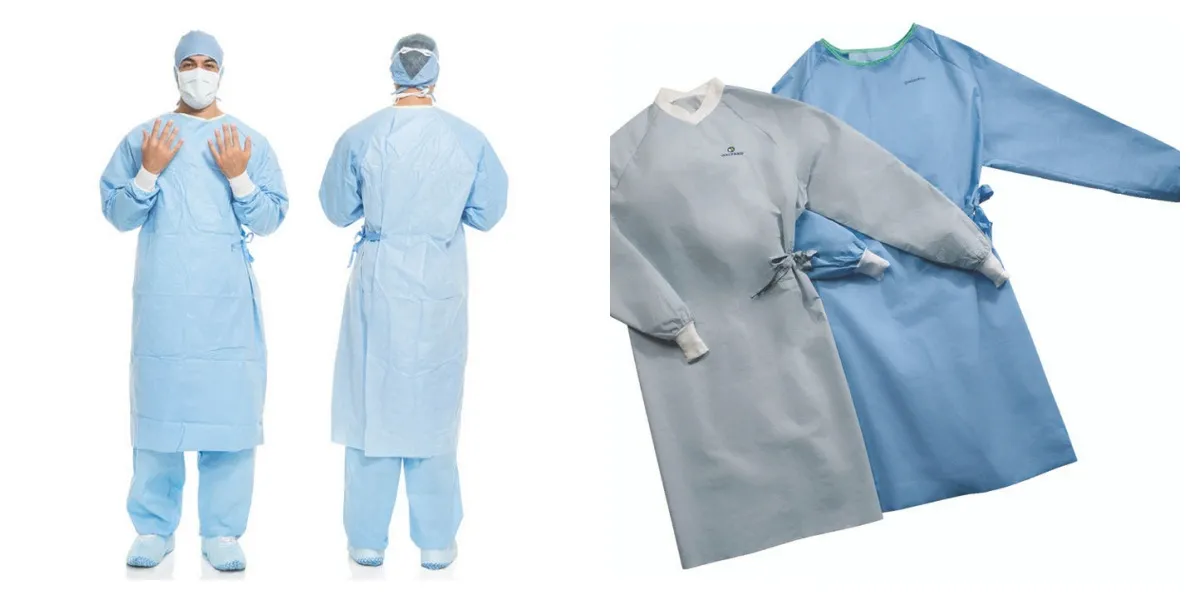
Kimberly-Clark has been a staple in the OR for decades. Their surgical gown lineup shows that kind of long-standing industry presence.
Today, much of their gown portfolio carries the Halyard brand in many markets. But the engineering roots are still KC. Their lineup covers the full AAMI PB70 spectrum:
AERO BLUE Performance Surgical Gown — an AAMI Level 3 sterile surgical gown built on proprietary Core technology. At launch, it delivered 4× greater fluid protection than comparable non-reinforced Level 3 gowns. The breathable back panel is a real advantage for long procedures. Heat buildup is a genuine issue in extended cases, and this gown addresses it directly.
ULTRA and ULTRA Film-Reinforced Surgical Gowns — AAMI Level 4 surgical gowns with FDA clearance under 510(k) K163191. These are built for high-acuity cases: cardiovascular, trauma, and orthopedic procedures involving power tools.
Tie-Back SMS Surgical Gown — Uses Evolution 4 SMS surgical gown material with a reinforced chest and raglan sleeves. It fits moderate-fluid procedures well.
Unisex Sterile Surgical Gown — Meets AORN standards for fluid, flame, and lint resistance. Support staff and smaller facilities sourcing through distributors rely on this one often.
One thing buyers can’t ignore: the MicroCool fraud case. Between 2013 and 2014, KC sold $49M worth of gowns labeled AAMI Level 4. Those gowns lacked valid barrier testing data. The case ended in a $40.4M settlement. Procurement teams today still use this case as a reason to verify surgical gown certification claims before purchasing.
What Are Cardinal Health Surgical Gowns? (Hospital Supply Chain Perspective)

Cardinal Health doesn’t just sell gowns as standalone products. Most gowns ship bundled inside Presource® procedure packs — and those packs cover the majority of major ORs across U.S. health systems. That distribution model shapes how you source, manage, and replace them.
Their gown portfolio covers AAMI PB70 Levels 1–4. OR purchasing focuses on Levels 3 and 4. Key product lines include RoyalSilk, Proxima, Astound, and Convertors®. All are built on SMS or SMMS nonwoven material, with laminated or reinforced critical zones — chest, abdomen, forearm — for higher-fluid cases.
Pricing benchmarks from distributor contracts:
– Level 3 sterile gown (e.g., RoyalSilk): ~ $7–11/gown
– Level 4 reinforced gown : ~ $11–18/gown
Here’s what most buyers miss: 80–90% of gowns used in large IDN ORs are embedded in Presource packs — not ordered as separate line items. Swap out a gown model, and you trigger a pack rebuild. That rebuild carries a 60–120-day lead time.
That one fact explains why Cardinal’s 2020 recall hit so hard. A supplier — Siyang Holymed — moved production to unapproved, uncontrolled facilities. The outcome: 9.1 million AAMI Level 3 sterile surgical gowns recalled, plus 2.9 million affected Presource packs. Some facilities canceled non-urgent surgeries outright. Others rushed to source substitute gowns at premium prices with expedited freight.
Cardinal cut the supplier. The operational damage, though, was already done. The recall exposed a hard truth: dual-vendor strategies and standalone gown buffer stock are not optional. They’re baseline supply chain hygiene — something every procurement team should have locked in before a disruption hits.
Key Differences: What Matters in Daily Use (Kimberly-Clark vs Cardinal Health)
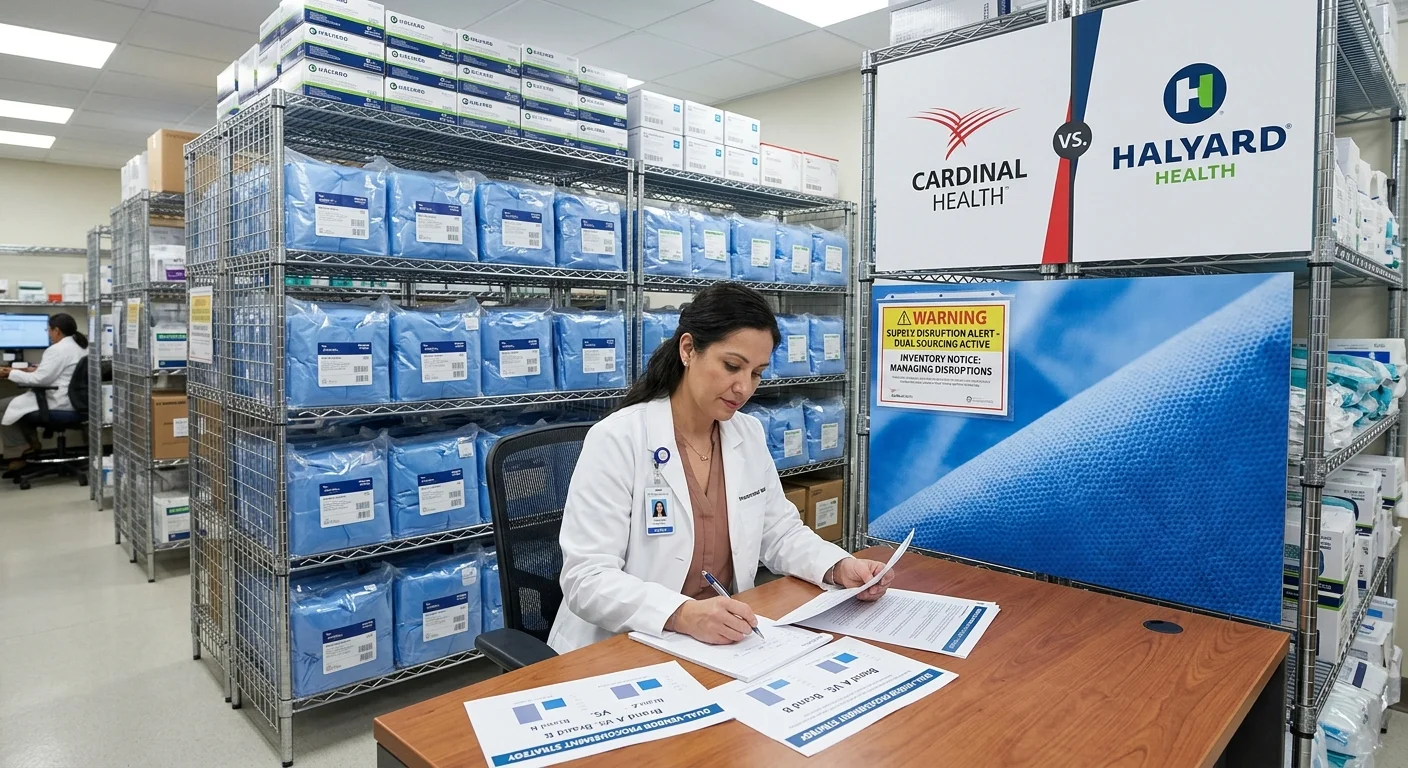
Spec sheets don’t scrub in. Your OR staff does.
The table below cuts through the product language. It maps what separates these two brands across the dimensions that shape purchasing decisions — protection performance, material construction, certifications, use-case fit, and cost.
Dimension | Kimberly-Clark | Cardinal Health |
|---|---|---|
AAMI Protection Levels | Levels 1–4 (full spectrum) | Levels 1–4 (full spectrum) |
Core Material | Polypropylene SMS; 40–60 gsm | SMS / SMMS + multi-polymer blends |
Design Priority | Barrier performance first | Regulatory equivalence + cost flexibility |
Level 3 Key Product | AERO BLUE (Core technology, breathable back panel) | RoyalSilk / Proxima |
Level 4 Key Product | ULTRA Film-Reinforced (510(k) K163191) | Astound / Convertors® reinforced line |
Reinforced Zones | Chest, forearm; film-laminated on Level 4 | Chest, abdomen, forearm; laminated critical zones |
Sterile Packaging | Individual sterile-packed | Individual + Presource® bundle packs |
Supply Model | Standalone gown ordering | Bundled in procedure packs (80–90% of IDN volume) |
Level 3 Price Range | ~$8–13/gown | ~$7–11/gown |
Level 4 Price Range | ~$13–20/gown | ~$11–18/gown |
Notable Compliance Issue | 2013–2014 MicroCool fraud; $40.4M settlement | 2020 recall; 9.1M Level 3 gowns + 2.9M Presource packs affected |
Ideal For | High-acuity, high-fluid procedures; performance-priority ORs | System-integrated IDNs; supply chain predictability |
The One Line Buyers Keep Missing
Cardinal’s bundled distribution model is a feature — until it isn’t. Switching a gown model inside a Presource pack triggers a full rebuild. That rebuild runs 60–120 days.
Kimberly-Clark’s standalone ordering model skips that constraint. Your procurement team gets faster substitution windows. So, supply disruptions don’t lock you into a months-long rebuild cycle.
Facilities running dual-vendor strategies benefit from that flexibility. It holds real operational value — not just on paper, but during the next recall.
What Surgeons & Nurses Notice in Real Use?
Spec sheets live in procurement binders. Gowns live in the OR — and the people wearing them notice things no product description captures.
Here’s what gets flagged during and after procedures.
The sterile field is everything. OR nurses are trained to catch breaches the moment they happen — a wet spot wicking through a drape, a hole in a gown sleeve, contact with a non-sterile surface. The gown gets changed. No discussion. Gown integrity under sustained fluid exposure isn’t a theoretical metric. It’s a real-time pass/fail. Scrub nurses watch for it on every single case.
This is where Kimberly-Clark’s AAMI Level 4 film-reinforced construction earns its keep. Think cardiovascular and trauma cases — arms inside cavities, arterial pressure unpredictable, irrigation running non-stop. A surgical gown that holds its barrier past the two-hour mark isn’t a preference anymore. It’s a requirement. OR nurses in high-acuity settings flag fluid strike-through at the forearm and chest as the earliest failure point. That’s the direct reason both KC’s ULTRA line and Cardinal’s Astound reinforce those critical zones.
Comfort shapes compliance — and it does so silently. A gown that traps heat gets pulled away from the body. Staff adjusts. They find workarounds. Every workaround is a sterile field risk. KC’s AERO BLUE breathable back panel was built for extended procedures. Heat buildup is a documented operational problem — not a comfort preference. Nurses in long orthopedic or spinal cases feel this first.
What gets tolerated versus what gets flagged:
Gown stiffness slows fine motor tasks — suturing, instrument handling, delicate dissection
Poor sleeve fit raises glove contamination risk during gowning
Material noise (crinkling SMS layers) draws flags in quieter procedures where auditory cues matter
Lint on a sterile field triggers concern and lands as an AORN compliance issue
Cardinal’s SMS and SMMS blends run quieter and softer than stiffer film-laminated constructions. KC’s film-reinforced Level 4 gowns give up some tactile flexibility to deliver maximum fluid barrier performance. Neither choice is wrong. They’re built for different case demands.
The nurses who notice these things aren’t being difficult. They’re doing what OR protocol requires — watching the sterile field, watching the gown, and speaking up when something isn’t right.
Which Surgical Gown Should Hospitals Choose?
Three factors drive the decision: your procedure mix, your ordering structure, and how much disruption your OR can handle.
No single brand wins across the board. One will fit your facility better than the other — and the logic is clear once you know what to look for.
Match Protection Level to Your Case Volume First
Start here. Everything else comes after.
High-acuity OR cases — cardiovascular, major trauma, complex obstetric, thoracic — call for Kimberly-Clark’s AAMI Level 4 ULTRA Film-Reinforced line. It’s the stronger technical choice for these procedures. The film-laminated critical zones, FDA 510(k) clearance under K163191, and barrier-first material design all target cases with extreme fluid volume. Arms stay inside cavities for two hours or more. You need that level of protection.
Moderate-fluid procedures — arthroscopy, laparoscopy, standard general surgery — are a different story. Cardinal Health’s Level 3 RoyalSilk or Proxima line gives you the same AAMI protection at a lower per-unit cost ($7–11 vs. $8–13). At Level 3, the performance gap between brands is narrow. The price gap is real.
Then, Decide Based on How You Source
Most procurement teams get this wrong. They evaluate the gown. They don’t evaluate the ordering model that comes with it.
Choose Kimberly-Clark if:
– Your OR needs standalone ordering flexibility
– You’re running a dual-vendor strategy and need a fast substitution window
– Your ordering team can’t absorb a 60–120-day pack rebuild cycle
Choose Cardinal Health if:
– Your facility already runs on Presource® procedure packs
– You’re an IDN focused on consolidated, bundled procurement
– Consistent delivery within an existing distribution relationship matters more than per-gown price differences
The One Rule That Overrides Everything
Before any contract is signed, verify surgical gown certification on finished gowns—not on raw fabric samples.
Both brands have compliance histories worth a close look. KC’s MicroCool fraud ended in a $40.4M settlement tied to invalid Level 4 barrier testing. Cardinal’s 2020 recall pulled 9.1 million Level 3 sterile surgical gowns from circulation. Neither issue is a dealbreaker on its own. Both are clear signals that certification paperwork needs the same scrutiny as price negotiation.
Ask vendors for test reports covering finished gown critical zones — Areas A, B, and C. Do they send fabric data? Send it back.
Common Mistakes Hospitals Make When Choosing Surgical Gowns
Procurement gets blamed when gowns fail. But most failures start long before the purchase order is signed.
These patterns show up across facilities, specialties, and supply chain reviews — again and again.
Choosing by price instead of the AAMI barrier level. A Level 2 gown in a 3-hour open bowel resection isn’t a budget call. It’s an exposure event waiting to happen. Every procedure carries a fluid volume, a duration, and a wearer role. Those three variables — not unit cost — set the minimum protection level required.
Assuming the AAMI level number does the clinical work for you. It doesn’t. AAMI PB70 assigns barrier ratings. It does not assign gowns to procedures. That’s your institution’s job. Build a procedure-risk matrix. Link case type, expected blood loss, and duration to a minimum AAMI level. Without one, that judgment falls to whoever stocks the cart that morning.
Confusing surgical gowns with surgical isolation gowns. Standard surgical gowns protect Areas A, B, and C — front, chest, and forearms. The back may offer zero fluid resistance. Surgical isolation gowns cover the full garment. Use the wrong type in high-exposure isolation procedures, and the staff ends up unprotected in areas they never expected.
Ignoring material construction beyond the AAMI label. SMMS nonwovens outperform basic SMS in sustained fluid resistance and lint control. High-lint fabrics are a real problem in laminar flow ORs. Put material construction in your tender documents — not just the level number.
Stocking one or two sizes. Oversized gowns contaminate sterile fields. Undersized gowns expose wrists. Neither works. Track misfit complaints from your team. Stock at least three to four sizes for core gown types.
The fix is structural, not reactive. Build a procedure-risk map. Set role-based gown policies. Require finished-gown AAMI test reports — not fabric samples — from every vendor. Run user trials before contracts close.
FAQ: Kimberly-Clark vs Cardinal Health Surgical Gowns
These questions come up in every serious procurement conversation. Here are direct answers.
How long has each company been in the surgical gown business?
Cardinal Health started in 1971 in Dublin, Ohio. It runs as both a manufacturer and distributor. Kimberly-Clark dates back to 1872. Their surgical gown line sells under the Halyard Health brand in clinical settings. Halyard #10558 shows up in peer-reviewed research as one of the three most used surgical gown models in the U.S.
Do both surgical gown brands cover all AAMI protection levels?
Yes. Both carry AAMI Levels 1–4 across their gown lines — sterile surgical gowns, isolation gowns, and surgical isolation gowns. Each level ties to a specific SKU. Check the exact AAMI rating on the product code before you order.
What standards govern both brands?
Both meet AAMI PB70, ASTM F2407 (tensile strength, tear resistance, lint generation, breathability), and FDA 510(k) requirements for Class II surgical gowns. Kimberly-Clark also aligns its product specs with AORN standards — covering barrier integrity, lint, flammability, and wearer comfort.
What documentation should procurement teams request?
Pull these from every vendor before you commit: – 510(k) number and intended use statement – AAMI level test data: ASTM F1670 (synthetic blood) and ASTM F1671 (viral penetration) – Finished-gown critical zone map — not raw fabric test results – Biocompatibility summary (ISO 10993) – Sizing specs and reinforcement design details
Which brand scores better on comfort?
Kimberly-Clark tends to rank higher on perceived wearer comfort — especially in longer procedures. Cardinal Health takes a different approach. You get wider cut dimensions in the chest and sleeves. Plus, they use zone-based material selection — lighter materials go where barrier demands are lower. Both strategies work, but they suit different preferences.
Conclusion
Choosing between Kimberly-Clark and Cardinal Health isn’t about picking a winner. It’s about matching the right sterile surgical gown to your OR environment, budget, and protection needs.
Here’s what matters most: high fluid exposure risk means AAMI Level 4 protection is not optional. That’s the standard your surgical team deserves. Running a high-volume facility with tighter margins? The right AAMI Level 3 surgical gown from either brand gives you reliable performance. You won’t pay for protection levels your procedures don’t require.
Both brands earn their place in the OR. The difference comes down to the details — and now you have those details.
Your next move: Bring this comparison into your next procurement review. Match your procedure types to the right protection level. Let the specs — not the brand name — drive the decision.
The best surgical gown is the one your team trusts on the hardest days.